La rivista e il marketplace globale per gli appassionati di auto d’epoca, creati da appassionati.
La rivista e il marketplace globale per gli appassionati di auto d’epoca, creati da appassionati.


Filter
Faccia la sua scelta
- Automobile
-
Marca >>
-
Anno >>
-
- Motociclette
-
Ubicazione >>
- Parti e altro
-
Marca dell'auto >>
-
Produttore >>
-
Categoria >>
- Biciclette
-
Anno >>
-
Paesi



A mystery car in snowy Belgrade
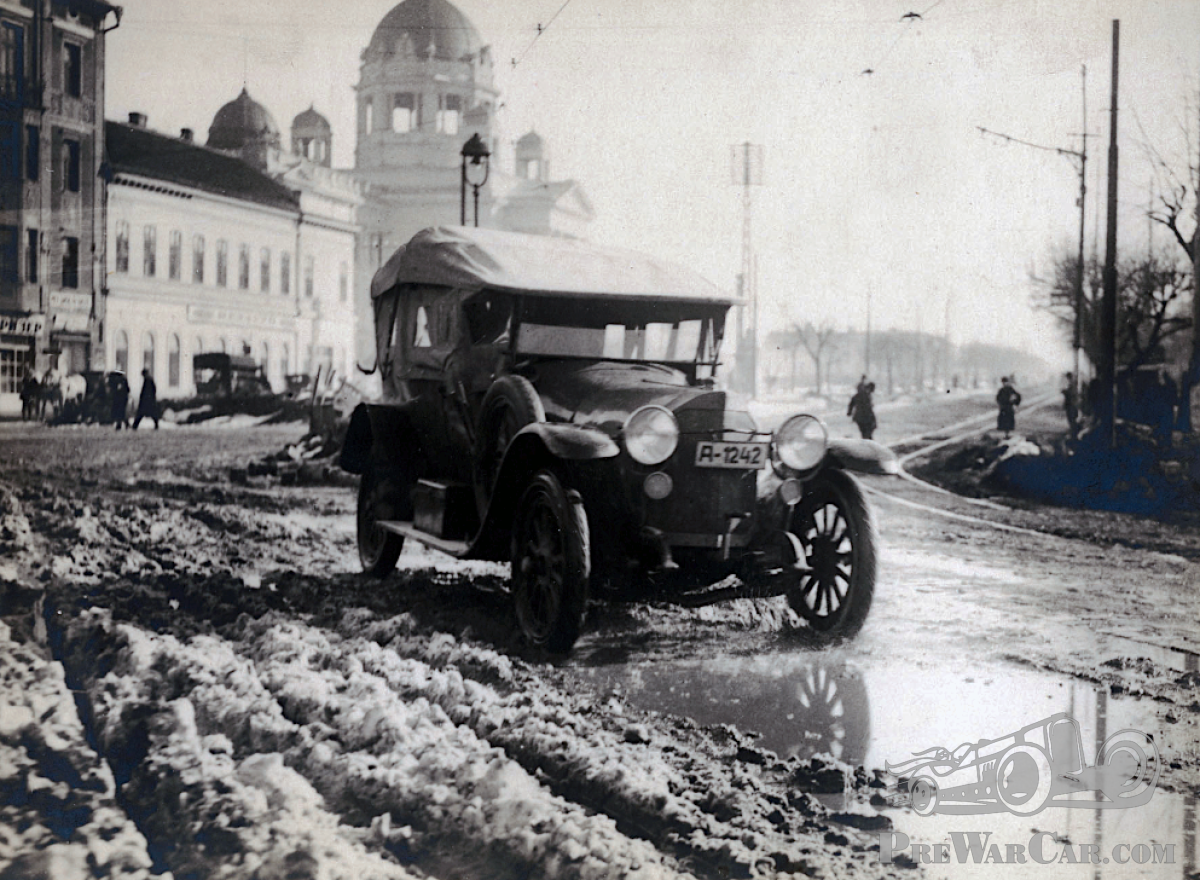

Is it not often the case that the less information we have about something, the stronger our desire is to learn about it? All we knew at first about this particular photograph was that it depicted ‘A car in the snow’, as the University of Graz’s caption told us. Where, when and by whom it was taken, and what car it shows, were all missing, so we conducted our own enquiry into it.
Several sources said it was taken in Belgrade in 1928, which seemed credible. Another told us more specifically that It shows ‘The National Assembly Building on Nikola Pašić Square in downtown Belgrade’, which appears to be correct. Although jammed in between other buildings, this impressive piece of architecture can still be found today and doesn’t seem to have changed all that much.
Next, we stumbled upon a newspaper clipping headed ‘The only two cars in Belgrade collided in 1903’, using this picture as its opening photograph. Translated, it reads: ‘Back in 1903, there were no more than two cars in Belgrade roaming the city streets. An interesting thing allegedly happened, which the citizens recounted for days afterwards. According to the newspapers of the period, those two, the only cars at the time, collided at the Mostar intersection in Belgrade and caused general chaos. Luckily, it was reported that none of the drivers were injured, and the only damage was to the car that allegedly caused the collision. The ‘culprit’ quickly fled the scene on foot and the owner of the second car, Vrzimir Točkanović, escaped with a few scratches. On that occasion, Vrzimir told the police and the gathered citizens: “Everything happened so fast that I didn't know what happened. He ran into the intersection and he must have been going faster than 20 an hour!” The driver who caused the accident, whose name is not known to this day, was sought for a long time because he also removed the number plates from his car before fleeing the scene.
Pardon us, we got carried away. The picture, clearly not of 1903 vintage, was just used to illustrate the piece with a picture of a historic car in Belgrade, but it was an interesting piece of trivia nonetheless. Anyone who knows more about the Vrzimir Točkanović accident on the Mostar intersection is invited to share their knowledge here. Meanwhile, we haven’t got much further with this lovely picture, so we’d love to hear from you about the car in the first place. A Mercedes of Benz, do we think?
Words: Jeroen Booij; picture: University of Graz
Pubblicato:
mercoledì marzo 1st, 2023
Facebook
LinkedIn
Twitter
WhatsApp
Email
Copy
Commenti
Ariejan Bos
07 Marzo 2023, 12:25
Maybe Elite seems a better suggestion on the basis of radiator shape, but the Elite cars I know of all have high shoulders, lacking the roundness of the Belgrade car, while all have horizontal bonnets right down to the wind shield. Besides, all seem to have dead straight front axles (though it is unclear on your car) and I see some more differences. On the basis of these observations, for me it seems unlikely that the car is an Elite.
Per saperne di più
Graeme Simpson
02 Marzo 2023, 02:31
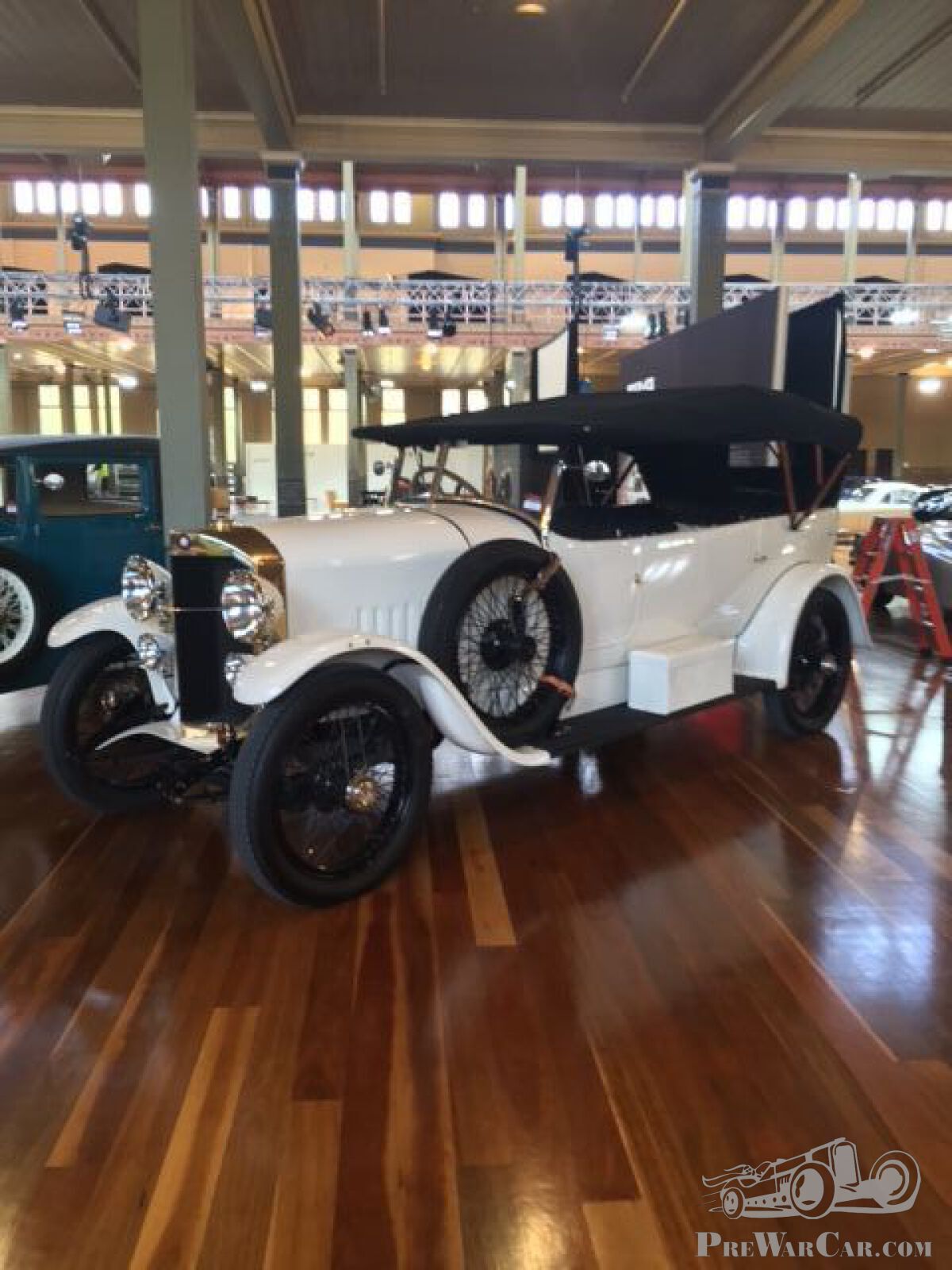
I believe this to be an Elite 10/35 or 10/38 from 1919-1920. The shallow dropped front axle, the shape of the dumb-irons, the round-shouldered radiator & bonnet, the badge(s) apparently mounted not on the point of the radiator, but to each side, the boomerang-shaped steady bar between the Bosch headlights all point towards this identification. Also the battery box mounted to the running board. I have an original spare parts book for the 10/35, which came with our Elite 12/40 when I bought it in 1963. About 3000 Elite cars were made by Elitewerke A G in Brand-Erbisdorf, Sachsen, from about 1914 to 1928, when the firm was bought by Adam Opel A G, itself soon bought by General Motors Corp.
Per saperne di più
Ariejan Bos
01 Marzo 2023, 15:46
It's as always in the details. Of course the details are a bit vague in this photo, but still they are clear enough to determine the make. And that would be a Benz of just before or in WW1, based on details like radiator shape and front axle. A Mercedes of that period had a front axle with deeper bend and very important: the radiator filler tube was always at the front end of the radiator, where for Benz it was always located at the rear, near the bonnet. The combination of the large and small electric front lights is not an identifying feature: I'd prefer to call them a German feature, as many German makes made use of these, including Benz, Mercedes and Opel.
The car is not Opel, because of the different radiator shape, with its inner core curving down parallel from top to bottom. The same of course applies to the Fiat 510S, which had a completely different front by the way. Also the Steyr radiator had a different radiator inner core and moreover had a straight front axle.
Per saperne di più
The car is not Opel, because of the different radiator shape, with its inner core curving down parallel from top to bottom. The same of course applies to the Fiat 510S, which had a completely different front by the way. Also the Steyr radiator had a different radiator inner core and moreover had a straight front axle.
Stefan Krayer
01 Marzo 2023, 12:46
It could be a Steyr around 1920, because of the Austrian influence in that area.
Per saperne di più
Steve Barnett
01 Marzo 2023, 12:23
V radiator and 12-spoke artillery wheels are not only the preserve of Opel but combined with the smaller driving lights below the main headlights suggests 1919 Opel 45hp.
Per saperne di più
Tomas Garcia
01 Marzo 2023, 09:35
Good morning, I would not rule out that it is a Fiat 510S.
Per saperne di più
Daniel Reuben
01 Marzo 2023, 02:24
I believe this is a Benz, perhaps from 1912-1914 on basis of the lights and brackets, front axle, spring perches and of course radiator.
Per saperne di più
Michael Schlenger
01 Marzo 2023, 00:48
The tourer in this photo is a German car from the period 1913/14 to c.1920 featuring a similar radiator used by Daimler or Benz back then. However, in the absence of any other distinctive features I doubt that it's possible to ascertain the manufacturer, since such radiators were used by many other marques and appear to have been available as an aftermarket accessory. I've dozens of period photos showing similar cars which are neither Daimlers nor Benzes, but offer no clue regarding their identity. By the way: I doubt that the photo was taken at the end of the 1920s in a European capital like Belgrade, I'd say it was taken immediately after WW1.
Per saperne di più