La rivista e il marketplace globale per gli appassionati di auto d’epoca, creati da appassionati.





Il mercato; tutte le auto prebelliche in vendita
Panoramica degli annunci correlati all'annuncio 1935 Ford Pickup
-

1933 Talbot AV105 ‘Ulster Coupe’ Coachwork by Vanden Plas
As a Swiss, Talbot Chief Engineer, Georges Roesch, designed his cars with Alpine motoring in mind. With their combination of a strong and powerful push-rod six cylinder engine, powerful brakes, light and accurate steering and a compact, light yet sturdy chassis it is no surprise that Talbots excelled in the Alpine Trials of the 1930s, then undoubte.. -
Ford Model T Runabout 1915
Lovely older restoration.Equipped with many accesoires In good running order.Hydraulic brakes in the original drums.Been in a museum collection for years , now running with fresh fuel and oil.Dutch registration documents -
1934 Singer Nine Le Mans | Historic Auctioneers | Farnborough International | 11th May 2024
The success of the Nine Sport at Le Mans led immediately to the introduction in 1933 of the first Le Mans model. This was the two-seater equivalent of the Nine Sports and it typified the British sports car of the 1930's. At a price of £215, an output of 34 h.p. and a top speed of over 70 m.p.h. with the windshield lowered, it provided keen competit.. -
1918 Ford Model T Pick-Up | Historic Auctioneers | Farnborough International | 11th May 2024
From 1909 to 1927, the Ford Motor Company built more than 15 million Model T cars. Without a doubt, Henry Ford transformed the economic and social fabric of the 20th century. The most popular body styles were two and five-seater open touring cars; however, a very wide variety of bodies were available over the years including closed cars, vans and o.. -
1936 Lagonda LG45 Fox & Nicholl Le Mans Team Car Replica (4½ litre) | Historic Auctioneers | Farnborough International | 11th May 2024
The car of choice in the early 1930s, with money no object, was probably the Bentley built by Rolls-Royce. However, this was, at least, double the price of a Lagonda which had far more attractive open touring coachwork. Especially if it carried the powerful 4½-litre Meadows engine, tried and tested in the Invicta. Even Sir Malcolm Campbell had one,.. -
1938 AC 16/70 March Special
THIS CAR L591 was first registered on the 1st of March 1938 and is said to have lived its early life just off of Cadogan Square in Knightsbridge.The car eventually turned up in the Bristol area in 1976, this is when Mr Cadogan (fittingly named!) purchased it in desperate need of restoration.Over the next 8 ye.. -
1939 MG VA Saloon | Classic Cars & Motorcycles | Brightwells | 8th May 2024
Older restoration; running and driving; a nice original car to use and enjoy; super interior; refurbished wheels; good door shuts



In primo piano
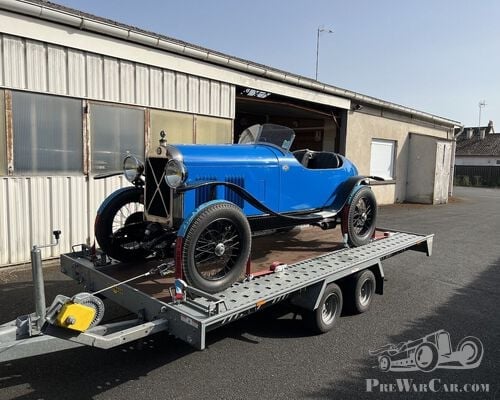
Salmson VAL 3 Séries 7
Salmson VAL3 Serie 7 del 1927. Completamente restaurata alcuni anni fa, in ottime condizioni generali, sia di carrozzeria che di meccanica. Carrozz..
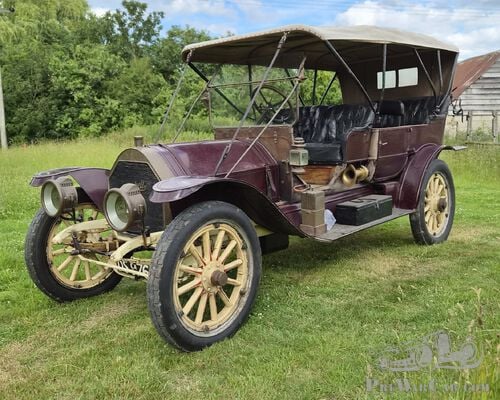
1910 Mitchell Model S - 50HP Six Cylinder
Based in Racine, Wisconsin and being the largest wagon manufacturer in the USA, Mitchell-Lewis produced their first motor car in 1903. Sales grew ..
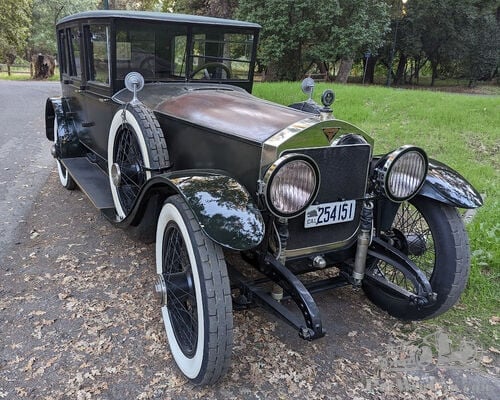
1916 Simplex, Crane model 5
La gru Simplex, modello 5 #2246, fu acquistata originariamente nel 1916 da Frank Coykendall, un industriale molto facoltoso residente a Kingston, N..