La rivista e il marketplace globale per gli appassionati di auto d’epoca, creati da appassionati.





Il mercato; tutte le auto prebelliche in vendita
Panoramica degli annunci correlati all'annuncio 1935 Ford Pickup
-

1935 Bentley 3 1/2 Litre Drophead Coupe | Estate of Mark Smith Auction | Gooding & Company | April 7, 2023
The first Bentley model produced after Rolls-Royce's acquisition of the company, the 3 1/2 Litre was the first of the “Derby Bentleys” built at Rolls-Royce's Derby factory. These machines were refined and elegant, earning them the famous “silent sports car” moniker that would become synonymous with the marque. As was the convention at the time, .. -
1929 Ford Model A Roadster | Estate of Mark Smith Auction | Gooding & Company | April 7, 2023
1927 marked a new and exciting chapter for Ford with the introduction of the Model A. An improvement in both design and performance over the Model T, it was offered in a wide variety of body styles and utilized standard controls more in line with other automakers. The new model surpassed its predecessor in every way, resonating with the buying p.. -
1933 Rolls-Royce Phantom I Riviera Town Car | Estate of Mark Smith Auction | Gooding & Company | April 7, 2023
The Springfield Phantom I provided the American Rolls-Royce customer with a chassis tailored to stateside driving conditions, featuring left-hand steering placement, a three-speed gearbox, and the Bijur centralized chassis lubrication system. Of the 1,243 chassis built, this example, numbered S268KR, was among the last cars built at the Springfi.. -
1935 Studebaker President Roadster | Estate of Mark Smith Auction | Gooding & Company | April 7, 2023
Modern from every angle, Studebaker’s President was the company’s finest and most exclusive offering, accounting for less than 10% of total production in 1935. Company literature dubbed the newest Studebaker’s design the “skyway silhouette, with slim, silvery radiators, and gull’s wing fenders.” The President Series featured a wheelbase 4" longe.. -
1934 LaSalle Series 350 Convertible Coupe | Estate of Mark Smith Auction | Gooding & Company | April 7, 2023
1934 was a watershed year for GM’s successful LaSalle division that CEO Alfred P. Sloan had positioned as a more affordable companion brand to Cadillac. Modern technical innovations included hydraulic brakes and independent front suspension, but it was the completely new, streamlined design awash with modern Art Deco-style details that set the n.. -
1915 Ford Model T Coupelet | Estate of Mark Smith Auction | Gooding & Company | April 7, 2023
From its October 1908 introduction, Henry Ford’s Model T completely revolutionized automobile design, production, and its maker. An uncanny combination of durability, reliability, and affordability, the Model T remained in production for nearly 19 full years with some 15 million examples of the beloved “Tin Lizzie” built. Visually similar to the.. -
1934 Packard Twelve 1108 Town Car | Estate of Mark Smith Auction | Gooding & Company | April 7, 2023
Packard’s 11th Series, corresponding to the 1934 model year, was – in the eyes of many enthusiasts – the zenith of Packard styling in the Classic Era. The most elegant of the cars bearing formal, capacious coachwork were built on the 1108 chassis, with its 147" wheelbase. Packard built nearly 8,000 cars in its 11th Series, with just 960 receivin.. -
1934 Lincoln KB Seven-Passenger Touring | Estate of Mark Smith Auction | Gooding & Company | April 7, 2023
The high-water mark for the Lincoln Motor Company was its entry into the multi-cylinder war, the KB, introduced for the 1932 model year. During its short three-year production run, just over 2,200 examples were built. Most of these expensive 12-cylinder Lincolns carried coachwork designed and built in-house, such as this factory-bodied Seven-Pas.. -
1934 GMC Pickup | Estate of Mark Smith Auction | Gooding & Company | April 7, 2023
The General Motors line of commercial trucks began in 1909 when William Durant acquired the Rapid Motor Vehicle Company of Pontiac, Michigan. Rapid had built a reputation as a powerful and durable truck – and captured attention when one climbed to the top of Pikes Peak. By 1911, under the General Motors umbrella, the GMC brand of commercial and .. -
1934 Ford Model BB House Car | Estate of Mark Smith Auction | Gooding & Company | April 7, 2023
In the early 20th century, prior to the advent of the modern motorhome or RV, house cars were built by enterprising individuals who wanted to enjoy the comforts of home while they toured America’s highways and byways. Like automotive travel trailers, house cars became popular post-WWI and boomed throughout the Great Depression, as those seeking ..






In primo piano
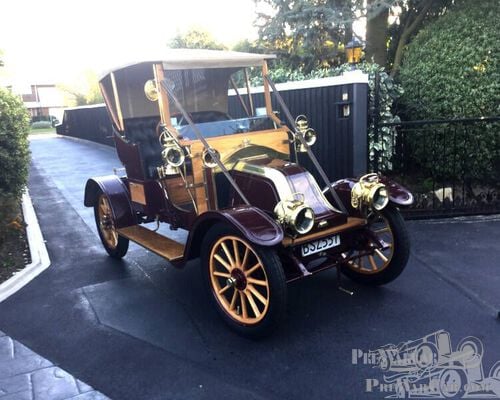
Renault AX del 1913 – chiamata Gigi
Acquistata in Nuova Zelanda dopo un restauro completo, la vettura è stata successivamente importata nel Regno Unito. È di nostra proprietà da oltre..
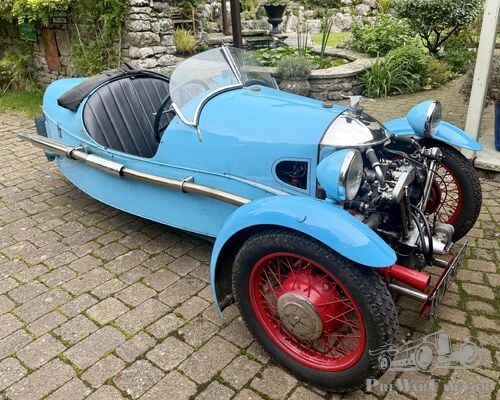
1933 Morgan Three-Wheeler Super Sports, Beetle Back • Show-Specification Car
First registered24 March 1933RegistrationXJ 6336 - original and transferableChassis numberD174Engine numberDTZE 94 H 31..
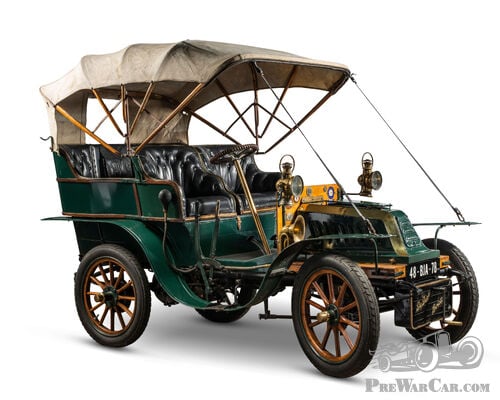
De Dion Bouton Type z in good running condition
De Dion Bouton Type Z from 1905. The car is in good condition, works and runs well. Serie number 36. Engine number 18190. French Carte grise.