La rivista e il marketplace globale per gli appassionati di auto d’epoca, creati da appassionati.





Il mercato; tutte le auto prebelliche in vendita
Panoramica degli annunci correlati all'annuncio 1923 Bentley 3 Litre
-

Lancia Dilambda Tourer 1930 for sale
Unlike its revolutionary Lambda V4 predecessor, the Dilambda did not use a stress-bearing body but reverted to a separate chassis. A new design, the latter possessed exceptional torsional rigidity, a virtue necessitated by its independent front suspension. Narrow-angle vee-configuration engines were a Lancia speciality, the Dilambda’s 3,960cc ove.. -
Rolls-Royce Phantom I, 40/50 HP Cabriolet 1928 for sale
Phantom I chassis number ‘94FH’ was originally delivered with ‘faux cabriolet’ coachwork by Thrupp & Maberly to first owner, one A J Newberry.Restored at date unknown, the car is currently fitted with a Barker-style cabriolet body while other noteworthy features include twin Grebel lights and an additional ‘emergency’ horn. We are a.. -
Hispano-Suiza H6B 7.2hp 6.6-litre Coupe de Ville by J Saoutchik 1924 for sale
BS 9588 is undoubtedly one of the most original surviving Hispano-Suizas with formal coachwork. J Saoutchik of 46 Rue Jacques Dulud, of Neuilly in Paris, were the favoured coachbuilders for this chassis, the quintessentially French Coupé de Ville coachwork demonstrating that the original owner spared no expense in the specification dictated to J S.. -
Wolseley 16/20 HP Five Seat Tourer 1919 for sale
This Wolseley dates from those immediate post-war years and is most handsomely presented in dark green livery with black wings and Rudge-Whitworth wire wheels, the mahogany door cappings adding a pleasing Edwardian flavour. It is equipped with a two-piece, folding, mahogany-framed windscreen and further weather protection is afforded by a beige hoo.. -
Rolls-Royce 20 HP Tourer 1929 for sale
‘This model was introduced to meet requests for a smaller, less expensive car in keeping with the trend after the First World War towards smaller cars for a wider market. Construction was simplified - but standards of workmanship were not compromised.’ - Edward Eves, Rolls-Royce, 75 Years of Motoring Excellence. Chassis number ‘GVO45’ was d.. -
Sunbeam 14/40 HP Five Seat Tourer by Brainsby 1925 for sale
Most chassis carried factory coachwork but this Sunbeam carries coachwork by respected provincial coachbuilders Brainsby of Peterborough. This handsome tourer is presented in grey and black livery with nickel fittings and is equipped with a three-piece opening windscreen, twin side-mounted spare wheels, hood and a full complement of sidescreens, pr.. -
Lanchester 21 HP Coupe 1924
Supplied new in 1924 to a Doctor who spent 40 driving the car on his rounds daily. It returned to Europe 10 years ago and underwent a full mechanical re-build by Arthur Archer in Great Dunmow Essex. A vast amount time, effort, and money has been invested in this vehicle and it is mechanically excellent. -
Bugatti 30 Tourer by Lavocat et Marsaud 1926 for sale
The car offered here – chassis number ‘4724’ – is one of only two known surviving examples of the Type 30 bodied by favoured coachbuilders Lavocat et Marsaud. According to factory sales records, ‘4724’ was produced in December 1925, invoiced to Dubuisson, of St Quentin, near Lille, presumably the local Bugatti agent, and delivered on 28.. -
Bentley Speed Six Le Mans Special by Peterson 1932
Available now in as new condition with very low mileage at a fraction of the cost of the real thing! view video footage of this rare vehicle at PreWarCar.TV (click) or a longer version at at Youtube.com -
Bugatti T38 Tourer by Lavocat & Marsaud 1927
Very nice body on a rare chassis (380 built). Plenty patina. Co-ownership with Jack Braam Ruben.


In primo piano
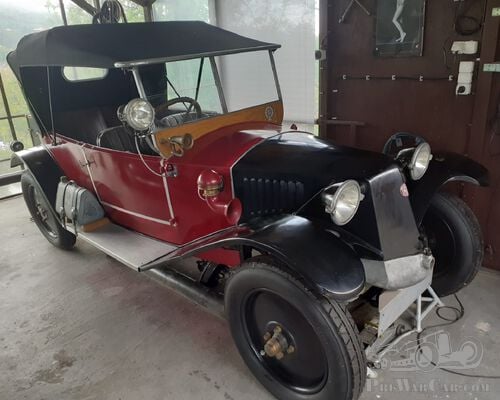
1924 Tatra 11 Roadster
Uno straordinario pezzo di storia dell'automobileProponiamo in vendita una rarissima Tatra 11 Roadster del 1924, una delle aut..
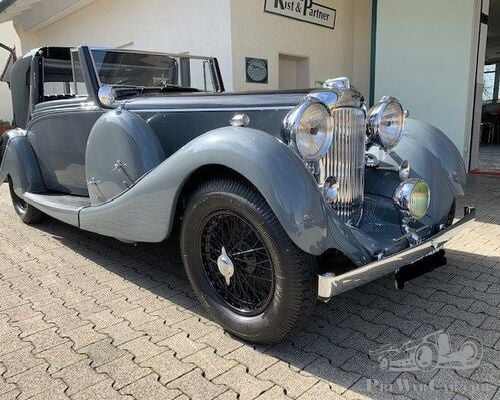
Lagonda LG 45 Coupe de Ville Sedanca di Mayfair
Successore della M45, la LG45 venne sviluppata attorno allo stesso eccellente sei cilindri in linea Meadows da 4,5 litri, già ampiamente collaudato..
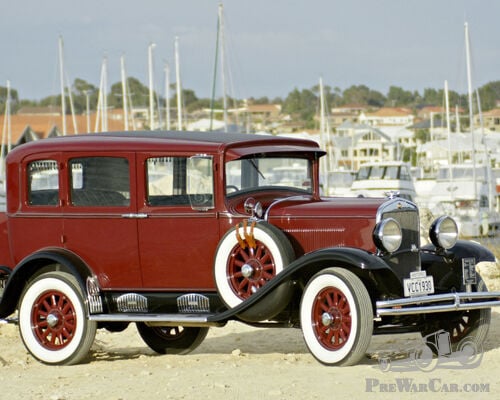
1930 Chrysler 66 Six-Wheel Equipped Royal Sedan
Una Chrysler 66 Royal Sedan restaurata in modo eccezionale e pluripremiata, con soli due proprietari in quasi 97 anni.L'attuale propr..