La rivista e il marketplace globale per gli appassionati di auto d’epoca, creati da appassionati.





Il mercato; tutte le auto prebelliche in vendita
Panoramica degli annunci correlati all'annuncio Frazernash Kit
-

1920 Ford Model T Roadster | Estate of Mark Smith Auction | Gooding & Company | April 7, 2023
The ubiquitous Model T was the most basic form of motorized transport for consumers for an extended stretch of time and heralded the arrival of the modern automobile. Enthusiasts in the period were soon adding aftermarket parts to their Model Ts to make them faster, stronger, and more enjoyable to use. This Model T Roadster is represent.. -
1926 Chevrolet Series V Superior Coupe | Estate of Mark Smith Auction | Gooding & Company | April 7, 2023
By the early 1920s, Chevrolet had begun to seriously challenge the dominance of the Ford Model T with their Series 490, named after its $490 price tag. The company’s next model was the Superior, which was more mechanically sophisticated, and buyers had a choice of a variety of colors. Finished in a gorgeous maroon color with gray cloth upholster.. -
1930 Packard Deluxe Eight 745 Roadster | Estate of Mark Smith Auction | Gooding & Company | April 7, 2023
Packard’s 7th Series of 1930 is remembered for including some of the company’s most iconic designs to date. The Roadster, in particular, was styled by Ray Dietrich and displays some of the most beautiful sporting lines and proportions of any American Classic. According to its chassis plate, this 745 was delivered by Packard of Washington.. -
1930 American Austin Roadster | Estate of Mark Smith Auction | Gooding & Company | April 7, 2023
Founded in 1929 in Butler, Pennsylvania, American Austin remains historic for producing one of America’s first economy cars – a license-built version of England’s Austin Seven. With coachwork designed by award-winning stylist Count Alexis de Sakhnoffsky, the American Austin Roadster was a small, economical, and stylish automobile. Former.. -
1924 Packard Single Eight 136 Sport Model | Estate of Mark Smith Auction | Gooding & Company | April 7, 2023
In summer 1923, Packard unveiled its highly anticipated “Single Eight,” powered by an all-new, inline eight-cylinder engine that would serve as the foundation for the company’s models over the next three decades. Characterized by its smooth, turbine-like power and durability, Packard’s Eight was the brainchild of Jesse Vincent’s renowned enginee.. -
1929 Ford Model A Roadster | Estate of Mark Smith Auction | Gooding & Company | April 7, 2023
1927 marked a new and exciting chapter for Ford with the introduction of the Model A. An improvement in both design and performance over the Model T, it was offered in a wide variety of body styles and utilized standard controls more in line with other automakers. The new model surpassed its predecessor in every way, resonating with the buying p.. -
1923 Brewster Model 91 Town Brougham | Estate of Mark Smith Auction | Gooding & Company | April 7, 2023
Brewster & Co., the most trusted name in American custom coachbuilding during the horse-and-buggy days, made a successful transition into the horseless carriage era. Based in New York City and boasting a peerless reputation for its build quality and elegant designs, this renowned firm produced custom automobile bodies for an elite clientel.. -
1928 Lincoln Model L Club Roadster | Estate of Mark Smith Auction | Gooding & Company | April 7, 2023
Following his purchase of Henry Leland’s Lincoln Motor Company in 1922, Henry Ford entrusted the new flagship of his automotive empire to his only son, Edsel. Almost immediately, Edsel’s eye for design led him to turn away from the bland Leland-era bodies and hire prestigious coachbuilding firms to design an array of attractive custom and semi-c.. -
1929 Stutz Series M Cabriolet | Estate of Mark Smith Auction | Gooding & Company | April 7, 2023
From its debut at the inaugural running of the Indianapolis 500 in 1911, Stutz cultivated an obsession with speed. Following its 1927 Stevens Trophy Cup and AAA Stock Car Champion wins, along with its epic 1928 Le Mans battle, the Indianapolis firm introduced its improved Series M in 1929. The enlarged Vertical Eight engine provided more power, .. -
1924 Ford Model T Speedster | Estate of Mark Smith Auction | Gooding & Company | April 7, 2023
In 1915, Louis Chevrolet, race car driver Joe Boyer, Indianapolis car dealer William Small, and Zenith Carburetor president Victor Heftler established the Frontenac Motor Corporation with the expressed purpose of engineering, building, and racing high-performance automobiles. Frontenac cars went on to capture back-to-back wins at the Indianapoli..






In primo piano
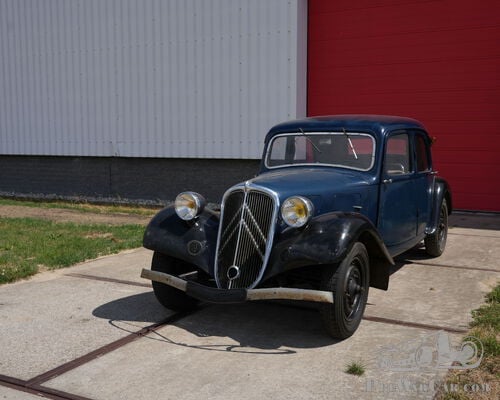
1935 Citroën Traction Avant
Citroën Traction Avant di prima produzioneCondizioni eccezionalmente originali, mai restaurataFino a poco tempo fa parte di ..

1904 De Dion Bouton Type V 8HP Rear Entrance Tonneau
Datata dal VCCImmatricolazione europeaComprovata esperienza nei rallyQuattro postiCondizioni splendide
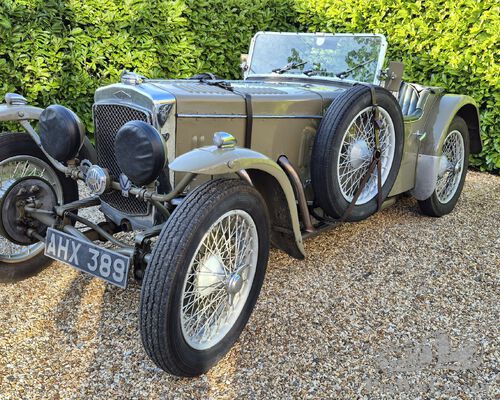
Fraser Nash TT Replica
AHX 389 (numero di telaio 2073, numero motore 10367).Importante e autentica TT Replica a passo corto, con storia completamente documentata f..