La rivista e il marketplace globale per gli appassionati di auto d’epoca, creati da appassionati.
La rivista e il marketplace globale per gli appassionati di auto d’epoca, creati da appassionati.


Filter
Faccia la sua scelta
- Automobile
-
Marca >>
-
Anno >>
-
- Motociclette
-
Ubicazione >>
- Parti e altro
-
Marca dell'auto >>
-
Produttore >>
-
Categoria >>
- Biciclette
-
Anno >>
-
Paesi



BeForty or bust in an Austin Ulster

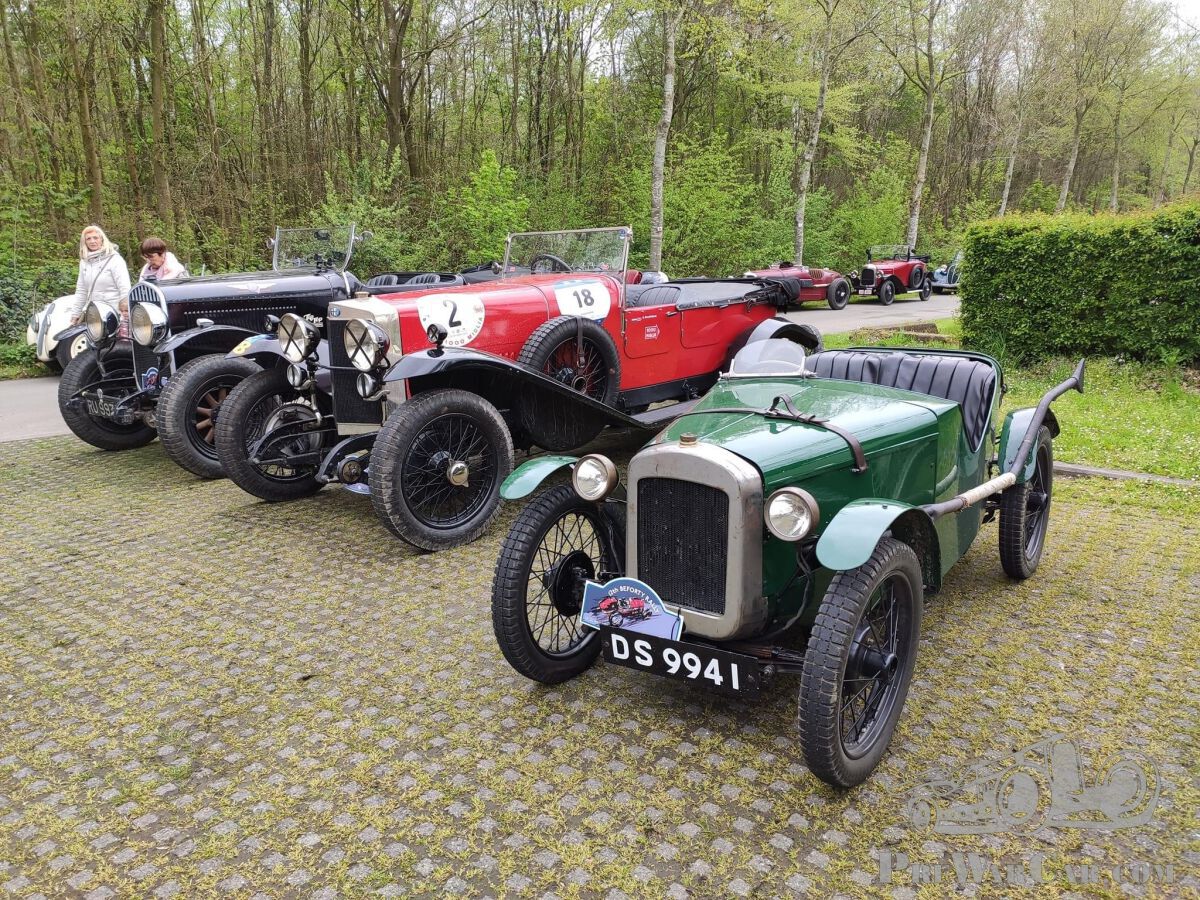


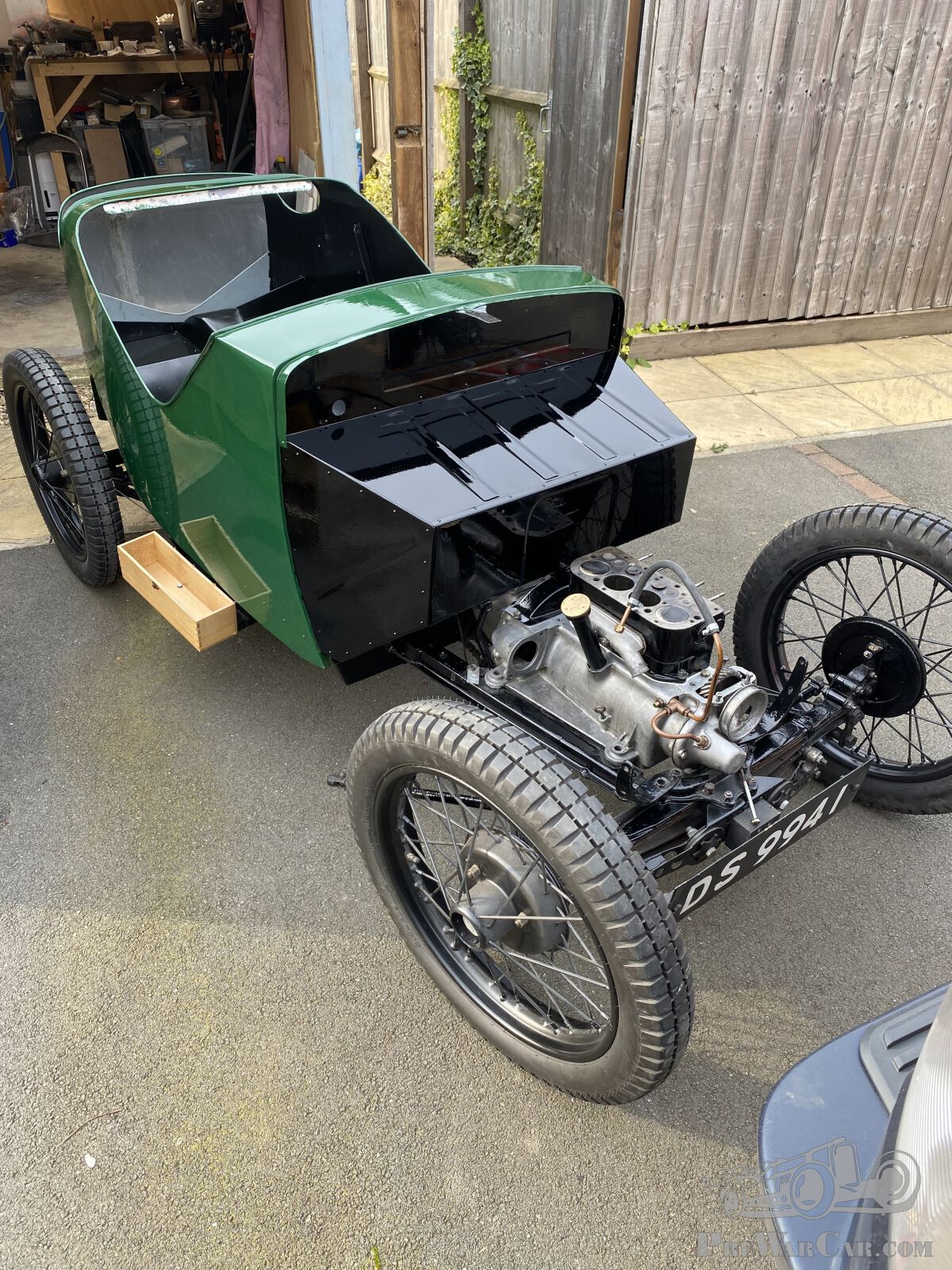


We recently brought you a report from the BeForty Rally, a driving tour around the lowlands of Europe with the noble aim of involving young enthusiasts with early cars. All participants must be under 40 years old, and their cars built before 1940. We caught up with one of the most enthusiastic participants on the 2023 rally, 23-year-old Robert Honey. Robert was at the wheel of his 1928 Austin Seven Ulster replica, which he had owned for five years but only finished rebuilding six hours before leaving England for Belgium.
Impressively, Robert’s interest in cars is entirely self-sown, not coming from a car family, though he’s grateful for the help and encouragement given by other enthusiasts over the years. He says, “I grew up in Weybridge, close to Brooklands. My parents took me there regularly before I was of school age and all the volunteers took me under their wing. I went through school without doing a lot regarding vintage cars, then when I was 15 I started doing a lot of woodwork and got very interested in engineering and making things. I came across Morgans with their ash-framed bodies and decided I’d like to make one, so I made a two-third-scale Morgan. I didn’t have the skills to make the chassis or bodywork, so I got in touch with a local group for young engineers, the GASP Motor Project, learnt to weld there and made the chassis. I also got in touch with Morgan, which was very supportive. It asked if I wanted to spend time at its works, and supported me with help and machinery for making the bodywork.
“At GASP, there was an electric racing car we were working on. We took it to a hill-climb also attended by classic Jaguar specialist Winspeed Motorsport. I got to know the owners very well and they realized how much I enjoyed vintage cars, so they put me in touch with some Bugatti restorers who invited me to some rallies, and I caught the bug and made some strong friendships. I got my Ulster replica later that year.”
Robert had been invited by a Bugatti family to accompany them on the Next Generation Rally, a sort of English equivalent of the BeForty. The rally stopped to visit a collection which had an Ulster, and after somebody put in a kind word in for Robert, he was allowed to take it for a short test-drive. He loved it, of course, and it then emerged that somebody else on the rally had an Ulster for sale, which soon ended up in Robert’s garage.
Rebuilding a sprint car for the road
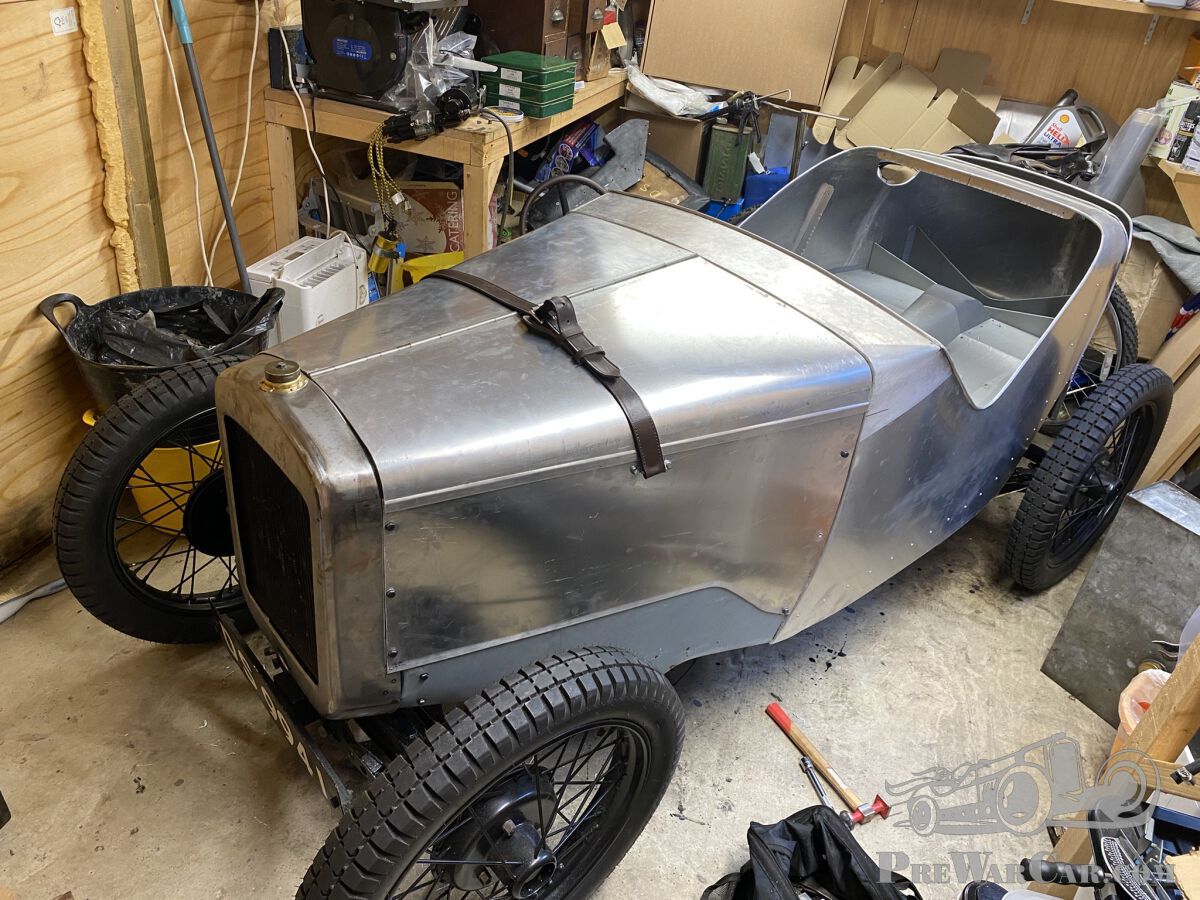
As bought, the Ulster had a high-compression engine, as original Ulsters had from the factory, mildly uprated with a Phoenix crank and 1¼-inch SU carburettor. “It was set up very much for sprints and short, fast races,” Robert explains. “It was somewhat unreliable for long distances and road use, consuming many head gaskets, so I rebuilt parts of the engine, rewired it with correct fabric-bound cable and fitted new shock absorbers. It had a Chris Gould fibreglass body from the 1960s but to be involved with the Vintage Sports-Car Club it needed a period-correct aluminium body. It was quite a big job taking everything off, and I’d been putting it off after my efforts to make it more reliable, but a gentleman in Wales was building a special with a modified chassis and it was preferable for him to have a fibreglass body, so I sold it to him and asked Rod Yates to make an aluminium body for me.”
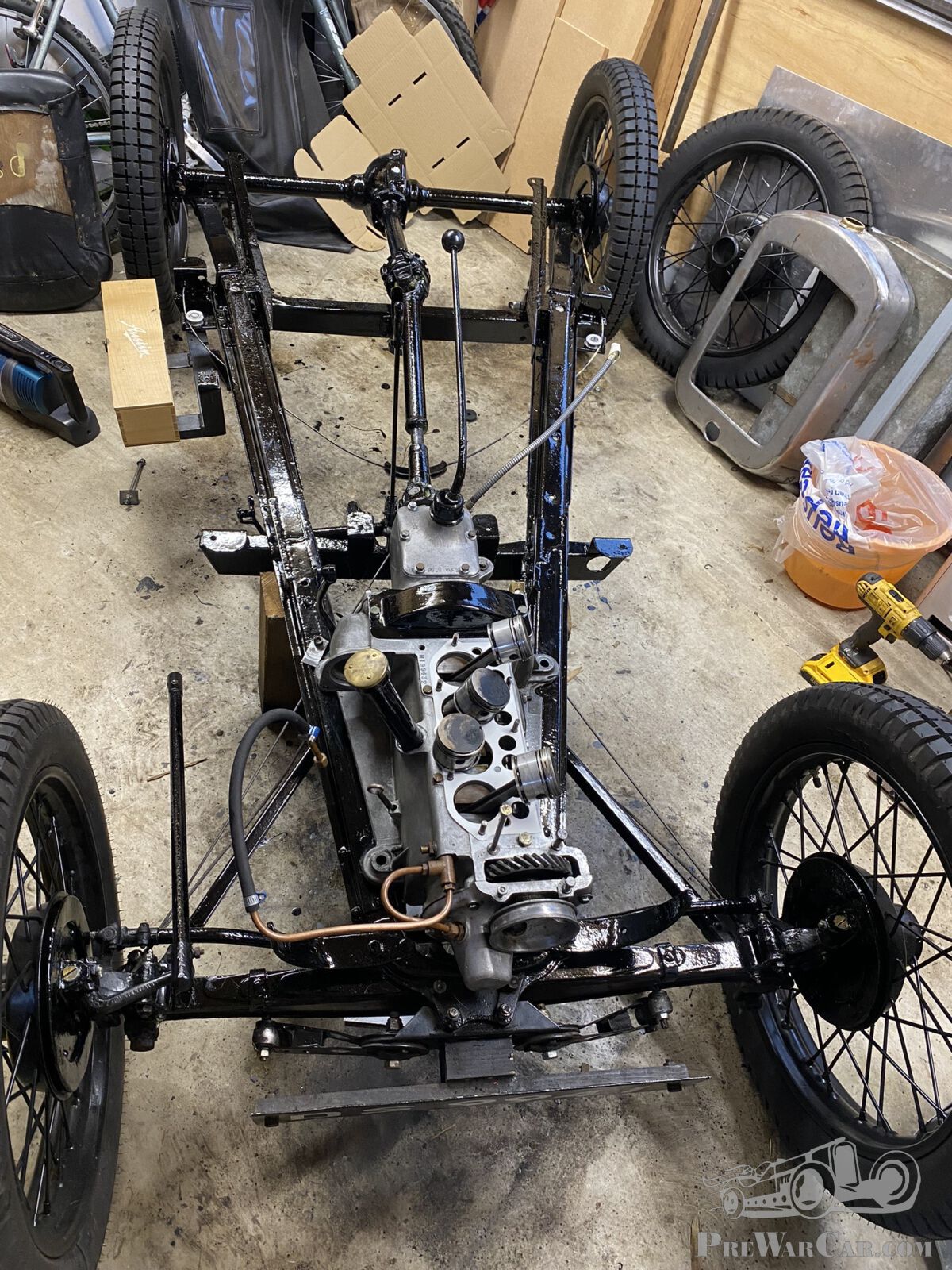
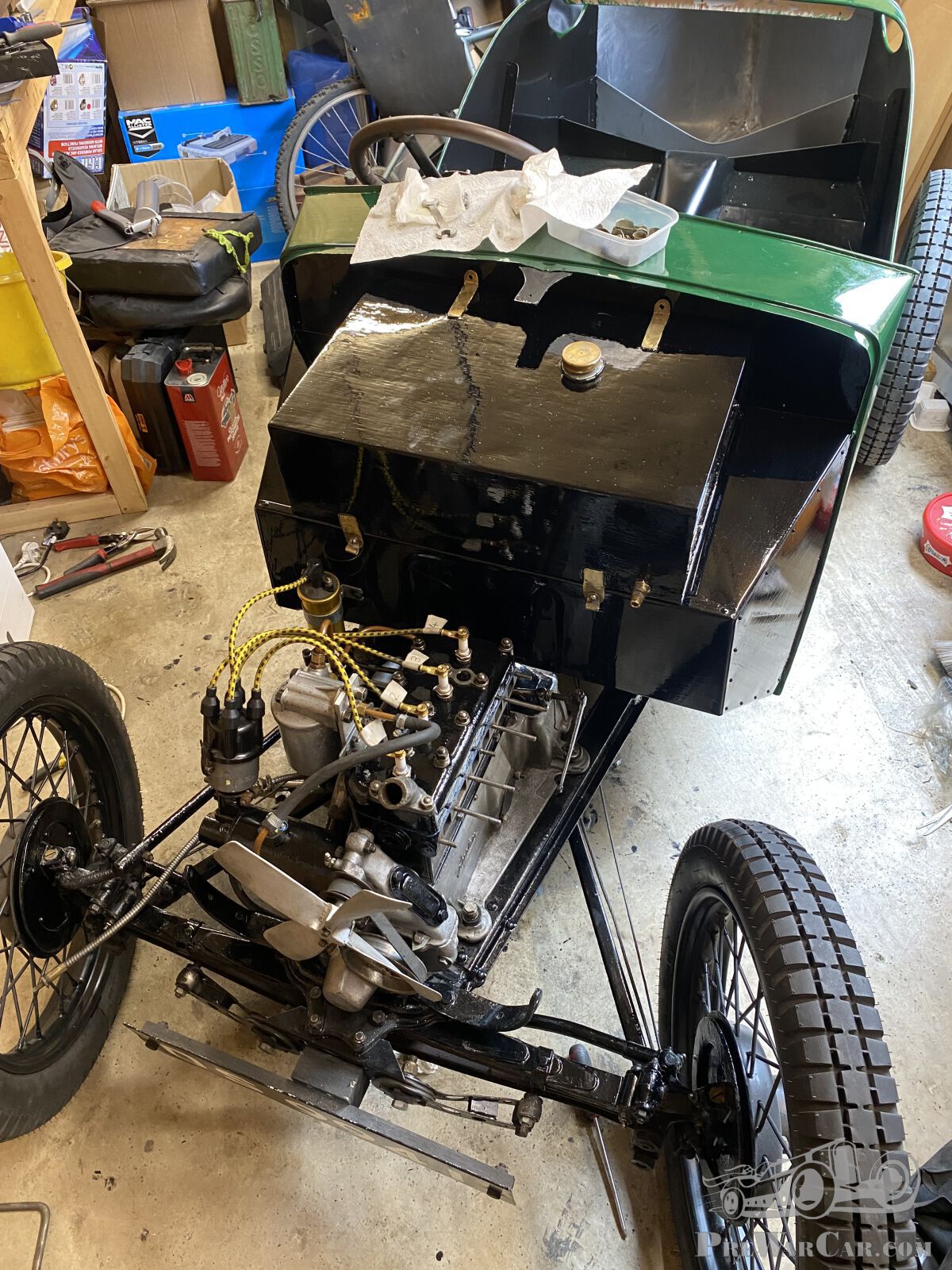
While that was happening in the spring of this year, Robert decided it would be a good time to overhaul the rest of the car. He refurbished the chassis with new coats of primer and paint, and stripped the engine right down and meticulously built it up again. “Due to various factors, the body ended up arriving five weeks before the BeForty, so I had a mad rush to get it fitted. The bodywork is fantastic, it’s all the correct shape, but because every chassis is slightly different, with 1920s tolerances and distortion over time, it was made oversized and fitting the panels to the car was the first challenge. It took about one-and-a-half weeks alongside full-time work. I also welded the brackets for the wings. There was a lot more manufacturing than I anticipated. I thoroughly enjoyed every bit of it and had the desire to savour each part of the rebuild process, but time was against me.”
One last wild rush
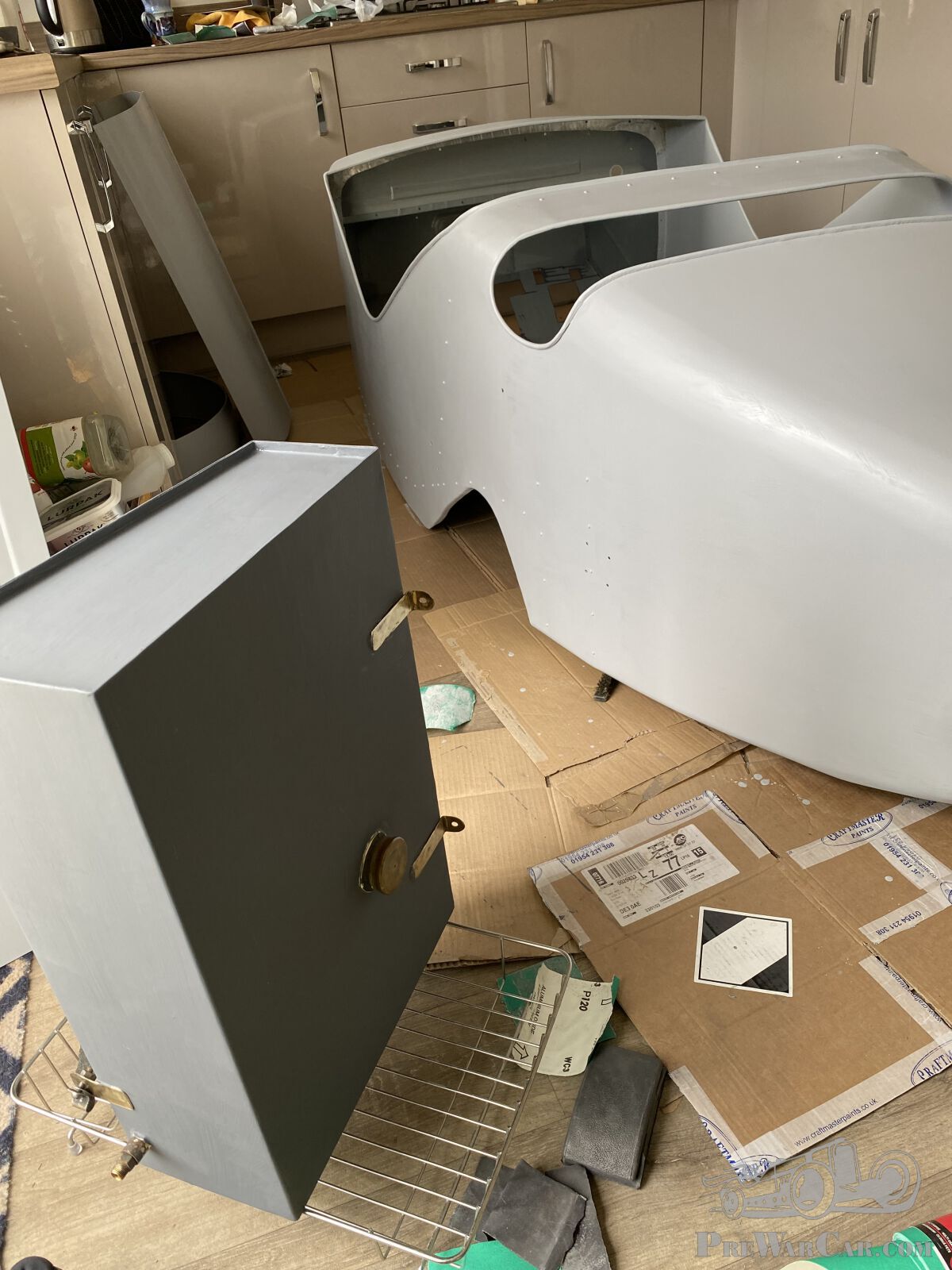
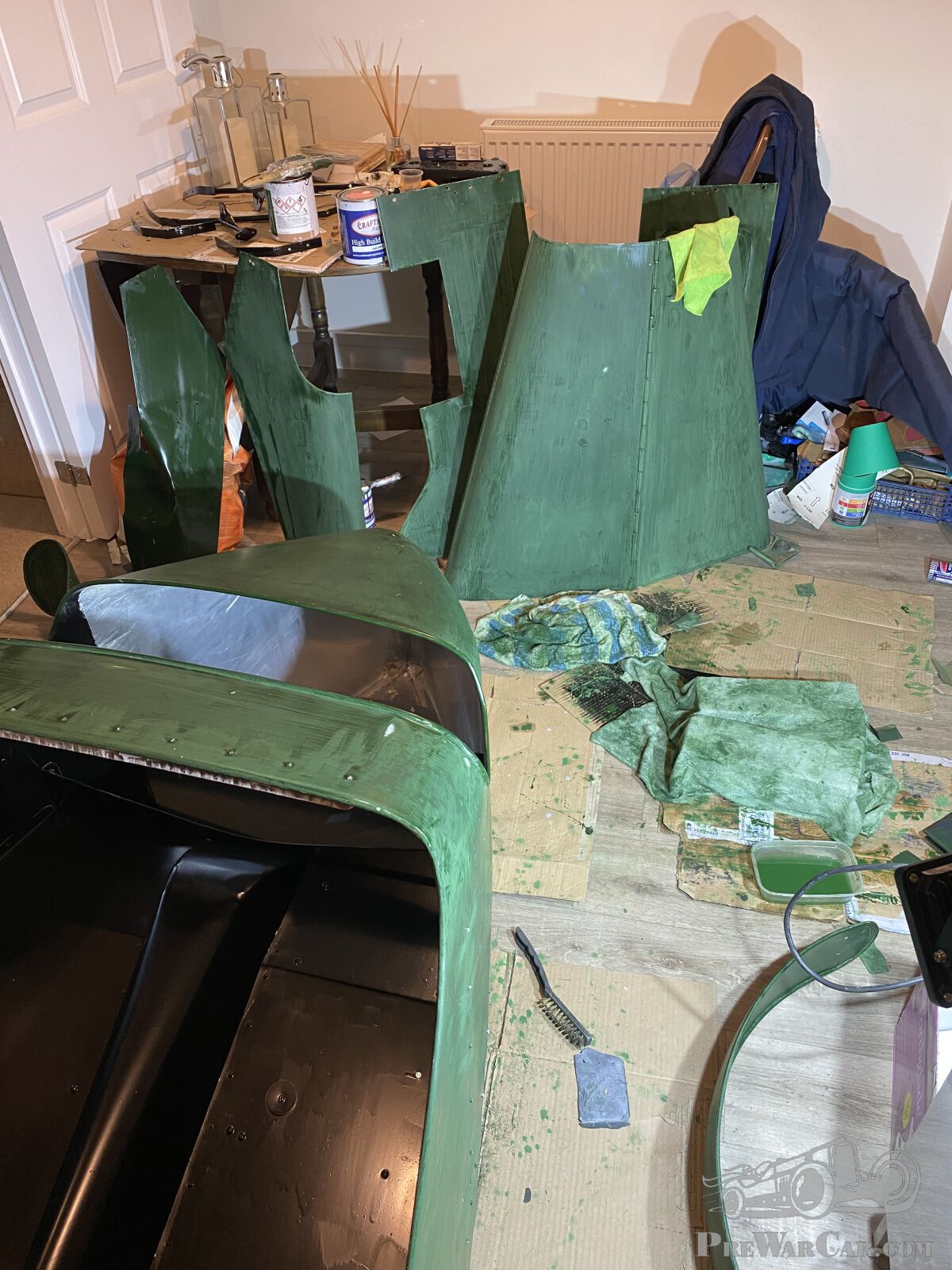
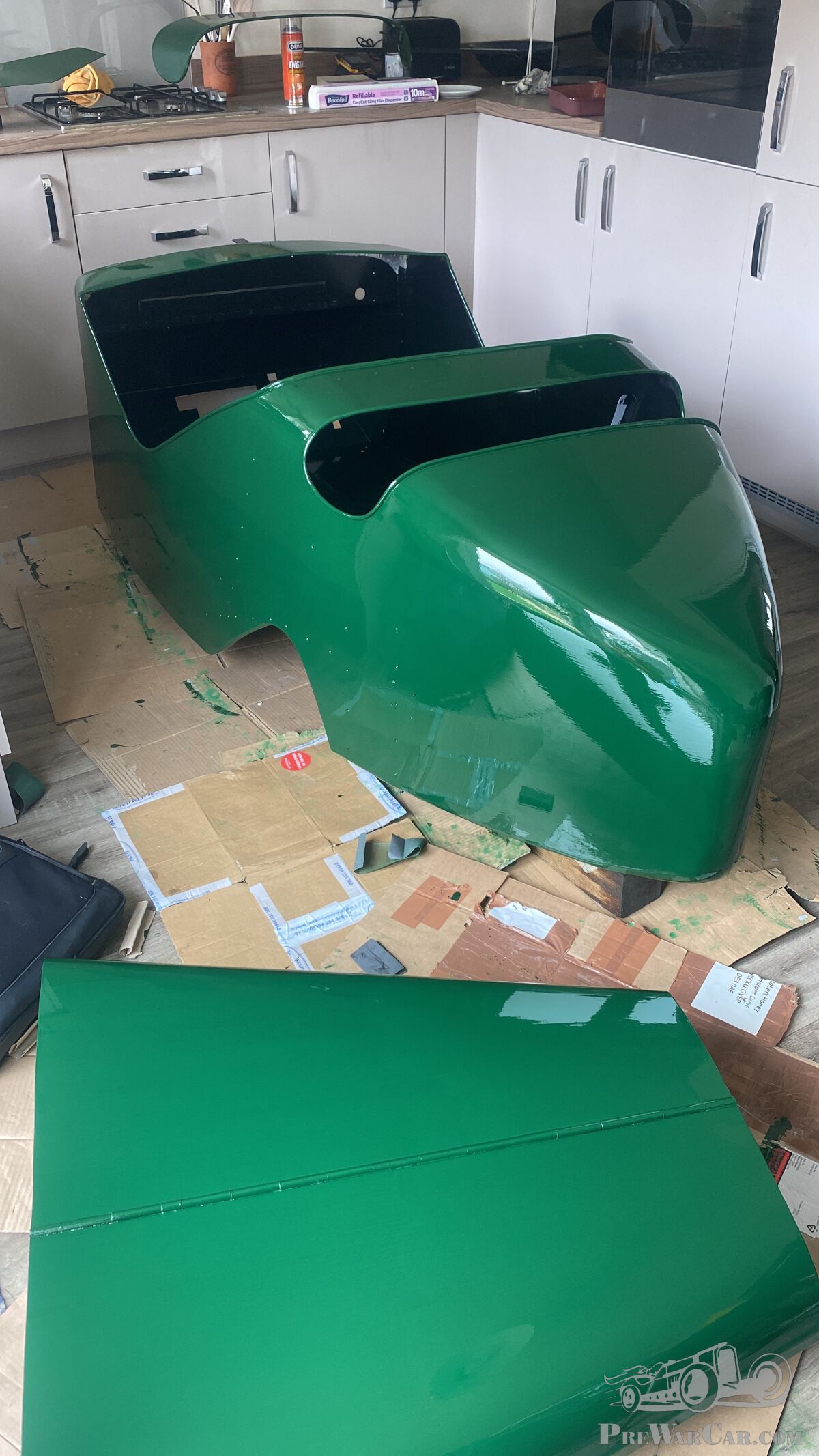
Robert then took the body off again to paint it. Concerned that his garage wasn’t sufficiently sterile, he cleared out his kitchen, spread cardboard over the floor and proceeded to work on the body there, etch-priming it, undercoating it and finishing it off with enamel top-coats. “It was a long, laborious week of painting and flatting back many times but I had a vision of how I wanted the paint to look and I kept going until I got there. That was the week before the BeForty. On the weekend before the rally, I started to refit the body, reinstalling the wiring, fitting all the instruments and gauges and finishing building the engine. I then fitted the fuel tank, fuel pump and accelerator linkages, as that all needed doing with the body on so I could cut the holes in the right places. I didn’t quite get round to making the seat, so I shoehorned the seat from the old car into it. I finished getting everything working at one in the morning on the day of the rally, then left for Belgium at seven o’clock, six hours later.”
Robert would have loved to have driven the Austin all the way but, since it was very much a test run, he trailered it as far as the house of some friends who lived closer to the Channel crossing. From there, they set off to Folkestone together for the cross-Channel train. Robert is pleased to report that all went well. “I packed as many tools as I could fit into the small boot. Every time we stopped, I let the engine cool and did some torqueing up to make sure the head was still tight. I just had the running-in procedure to do, tightening nuts and bolts. Nothing went wrong unexpectedly. On the last day we suffered an electrical fault when the condenser came to the end of its life, but the rally support team had a spare.
“Coming back, our friends had a puncture so we stayed with them, which left us behind schedule for the Eurotunnel. We had 45 minutes of motorway driving at higher speeds than we’d done before, but the Austin went brilliantly. Then we got to the other end of the tunnel and it wouldn’t start, and I had to push it all the way down the shuttle train. I realized that because the engine had got hotter and expanded, it had compressed the head gasket and then shrunk back again, which had allowed water to seep into the cylinders. We dried them out and then drove for a good hour back to the trailer park, encountering a hail storm along the way.”
Coming soon to a hill-climb near you
Now that the Austin has proved itself, Robert’s anticipating lots of fun with it. “There are a few things I’d like to finish off. I love driving it but it’s slightly noisy, so I’m currently making a silencer just to bring the noise level down. I want to use it for driving to work, and leaving at six o’clock is just a little antisocial at the moment. It needs upholstering and the radiator cowl nickel-plating, then it’ll be done. The desire for the aluminium body was to get more involved in hill-climbs, driving tests and trials. I’ve been told by numerous people approaching the upper end of the BeForty and Next Generation criteria how fast the time goes, so I must get to as many rallies and events as possible.
“I’m sure it won’t be long before I’m itching to have another project. Restoring and caring for vintage cars has become a huge passion of which this Austin has been the start. It’s always a journey of learning and understanding how each different car works, and I’ll always give things a go myself with as much guidance and advice as I can get. I’m either pleased that I’ve learnt a new skill or, if it doesn’t go how I’d like, I gain an appreciation for the people who do it incredibly well. There’s no reason why I’d ever want to get rid of the Austin, though I never feel like I own it; it’s more like being a custodian. It’s a bit of history and it’s important to keep these cars alive and share them with the world.”
Words: Zack Stiling; photographs: Robert Honey
Pubblicato:
lunedì giugno 12th, 2023
Facebook
LinkedIn
Twitter
WhatsApp
Email
Copy
Commenti
David Cordy
19 Giugno 2023, 01:29
Peter Maguire
12 Giugno 2023, 16:12
Apart from saying 'well done' , I would like to try and help by commenting on the head gasket problems experienced.
My advice is to torque the head down to 24 lb. ft. and do not use any head gasket goo! Castrol CL grease or similar is sufficient.
though I used to use 'R40' as that was what went into all my sporting A7 engines. Never a big end or any bearing problem and only
once a gasket problem, though that was in part due to head distortion.
It is obviously essential that the block and head surfaces are in goood order.
However, if going to 24 lb. ft., it is vital that all the head studs are a proper fit into the block, so helicoils if the threads are bad.
Also, the head studs must be of suitable HT steel (never stainless). R-spec is okay, S is better.
Tighten, in the order set by Austin, and then go in 2 lb. increments until 24 is reached. A really goood torque wrench is essential.
All the best.
Per saperne di più
My advice is to torque the head down to 24 lb. ft. and do not use any head gasket goo! Castrol CL grease or similar is sufficient.
though I used to use 'R40' as that was what went into all my sporting A7 engines. Never a big end or any bearing problem and only
once a gasket problem, though that was in part due to head distortion.
It is obviously essential that the block and head surfaces are in goood order.
However, if going to 24 lb. ft., it is vital that all the head studs are a proper fit into the block, so helicoils if the threads are bad.
Also, the head studs must be of suitable HT steel (never stainless). R-spec is okay, S is better.
Tighten, in the order set by Austin, and then go in 2 lb. increments until 24 is reached. A really goood torque wrench is essential.
All the best.
If you want a working holiday in Australia, let me know! (Working on old cars, that is!)
Cheers.