La rivista e il marketplace globale per gli appassionati di auto d’epoca, creati da appassionati.
La rivista e il marketplace globale per gli appassionati di auto d’epoca, creati da appassionati.


Filter
Faccia la sua scelta
- Automobile
-
Marca >>
-
Anno >>
-
- Motociclette
-
Ubicazione >>
- Parti e altro
-
Marca dell'auto >>
-
Produttore >>
-
Categoria >>
- Biciclette
-
Anno >>
-
Paesi


Buy British or buy Benz? A German antique opens Britain's garage of the future
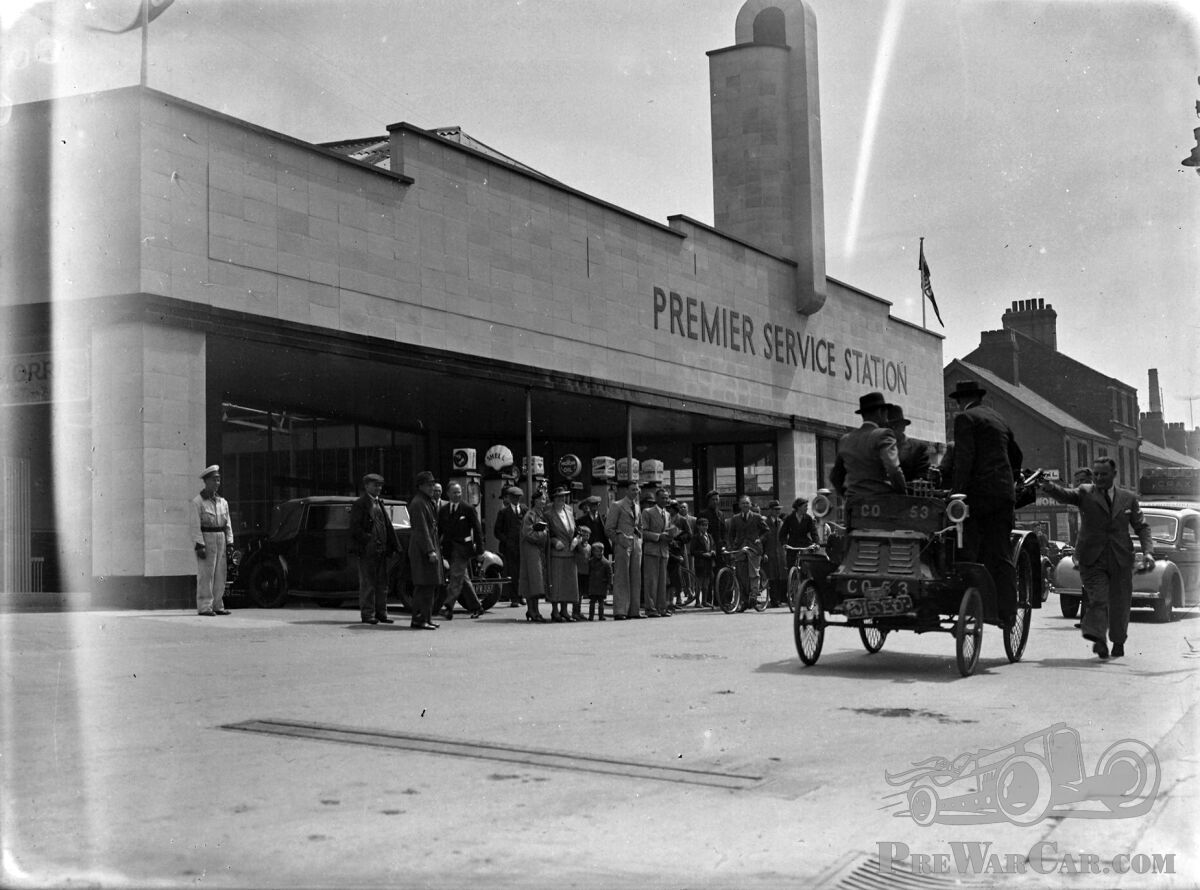
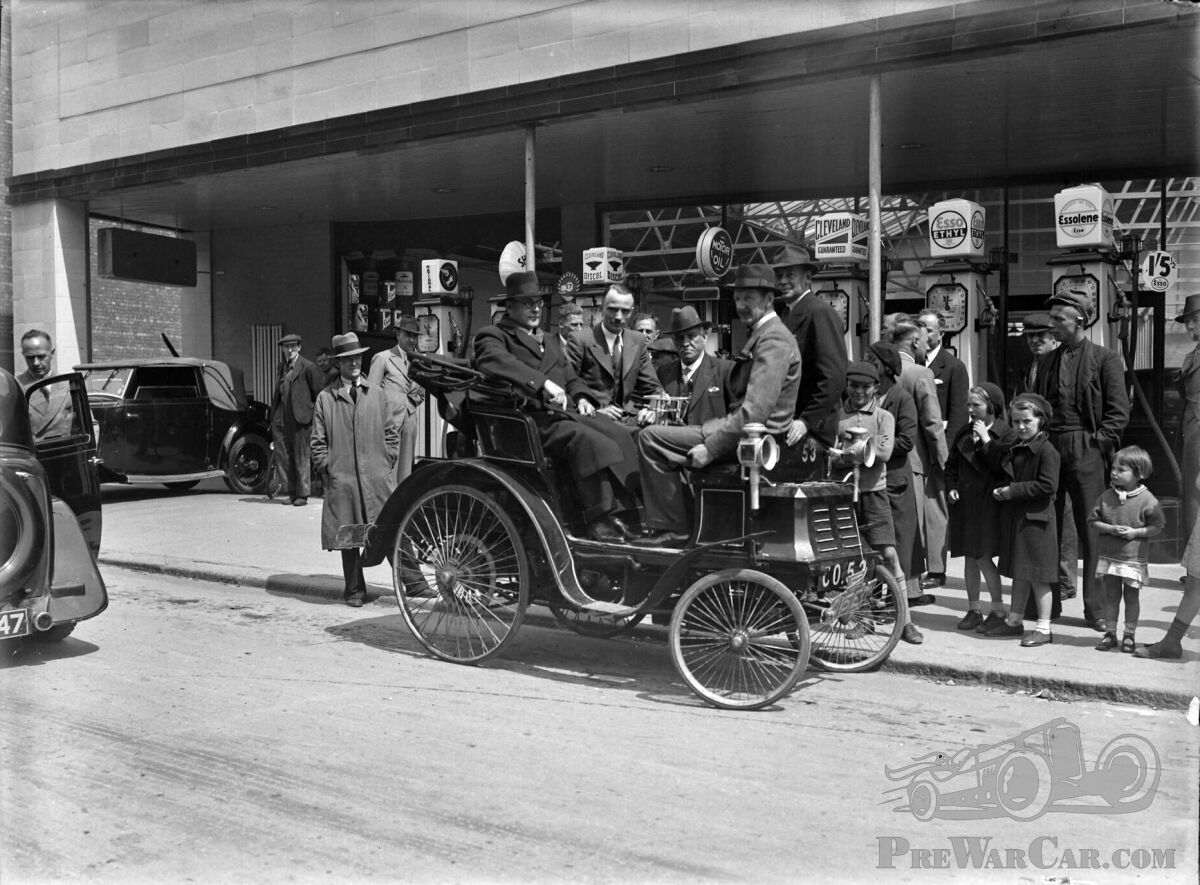
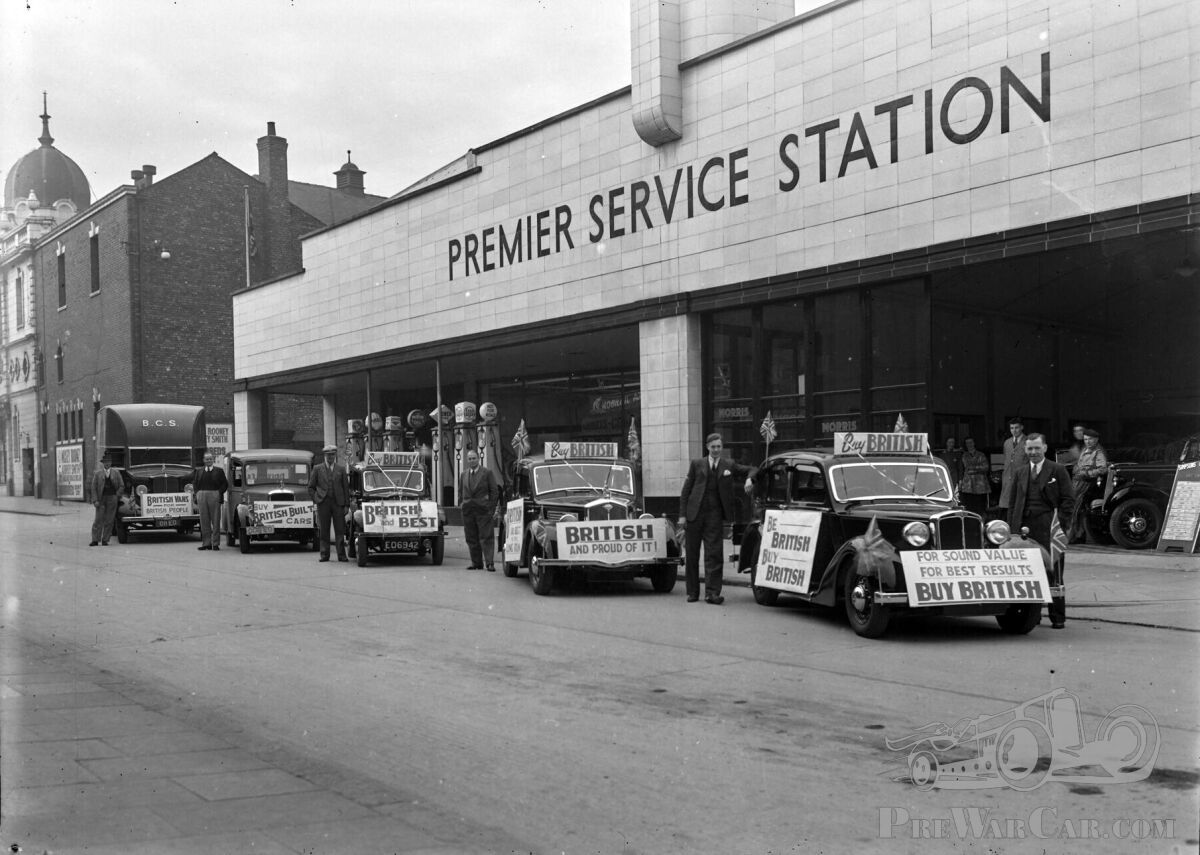


On June 10th, 1937, the town of Barrow-in-Furness in Lancashire saw Loxham's Garage open its new premises on Rawlinson Street, and what a grand opening it was. The ultra-modern, Art Déco Premier Service Station came with an impressive showroom for its Morris cars, plus a forecourt offering a wide variety of petrols from all the known producers. The building was of light stone with characteristic streamlined tower for æsthetic effect, and lots of glass. The third picture shows its full width, although that is a slightly later photograph.
Anyway, to celebrate the 1937 opening, Loxham’s took a trip down memory lane and drove an historic vis-à-vis up and down Rawlinson Street, gazed upon by invitees and admirers. "The old car is a 1903 Benz?" asks one of the captions supplied by the Sankey Archive, but they're clearly unsure. We weren’t certain ourselves, but a web search for the registration number CO 53 gave some answers readily enough.
It turns out that another wonderful, and definitely earlier, photograph of the same car was published in the book Plymouth in the Age of the Petrol-driven Motor Car not too long ago. The car is described there as a 4½hp Benz and was apparently purchased new in 1901 by Dr. Francis Henry Pearse, a dental surgeon of Plymouth, who acquired that registration. Plymouth is a long way from Barrow-in-Furness, which makes you wonder how it found its way up north.
Yet another source shows three pictures of the car being filled up with fuel and driven in November, 1931, at Brooklands and mentions a Mr. C. S. Burney as the owner of the time. It further adds: “This 1899 Benz car, formerly owned by Dr. Peace of Plymouth, who threatened to bury it when assessed for more taxation for his garage, has been reprieved and will take part in the forthcoming Old Crocks' Run to Brighton.”
It appears to have survived at least until 1937 with no record of entombment, but where is it now? And is it an 1899 or 1901 car, owned originally by a Dr. Pearse or Peace?
Words: Jeroen Booij
Pictures: The Sankey Archive
Pubblicato:
martedì novembre 12th, 2024
Facebook
LinkedIn
Twitter
WhatsApp
Email
Copy
Commenti
David Grimstead
13 Novembre 2024, 17:28
Mr. Roger Harrison
12 Novembre 2024, 19:39
Nice picture of my home town. The building has survived, but is now a supermarket, and has lost the tower.
There are lots of interesting car and motorcycle pictures on the Sankey archive. Sankey was the local photographer.
Best wishes.
Per saperne di più
There are lots of interesting car and motorcycle pictures on the Sankey archive. Sankey was the local photographer.
Best wishes.
Stephen McCann
12 Novembre 2024, 09:22
I have the programme for the 1932 London to Brighton Run—entry 29 is a 1901 Benz entered by C. S. Burney. The car is described as "rescued from burial at Plymouth."
Happy Motoring,
Stephen McCann
Per saperne di più
Happy Motoring,
Stephen McCann
Still driving it on 1st April, 1921 and supposedly resenting a hike in car tax (which is explained later), Pearse, known to be a bit of a joker, protested by installing a bicycle frame in the car and pedalling it through Plymouth, very, very slowly—the crank had to be pedalled backwards. Interviewed afterwards when somewhat breathless, he recalled the car’s earliest days in Plymouth, including a race across Devon in 1912 between his car (S.L.O.T.H.) and the 8 h.p. Darracq of Richard Cooke (S.N.A.I.L.), the only members of the “Marble Molar Automobile Club.” Pearse lost by the skin of his teeth...
It was reported in March, 1927, that “he still drives at times his Benz motor-car, which he has used for 26 years. The car, the original cost of which was £240, is a four-seater Victoria. It has a four horse-power engine. The original sparking plug is still used, the car still runs on the solid tyres after 26 years.”
Then, in March, 1928: “PLYMOUTH ENTRANT IN OLD CAR RACE. Mr. F. H. Pearse, Queen Anne-terrace Plymouth, notified The Western Morning News yesterday of his intention to take his 28-years-old motor car to London to take part with 50 motoring veterans in the Emancipation-day run to Brighton. In an interview Mr. Pearse said that it only needed the incentive of a half-crown wager to induce him to make the trip. The wager is forthcoming, said Mr. Pearse, and I shall travel up to London on Friday, putting my old car on the rail for that part the journey." A couple of years later he said he did not enter again due to the £15 cost being rather more than the wager.
Not directly related to the car but telling of Pearse’s character, he climbed the 150ft. tower of Sherwell Chapel for a shilling bet in 1929, whistling and throwing down streamers to attract attention. An observer said it was the nearest Pearse would ever get to heaven.
On 31st March, 1931, this was reported: “OLD MOTOR CAR REPRIEVED. The thirty-year-old car which Dr. F. H. Pearse, of Plymouth, proposed to bury to-morrow rather than pay rates (50 shillings) on the shed in which he keeps it is reprieved. Dr. Pearse has received hundreds of letters and telegrams since he announced his intention of interring the car and he has decided now to preserve it. After all these inquiries I should feel I was a murderer if I destroyed it, he said to-day. Everybody has begged me to keep it for the benefit of future generations, and I shall not retain it myself. I shall either sell it or give it to a museum, and I should prefer Plymouth Museum to have it if they can find room.”
On the 7th April, 1931, this: “THE ANCIENT BENZ. ITS FATE STILL A MATTER OF DOUBT. I don't want to make any money out of it. I would rather see the thing given locally, said Mr. F. H. Pearse. of Queen Anne-terrace, Plymouth yesterday when seen concerning his proposal to sell his 4½ h.p. Benz car, which he bought over 30 years ago. Mr. Pearse continues to receive considerable correspondence relative to his veteran car, which is likely to change ownership following the proposal of the authorities to increase the assessment on the garage owned by Mr. Pearse. Although Mr. Pearse has received an offer of £35 from Mr. Cecil Burney, Brooklands Aero Club, Brooklands Motor Course, Weybridge, he has not decided yet to close the deal, believing that there is some hope of this interesting relic of early motoring days remaining in Plymouth.”
Plymouth Museum not being interested, it was then reported a few days later: “ANCIENT CAR. Plymouth relic sold. The 4½ h.p. Benz car owned by Mr. F. H. Pearse, of Queen Anne-terrace, Plymouth, is soon to leave the city, he having definitely decided to sell it to Mr. Cecil Burney, Brooklands Aero Club, Brooklands Motor Course, Weybridge, for £35. The car has attracted considerable attention, and Mr. Pearse says a statement has even appeared in a Cape Town newspaper to the effect that Plymouth Council could not find room for it the museum.” In fact, he had over 50 British enquiries about buying it.
The Benz left Plymouth 16th April, 1931: “Old Benz car's exit from Plymouth. The old Benz car, belonging to Mr. F. H. Pearse, of Queen Anne-terrace, Plymouth, about which so much has been heard of late, will leave the city on Thursday for its new home at Brooklands. If the car were driven to the station the owner would have to take out a road licence, driver's licence, and the third-party risk insurance, so he proposes to push it. Gravity, down the hill, was how Mr. Pearse explained the manner in which the car would proceed to Friary Station. At the corner of Drake Circus, I shall push it along Ebrington-street, and when I get into the private grounds of the Southern Railway at Friary Station, I shall start the engine, and if the Kinema folks are down I shall give them a demonstration before the old car goes off.”
There are photos of it being driven on Ebrington-street but after arriving in London it was photographed, with a suitably derogatory caption, being transported to Weybridge on a one cart horse-powered rully.
The Benz was entered for the Brighton run three times during the 1930s. Evidently in 1932, possibly again by Burney, and on 20th November, 1938, after it made the Plymouth news: “Devon Veteran Cars. Three vehicles saved from destruction in Devonshire will be among the 121 taking part in the veteran car run from London to Brighton tomorrow. With the fourteen vehicles manufactured in 1901 is a Benz entered by Mr. J. Bradshaw and driven by Mr. R. Seaman. This car, states the programme for the event, was rescued from burial at Plymouth. It will be recalled by many Plymothians that the Benz was for many years owned and driven through the city streets by Mr. F. H. Pearse, local dentist.”
And here is a Plymouth post-script from January, 1939, explaining about the tax: “EXTREMES' MEETING. Fastest & Slowest Men's Plymouth Acquaintance. Capt. G. E. Eyston, fastest man on earth, met in Plymouth the man who claims to hold the record for the slowest speed on land. The latter is Mr. F. H. Pearse, of Queen Anne-terrace, Plymouth, who until seven years ago owned the oldest car in the city. Mr. Pearse, who made Capt. Eyston's acquaintance at the Shell-Mex Exhibition in the Guildhall, bought a 4½ h.p. Benz in 1901. Mr. Pearse related to Capt. Eyston how he had travelled at less than one mile an hour in that car. "It all came about through excessive taxation," he said. "He had had to suffer an increase from £1 carriage tax to £9 motor tax, and protested in a remarkable manner. He drove through Plymouth by fixing a bicycle frame in the car and pedalling, although the engine was quite intact. In this way he was free from tax. Hundreds of people watched him, and the police had to turn out in force to keep the public on the move as he was not going fast enough to keep up to their walking pace.”
When C. S. Burney purchased the car, he already owned an 1898 Benz, which he had bought in 1930. It seems that his 1898 and 1901 Benzes were often misidentified but he evidently ran the 1901 car to Brighton in 1932. When Bradshaw entered the 1901 ex-Pearse/Burney car in the 1938 Run, Pearse, recalling it, said that its present owner lived in Preston, Lancs.
Pearse died in March, 1947, and in his will tried to commit the current owner, which he knew was Loxham’s Garage, to sell the car to Bristol Museum for £100. The Managing Director of Loxham’s, H. Bradshaw, reportedly claimed he had bought the car from Pearse fifteen years before and had paid more than £100, statements not quite matching its recorded press history. Pearse’s wishes were presumably not met as a Mr. Bradshaw from Preston displayed his Benz at the Southport Motor Show in 1954 and P. Bradshaw entered a “1900” Benz in the 1955 Brighton run.
Pearse also wanted the old spark plug and his 1928 London-Brighton Bronze Medallion given to Plymouth Museum but that may not have happened either… So, who has the car and memorabilia now?