La rivista e il marketplace globale per gli appassionati di auto d’epoca, creati da appassionati.
La rivista e il marketplace globale per gli appassionati di auto d’epoca, creati da appassionati.


Filter
Faccia la sua scelta
- Automobile
-
Marca >>
-
Anno >>
-
- Motociclette
-
Ubicazione >>
- Parti e altro
-
Marca dell'auto >>
-
Produttore >>
-
Categoria >>
- Biciclette
-
Anno >>
-
Paesi



Converting your car for auto camping this Summer!
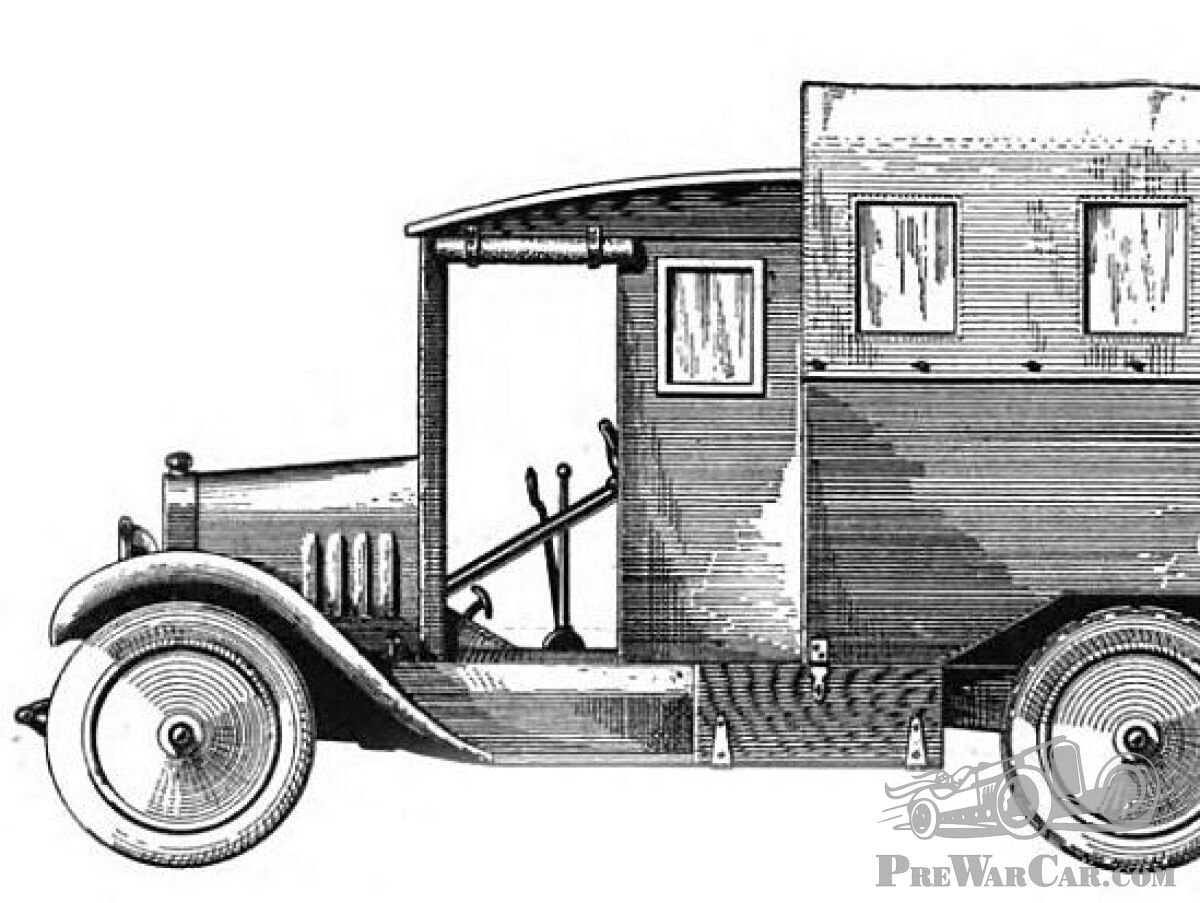
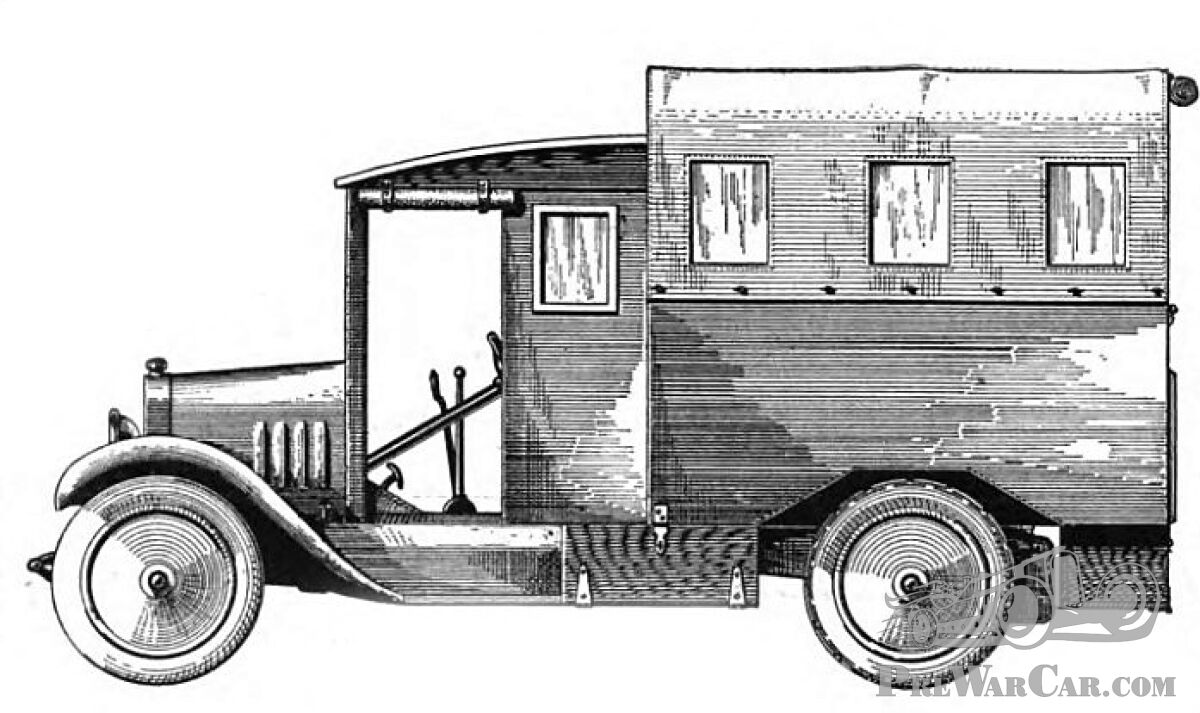
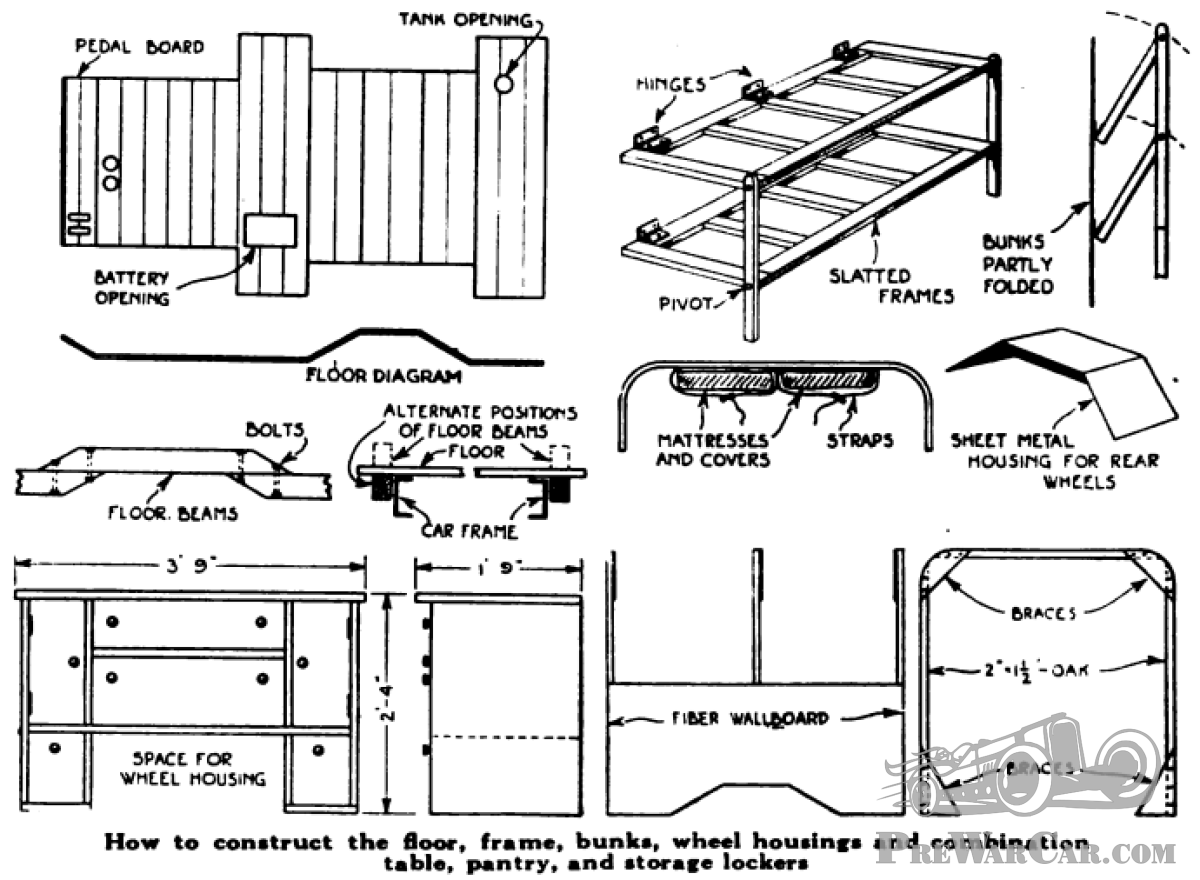
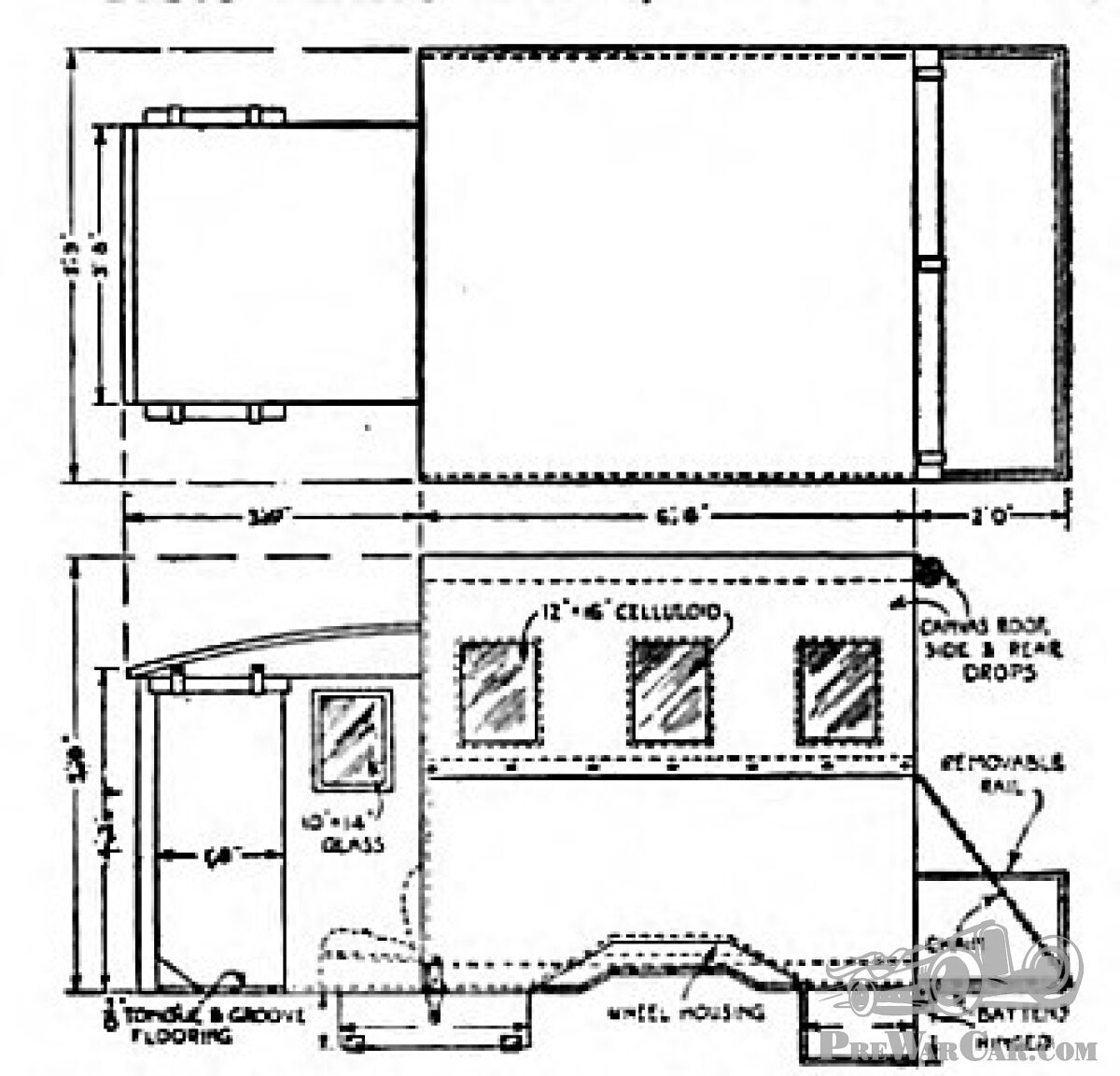
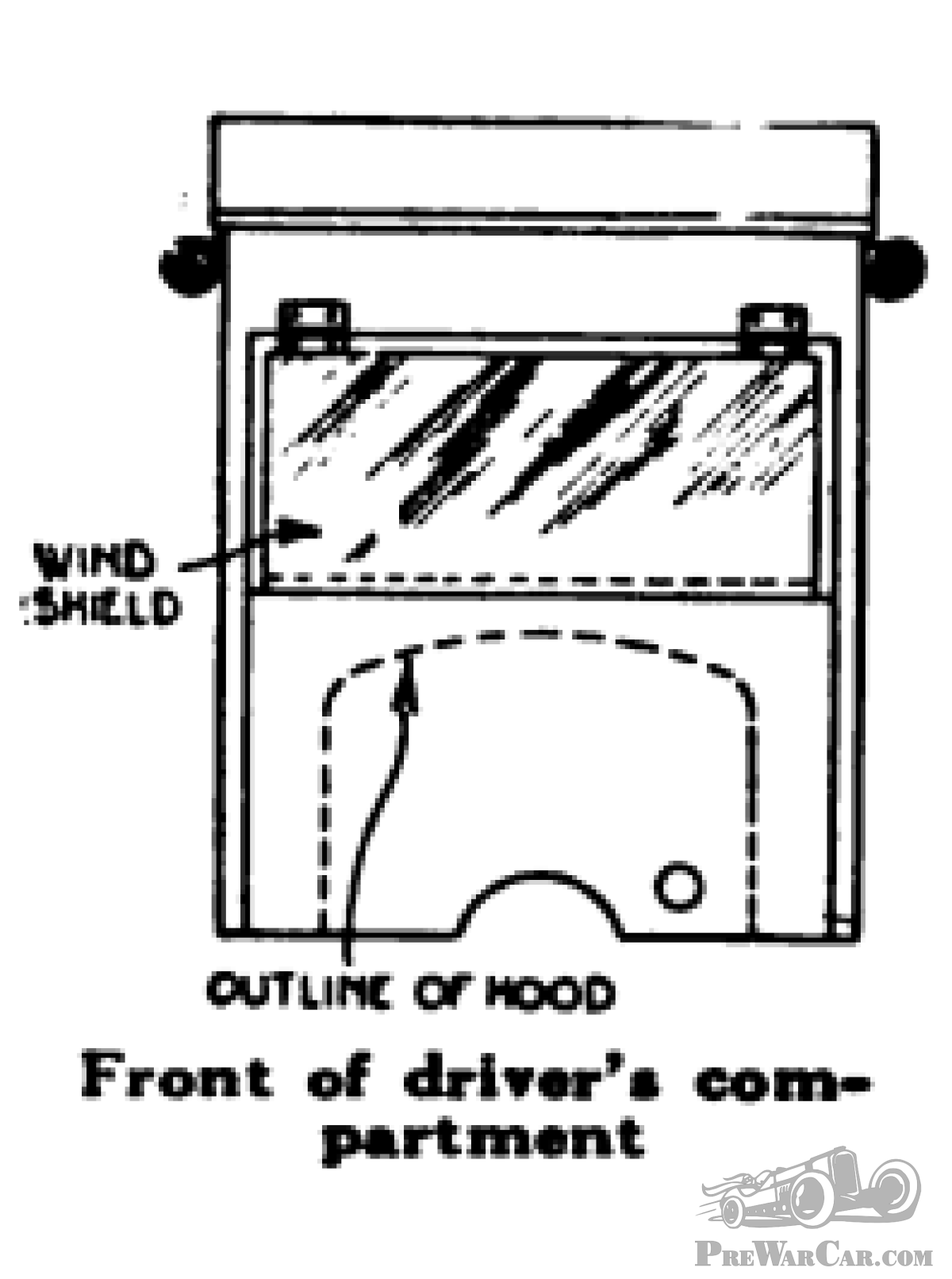


Today it is Thursday the 21st of June, this means it is the start of the astronomical Summer! Which is also known as estival solstice. As the sun reaches its most northern point, around this date we will enjoy the most daylight of the calendar year.
The Summer also means it is time to get your pre-war car(s) out of the garage (if you haven`t done that yet) and explore. Always look for new adventures and meet new people. And have you ever thought about converting your car for auto camping? Just for fun! Why not try something new?! Mr G.A. Luers wrote a very funny detailed description of a possibility of how to do this. We are very much looking forward to receiving the photographs of your results!
Auto camping is a comparatively new and most delightful form of outdoor life. It permits the enjoyment of all the zest and pleasure of camping with out of the labour of packing equipment and supplies over long and weary trails.
To have a separate body of your automobile especially designed for auto camping is most desirable. It will prevent any possibility of the original body of the car being disfigured by rough usage, and it allows you to keep your camping equipment together in a compact way, so that whenever you desire to make an excursion there need be no tedious gathering together and stowing away of the thousand and one necessities for camping in comfort.
The body that is illustrated has these advantages. It is installed as a separate unit after the car body has been demounted. This is possible because in practically every car the body is a unit that extends to the dash, or edge of the cowl. By the removal of the body bolts and possibly the rear fenders, the body may be detached, leaving the chassis, which contains all necessary operating parts, such as the gas tank, battery, and steering gear. By means of similar bolts, the camping body is secured to the chassis frame, in which no additional bolt holes have to be drilled. A change of bodies does not require much time, especially if hoisting equipment is available to lift them.
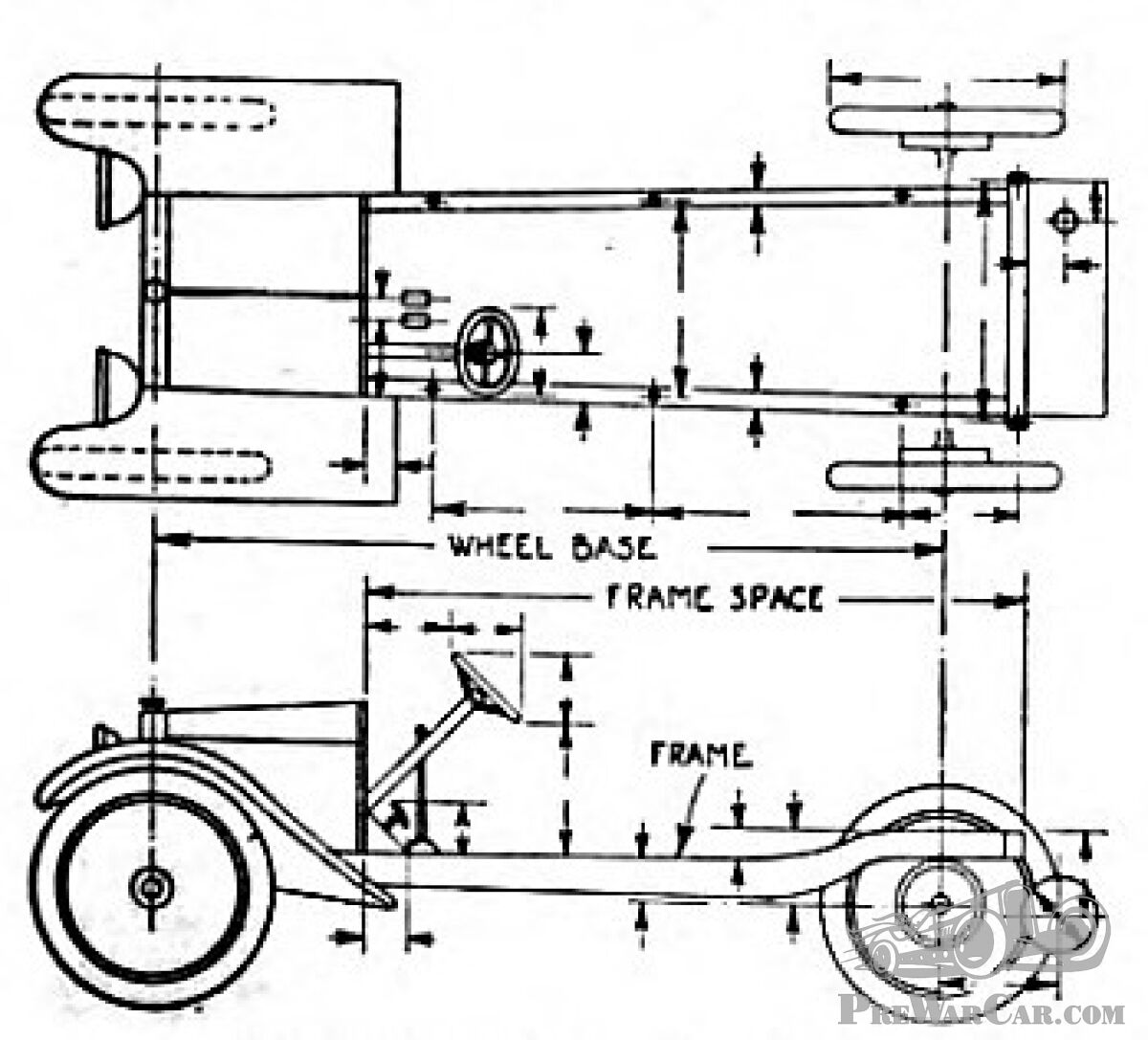
The use of this camping body may not extend beyond two periods yearly. It can be constructed in leisure time, without interfering with the use of the car, and placed in readiness to practically the last detail, by carefully planning the work and obtaining correct measurements of the frame and the exact location of the steering gear, gearshift, brake, and other details. These measurements should be made most accurately and placed on the blank diagram below to form a basis for all the dimensions of the finished body.
Inasmuch as no two makes of cars have similar measurements, the over-all distances shown should be regarded only as approximate. They must be modified to suit the individual chassis to which the body is to be fitted. The most essential dimensions are those indicated on the blank chart.
The chief material required in construction is wood. The wooden framing and flooring combine lightness with the flexibility required to withstand the twisting stresses incidental to travel over uneven roads.
The covering and side curtains should be of waterproof canvas or rubberized canvas; this will maintain a comparatively light overhead weight and prevent the outfit from being top heavy. The body, sides, rear, and doors are of any good grade of tough, pliable wallboard, though ½ in. wood sheathing can be substituted. In several special bodies with which the writer has helped, the use of wallboard has proven especially satisfactory; it is adapted to rapid construction because of the conveniently large area of the sheets. When painted, this material is practically weatherproof, and the smooth, even appearance justifies it use, even if it is a little more difficult to obtain than wood.
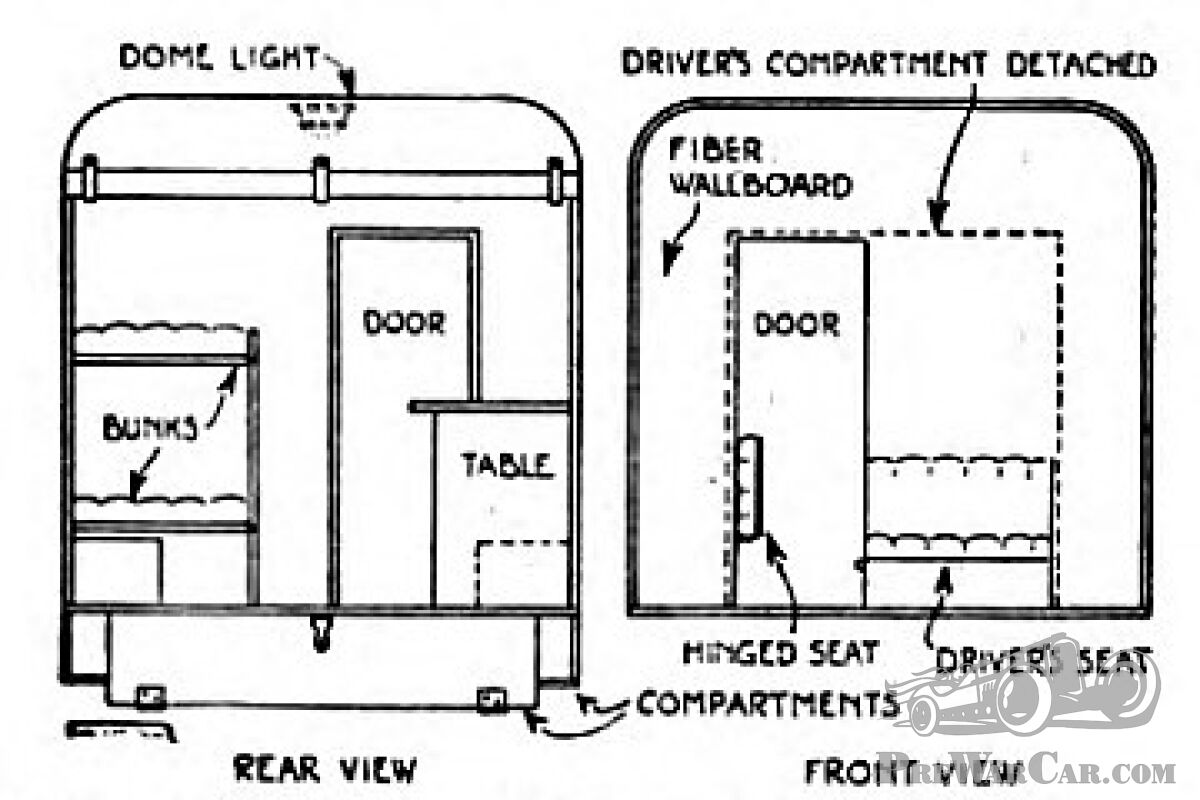
In the arrangement of the body shown in the lower right-hand sketch, accommodations for two persons are provided. Provision for four bunks is possible by making the combined table and pantry removable so that berths may be lowered at night.
The driver`s compartment is separated from the inside for convenience. It is more interesting and comfortable for the campers to occupy the seat facing forward. Three outside lockers, two at the sides, forward of the wheels, and one at the rear are essential to hold small articles, such as clothing, food supplies, fuel and oils, hunting and fishing paraphernalia. These are large and commodious and, being set low, do not tend to make the car top heavy.
Illumination is by means of atop light or dome, connected with the battery as most convenient. Lights for reading, writing, and other work are placed on the walls inside if desired. The side coverings should permit ample ventilation for hot nights, but provide close-spaced turn-fasteners so that they can be buckled down tightly when cool weather is encountered and it is desired to heat the inside of the car by means of one of those indispensable oilstove heaters. It is an easy matter to arrange netting inside the side curtains for safeguarding against mosquitoes and other insects.
Follow diagrams carefully
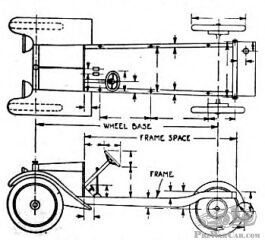
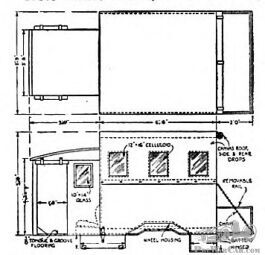
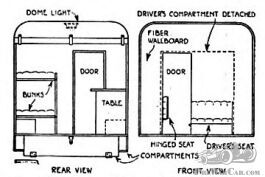
Sufficient detail is shown in the sketches to enable the builder to determine the amount of materials for an average car and by adding 15 per cent to this, he will be assured of more than that required, even if his car is of a somewhat longer wheelbase. In the plan shown the materials should cost less than $100, depending somewhat upon the fittings used. The wood, canvas and wallboard are the least expensive items, while the hardware will prove the more costly. Where hinges, fastenings, catches, etc…, are available and not have to be purchased the cost will be cut almost 50 per cent. The cost of labour, if it is desired to have this body built, will be about twice that of the material, or about $200.
The main consideration is making this body, as in any other task involving construction, is that of planning. When carefully drawn up, even if the owner has only rough ideas on sketching, the work is half done. That is mainly a matter of determining the distance and measurements of the chassis and frame, the positions and dimensions around the wheels, gasoline tank, steering gear, and levers. With these definitely down on paper, the overall dimensions of the body may be worked out; then from the over-all dimensions each frame member, brace, floor support, and the beam is cut.
Use screws in the assembling of the wooden parts where possible. As a precaution against the body`s coming in contact with the rear wheels, allow fully 12 in. above the wheel with the load off the frame.
This plan can be elaborated to the extent of finishing the inside of the body to conceal the frame with canvas and upholstering and making each part of finished food, carefully painting and staining all visible surfaces. The main consideration, however, should be to build as light a body as possible.
Finish the outside with either a dark green or olive drab paint. Black is too sober for a camping car; draw is recommended as a dependable colour that does no show how mud to any appreciable extent.
By G. A. Luers
Source: Popular Science Monthly June 1922 (page 77 and 78).
Pubblicato:
giovedì giugno 21st, 2018
Facebook
LinkedIn
Twitter
WhatsApp
Email
Copy
Commenti
Grohe
21 Giugno 2018, 10:21
Have a look at the postwarcar section.
www.christophgrohe.com