La rivista e il marketplace globale per gli appassionati di auto d’epoca, creati da appassionati.
La rivista e il marketplace globale per gli appassionati di auto d’epoca, creati da appassionati.


Filter
Faccia la sua scelta
- Automobile
-
Marca >>
-
Anno >>
-
- Motociclette
-
Ubicazione >>
- Parti e altro
-
Marca dell'auto >>
-
Produttore >>
-
Categoria >>
- Biciclette
-
Anno >>
-
Paesi



The future of motoring according to M. Serpollet
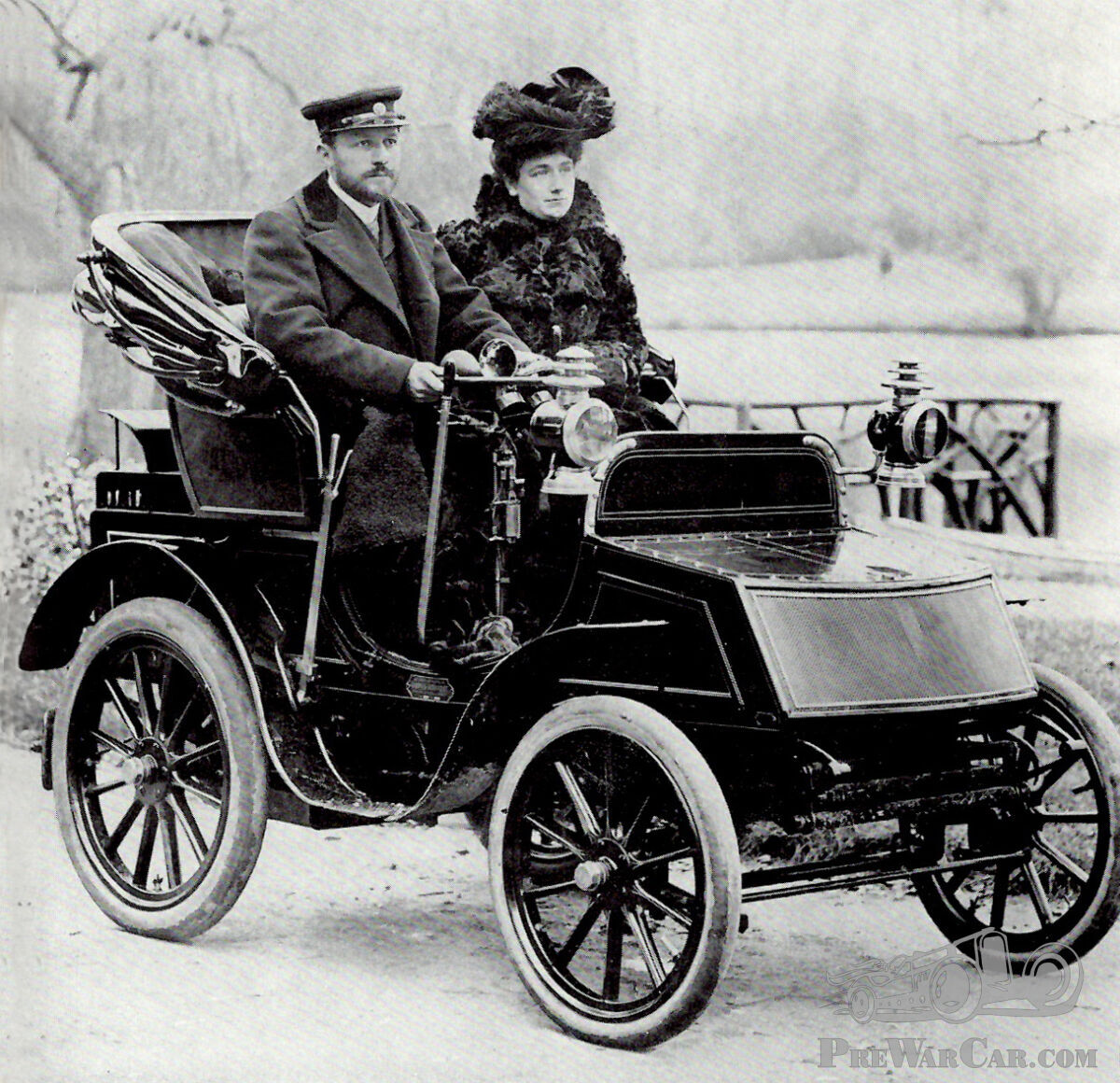

As we all know, the turn of the 19th and 20th centuries was a time when no one was quite sure what an automobile should be; internal combustion, steam and electricity each had their zealous advocates. Léon Serpollet was certain the future lay in steam, which was natural enough - being a Frenchman, he came from a long line of successful steam pioneers which included Amédée Bollée and the partnership of the Comte de Dion, Georges Bouton and Charles Trépardoux.
Serpollet's contribution to steam engineering was no less important. His innovative use of a multi-tube flash boiler in 1888 made the steam-car far more usable and economical than it had ever been previously.
French engineering, American money
By 1900, he was marketing attractive cars like the one pictured, one of the first Gardner-Serpollets, in which he is seated alongside his well-dressed wife. It was in 1900 that he attracted the financial backing of American Frank Gardner, and with this extra support he was able to build a number of racing cars which proved highly competitive, being capable of no less than 75mph.
The car shown here is a 5cv Model D, Serpollet's smallest model, which entered production in mid-1900 having received approval from French officials in May. The pretty two-seater body is by the prominent Parisian carrosserie Kellner et ses Fils, while the photograph was taken by famed French sports photographer Jules Beau, for the cover of the January 1901 edition of Les Sports Modernes.
Steamers are fascinating to behold, and there's nowhere better to see them in action than on the London to Brighton Veteran Car Run, which this year will play host to a plethora of Serpollet's American rivals, including Locomobile, Stanley and White.
Words: Zack Stiling; photograph: Jules Beau / Les Sports Modernes
Pubblicato:
martedì novembre 1st, 2022
Facebook
LinkedIn
Twitter
WhatsApp
Email
Copy
Commenti
Richard Heritage
07 Novembre 2022, 13:17
It was Serpollet's steam car known as the "Easter Egg" tat won the very first motor car race at Bexhill on Sea in 1902 with a speed of over 70 mph. There is a an exact running copy of this vehicle in the Bexhill on Sea museum. Though it has not been steamed up for several years.
Per saperne di più
Mike Clark
01 Novembre 2022, 10:40
Leon Serpollet died in 1907 which evidently led to the demise of his very innovative company. There was a plan to manufacture the Gardner Serpollet at York in the UK and a site was established on the Scarborough road just outside the city walls. It is now a supemarket.
Mike
Per saperne di più
Mike
Chris Wedgwood
01 Novembre 2022, 15:04
Serpollets were indeed made near York, the company was called PLT from memory Power Light and Traction, they had a license to build using the Serpollet patents, there was a court case too, as they thought that they had the sole rights and Speedwell were still acting as agents in London. I have three Model Ds in my workshop at the moment, which was the 1899/1900 5hp model, aiming for the Brighton run next year
Per saperne di più