La rivista e il marketplace globale per gli appassionati di auto d’epoca, creati da appassionati.
La rivista e il marketplace globale per gli appassionati di auto d’epoca, creati da appassionati.


Filter
Faccia la sua scelta
- Automobile
-
Marca >>
-
Anno >>
-
- Motociclette
-
Ubicazione >>
- Parti e altro
-
Marca dell'auto >>
-
Produttore >>
-
Categoria >>
- Biciclette
-
Anno >>
-
Paesi


Doctor Hisette’s car
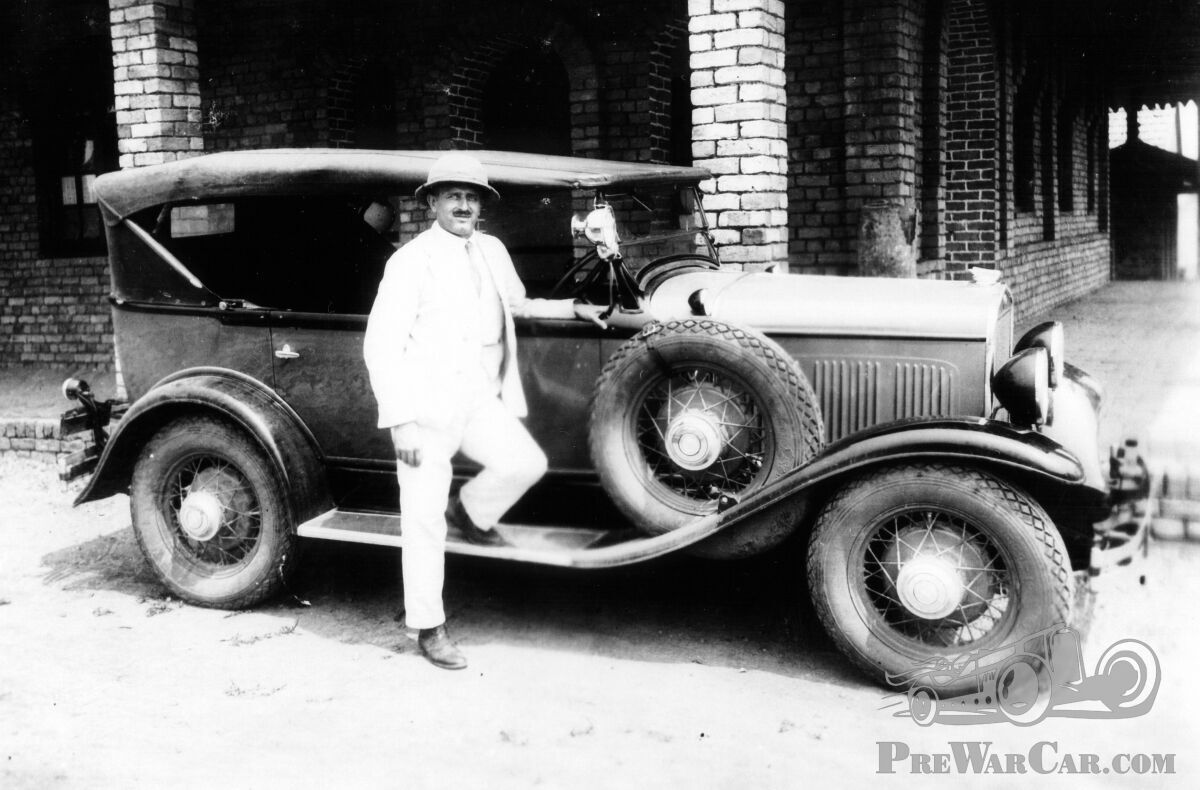

Today is World Health Day and we thought that’d make it a most appropriate day to share a little bit of wisdom about one doctor in particular: Dr Jean Hisette. To be fair the reason for that is because we came across this lovely picture of the man, supposedly taken in about 1930. That’s not exactly your average doctor’s coupe is it? Quite a car, especially when you know it was photographed in the middle of Belgian Congo.
World Health Day
Having survived WW1 as a medicine student who performed the role of a medical assistant in the 1st division of the Belgian Army, Hisette became a specialist in tropical diseases after having emigrated to Africa in 1928. He was the man to discover an eye disease occurring in people affected by a worm infection: onchocerciasis. A priest had told Hisette about the unusually large number of blind people along the river Sankuru, which led him to the discovery of river blindness. Along the shores of the rivers Sankuru and Lomami, Hisette discovered several thousand victims and became the first to identify the strain of the disease. He set up his own little hospital, which is said to have been so small that he preferred to operate out on the terrace. It didn’t matter to him, as it didn’t matter what colour, race or religion his patients were.
Can we assume he used boats on his expedition journeys? This can be found on his 1934 Harvard African Expedition: “The Americans sailed from Antwerp and disembarked, after a voyage of sixteen days, on the west coast of Africa at Lobito Bay (Angola). The expedition proceeded eastward from Lobito by rail for four days to the city of Elisabethville, now known as Lubumbashi. The train journey was continued, now accompanied by Dr Jean Hissette. They travelled in a north-westerly direction for nearly three days to the village of Luputa, then by car and truck to the village of Kabinda, then further north to the village of Pania Mutombo on the Sankuru-Lubilash River. This was exactly the same way Hissette had taken in 1930.” We typed in these village names on Google Maps and received this: “Your search seems to be outside our current coverage area for driving”. We can only guess what that was like 90 years ago.
Not exactly a Champagne Safari, we reckon. Hisette must have valued the privilege of motoring in Africa in the 1930s though. The picture of him here is said to be taken in his African hometown of Thielen Saint-Jacques.
Words by Jeroen Booij. Picture Wikipedia.
Pubblicato:
mercoledì aprile 7th, 2021
Facebook
LinkedIn
Twitter
WhatsApp
Email
Copy