La rivista e il marketplace globale per gli appassionati di auto d’epoca, creati da appassionati.
La rivista e il marketplace globale per gli appassionati di auto d’epoca, creati da appassionati.


Filter
Faccia la sua scelta
- Automobile
-
Marca >>
-
Anno >>
-
- Motociclette
-
Ubicazione >>
- Parti e altro
-
Marca dell'auto >>
-
Produttore >>
-
Categoria >>
- Biciclette
-
Anno >>
-
Paesi


Join the PreWarCar Easter Egg hunt...
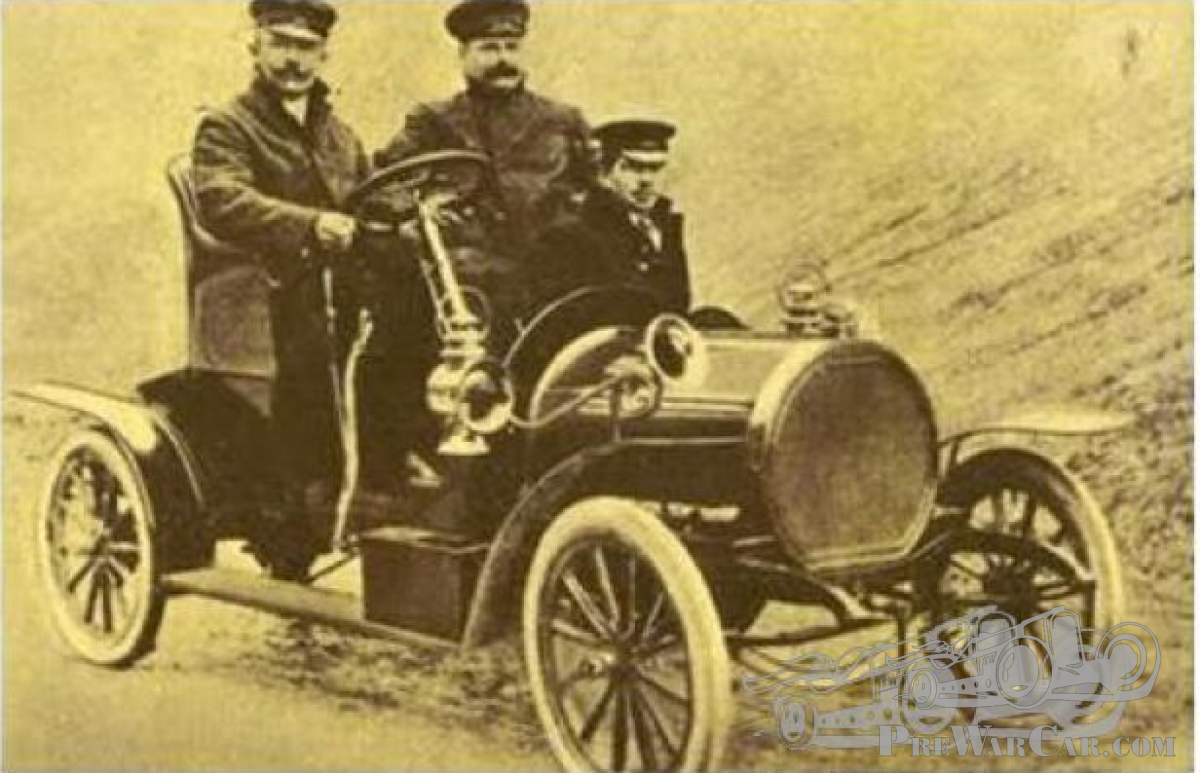
This reputedly shows Egg at the wheel of one of his cars, presumably an Excelsior, but we have no way of knowing if that is correct


For many families, Easter wouldn't be the same without an egg hunt for the children to take part in, and what might seem at first like an odd custom makes perfect sense if we trace it back to its roots. The egg, of course, represents new life and the Resurrection of Christ, but apparently the hunt for them has its origins in post-Reformation Germany—some sources suggest it even owes its existence to Martin Luther himself. The men of Luther's congregation, it is said, would hide eggs for women and children to discover, as Mary Magdalene was the first to discover the Resurrection by finding Christ's empty tomb.
We can, of course, be like children ourselves when it comes to old cars, and there's a different kind of Easter Egg hunt we can participate in. Scanning Georgano the other day, it came to our attention that there was a Swiss car called the Egg, built by Automobilfabrik Egg & Egli of Zürich between 1896 and 1900. Egli was a Swiss banker who provided financial backing. According to Georgano, Rudolf Egg built an experimental three-wheeler in 1893, but it was not until 1896 that production commenced. The first cars were similar to Léon Bollées, but with a sociable seating arrangement, a De Dion-Bouton 3hp engine and belt-drive. Licenses were sold in 1898 to Bachtold of Steckborn and Weber of Uster; Bachtold made just six cars, but Weber built over fifty. The design and manufacturing rights were then sold in 1899 to the Zürcher Patent Motorwagen-Fabrik Rapid, which continued building them under Rapid name.
That did not quite mark the end of the Egg, however. Herr Egg put a four-wheeled design briefly into production which somewhat took after the Benz Velo, and he later produced designs for two other Swiss firms, the short-lived (1905-07) Excelsior (no relation to the much bigger Belgian firm) and the later Moser (1914-1924). In later life, he apparently became a Renault dealer in Zürich.
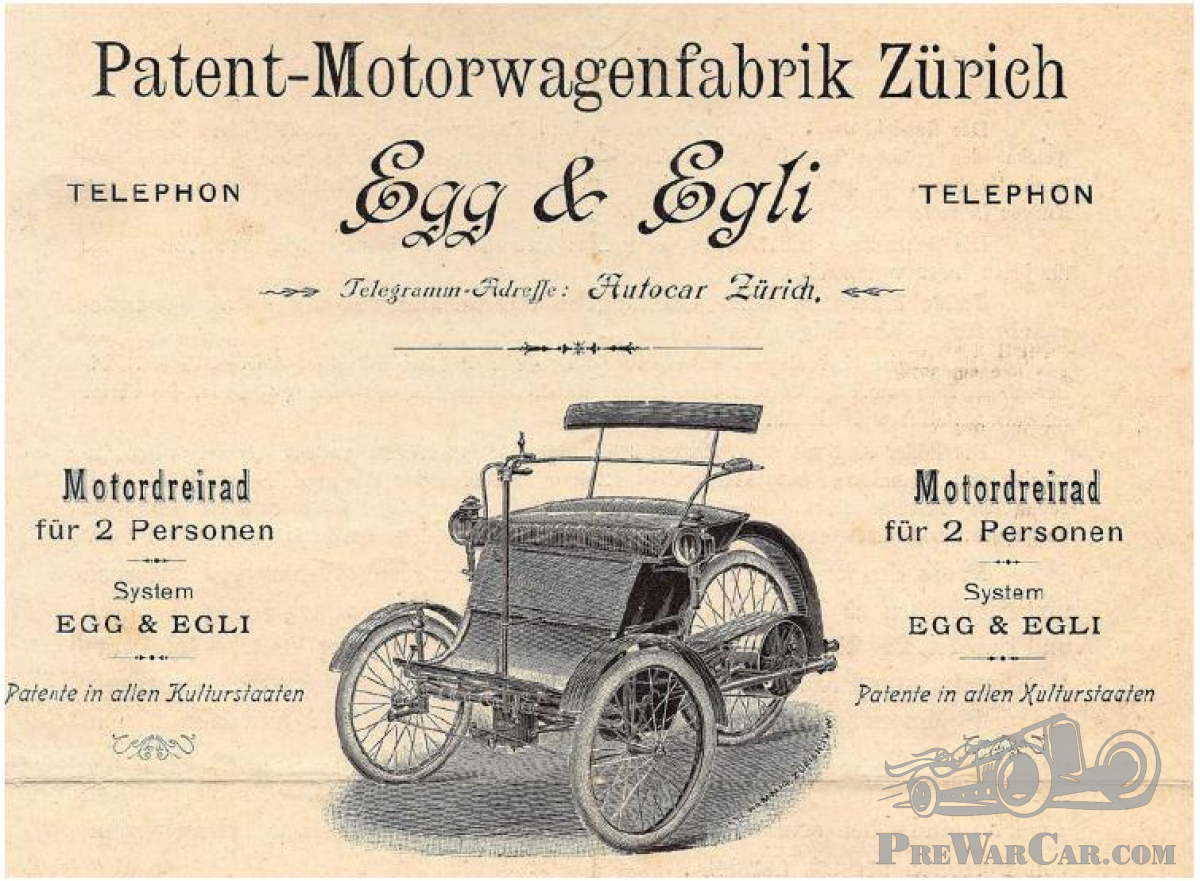
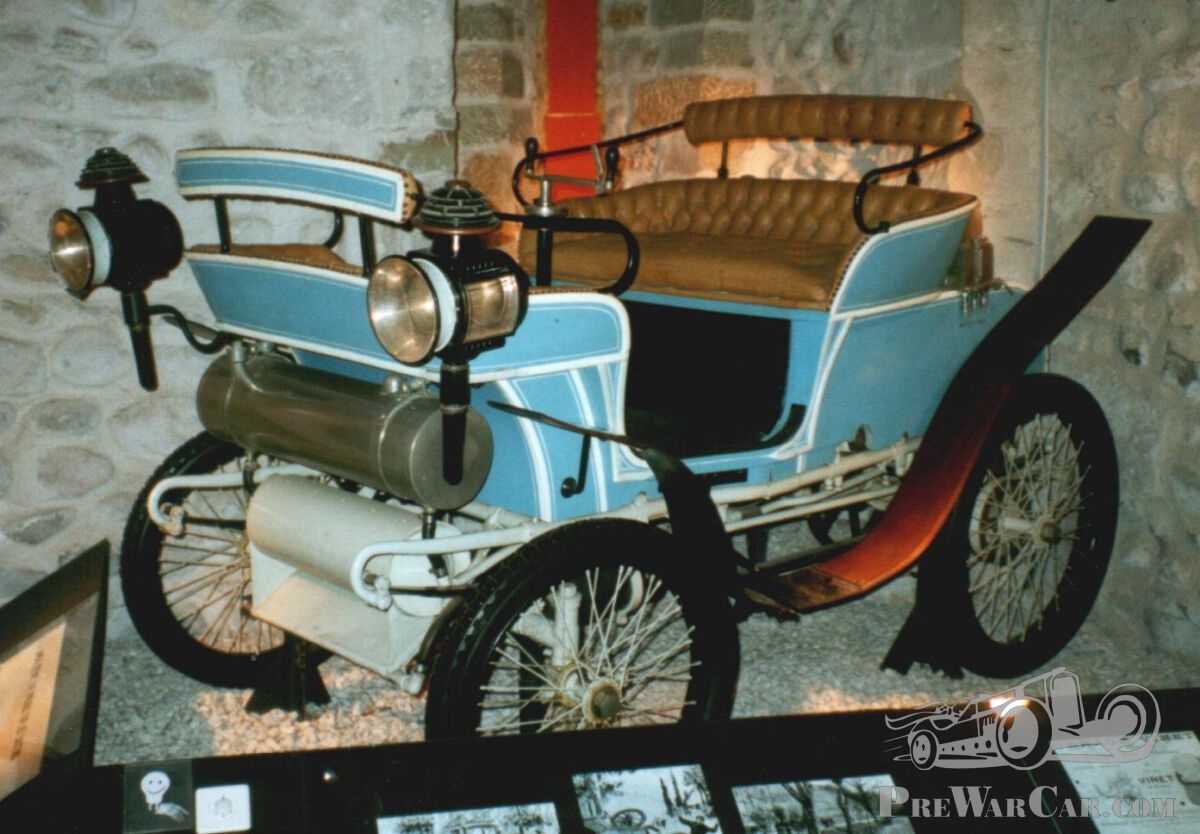
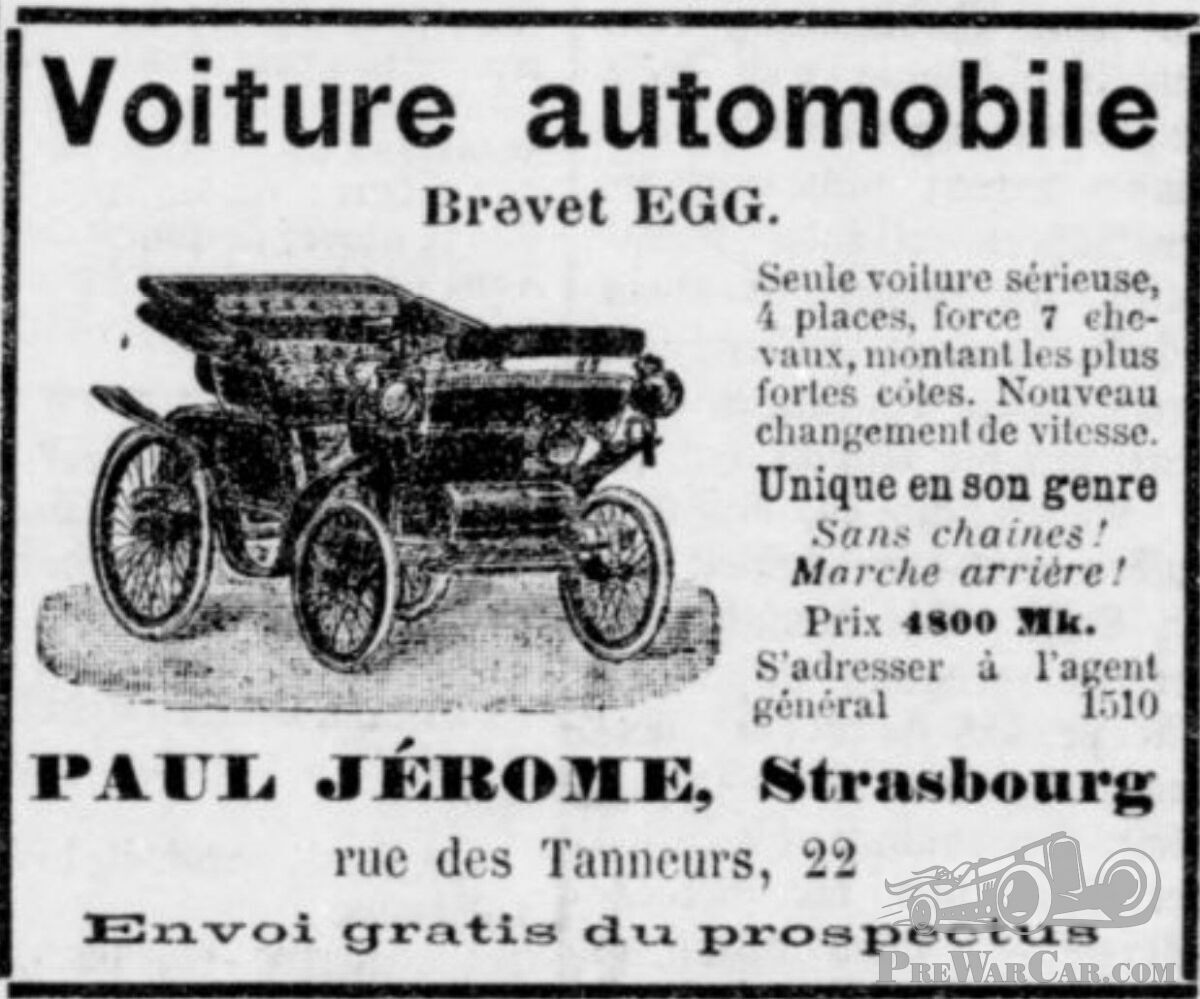
We can see from the pictured advertisement that Georgano's description of the three-wheelers is accurate, but what about the four-wheeler? The photograph shows what is apparently the only surviving Egg and the oldest surviving Swiss car, dating from 1898. It has been house, we believe since before the millennium, at the Automobile Museum of the Switzerland's Château de Grandson, which is presently closed until 2026 as it undergoes maintenance and restoration. We can see the resemblance to the Benz, although we are not aware of any Velo having a vis-à-vis body. Like the Benz, it has a rear-mounted horizontal engine and belt-drive. Its price when new would have been 12,000 francs.
That's about all we can find out, but are we missing something? Maybe there are more Eggs out there, hidden somewhere and waiting to be hunted down? If you know any more about Switzerland's pioneering marque, be sure to let us know.
If you can't find the car, just enjoy your eggs of the edible variety—Happy Easter!
Photograph: Buch-t on Wikimedia Commons
Pubblicato:
domenica marzo 31st, 2024
Facebook
LinkedIn
Twitter
WhatsApp
Email
Copy
Commenti
De Leenheer Clement
31 Marzo 2024, 14:59
Second photo: 1905 Excelsior voiturette with 6hp engine and chain-drive.
Third photo: a new model Excelsior was produced in 1906 with a four-cylinder, 6 hp engine.
Rudolf Egg driving a 1906 Egg-Excelsior on the Gotthard route during a trip to Lugano.
From the book "Voitures Suisses" by Ernest Schmid.
--------------------------------------------
Tweede foto: Excelsior 1905 voiturette met 6 pk motor en ketting aandrijving.
Derde foto: in 1906 werd een nieuw model Excelsior geproduceerd met een 4-cilinder, 6 pk motor.
Rudolf Egg rijdt met een Egg-Excelsior 1906 op de Gotthard-route tijdens een trip naar Lugano.
Uit het boek "Voitures Suisses" van Ernest Schmid.
Per saperne di più
Third photo: a new model Excelsior was produced in 1906 with a four-cylinder, 6 hp engine.
Rudolf Egg driving a 1906 Egg-Excelsior on the Gotthard route during a trip to Lugano.
From the book "Voitures Suisses" by Ernest Schmid.
--------------------------------------------
Tweede foto: Excelsior 1905 voiturette met 6 pk motor en ketting aandrijving.
Derde foto: in 1906 werd een nieuw model Excelsior geproduceerd met een 4-cilinder, 6 pk motor.
Rudolf Egg rijdt met een Egg-Excelsior 1906 op de Gotthard-route tijdens een trip naar Lugano.
Uit het boek "Voitures Suisses" van Ernest Schmid.
Voici une publicité de l'automobile Egg parue le 22 juin 1901 dans le journal alsacien Express. Rudolf Egg a créé une entreprise (Egg et Cie) à Paris en décembre 1906 pour construire des automobiles sous la marque ELVA. Cette société a fait faillite en décembre 1907. D'après les archive de la société des automobiles Martini, Rudolf Egg a proposé ses services pour diriger l'entreprise le 29 novembre 1913.
--------------------------------------------------------------------
Here is an advertisement for the Egg automobile published on June 22nd, 1901, in the Alsatian newspaper Express. Rudolf Egg established a company (Egg et Cie) in Paris in December, 1906, to build automobiles under the ELVA brand. This company went bankrupt in December, 1907.
According to the archives of the Martini automobile company, Rudolf Egg offered his services to manage the company on November 29th, 1913.