La rivista e il marketplace globale per gli appassionati di auto d’epoca, creati da appassionati.
La rivista e il marketplace globale per gli appassionati di auto d’epoca, creati da appassionati.


Filter
Faccia la sua scelta
- Automobile
-
Marca >>
-
Anno >>
-
- Motociclette
-
Ubicazione >>
- Parti e altro
-
Marca dell'auto >>
-
Produttore >>
-
Categoria >>
- Biciclette
-
Anno >>
-
Paesi



Combattere la minaccia salina: la soluzione pre-bellica per la guida invernale
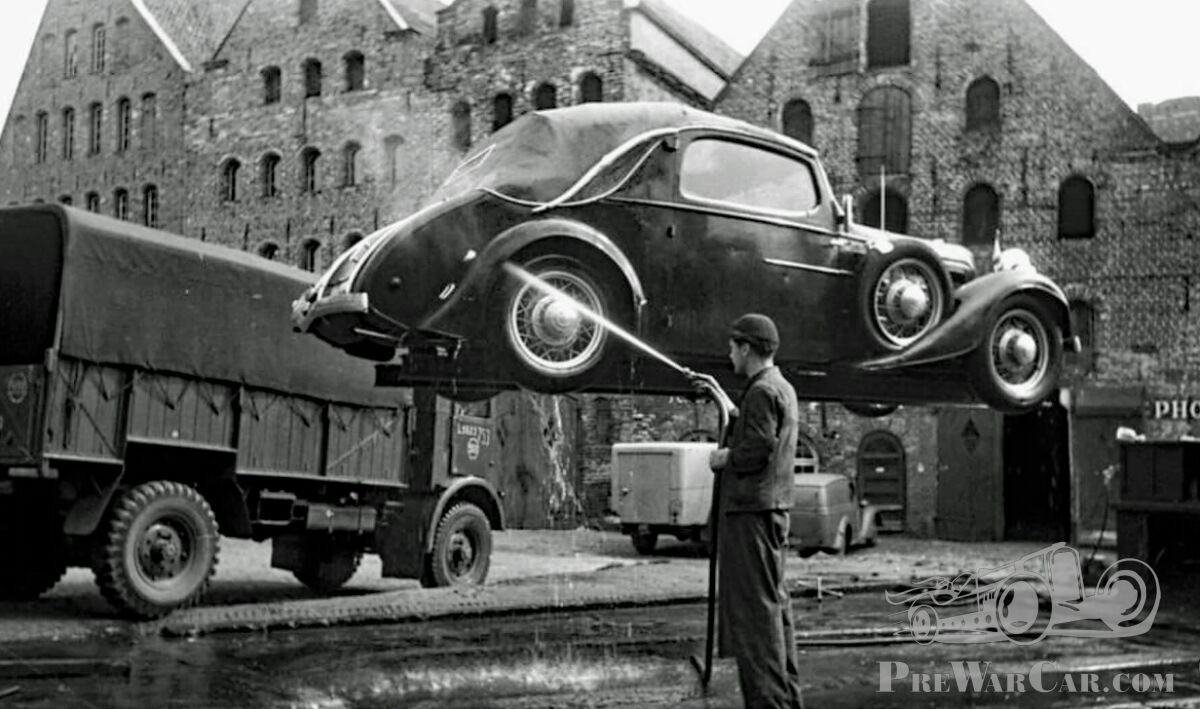

No, non è un trucco! Guardate bene e vedrete che l’auto non sta fluttuando nell’aria, ma si trova effettivamente su un sollevatore con un palo centrale, nascosto solo dall’uomo che sta davanti al tubo. Davvero ingegnoso!
La fotografia è stata scattata nella città di Lübeck, nel nord della Germania, in una data sconosciuta. Sappiamo che gli edifici sullo sfondo sono i magazzini storici di sale della città, risalenti ai secoli XVI-XVIII, quando Lübeck era una delle principali protagoniste nel commercio del sale. A proposito, queste strutture sono state successivamente utilizzate come rifugio del Conte Orlok, quando nel 1922 fu girato lì il celebre film dell’orrore Nosferatu. Alcuni degli edifici al piano terra sono stati successivamente trasformati in garage. Esistono ancora oggi e possono essere affittati per eventi e concerti.
Comunque, quando pensiamo al sale, la prima cosa che ci viene in mente è il sale sparso sulle strade d’inverno. Tutti noi rabbrividiamo quando dobbiamo portare le nostre auto su strade salate, quindi questa foto sembra davvero adatta—spruzzalo su quel sollevatore geniale!
Per quanto riguarda l’auto, non c’è dubbio che si tratti di un prodotto dell’ingegneria tedesca, ma quale in particolare?
Parole: Jeroen Booij
Fotografia: Scheerer Foto
Pubblicato:
lunedì gennaio 6th, 2025
Facebook
LinkedIn
Twitter
WhatsApp
Email
Copy
Commenti
Gerd Klioba
08 Gennaio 2025, 08:26
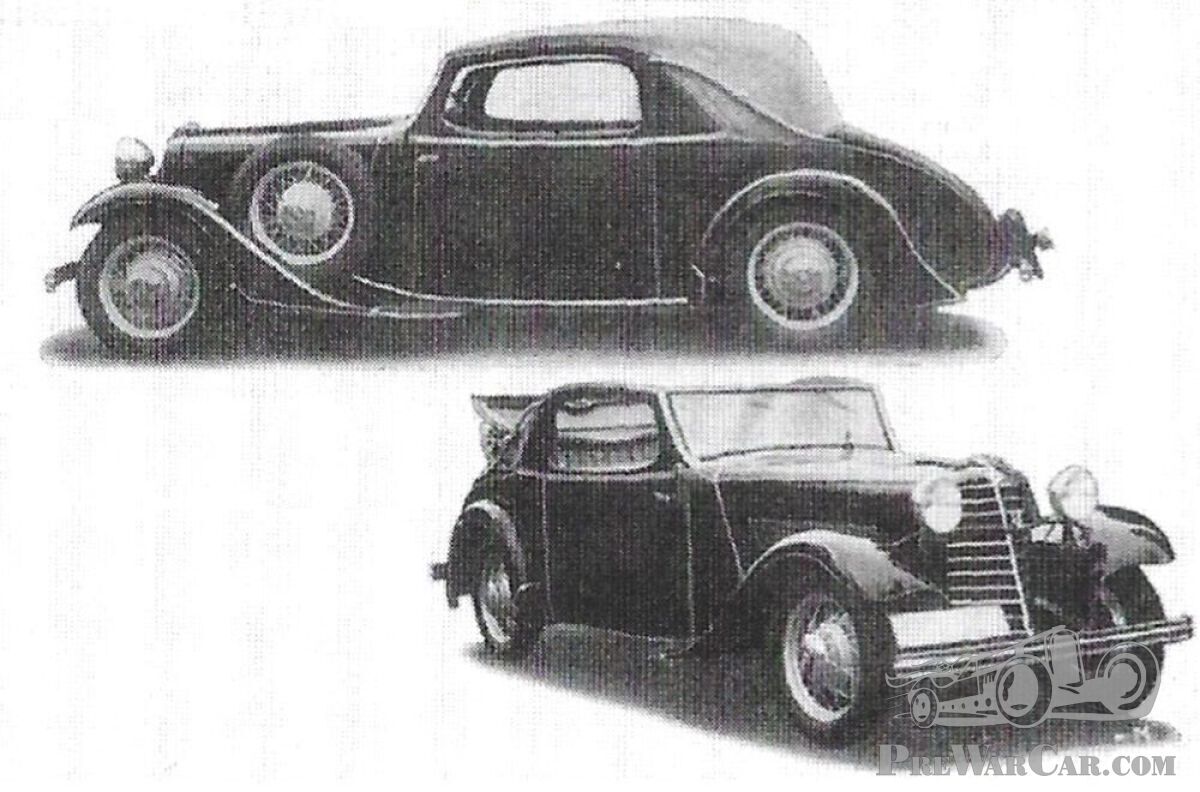
The car in front of the salt warehouses in Lübeck is a 1932 Ford V8 Aero-Cabriolet bodied by Ludewig.
Per saperne di più
Tim Hewitt
06 Gennaio 2025, 23:31
I'm not sure what the car is, but the truck is definitely a British Army Austin K5 with a GS body. They made just over 12,000 of them between 1941 and 1945.
By the way, the spare wheel on the car won't do them much good; it looks flat to me.
Per saperne di più
By the way, the spare wheel on the car won't do them much good; it looks flat to me.
David Grimstead
06 Gennaio 2025, 22:02
I don’t know about the car but the “elephant-in-the-parkplatz” for truck enthusiasts looks like a British Second World War-era Austin K5 4x4 army lorry, known as a “screamer” due to its noisy transfer box, not to mention its dodgy piston rings.
A number of post-war armies got surplus ones free; notably this included a Norwegian Army unit of 4,400 men, which was moved from the Harz area to Schleswig-Holstein (with Lübeck at its edge) to secure some of the British occupation zone between September, 1948, and 1953—the Russian zone started a few miles east of Lübeck.
Information about the Norwegian unit says that “a number of administrative vehicles of German origin were also allocated”—could the wing-mounted standard that Dirk Eger mentions be a Norwegian flag on the C.O.’s personal staff car?
I must add that the Danish Army got some K5s, too, and their door-printed registration numbers start as here with “L.”
Looking at the style of the two commercial vans, this must be early 1950s rather than pre-war.
Per saperne di più
A number of post-war armies got surplus ones free; notably this included a Norwegian Army unit of 4,400 men, which was moved from the Harz area to Schleswig-Holstein (with Lübeck at its edge) to secure some of the British occupation zone between September, 1948, and 1953—the Russian zone started a few miles east of Lübeck.
Information about the Norwegian unit says that “a number of administrative vehicles of German origin were also allocated”—could the wing-mounted standard that Dirk Eger mentions be a Norwegian flag on the C.O.’s personal staff car?
I must add that the Danish Army got some K5s, too, and their door-printed registration numbers start as here with “L.”
Looking at the style of the two commercial vans, this must be early 1950s rather than pre-war.
Francisco Carrión
06 Gennaio 2025, 19:08
They're clearly Ford V8 bumpers and wheels. I think it is a German-bodied Ford V8, a very interesting one-off car.
Per saperne di più
Daniel Reuben
06 Gennaio 2025, 12:38
I vote for an Audi UW220. I think the hubcaps, the shape of the wings and the impressed beltline on the upper side of the bonnet which bends down at an angle at the very front all fit the Audi. I am having a hard time recognising the rear bodywork extending beyond the wings, the landau bars/top (is it just decorative—the fabric looks supported to be operational?) and also the horizontal trim piece on the door. Could this be special coachwork?
Per saperne di più
Dirk Eger
06 Gennaio 2025, 11:16
It is a Horch 853, probably confiscated by the British Army in 1945. You see the standard on the front wing.
Per saperne di più