La rivista e il marketplace globale per gli appassionati di auto d’epoca, creati da appassionati.
La rivista e il marketplace globale per gli appassionati di auto d’epoca, creati da appassionati.


Filter
Faccia la sua scelta
- Automobile
-
Marca >>
-
Anno >>
-
- Motociclette
-
Ubicazione >>
- Parti e altro
-
Marca dell'auto >>
-
Produttore >>
-
Categoria >>
- Biciclette
-
Anno >>
-
Paesi


From the family album - My great grandfather in a car
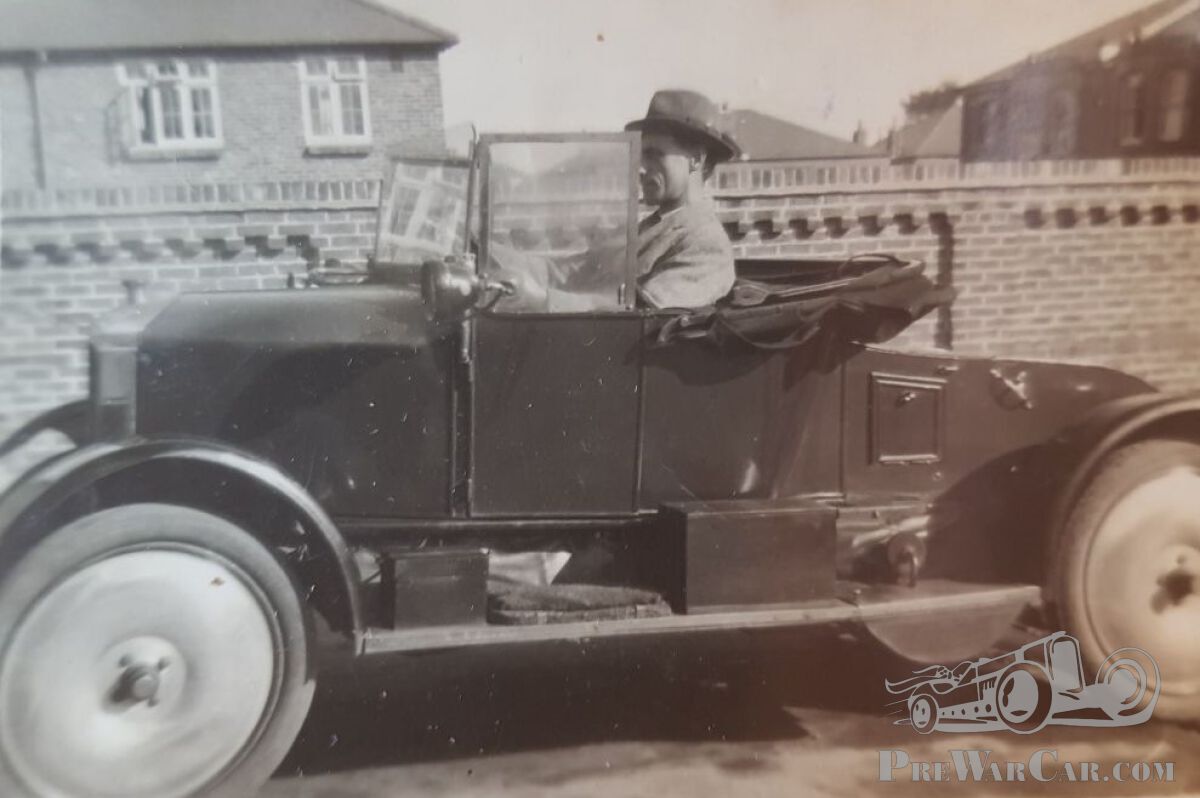

"Hi, I've attached a photo of my great grandfather in a car. Can anyone tell me anything about it, please? I'm guessing early 1920s but would love to know more. Thank you."
Recently we received this message from Gabby together with this beautiful old photograph from the family album. Can anyone help with the identification of this PreWarCar and maybe tell Gabby more about it?
Pubblicato:
sabato agosto 22nd, 2020
Facebook
LinkedIn
Twitter
WhatsApp
Email
Copy
Commenti
David GREEN
24 Agosto 2020, 14:19
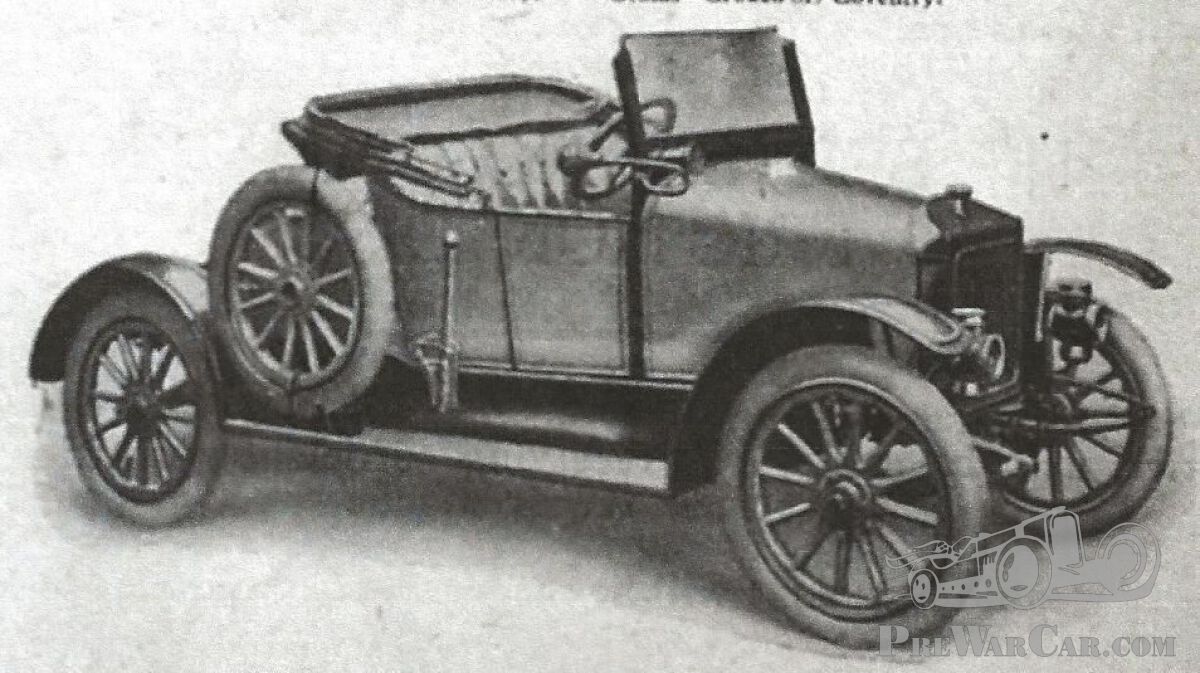
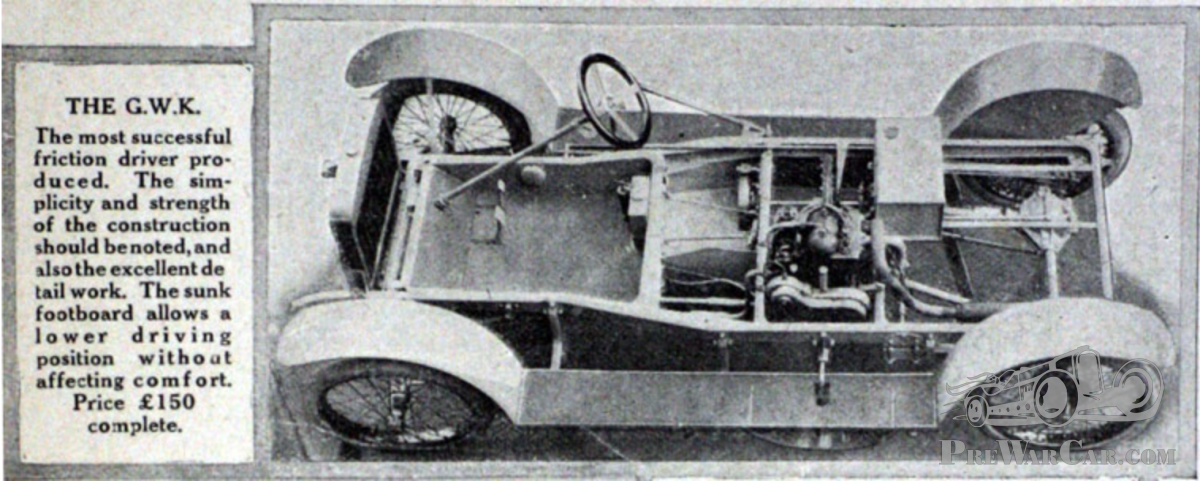
Well done. It is obviously a GWK cycle car. I am attaching a photograph of a slightly earlier version of the car than 1920 that resolves most of the puzzles. The engine is amidships. This allows the driver to sit well forward. The rear spring is, indeed, a quarter leaf spring, but it is not elliptic. The curious feature of the inverted circular well, with its right-angle bar, is shown in the photograph to be the starting handle. Clearly, a piece of the running board was lifted to allow the crank handle to turn, and replaced after the engine had started. The curious tilt of the car appears to be due to a weight in the dickey compartment at the rear.
Per saperne di più
Mike Clark
24 Agosto 2020, 10:09
GWK friction drive about 1920. Disc wheels look wrong but I think the discs are aftermarker add ons.
Per saperne di più
David GREEN
24 Agosto 2020, 09:56
The identity of this car is an interesting challenge, and I note you have no takers after 48 hours - an unusual occurrence. The car's general construction is reminiscent of a Trojan, including the wheels and number of wheel nuts. There appears to be a fuel cap filler halfway along the bonnet line.
Trojans were built on a metal punt, rather than a conventional chassis. Suspension was through long, cantilevered springs. The engine was a 4-cylinder 2-stroke, with the cylinders coupled in pairs, and pistons in each pair sharing a V-shaped con-rod. Drive was through a 2-speed epicyclic gearbox, and chain to the back axle. I rode as passenger in a Trojan van from Surrey to Anglesey and back nearly 60 years ago, on more than one occasion. They were not fast, and we used to joke that 'Trojans lead the way' had a double meaning, since the traffic stretched behind us, and the road in front was always clear.
The car in the picture looks to have been modified. It is left-hand drive, and has a non-Trojan radiator. Quite how the switch in driver position could accommodate the long starting handle, which lay to the right hand of the driver in a RHD vehicle is not clear. Indeed, the photograph may have been reversed. There was no starter motor. The car is semi-forward control. I know of at least one fully forward control van that was built, and the long metal punt could, in principle, take a number of different driving-seat positions. The windscreen looks to be V-shaped, with reflections of one of the houses. The curved casing looks to be protecting the large flywheel and chain-sprocket. Its position relative to the back axle looks to be a bit short, but perhaps the engine had been moved backwards. It would certainly alter the weight distribution, and explain the way the car sits. It would have been a poor decision, since the back axle would have swung on its cantilever spring with a trajectory that would require the chain length to accommodate substantial changes in sprocket-to-sprocket distances.
Per saperne di più
Trojans were built on a metal punt, rather than a conventional chassis. Suspension was through long, cantilevered springs. The engine was a 4-cylinder 2-stroke, with the cylinders coupled in pairs, and pistons in each pair sharing a V-shaped con-rod. Drive was through a 2-speed epicyclic gearbox, and chain to the back axle. I rode as passenger in a Trojan van from Surrey to Anglesey and back nearly 60 years ago, on more than one occasion. They were not fast, and we used to joke that 'Trojans lead the way' had a double meaning, since the traffic stretched behind us, and the road in front was always clear.
The car in the picture looks to have been modified. It is left-hand drive, and has a non-Trojan radiator. Quite how the switch in driver position could accommodate the long starting handle, which lay to the right hand of the driver in a RHD vehicle is not clear. Indeed, the photograph may have been reversed. There was no starter motor. The car is semi-forward control. I know of at least one fully forward control van that was built, and the long metal punt could, in principle, take a number of different driving-seat positions. The windscreen looks to be V-shaped, with reflections of one of the houses. The curved casing looks to be protecting the large flywheel and chain-sprocket. Its position relative to the back axle looks to be a bit short, but perhaps the engine had been moved backwards. It would certainly alter the weight distribution, and explain the way the car sits. It would have been a poor decision, since the back axle would have swung on its cantilever spring with a trajectory that would require the chain length to accommodate substantial changes in sprocket-to-sprocket distances.
Stephen McCann ( UK)
24 Agosto 2020, 08:18
GWK twin cylinder with friction drive c. 1920 .
Per saperne di più
The Crouch had a matching radiator and seamless bonnet sides on its 1919-1922 model, which was otherwise mechanically virtually unaltered from 1912 to 1922. It too was rear engined, with a transverse crankshaft for its initially 906cc then 1018cc vee-twin but it had a clutch and 3-speed gearbox. As suggested, the disc wheels probably an add-on; Sankey’s their standard later.
Possibly irrelevant to this but Alfred Moss, Stirling’s father, won a private competitors’ handicap at Brooklands in 1923 driving a front-engined Crouch.