La rivista e il marketplace globale per gli appassionati di auto d’epoca, creati da appassionati.
La rivista e il marketplace globale per gli appassionati di auto d’epoca, creati da appassionati.


Filter
Faccia la sua scelta
- Automobile
-
Marca >>
-
Anno >>
-
- Motociclette
-
Ubicazione >>
- Parti e altro
-
Marca dell'auto >>
-
Produttore >>
-
Categoria >>
- Biciclette
-
Anno >>
-
Paesi


Gobron-Brillié: automobili straordinarie per persone straordinarie


Alla luce delle tante innovazioni dell’epoca, potrebbe interessarle il motore a pistoni contrapposti di Eugène Brillié. Insieme a Gustave Gobron sviluppò questo particolare progetto, dando poi vita al marchio Gobron-Brillié. Il motore destinato alle loro automobili di lusso utilizzava un pistone a ciascuna estremità di ogni cilindro e non prevedeva la classica testata. Non era disposto orizzontalmente come un boxer, bensì in verticale. Il principio era già apparso in altri tipi di motore, ma potrebbe essere stata la prima volta che veniva applicato a un’automobile. E pare che le prestazioni non fossero affatto deludenti. Una delle loro vetture equipaggiate con questo motore sarebbe stata addirittura la prima automobile al mondo a superare la soglia dei 150 km/h, raggiungendo pochi mesi dopo oltre 100 mph (161 km/h).
Evidentemente, però, il sistema comportava anche diversi problemi, perché già dal 1904 Gobron-Brillié passò a soluzioni motoristiche più convenzionali. Esistono ancora oggi esemplari di questi motori? Questa fotografia mostra una vettura del 1907. Sebbene fosse equipaggiata con un più tradizionale quattro cilindri — forse addirittura la versione da 11 litri e 75 CV —, l’abbiamo trovata altrettanto affascinante. L’immagine proviene dagli archivi del Museo Ungherese della Tecnologia e dei Trasporti e ritrae la Gobron-Brillié di un certo Jenő Baruch. Erede di una compagnia petrolifera, pare conducesse una vita da playboy, spendendo gran parte del patrimonio accumulato dal padre in cavalli e automobili. Nel 1928 Baruch si tolse la vita, secondo quanto riportato, «per sfuggire a problemi sempre più gravi». Una storia davvero triste.
Questa splendida fotografia della raffinata landaulet fu però scattata in tempi decisamente più felici. Con una carrozzeria realizzata dal carrozziere budapestino Kölber, Baruch partecipò nell’estate del 1907 all’Herkomer Tour, la prestigiosa competizione voluta dall’imperatore tedesco che collegava Francoforte, Monaco, Vienna e nuovamente Francoforte. Che fine abbia fatto poi questa vettura..?
Testo: Jeroen Booij
Foto: Museo Ungherese della Tecnologia e dei Trasporti, con ringraziamenti a Pál Negyesi
Pubblicato:
lunedì maggio 25th, 2026
Facebook
LinkedIn
Twitter
WhatsApp
Email
Copy
Commenti
Bob King
02 Giugno, 03:33
Ariejan Bos
01 Giugno, 22:45
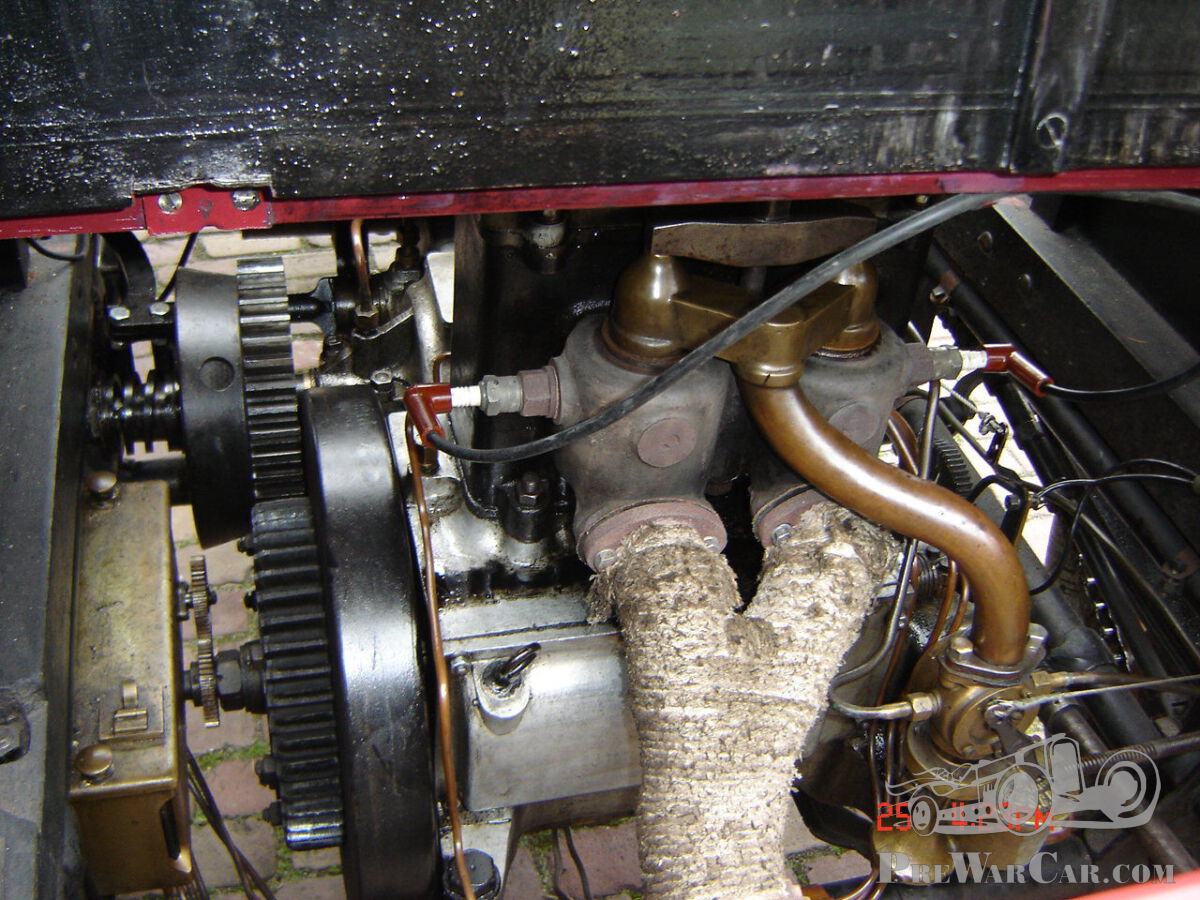
Sorry, the comment function doesn't seem to work. So, as for the Nagant-Gobron car: the engine photos show clearly the standard double acting two-cylinder engine as used also in the Gobron-Brillié cars. So the remark about the use of a 'normal' engine doesn't seem to be correct to me.
Per saperne di più
Philip Riedel
01 Giugno, 09:17
As a young lad in the 1960's I recall a large Gobron Brille on Rallies with the Sporting Car Club of SA in South Australia.
I seem to remember this car was sold and returned to Europe.??
I wonder what happened to it ?
Per saperne di più
I seem to remember this car was sold and returned to Europe.??
I wonder what happened to it ?



Philippe
31 Maggio, 11:58
I have some doubt about the actual brandname in 1907 as I thought it had been changed to just Gobron when the engineer Eugène Brillié left to join Schneider in Le Havre. I understand from heir family that the main problem was not technical but rather economical because the opposed piston engines were quite more expensive to build and maintain compared to more conventional engines. The model shown obviously has a conventional engine and not the opposed pistons one.
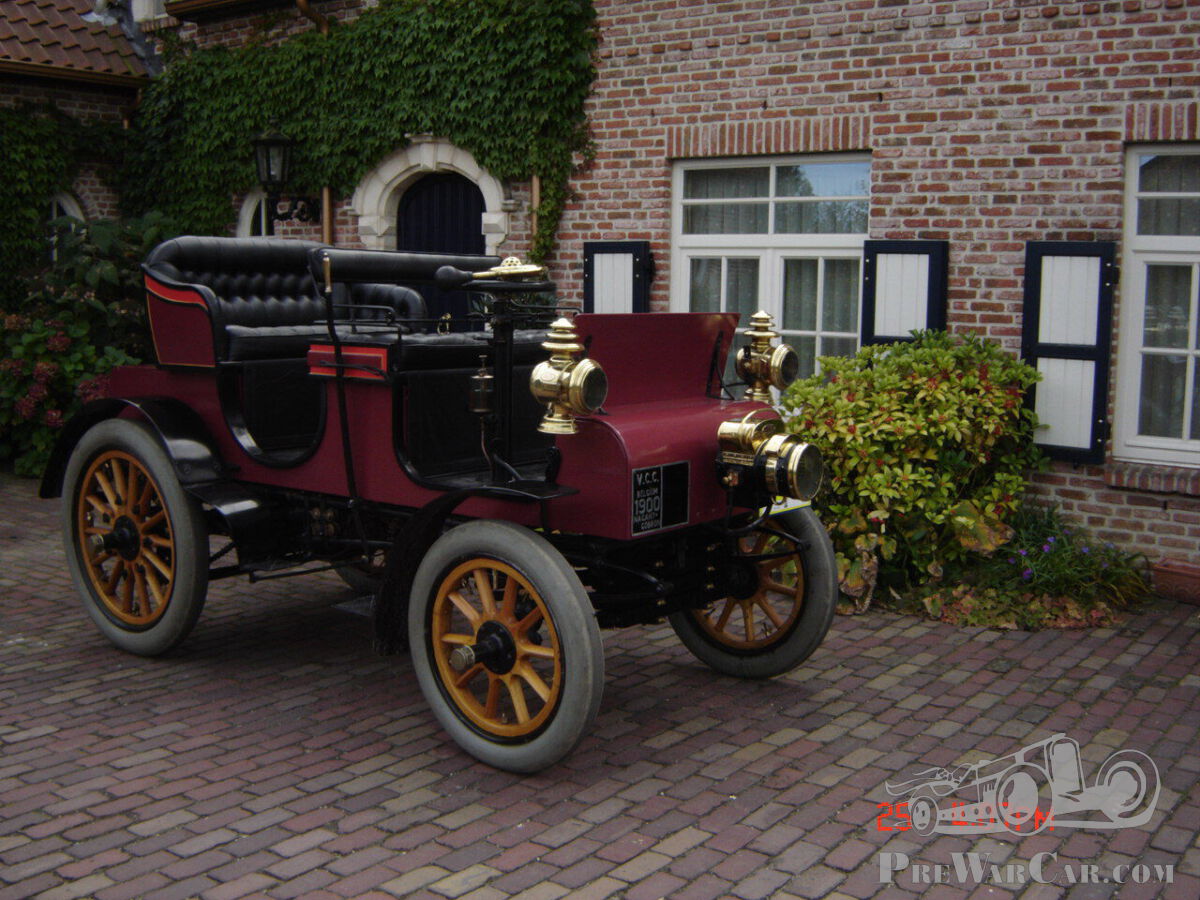
There are still a few cars with opposed pistons although I not aware of any really running... with the exception of the Belgian 1900 Gobron-Brillié built by the Nagant in Liège which ran over 6.000 km at various events (Bordeaux-Paris raid, London-Brighton, Circuit des Ardennes,...) since its restoration in 2011. Not too surprising as the (Belgian) Prince Albert who owned two such cars drove himself over 4.000 km from Brussels to Bavaria and Innsbruck without the slighest mechanic problems according to a letter of his chief of staff to the car manufacturer in 1901. My father acquired the car pictured in 1964 and it is still in the family
Per saperne di più
There are still a few cars with opposed pistons although I not aware of any really running... with the exception of the Belgian 1900 Gobron-Brillié built by the Nagant in Liège which ran over 6.000 km at various events (Bordeaux-Paris raid, London-Brighton, Circuit des Ardennes,...) since its restoration in 2011. Not too surprising as the (Belgian) Prince Albert who owned two such cars drove himself over 4.000 km from Brussels to Bavaria and Innsbruck without the slighest mechanic problems according to a letter of his chief of staff to the car manufacturer in 1901. My father acquired the car pictured in 1964 and it is still in the family

Stanislav Kirilets
31 Maggio, 11:40
1st International Automobile Exhibition in St. Petersburg, 1907. Gobron-Brillié Automobiles at the stand of the Russian representative, Nikolas Kritsch.
Per saperne di più
Bill Armstrong
31 Maggio, 11:14
There is, or was, since its many years since I last went there, a Gobron-Brillie fire appliance at the Beaulieu Motor Museum (or whatever its called now); I thought that it had an opposed piston engine but can't remember for certain.
Per saperne di più


Kieran White
28 Maggio, 17:32
Two Gobron-Brillies at the speed trials in the Phoenix Park during the Irish Fortnight in 1903.
The Gordon Bennett was included in this fortnight.
A Mors captured the land speed record at 82mph on Chesterfield Avenue if memory serves me right.
Incidentally the Irish Veteran and Vintage Car Clubsre staging their 50th anniversary Gordon Bennett Rally on 5th,6th and 7th June.
Per saperne di più
The Gordon Bennett was included in this fortnight.
A Mors captured the land speed record at 82mph on Chesterfield Avenue if memory serves me right.
Incidentally the Irish Veteran and Vintage Car Clubsre staging their 50th anniversary Gordon Bennett Rally on 5th,6th and 7th June.
Tony Press
27 Maggio, 00:19
I very naughty name sometimes given 'Gobbling Billie'
Per saperne di più

Ariejan Bos
25 Maggio, 12:55
There are two minor details I would like to mention. First is that this 1907 model, a beautiful example of the make by the way, was probably the 40/60hp model, which without doubt still had the engine with double acting pistons. As far as I’m aware Gobron used these engines at least until WW1 in most if not all of their models.
The second detail is the body type, which clearly is not a landaulet as there is no folding top. However the confusion may have been caused by a Bianchi toy model made by Rio (which happens to be in my mini museum), which is exactly the same model and was being sold by Rio as a landaulet. So if not a landaulet, what is it then? An identical model, but with Ariès chassis, was called a berline in 1907 (see upload). Even this name is arbitrary, as the berline officially had two opposing benches for 2 persons each. However name-giving in car body land changed with time: remember the De Dion-Bouton body in the post of May 8th, which had been given the name of berline de voyage. Technically one would have to speak of a coupé (literally meaning a cut-off berline), but another name in use in the early days was the berlingot or demi-berline. As one may observe, this De Dion-Bouton was similar to the Gobron-Brillié body with the exception that the first was inside driven, the latter chauffeur driven. So, although I would prefer the name coupé de voyage, (demi-)berline (de voyage) was definitely an option in these days.
Per saperne di più
The second detail is the body type, which clearly is not a landaulet as there is no folding top. However the confusion may have been caused by a Bianchi toy model made by Rio (which happens to be in my mini museum), which is exactly the same model and was being sold by Rio as a landaulet. So if not a landaulet, what is it then? An identical model, but with Ariès chassis, was called a berline in 1907 (see upload). Even this name is arbitrary, as the berline officially had two opposing benches for 2 persons each. However name-giving in car body land changed with time: remember the De Dion-Bouton body in the post of May 8th, which had been given the name of berline de voyage. Technically one would have to speak of a coupé (literally meaning a cut-off berline), but another name in use in the early days was the berlingot or demi-berline. As one may observe, this De Dion-Bouton was similar to the Gobron-Brillié body with the exception that the first was inside driven, the latter chauffeur driven. So, although I would prefer the name coupé de voyage, (demi-)berline (de voyage) was definitely an option in these days.
Motoring journalist 'Bunny' Tubbs had one which I encountered at Jackie Pichon's restaurant in 1967, when it was celebrating it's fiftieth birthday by touring in France. Bunny's daughter has written about the car in the VSCC Bulletin relatively recently - it may still be in the Tubb's family.
I recall Bunny's description of being a motoring journalist as "It is not all steer and vittles".