La rivista e il marketplace globale per gli appassionati di auto d’epoca, creati da appassionati.
La rivista e il marketplace globale per gli appassionati di auto d’epoca, creati da appassionati.


Filter
Faccia la sua scelta
- Automobile
-
Marca >>
-
Anno >>
-
- Motociclette
-
Ubicazione >>
- Parti e altro
-
Marca dell'auto >>
-
Produttore >>
-
Categoria >>
- Biciclette
-
Anno >>
-
Paesi



Going Loco sulla strada aperta
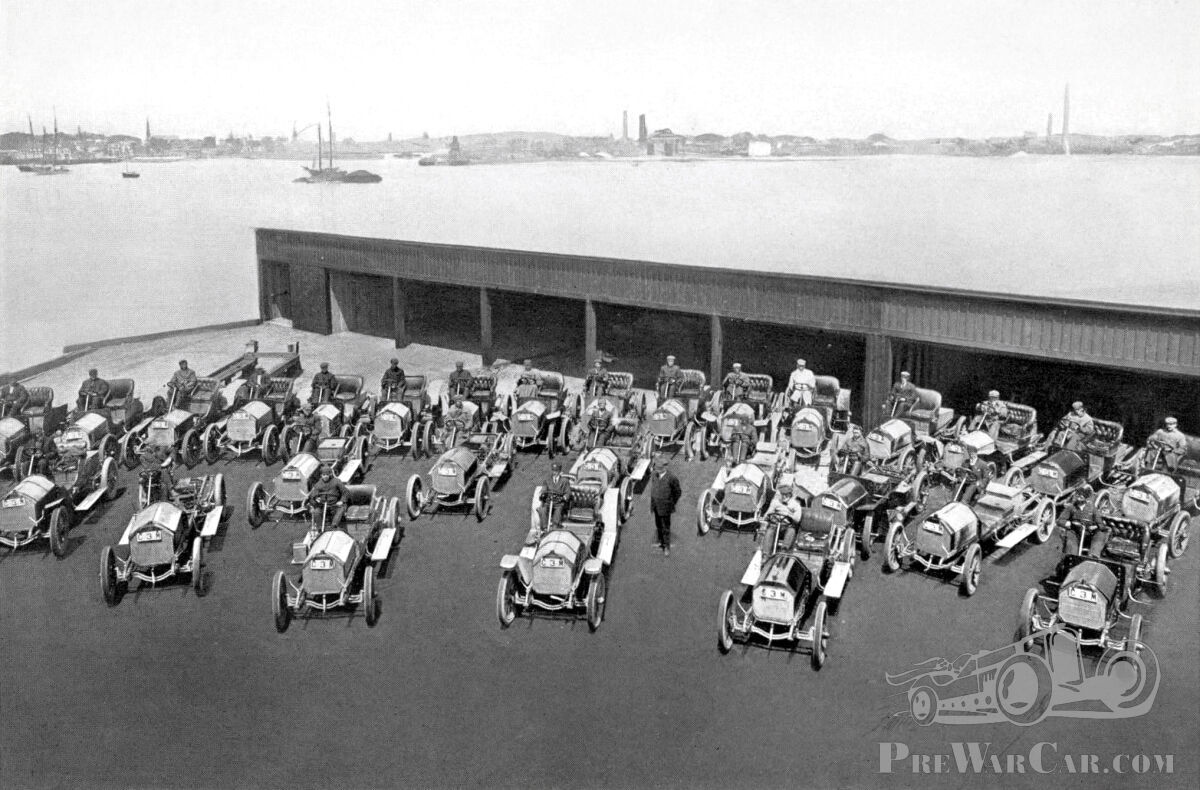

Oh, avrete sicuramente già incontrato il nome Locomobile – un nome nato dalla fusione di locomotive e automobile. Forse ne avete persino vista una, perché questi colossi del dopoguerra 1904 (prima producevano automobili a vapore più modeste) compaiono ancora di tanto in tanto in eventi prestigiosi e aste. Al Pebble Beach Concours del 2023, ad esempio, la “Old Number 16” non restaurata — la vettura da corsa da 90 CV che vinse la Vanderbilt Cup del 1908 — fu una vera star dello spettacolo.
Ma 28 esemplari in un’unica foto? Per quello bisognava essere in fabbrica il giorno in cui queste grandi auto venivano costruite. È proprio lì che fu scattata questa affascinante immagine: ‘The Locomobile testing crew ready for the road’, come recita la didascalia originale. Proviene da un libro del 1912 dedicato al marchio americano e fu probabilmente realizzata quello stesso anno nello stabilimento di Bridgeport, Connecticut.
Curiosamente, tutte le auto portano una targa simile, ‘C 3 M’, che avrà certamente segnalato agli abitanti di Bridgeport che si trattava dell’ennesimo prodotto della Locomobile Company of America lanciato per le strade. Si dice che il Connecticut sia stato il primo stato americano ad abolire il limite di velocità di 15 mph già nel 1901, cosa che deve aver reso possibili test davvero adeguati per queste vetture.
Le 28 Locomobile qui raffigurate sono tutte Model 48, introdotte nel 1911? Erano auto costose, con un prezzo di circa 10.000 dollari per una tourer aperta completamente carrozzata e pronta a partire — senza contare gli accessori di lusso offerti all’epoca, tra cui fari ornamentali realizzati su misura da Tiffany & Co. Allo stesso tempo, una Ford Model T Phaeton costava in media circa 600 dollari, con Henry Ford impegnato a ridurre ulteriormente i costi, il che l’avrebbe resa ancora più economica negli anni successivi. Non c’è da meravigliarsi, quindi, se alla fine Locomobile scomparve…?
Parole di Jeroen Booij
Immagine da ‘The Locomobile book’
Pubblicato:
mercoledì novembre 26th, 2025
Facebook
LinkedIn
Twitter
WhatsApp
Email
Copy
Commenti
R.Douglas Miller
30 Novembre 2025, 20:39
Daniel Reuben
29 Novembre 2025, 03:39
I suspect the majority, if not all of these are their 4 cylinder Model L's. Supporting this, the hoods seem short and in the front row at either end are cars that look like they could be chain driven. Most Model M and R (future 48's and 38's) were LHD although I can't say if the very first might have been RHD however. The model L also overlapped and continued production as late as 1915. The company established an Experimental Department where they would test over many months about 5-8 cars at a time through the year. While some could be mixed into this photo these are more likely production cars outfitted with seats in which to pilot them prior to being outfitted with coachwork. They are unlikely race cars at this late date and additionally since a few manifest vertical dashboards that the racers didn't have. The Connecticut license plates (ending in "M") were for registered manufacturers and they could purchase multiple redundant ones at the time (for a fee).
Per saperne di più
Maybe they never left the area or were brought back by collectors more familiar with the Marque.