La rivista e il marketplace globale per gli appassionati di auto d’epoca, creati da appassionati.
La rivista e il marketplace globale per gli appassionati di auto d’epoca, creati da appassionati.


Filter
Faccia la sua scelta
- Automobile
-
Marca >>
-
Anno >>
-
- Motociclette
-
Ubicazione >>
- Parti e altro
-
Marca dell'auto >>
-
Produttore >>
-
Categoria >>
- Biciclette
-
Anno >>
-
Paesi


Horseless high-wheeler



Anyone with an interest in early motoring should be familiar with the Duryea brothers. They were to America what Benz was to Germany and Panhard et Levassor to France: the original pioneers. Despite this, they do not enjoy the same recognition, at least not in Europe. It’s been a long time since a Duryea appeared on the Brighton Run (Stevens-Duryea is a different marque), and few exist in preservation outside America.
Duryea
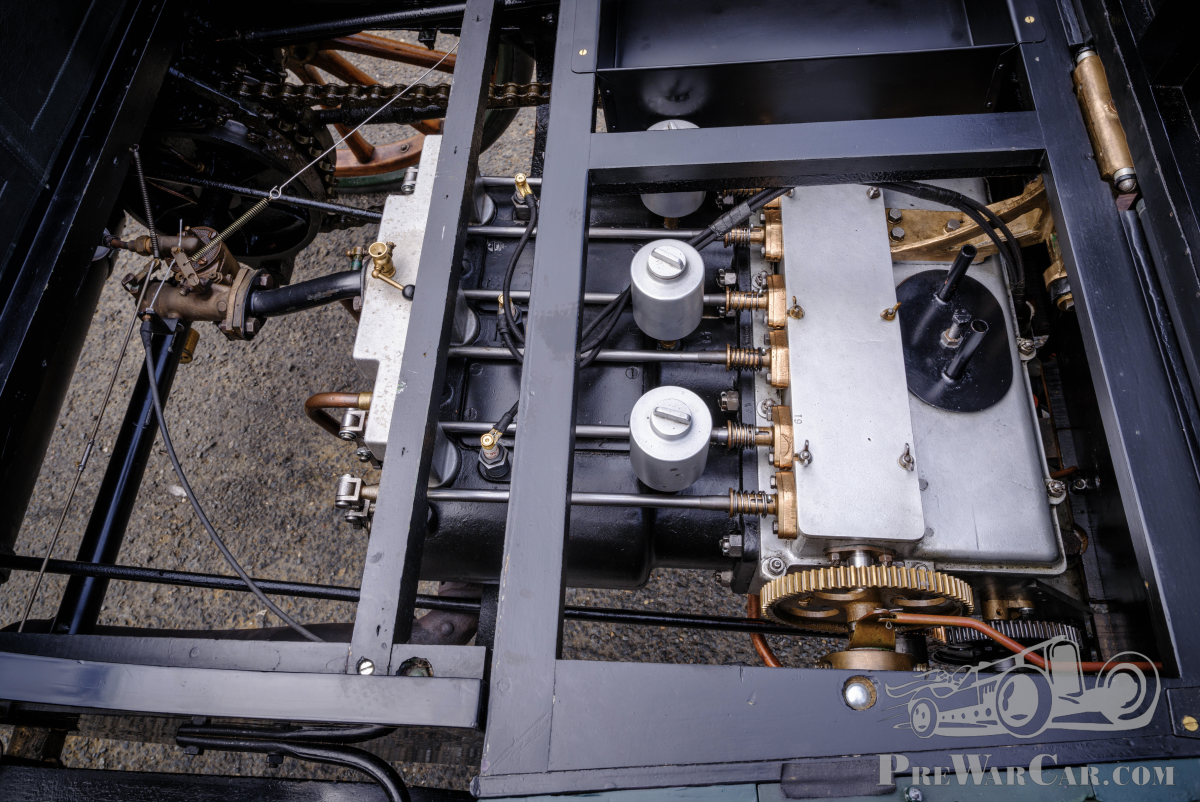
The situation was different 120 years ago. Duryeas were not only sold in Britain, they were even constructed at a factory in Coventry to a unique specification. The man responsible was Henry Sturmey, he of The Autocar, The Motor and Sturmey-Archer bicycle hub fame. Supposing there might be a British market fora car which was distinctly American and extraordinarily unconventional, even by Veteran standards, he marketed British Duryeas in standard 10hp guise as imported from America, but others he fitted with enlarged engines of 12 and 15hp, produced by a prominent Rugby engineering firm.
Sadly, the British Duryea, with its mid-mounted, underfloor, transverse three-cylinder engine and tiller steering, wasn’t what the British motorist wanted. Few were built and today only one survives, a 1904 12hp phaeton. Hidden since 1960 in two private collections, it has recently ventured onto public roads for the first time in 62 years.
Zack Stiling looks into Sturmey’s eccentric enterprise in the September issue of The Automobile, on sale now.
Words by Zack Stiling. Photographs by Jim Holden.
Pubblicato:
mercoledì agosto 17th, 2022
Facebook
LinkedIn
Twitter
WhatsApp
Email
Copy