La rivista e il marketplace globale per gli appassionati di auto d’epoca, creati da appassionati.
La rivista e il marketplace globale per gli appassionati di auto d’epoca, creati da appassionati.


Filter
Faccia la sua scelta
- Automobile
-
Marca >>
-
Anno >>
-
- Motociclette
-
Ubicazione >>
- Parti e altro
-
Marca dell'auto >>
-
Produttore >>
-
Categoria >>
- Biciclette
-
Anno >>
-
Paesi


In search of the oldest single seat racer...
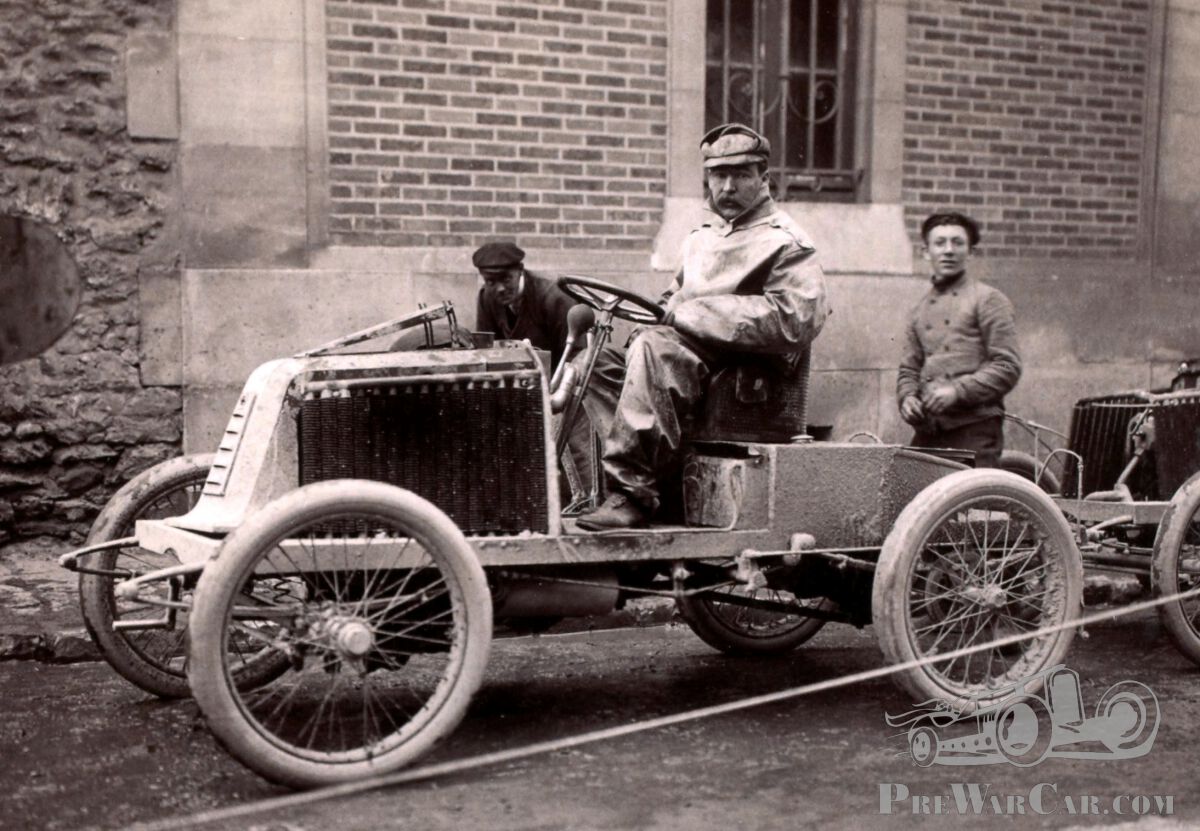
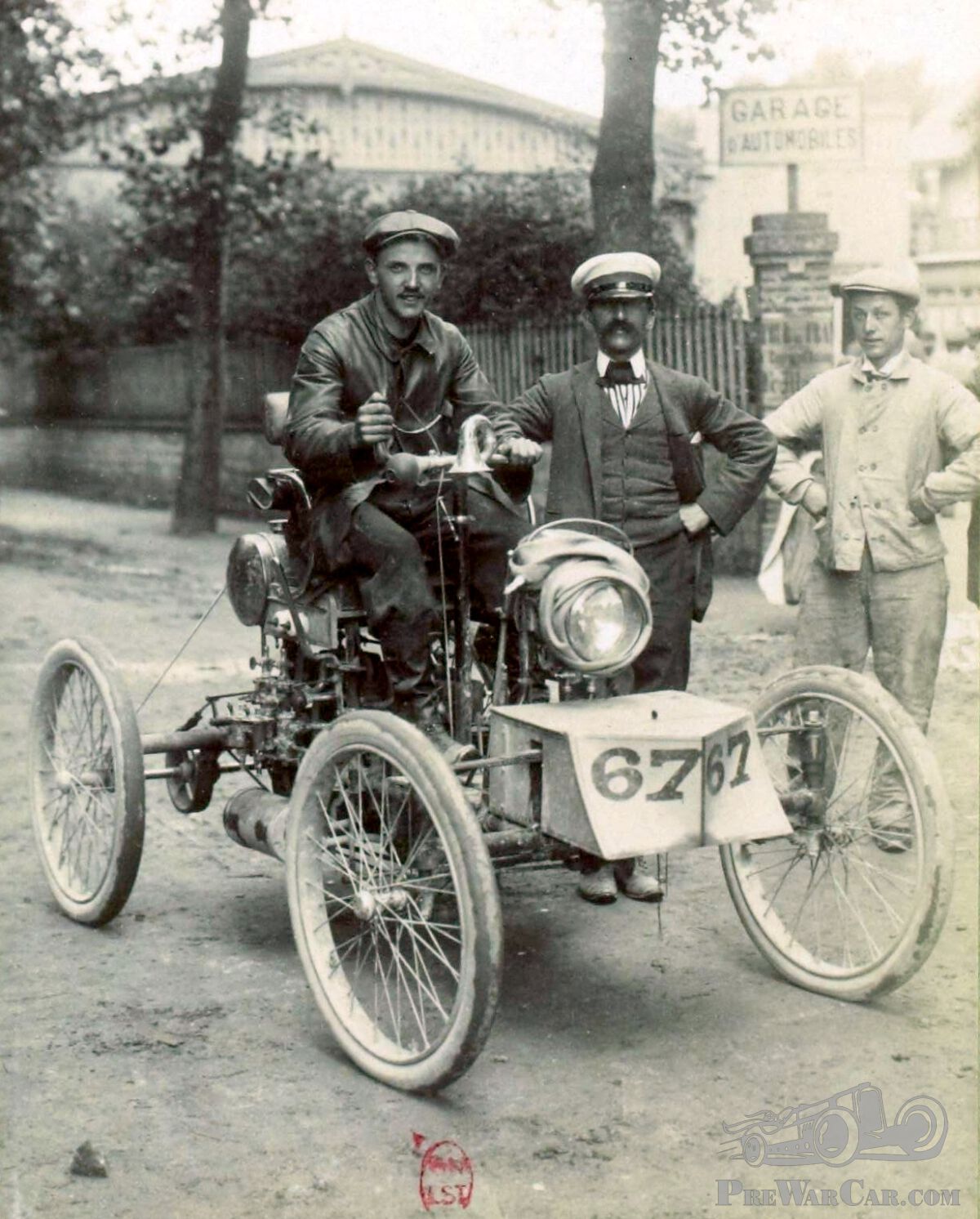


The following question was recently sent in by Charles Walmsley from Buenos Aires: ”which is the first ever open single seater race car, this does not include cars made for records”. In other words, cars made for track or road. He suggests the 999 Ford, but ads “I stand to be corrected”, followed by the remark “is this a good question?”
Well, Charles, at first I thought this is another question about old, older, oldest and the funny thing with answering these questions is that there will always turn up something older. On second thought, however, it could be interesting to go into this matter further, because it raises the question: why two seats and why one? In this search, I will restrict myself to four-wheeled cars.
The normal outfit for racers was two seats and the reason is obvious: in Europe, where car racing was more or less invented, long-distance road racing was common practice and the use of a mechanician almost indispensable, so a second seat was a necessity. Besides, in the early years, cars were built for touring and not especially for racing, so at least one extra seat was necessary to accommodate passengers.
In the United States, where road racing was more difficult because of the often bad quality of the country roads, track racing on ovals built for horse racing became popular already very soon. The first recorded race on such a track was at Narragansett Park, Rhode Island, in 1896. Because of the fact that the rounds and also the racing distances were short, a mechanician driving along wasn't necessary.
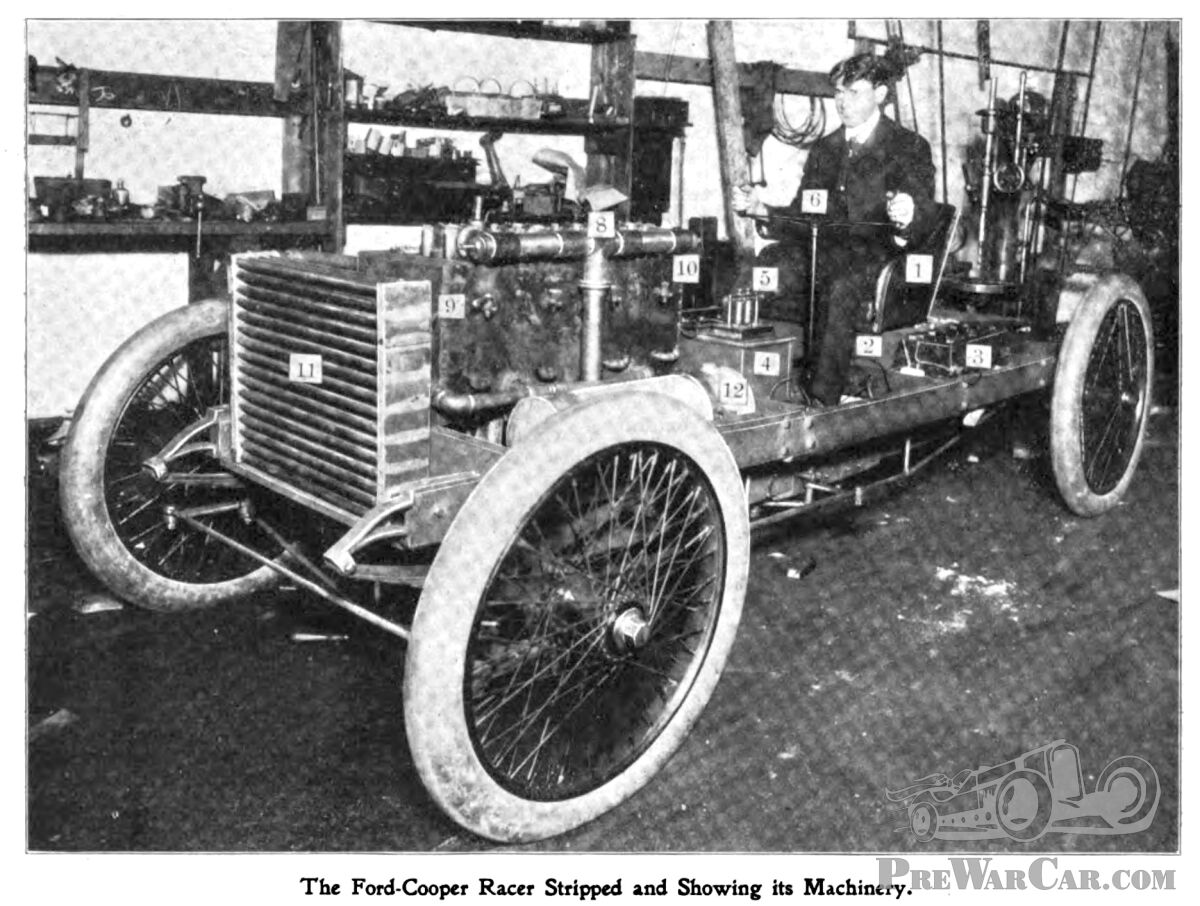
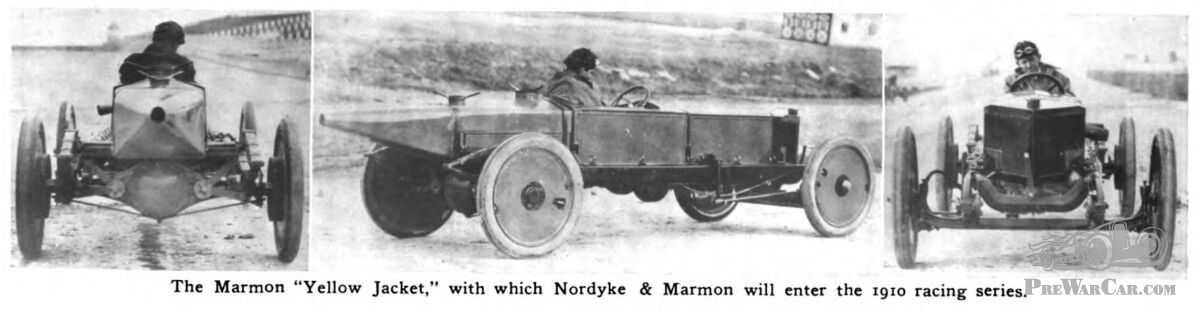
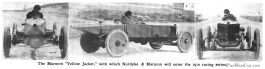
Cars were starting to be developed especially for racing in Europe around 1898 and in America around 1900. Ford developed his first racing car in 1901 and raced it himself at Grosse Point in November of that year, but that was still a two-seater. In 1902 he developed with Tom Cooper two very powerful single-seat racing cars, which were named '999' and 'Arrow'. One of these cars was raced by Oldfield at Grosse Point that year. In this race, at least one other single-seat racer was present: the Oldsmobile Skeleton racer. Other famous examples that followed were among others the 1903 Oldsmobile Pirate, the Packard Grey Wolfe of the same year and the 1904 Peerless Green Dragon. In later years Ray Harroun appeared to be an advocate of the single seat racer resulting in the 1910 Marmon Yellow Jacket and the world famous 1911 Marmon Wasp.
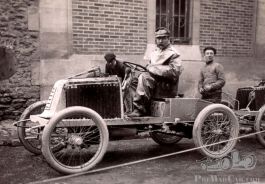
In Europe, the two-seat car remained the standard for a long time, but there are a few notable exceptions. The first one is the Renault light racer, which was raced in the Paris-Berlin race of 1901. The whole team of four cars, driven by Louis (winner of the voiturette class) and Marcel Renault, Oury and Grus, consisted of single-seat racers. The same type of voiturette was used during the Circuit du Nord in May 1902. Officially, however, it was a two-seater with the second seat left out.
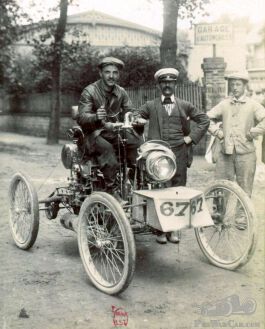
Going back in time (and ignoring the single seat record racers of Jenatzy and Chasseloup-Laubat) we come across the Decauville voiturelle racer (the name voiturette was reserved still for the three-wheeled Léon Bollée), competing in the 1898 Paris-Amsterdam race and the 1899 Tour de France. This little car was a real single seat racer and at the moment the oldest one, I could find. But if you have older suggestions, please present them to us!
As you may have noticed, I've avoided the names monoposto and biposto. I guess these words came into use only much later and must have their origin in Italian racing history. When the word monoposto was used for the first time is another challenge to sort out, but that is up to you, dear reader...
On the images:
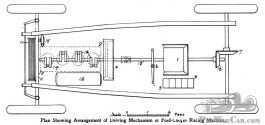
1. (Lead image) One of the 1902 Ford racers (The Automobile Review 1902 p.263).
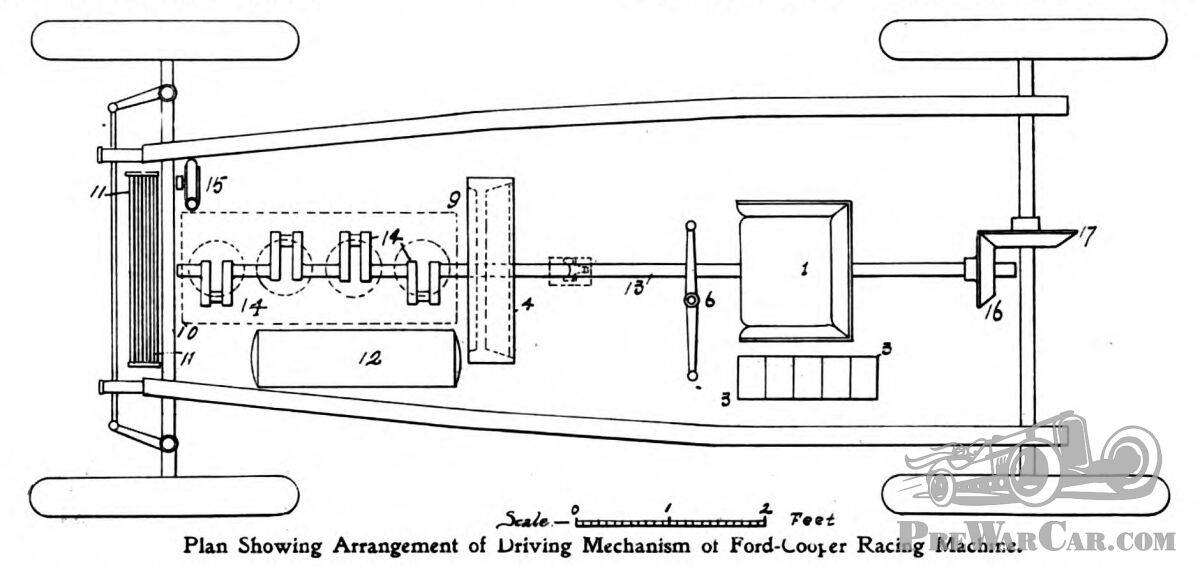
2. Ford racer layout (ib.).
3. The 1910 Marmon Yellow Jacket (MoToR, May 1910 p.104).
4. Grus at the wheel of a 1902 Renault voiturette during the Circuit du Nord (coll. Jules Beau T.17).
5. Gabriel on a Decauville voiturelle during the 1899 Tour de France (coll. Jules Beau T.10).
Words by Ariejan Bos.
Pubblicato:
martedì agosto 7th, 2018
Facebook
LinkedIn
Twitter
WhatsApp
Email
Copy
Commenti
Jeff Perkins
10 Agosto 2018, 03:56
Thank You Ariejan Bos for this information, I have had a similar question for a long time!
Per saperne di più
Milko Maraschio
07 Agosto 2018, 15:45
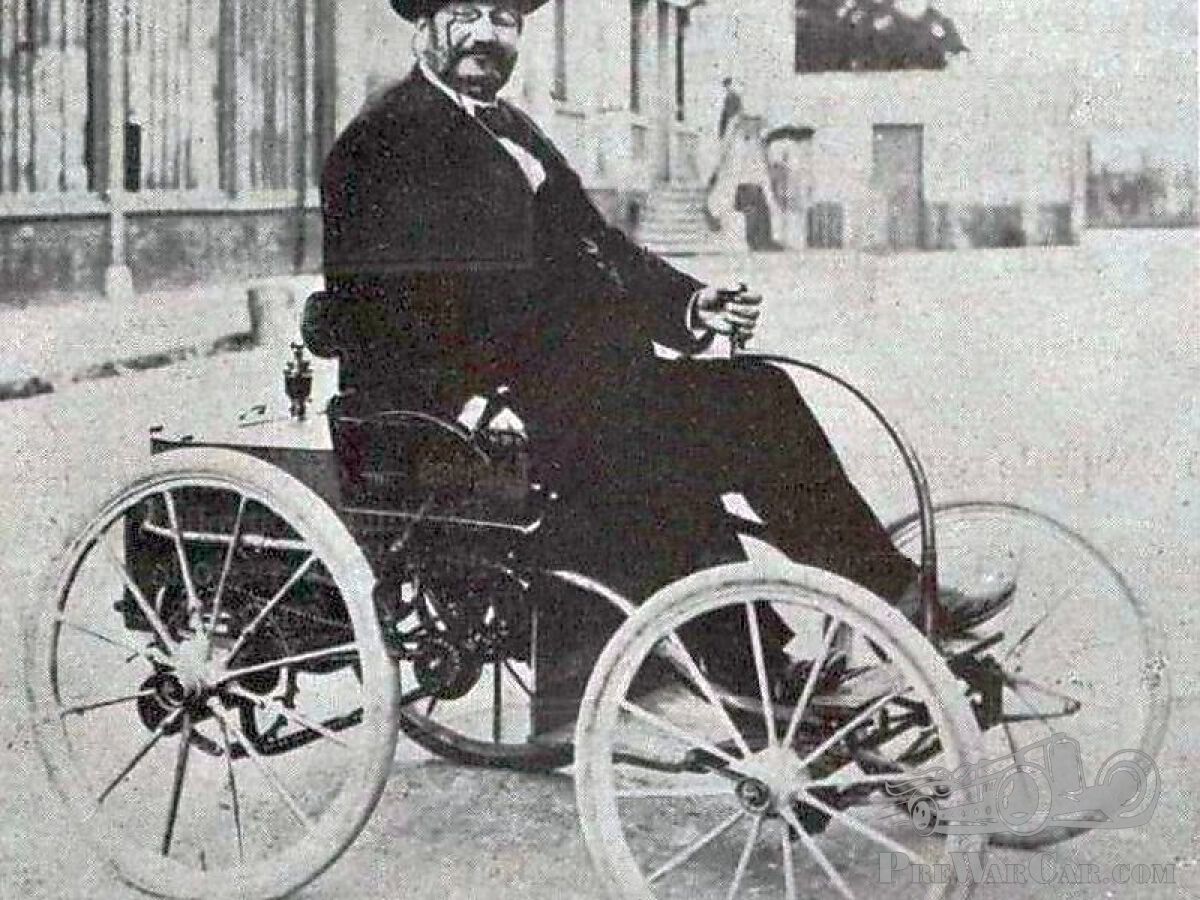
Panhard Levassor, built several single-seat prototypes between 1892/4, the photo that supposedly attached corresponds to 1892, but I'm sure there were more vehicles of that era. I do not know, in which event they could have participated, since they were not used (maybe because of the great distance of them ...) neither in the Paris Rouen 1894, nor in the Paris Burdeux 1895.-
Per saperne di più