La rivista e il marketplace globale per gli appassionati di auto d’epoca, creati da appassionati.
La rivista e il marketplace globale per gli appassionati di auto d’epoca, creati da appassionati.


Filter
Faccia la sua scelta
- Automobile
-
Marca >>
-
Anno >>
-
- Motociclette
-
Ubicazione >>
- Parti e altro
-
Marca dell'auto >>
-
Produttore >>
-
Categoria >>
- Biciclette
-
Anno >>
-
Paesi


Leslie Bucknall's expensive cars and balloons



19th-century three wheeling - part 1
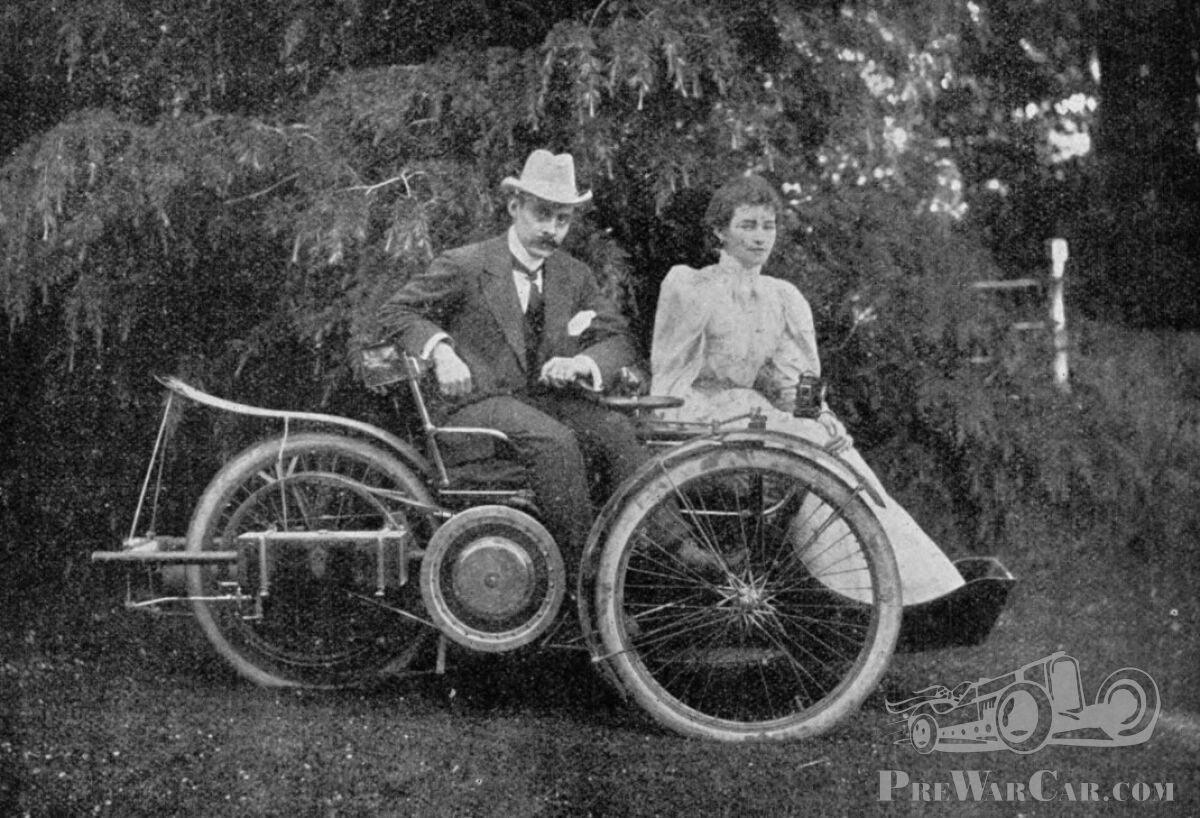
In this new mini-series, we look at a number of car owners, who had at least one thing in common; they were owners (or even the inventor!) of three-wheeled vehicles, before 1900. We start with Leslie Bucknall of Wickhust Manor near Sevenoaks in Kent, UK.
Arthur Leslie Bucknall was a shipping agent and steamship governor, and as such could afford to be one of the first vehicle owners in the UK. He did not mind doing a few miles too, as with his Coventry Motette, a British license-built of the French Léon Bollée voiturette, he made a trip to Paris in the spring of 1897. 'We started from Boulogne at six o'clock in the morning of the 5th of June by the Abbeville Road, and, after stopping once or twice to cool the cylinder, we arrived at Abbeville in time for déjeuner at about 10.30, thus having done the fifty miles in four and a half hours.' After the meal, they headed for Beauvais and after first running over a small dog, they had 'another excitement, which resulted in the death of a cock.' On the next day, they drove into the courtyard of the Continental Hotel at about twelve o'clock, having averaged about 10 miles over the full distance. 'We could have done the distance in a much shorter time had we cared to do so, but not being pushed for time we took it easy.'
A bit later, he had also bought a De Dion Bouton tricycle but put it up for sale only a couple of weeks later because 'he has his time occupied with large motor cars', one of which was an early Daimler Phaeton of 5 ½ hp. Bucknall didn't keep any of his cars long.
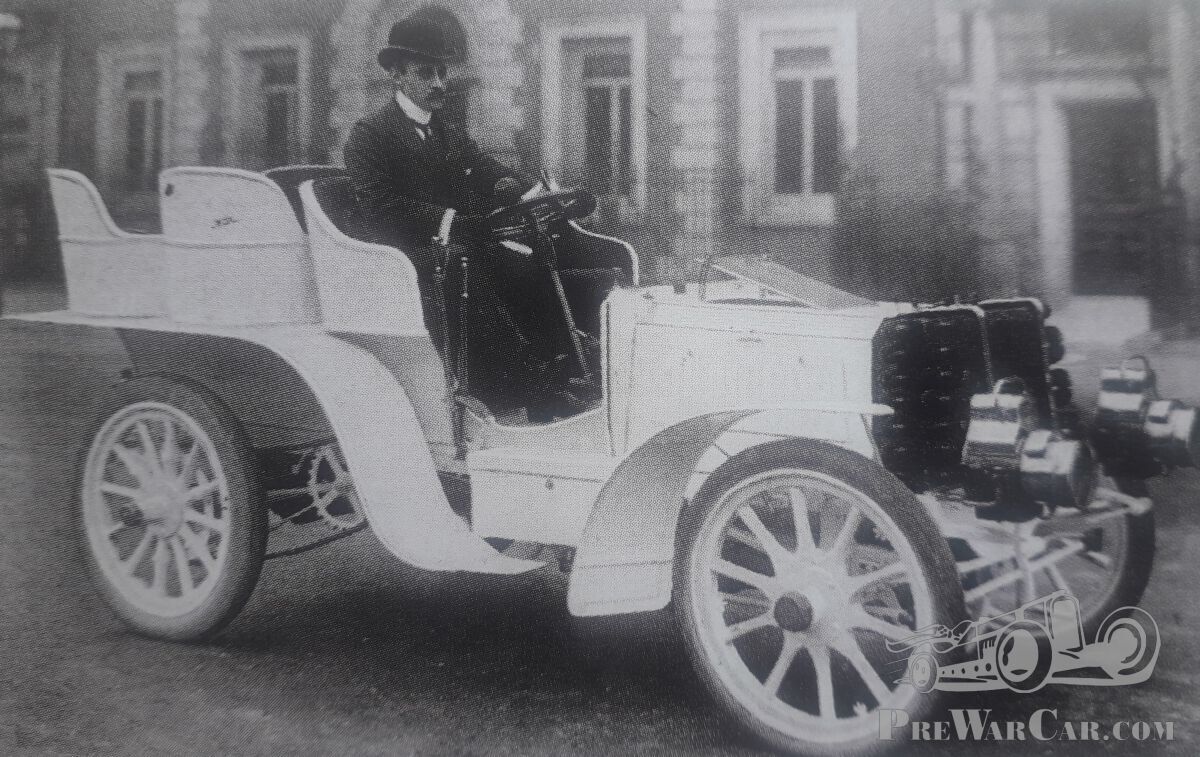
In 1901, he and his Chief Engineer J.V. Taylor went to Paris and persuaded Chevalier René de Knyff to sell his brand-new Panhard-Levassor, a 7 hp twin-cylinder masterpiece. The transaction didn't go easy, as Elizabeth Nagle later wrote down in Veterans of the Road. Taylor told her: 'We saw the Chevalier, who was a typical French aristocrat, spoke perfect English, and received us very cordially, but flatly declined to sell the car for any consideration. This only made Bucknall more determined to have the car somehow, and he urged his request really beyond the limit of politeness. At last, the Chevalier told him frankly that if he forced him to sell, it would be at a figure out of all proportion to either the normal price or the actual cost, which must have been very high. … Eventually, the two principals retired to a private room, returning after a time to announce the deal completed, the final figure not being stated.' This was Le Papillon Blue, the famous car that still exists today, and was recently sold by Bonhams.
Again, this car was not kept long, and in 1902, the 40 hp Panhard-Levassor that Charles Jarrott had raced in Paris-Berlin was obtained, but surprisingly converted to luxurious coachwork.
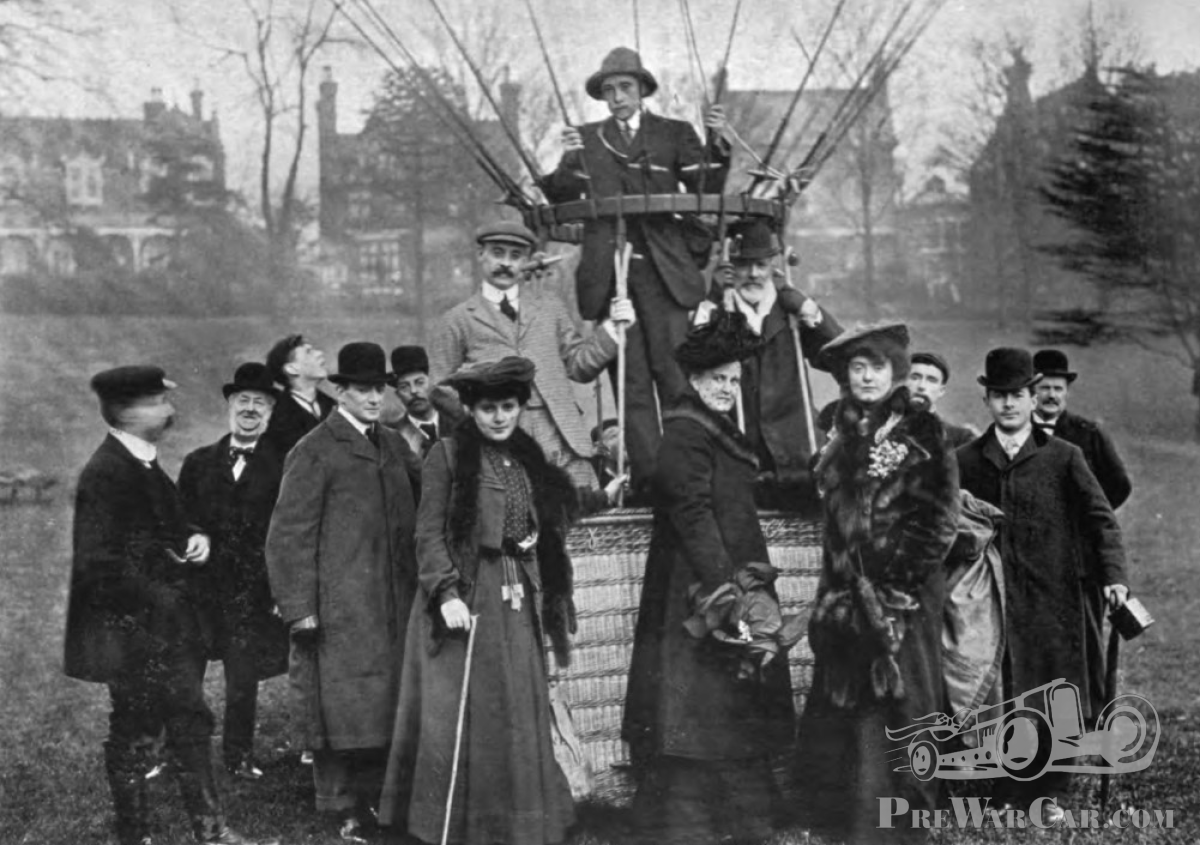
Bucknall had been a founder member of The Automobile Club of Great Britain in 1897 but had also taken up ballooning. He owned a series of gas balloons, named after his young daughter Vivienne, and did many ascents, even 'inventing' the new sport of balloon-chasing by the car. There was even a military experiment, to see if a balloon could out-run chase cars and so safely deliver despatches. In November 1902, Bucknall took off and was chased by Frank Butler's daughter Vera, in an 8 hp Renault, Dr Hutchinson in a 10 hp Benz, Cavendish (12 hp Darracq), Midgley (16 hp Napier), Fordyce (12 hp Darracq), Hutton (10 hp Panhard), D. Farman (30 hp Panhard), Cordingley (40 hp Mercedes) and even Charles Rolls, in a 10 hp Panhard. The balloon was caught – and the despatches captured – near Staplehurst, thirty-five miles away from its take-off point, Crystal Palace. Two more balloon hunts took place, but it is not clear whether the military value of the experiment was proven...
In November 1906, Bucknall flew Vivienne IV from England to the vicinity of the Lake of Geneva in 16 hours, allegedly a record distance flight. Leslie Bucknall died in 1939.
Words by Nick Jonckheere.
Thanks to David Burgess-Wise, Bonhams and Kate Baldock.
Pubblicato:
martedì giugno 16th, 2020
Facebook
LinkedIn
Twitter
WhatsApp
Email
Copy