La rivista e il marketplace globale per gli appassionati di auto d’epoca, creati da appassionati.
La rivista e il marketplace globale per gli appassionati di auto d’epoca, creati da appassionati.


Filter
Faccia la sua scelta
- Automobile
-
Marca >>
-
Anno >>
-
- Motociclette
-
Ubicazione >>
- Parti e altro
-
Marca dell'auto >>
-
Produttore >>
-
Categoria >>
- Biciclette
-
Anno >>
-
Paesi



'M' for Mystery: the unsolved puzzle of De Dion-Bouton's proprietary engines
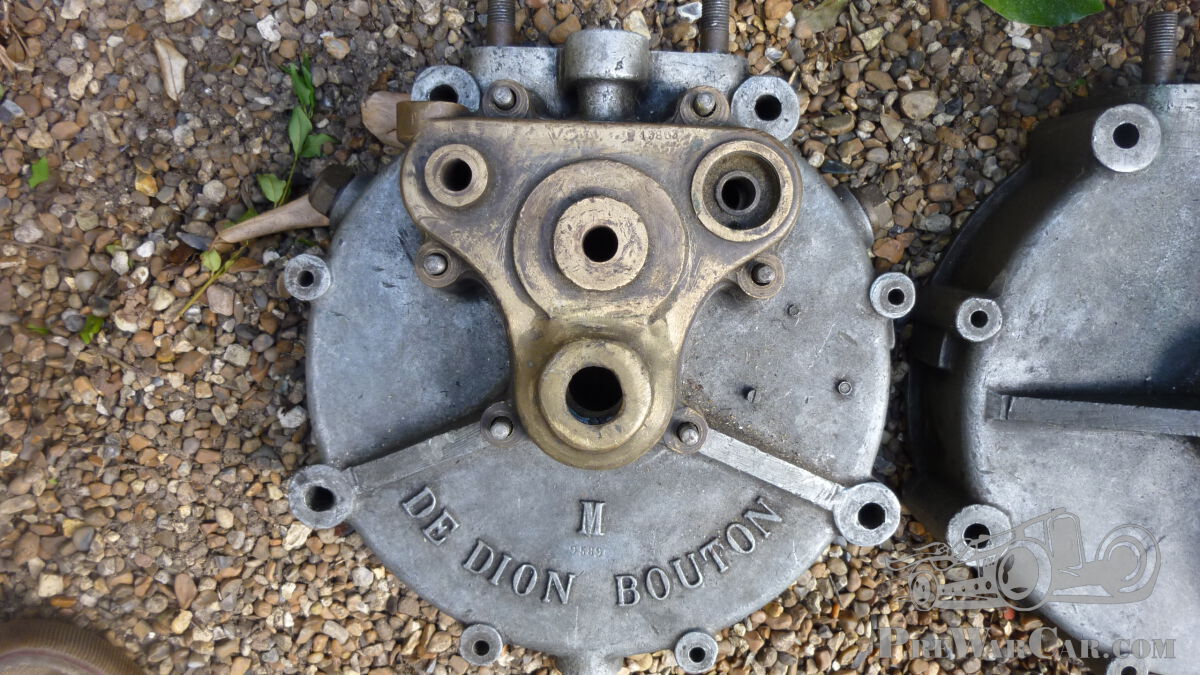


From the mid-1890s, De Dion-Bouton became an established engine manufacturer which also developed a range of motorised tricycles and quadricycles. Between 1899 and 1904, it has been estimated that the De Dion-Bouton company made around 31,000 engines of varying capacities, of which slightly under half were utilised for its own three- and four-wheel vehicles. The remainder were purchased by external organisations, eager to take advantage of tried and tested power units in their own machines. The percentage of the production that was used in this fashion reduced over the period from sixty per cent in 1899 to less than forty-five per cent by 1904, and had virtually ceased by 1905-06, by which time most motor manufacturers of reasonable size had developed their own foundries to improve both their expertise in this essential area and their margins.
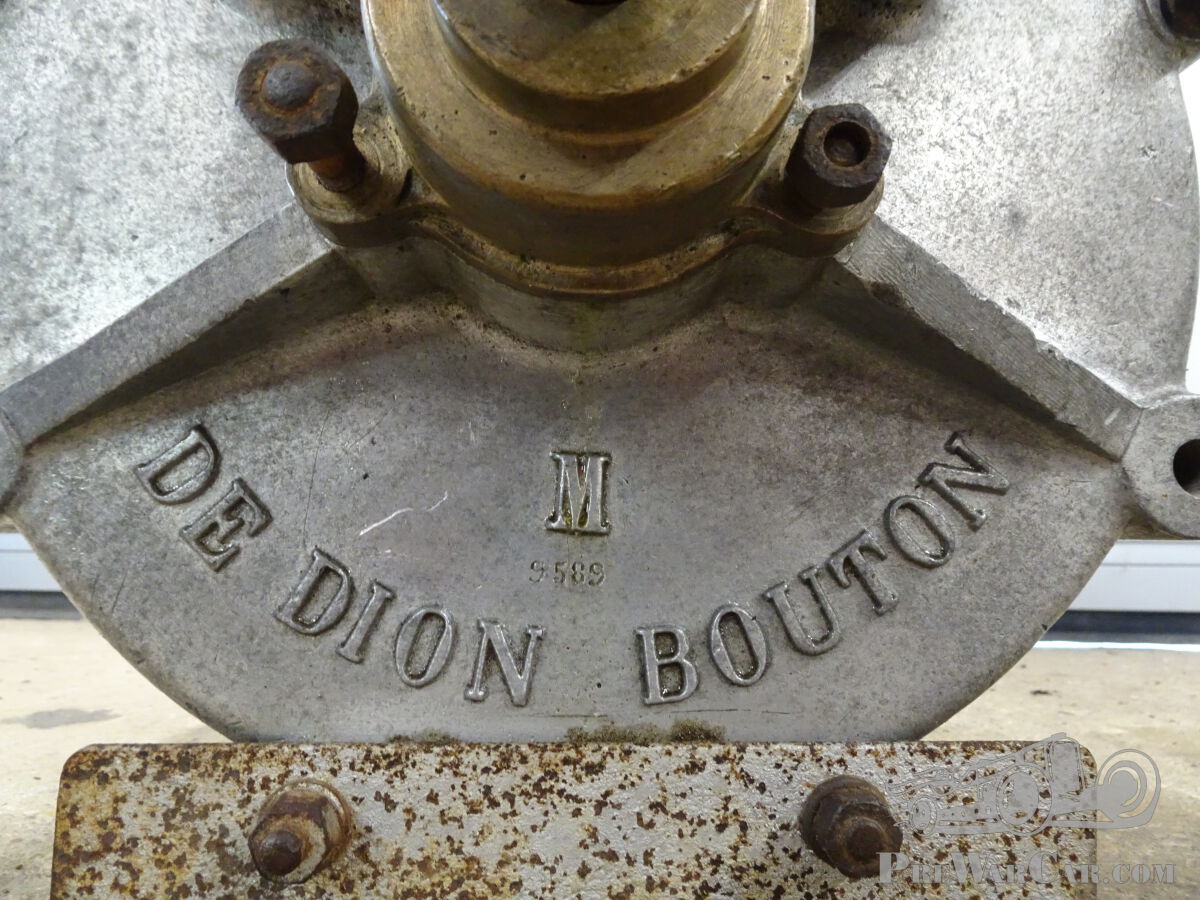
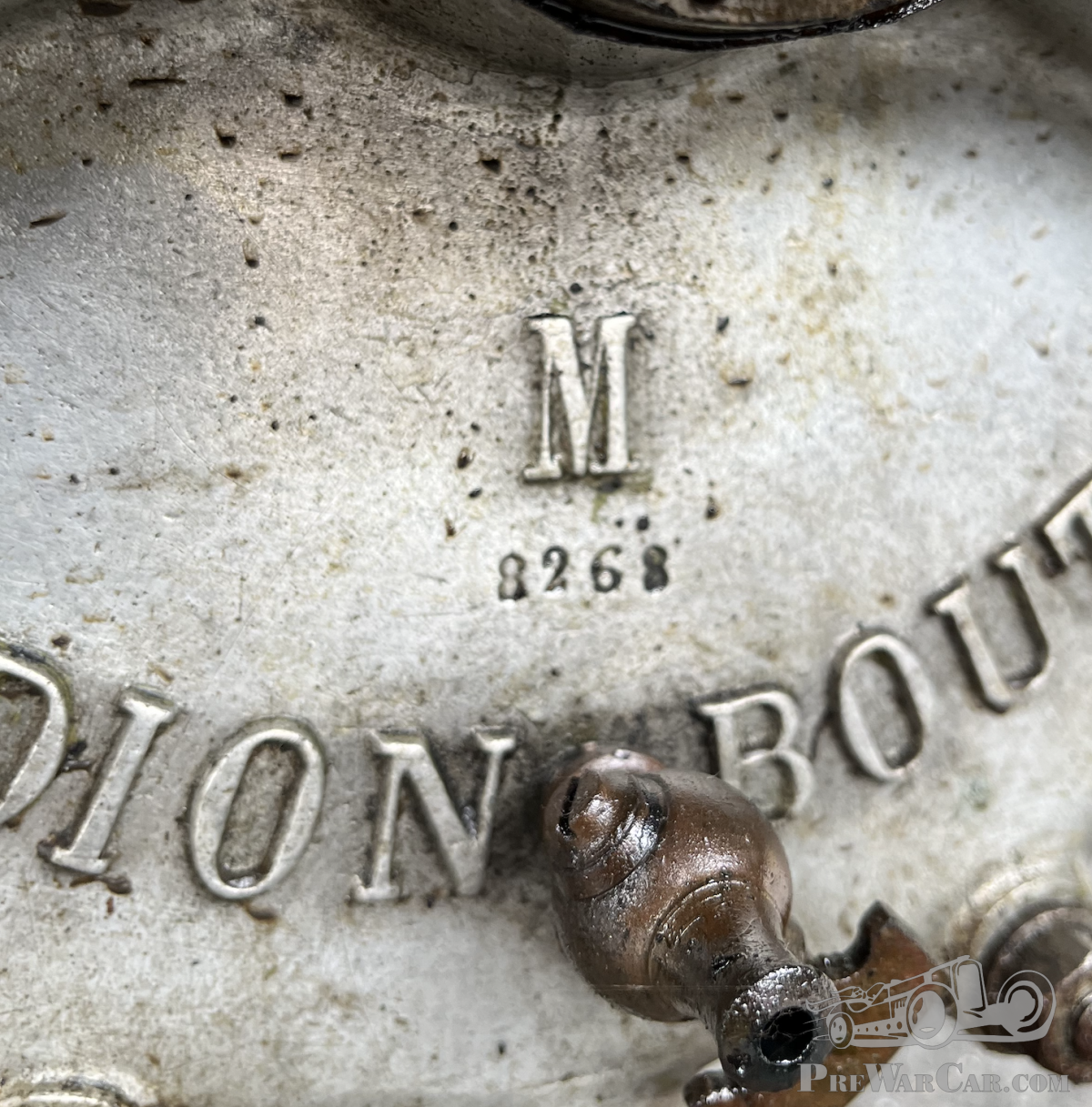
One of the longstanding impacts of De Dion-Bouton engine productivity at the turn of the last century has been the ready availability of replacement motors for veteran motorists when they discover that their cylinder barrel is in no fit state to withstand another repair. A significant number of car owners over the years have made the observation that some of the surviving engines on offer have the letter 'M' cast into the front of the crankcase, positioned beneath the strengthening ribs and above the De Dion-Bouton script. In most cases, the numbers 9589 are hand-stamped below the 'M' and, more rarely, the numbers 8935 (or possibly 8985) appear. All the crankcases with the 9589 stamp are of 6hp, and those with the number 8935 (or 8985) are of 8hp. In one recorded instance, there is the number 8268 on a 6hp crankcase. Stamped serial numbers for these 'M' units, located to the side of the same crankcases, are in the 11000–17100 range, indicating a date of 1903-05. The engine with a 17100 serial number has a January, 1905, date stamped on the dome of the piston, confirming its later date. A small number of engines with higher serial numbers have been reported but not verified.
Apart from the 'M' marking there appears to be nothing unusual in the design or construction of these engines. All the engines have an exhaust valve lifter which is fitted to the top left-hand side of the timing cover, although one recorded unit has the device on the top right-hand side. Half of the recorded 'M' engines do not have water pump drive apertures on the right-hand side of the timing cover and, since all 1903-05 De Dion-Bouton motor cars have the water pump fitted in front of the engine and above the radiator, these 'M' engines cannot have been fitted to De Dion-Bouton motor vehicles.
Over the years, some observers of these engines have considered that the purpose of the 'M' is to identify those crankcases that were made outside the De Dion-Bouton foundry, while others have proposed that it was applied to castings that were destined to be supplied to external manufacturers. The first of these scenarios seems to be implausible since De Dion-Bouton had one of the longest-established and largest foundries in Paris, and it seems unlikely that external suppliers would be needed to manufacture engines for them. Further, with more than forty per cent of the Puteaux production going to external vehicle manufacturers, it is evident that the ‘exported’ engines were never regularly marked with the 'M,' since fewer than forty have been recorded.
It is the case that the bulk of the 'M' engines are to be found in non-De Dion-Bouton vehicles, or they appear as ‘loose’ engines, or it is known that they have been fitted as replacement units in De Dion-Bouton vehicles. This would strongly indicate that the engines were made for external usage, possibly by a single customer. But who could this customer have been?
By 1903, Renault had ceased to rely upon De Dion-Bouton engines, so that company can be excluded from speculation. Corre, on the other hand, installed 6hp De Dion-Bouton engines in its Type E, and from March, 1904, in its Type F, before switching to an 8hp unit. It has been estimated that no more than three hundred and fifty Type F vehicles were made. The existence of 'M' engines with and without water pump drives from the front of the crankcase might support the view that a suitable candidate would be a manufacturer that installed a range of cooling options. One such firm was Lacoste et Battmann. From 1902, 6hp and 8hp engines from De Dion-Bouton and Aster were available, cooled by water pump and radiator. In 1903, there was a broader range of engines on offer, but the 6hp and 8hp engined chassis had the option of a friction drive centrifugal water pump, located on the rear left-hand side of the engine, and so dispensing with the need for a front water pump drive.
The mystery remains …
The above article by Michael Edwards affords a glimpse into some of the research undertaken for his fascinating new book, De Dion Bouton: The Veteran Years, 1899-1904. The mystery of the 'M' engines is discussed in greater detail, with illustrations, along with a range of other topics which should interest all veteran enthusiasts. More details on the contents the new books and on-line ordering can be found on surrendenpress.com. All books ordered within the EU are despatched from the Netherlands. For any further questions about this article or the books, please leave a message below or via surrendenpress.com.
Pubblicato:
martedì giugno 4th, 2024
Facebook
LinkedIn
Twitter
WhatsApp
Email
Copy
Commenti
Jorn Scharlemann
15 Settembre 2024, 20:55
Jorn Scharlemann
16 Giugno 2024, 14:33
How about "M" for Motorette? There is some written evidence that the De Dion-Bouton Motorette Company in Brooklyn, New York, manufactured engines, although likely not of a high quality as engines were imported again from France in 1901/02.
Per saperne di più
Richard Smith
04 Giugno 2024, 08:53
How about "marine", "machine" or "military" engine.
Per saperne di più
Does anyone have more information?