La rivista e il marketplace globale per gli appassionati di auto d’epoca, creati da appassionati.
La rivista e il marketplace globale per gli appassionati di auto d’epoca, creati da appassionati.


Filter
Faccia la sua scelta
- Automobile
-
Marca >>
-
Anno >>
-
- Motociclette
-
Ubicazione >>
- Parti e altro
-
Marca dell'auto >>
-
Produttore >>
-
Categoria >>
- Biciclette
-
Anno >>
-
Paesi



Minerva - a brand that deserves more


Rolls-Royce, Bentley, Mercedes and even Hispano-Suiza are well known by people who are interested in old cars. Minerva, however, does not often ring a bell with the same people. Is that a car from Italy or France? It is very sad that such a famous make with such high-quality products is so unfamiliar with so many people. Besides that, it is very difficult to get relevant documentation on the cars wearing their Minerva mascot so proudly. You can fill your bookshelves with a lot of books of the earlier mentioned makes, but to find a book on Minerva is almost impossible. That is very dishonest because the Minerva cars are among the best in their days. Kings, movie stars and industrialists preferred the silent power, the high quality and the extreme luxury of the Minerva cars.
What makes the Minerva so unknown? Minerva was made in Antwerp, Belgium. Minerva, established by the Dutchman Silvain de Jong, started the production of cycles and motorcycles at the end of the 19th century. In 1904 the first car was produced; this was more or less a voiturette. The factory grew to a workforce of over 6000 workers. In 1908 Minerva started the production of cars with sleeve engines after a patent of the American inventor Knight. They stayed producing sleeve engines for their cars until their takeover by Imperia in 1934. Belgium is a rather small but very car minded country with an ample variety of pre-war makes. Therefore, it was not easy for Minerva to sell enough big luxury cars to continue the production. Other interesting markets like Britain, Germany and France protected their homemade products as Rolls Royce, Mercedes, Hispano-Suiza and other high-class makes. That is the reason why a lot of big Minerva’s went to less protected markets as America and Australia and makes Minerva cars a rare breed in Europe.
Minerva made beautiful and well-built cars that easily could compete with the top of the car market in the vintage era. For instance, in 1925 they already offered cars with power-assisted four-wheel brakes and aluminium drums all around. In that period Rolls-Royce was still delivering cars with only rear-wheel brakes. Like Voisin, Minerva was one of the makes that kept producing sleeve engines of high quality and believed in the reliability of the design. They produced impressive cars like the fast AKS with a 6-litre engine and the AL with a beautiful 8-cylinder sleeve engine of 6.6 litres. These models are rare and very sought after. I own a Minerva AC with a 30 HP 6-cylinder engine of 5.3 litres and I am still impressed by her good manners and reliability when I am travelling through Europe. It is very sad that Minerva is still so underestimated and that there is so little documentation. This particular brand deserves more.
Words and pictures by Ernest van Arendonk.
Pubblicato:
martedì aprile 7th, 2020
Facebook
LinkedIn
Twitter
WhatsApp
Email
Copy
Commenti
Jerry Alderson
27 Aprile 2020, 03:53

Guido De Backer
26 Aprile 2020, 19:51
Somewhere in the early nineties, I was offered a 1918(?) Minerva along with a collection of other cars, mainly Volvo, after the decease of a collectioneur in the north of Sweden - Umeå or Luleå. This Minerva was said to have belonged to the King of Norway.
Recently bought a house then, I had no means to buy the car, did try however to incentivate someone in Belgium to bring the car back home. Being from Mortsel, where the Minderva factory was operating at the time, we were well connected with the brand.
Didn't succeed and I heard later that the car went to a museum in Norway. A nice destiny since it had belonged to their King, just hope someone takes it out for a ride now and then.
For the city of Mortsel, the Minerva factory brought wealth and pride, but also great tragedy. Minerva went broke in the '30's and during the war the factory was used to overhaul german war planes. The ERLA werke it was called at the time. On april 5th '43 it was therefore targeted by a bomb raid. Unfortunately most of the bombs missed target and fell over the city centre of Mortel, killing 1000 people, one fifth at the population of that time.
greetings from Sinimbu, South of Brasil
Per saperne di più
Recently bought a house then, I had no means to buy the car, did try however to incentivate someone in Belgium to bring the car back home. Being from Mortsel, where the Minderva factory was operating at the time, we were well connected with the brand.
Didn't succeed and I heard later that the car went to a museum in Norway. A nice destiny since it had belonged to their King, just hope someone takes it out for a ride now and then.
For the city of Mortsel, the Minerva factory brought wealth and pride, but also great tragedy. Minerva went broke in the '30's and during the war the factory was used to overhaul german war planes. The ERLA werke it was called at the time. On april 5th '43 it was therefore targeted by a bomb raid. Unfortunately most of the bombs missed target and fell over the city centre of Mortel, killing 1000 people, one fifth at the population of that time.
greetings from Sinimbu, South of Brasil
Peter Thorogood
26 Aprile 2020, 01:37
In the early 1950's in a street close to the Clock Tower in Crouch End, North London was a Minerva enthusiast as several cars were parked outside his house, which as a 10 year old I always admired. I wonder what happened to the cars.
Per saperne di più
Richard schneider
08 Aprile 2020, 01:26
While they may not be as well known, recent auction prices show Minervas trading at near Bentley prices. So they’re not completely unloved
Per saperne di più
Aksel Kopperud
07 Aprile 2020, 15:16
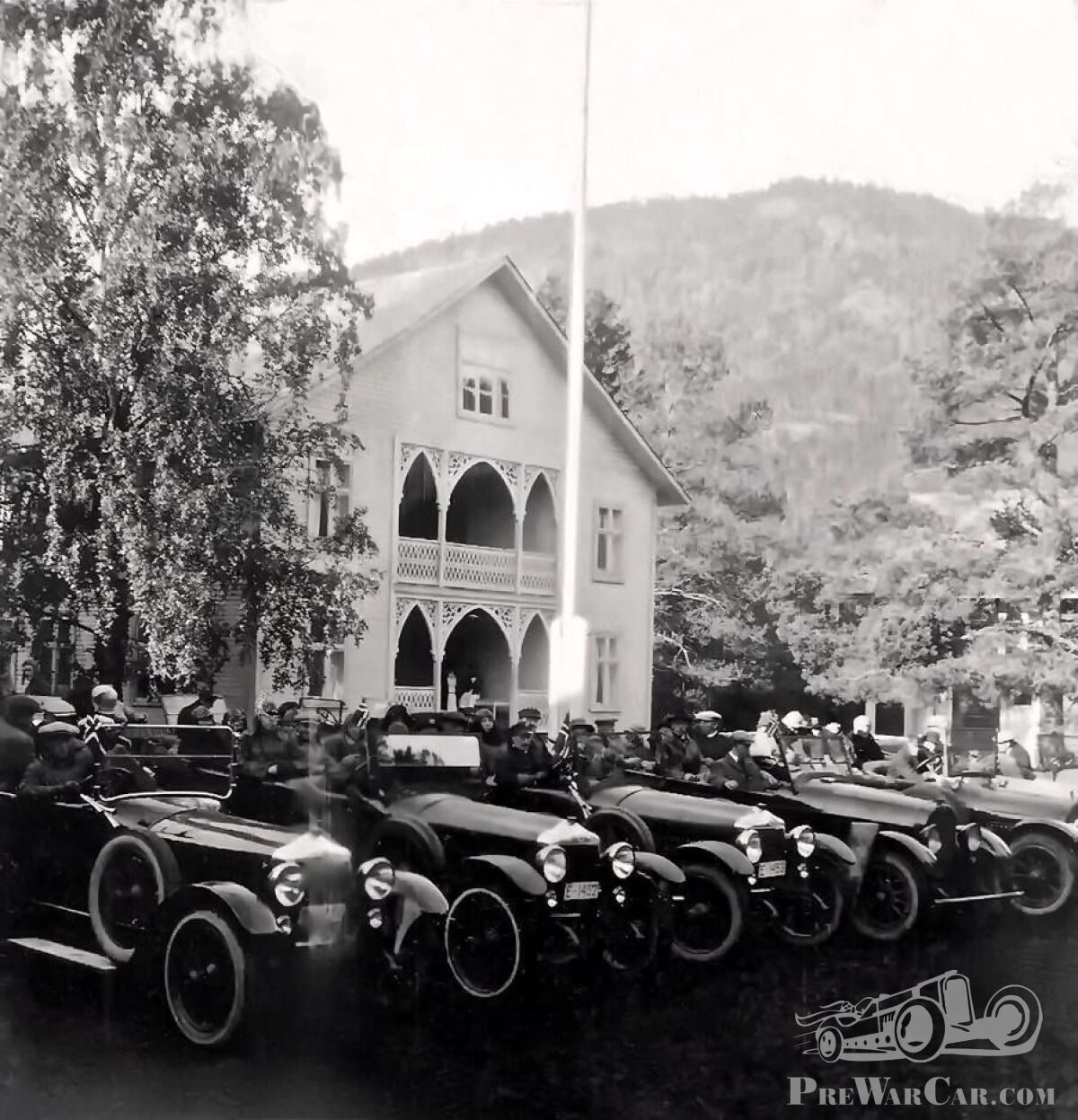
Picture of 3 Minervas outside local hotel in 1921 was missing earlier
Per saperne di più
Aksel Kopperud
07 Aprile 2020, 13:24
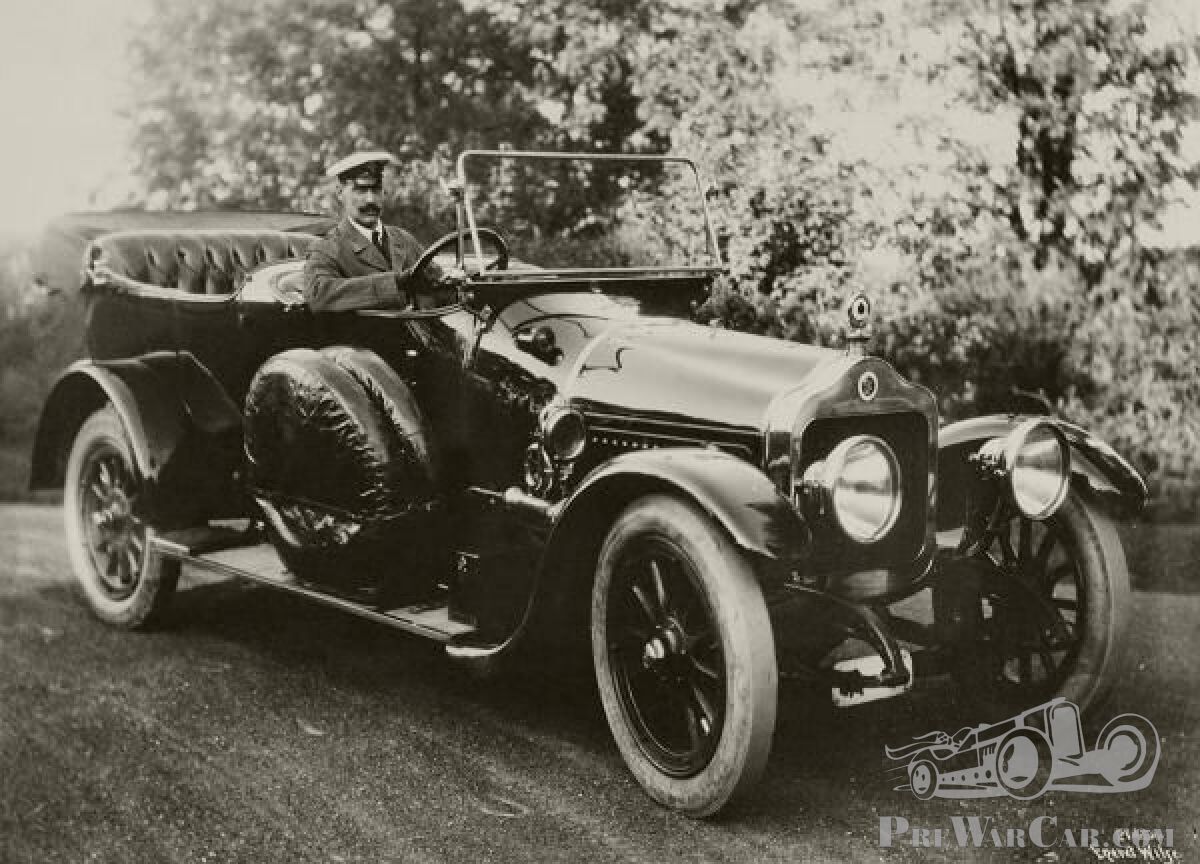
In Norway we had many cars of the brand Minerva that were used as a taxi and a mini bus. King Håkon of Norway procured 2 pieces in 1913 an open torpedo (see picture) and a closed limousine, the closed limousine is today on display at the Norwegian Technical Museum. In my home district of Valdres, the bus company acquired several Minervas that were used in daily transport (see photo from 1921 where 3 new Minervas were presented)
Per saperne di più
Hugo Modderman
07 Aprile 2020, 12:37
Well there is also the book by Philippe Boval and Albert Valcke (1998) so two books on Minerva is not bad at all. A more famous brand like Isotta Fraschini has only one book! (and a 1971 softcover)
Per saperne di più
Bart
07 Aprile 2020, 09:03
Agreed!
The book about the history of the Belgian Minerva: written by Yvette and Jacques Kupelian availible in Dutch, French and English editions - 179 pp - 21.5 x 30.5 cm - hardcover.
Per saperne di più
The book about the history of the Belgian Minerva: written by Yvette and Jacques Kupelian availible in Dutch, French and English editions - 179 pp - 21.5 x 30.5 cm - hardcover.
Albert
21 Aprile 2020, 16:41
Bart, are you sure there was an edition of this book in English? Never heard about it. If it’s true, it must be extremely rare. By the way, Minerva armored car fan here :)
Best Regards,
Albert (Warsaw, Poland)
Per saperne di più
Best Regards,
Albert (Warsaw, Poland)
Anders Svenfelt
07 Aprile 2020, 07:13
Minerva had a big share on the taxi-cab market in the Swedish capital Stockholm 1909-1914, immediately before WW1. That was probably mainly due to the efforts of the general agent Hans Osterman
Per saperne di più
The first couple of years of the restoration was difficult, but as the boxes emptied, it got easier. On each part I worked on, there were items that just amazed me in the way it was made. Castings were unbelievably complex, and would have been difficult to cast, in the days of sand casting. We have it easier today with investment casting. Things were uniquely made with devises to prevent it from failing. Things like left hand threads, to prevent backing off, small lock pins, springs etc. If I was taking something apart to check it out, and it wasn’t coming apart, I would just step back and take a good hard look at it and try to figure out what I was doing wrong. I had to make many parts as I could just not find them. I bought anything Minerva I could find at swap meets, or through car club connections, then on line. Found out that a lot of the parts were not for my model TT.
There were years I didn’t work on the car very much, as my family was my number ONE concern. A mortgage, food and clothing and children’s education was the priority. The Minerva car company used the finest bought in accessories available at the time. Scintilla starter motor, magneto,ignition. Jaeger clock, speedometer. Houdaille shocks. Malivert oil gauge. Willocq and Bottin headlights. Bosch horn.
When it came to the interior, it had pigskin leather folding top, pigskin leather upholstery . Mahogany trim inside and out. It had a headliner How many touring cars had a headlining? The top is an All Weather top.
Everything about this car was the finest they could use at that time. Being a machinist, I am a perfectionist, and I tried to make everything as close to I could determine, the way it would have been when made. In the early years of my restoration, I even made metric nuts and bolts that weren’t available, because the originals didn’t have stamping on like all bolts today. Overall, my impression of the car is that it was extremely well made, right down to the two colour enamel and 24 carat gold Minerva head radiator mascot, and the magnificent Minerva head mounted on the radiator cap.