La rivista e il marketplace globale per gli appassionati di auto d’epoca, creati da appassionati.
La rivista e il marketplace globale per gli appassionati di auto d’epoca, creati da appassionati.


Filter
Faccia la sua scelta
- Automobile
-
Marca >>
-
Anno >>
-
- Motociclette
-
Ubicazione >>
- Parti e altro
-
Marca dell'auto >>
-
Produttore >>
-
Categoria >>
- Biciclette
-
Anno >>
-
Paesi



Modern (computer) technology and PreWarCars


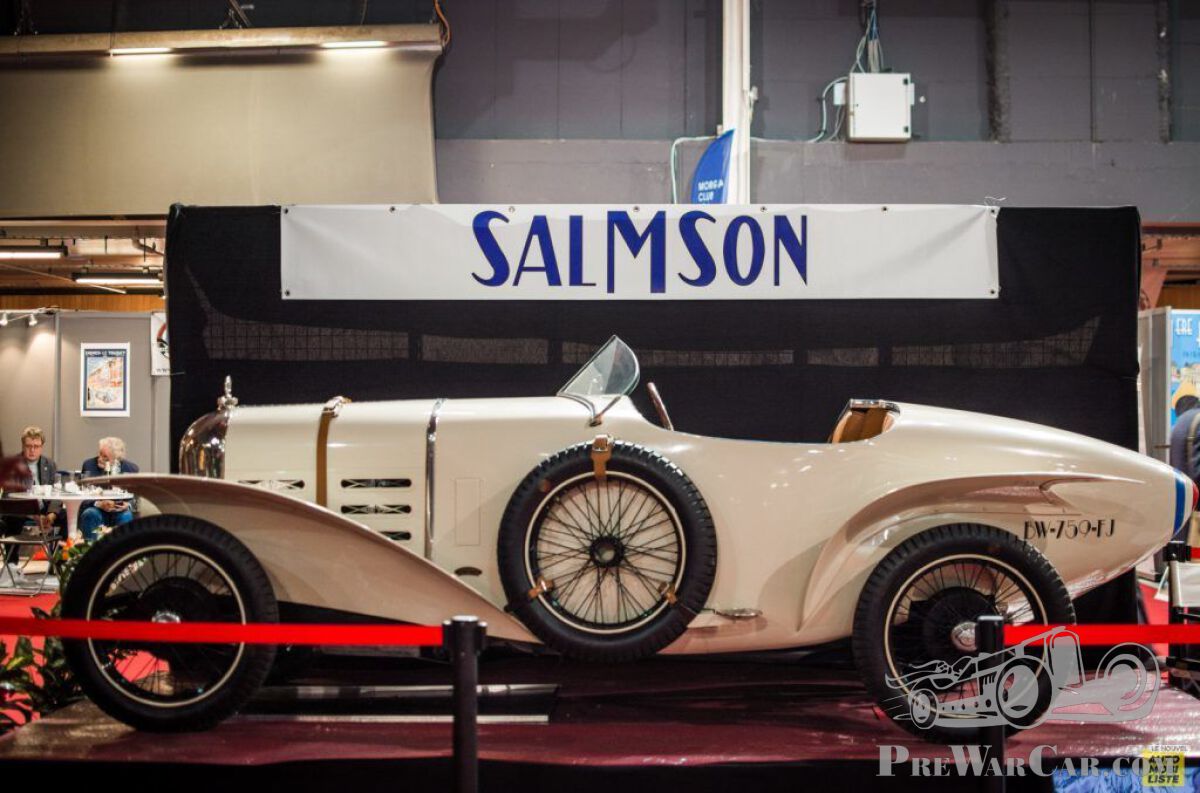
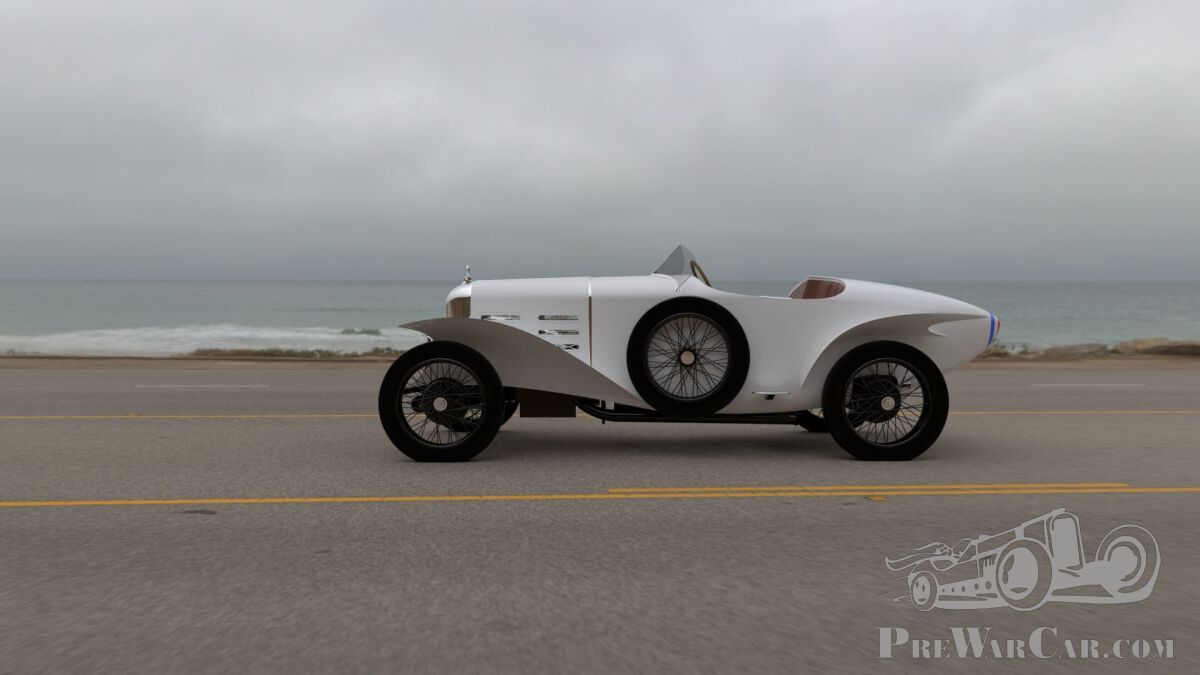
Some time ago we visited a very interesting man in the South of France whom we met through PreWarCar.com. This true professional had previously sent us beautiful drawings and renderings of his 1925 Salmson Grand Sport which he had made on the computer. Besides this, there was a wonderful video of the restoration process and the final result of the Salmson he had restored himself. You might already have seen or read about this beautiful car as we published an article called: What happens after you successfully buy or sell something at PreWarCar.com?
After talking to him, I asked myself the question: to what extent can we use modern (computer) technology for PreWarCars? I am aware this is a very broad subject. And let me be clear, the drawings and renderings our friend made from his Grand Sports were entirely and only for restoring and rebuilding his car. He is a well-known (modern) car designer and therefore this is part of his profession.
So the question is: to what extent can we use modern (computer) technology for our PreWarCars to keep our heritage on the road for future generations?
Take 3D printing, which can, for instance, be used to make new parts or create malls to make new parts. Of course, a benefit of this is that you can first scan and/or draw the original part after which you can modify/ adjust/ repair the part(s). But are we only “allowed” to use this technology to recreate old parts or also to “improve” parts for our PreWars? Is this the "new" craftmanship?
Let's take this to the next level. You can also use modern technology to build (new) PreWarCars exactly the way they were when they first came from the factory. If you would use the original factory drawings, would they then be “original” in your opinion? And what if in the future this would be the only way to preserve our heritage?
But you can also look at it from another perspective. We can ask ourselves the question whether it might be necessary to “copy” “original” PreWarCars to multiply them so they become, maybe, more affordable and accessible to a different target group (for instance youngsters). I think we all know a good example of the pur sang, originally from a well-known manufacturer starting with a B and ending with ugatti. And then we can also discuss electronic ignitions, fuel injection and other modern techniques. But that might be something for later.
Where do we draw the line of “original”? Maybe we should first ask ourselves the question: what is original? If we have a brand new PreWarCar which came straight from the factory, do you think it would be able to drive (without any modifications!)?
To what extent can we use modern (computer) technology for our PreWarCars to keep our heritage on the road for future generations?
Please comment below and give your opinion.
Words by the editor. Rendering by Steeve.
Pubblicato:
domenica dicembre 8th, 2019
Facebook
LinkedIn
Twitter
WhatsApp
Email
Copy
Commenti

Nick Willmore
13 Dicembre 2019, 10:24
I take your point about how far should we go in recreating lost parts? I think there is no doubt that many will go for reproduction brake drums made of the original steel. But having created the computer file it would be easy to then add some fins and cast the next batch in alloy for improved performance. Great for those that want to race and also those that are concerned about using their car on modern roads, but do we want to support this as a hobby? So modern approaches do allow us to push the boundaries, and reduce costs, and as the cat is out the bag there are going to be people looking for markets, I may even become one of them.
Ultimately I expect I will end up using some of the profits from the first run of drums in steel to do a smaller batch of alloy drums and see what the market decides. In the final analysis people will make their own minds up and will buy or not based on cost, availability and vision for their car. Part of the decision may be whether they want a show car or something they want to use more often, knowing that parts will wear. If they buy I will keep remanufacturing and re-inventing. Another post mentioned 3D printing which we used to mock up a prototype to check the drawing against the original so to do it in metal is a simple change in media. This then brings into play smaller scale production so it again questions cost and availability.
As to whole cars, I love the idea but in reality the cost in terms of small scale parts manufacture and the labour costs mean that it will remain a niche activity for now, much like the vintage inspired kit car.
Nick
Per saperne di più
Ultimately I expect I will end up using some of the profits from the first run of drums in steel to do a smaller batch of alloy drums and see what the market decides. In the final analysis people will make their own minds up and will buy or not based on cost, availability and vision for their car. Part of the decision may be whether they want a show car or something they want to use more often, knowing that parts will wear. If they buy I will keep remanufacturing and re-inventing. Another post mentioned 3D printing which we used to mock up a prototype to check the drawing against the original so to do it in metal is a simple change in media. This then brings into play smaller scale production so it again questions cost and availability.
As to whole cars, I love the idea but in reality the cost in terms of small scale parts manufacture and the labour costs mean that it will remain a niche activity for now, much like the vintage inspired kit car.
Nick
Yoan CONRAUX
10 Dicembre 2019, 07:43
Very beautiful car , congratulations Steeve !
Per saperne di più
steeve
09 Dicembre 2019, 15:38
The method of restoration of old vehicles is a great debate:
The important thing for me is to respect the materials and drawings of vehicle' period.
The computer is just one more help:
Whether writing a poem with a pencil, a pen, or using a computer is only a matter of method but not a guarantee of results.
When I restored the Salmson Grand Sport, I used my computer to draw the car down till the smallest detail. But always starting from original drawings.
For example the wooden structure that was designed was made in the right sections, with the same essence of wood as the original car, and with the same type of coupling.
The computer is extremely useful because we can decide each detail before starting the restoration, up to the size of the rivets !
Then some parts can be milled directly with 3D tools (like my wooden structure), other cut with laser ( like air outake), or some pieces in 3D printing (like some bielette not found that I did realize with this method).
Per saperne di più
The important thing for me is to respect the materials and drawings of vehicle' period.
The computer is just one more help:
Whether writing a poem with a pencil, a pen, or using a computer is only a matter of method but not a guarantee of results.
When I restored the Salmson Grand Sport, I used my computer to draw the car down till the smallest detail. But always starting from original drawings.
For example the wooden structure that was designed was made in the right sections, with the same essence of wood as the original car, and with the same type of coupling.
The computer is extremely useful because we can decide each detail before starting the restoration, up to the size of the rivets !
Then some parts can be milled directly with 3D tools (like my wooden structure), other cut with laser ( like air outake), or some pieces in 3D printing (like some bielette not found that I did realize with this method).
Wilson Jones Walthall III
09 Dicembre 2019, 15:26
As long as form, fit, and function of the completed car part is the same as the original, modern technology should be used to provide the best part at the lowest cost. 'The cat is already out of the bag' on now much of a car can be produced with modern technology with many parts used in E-type restorations being made this way now, and the 'continuation serial number' whole cars (D's for example) being produced.
Judges will need to separate winners by 'how close to as originally built' the example is. Like dog shows where the individual is measured against the standard of the breed.
Per saperne di più
Judges will need to separate winners by 'how close to as originally built' the example is. Like dog shows where the individual is measured against the standard of the breed.
Chris Leigh-Jones
08 Dicembre 2019, 09:17
I think to explore this point, we need to pose a few questions as no single ethos is all-inclusive of the audience we have. Do we keep alive and focus on only:
the simplicity of build-in local machine shops using hand finishing tools and basic mechanical processes?
the human skills of hand tools, fitting, metal fabrication?
the absolute originality of only parts sourced from early production?
the fun of ownership and driving experience with limited performance, road handling and a direct feel of the local elements?
I doubt any single answer will satisfy every passion, budget or project though for me, I'll take anything going to keep them on the road, the wind in my thinning hair and wide-eyed stairs of appreciative grandchildren whose memories I'm gently influencing beyond my own lifetime. Chris
Per saperne di più
the simplicity of build-in local machine shops using hand finishing tools and basic mechanical processes?
the human skills of hand tools, fitting, metal fabrication?
the absolute originality of only parts sourced from early production?
the fun of ownership and driving experience with limited performance, road handling and a direct feel of the local elements?
I doubt any single answer will satisfy every passion, budget or project though for me, I'll take anything going to keep them on the road, the wind in my thinning hair and wide-eyed stairs of appreciative grandchildren whose memories I'm gently influencing beyond my own lifetime. Chris
Tony Hillyard
08 Dicembre 2019, 08:21
I am with Allan Lewis on this. Having seen some really poor quality reproduction parts that usually don't fit very well, the idea of using original parts or drawings via 3D printing to create, for example patterns for sand casting, seems so obvious, you wonder why we are even discussing it.
In the day, the engineers would use the very latest technology to produce the vehicles we cherish today. As the current engineers are doing in the twenty first century. It is our duty to preserve these pieces of history for the future generations.
Per saperne di più
In the day, the engineers would use the very latest technology to produce the vehicles we cherish today. As the current engineers are doing in the twenty first century. It is our duty to preserve these pieces of history for the future generations.
Allan B. Lewis
08 Dicembre 2019, 02:15
If we turn this question around “If we don’t use computer technology to fabricate parts for the car, will it become too expensive to restore? “
To me the most exciting 3D printing process is the direct printing of sand moulds for sand casting. In this process the fabrication of a wood pattern for the part is eliminated; the part cast of the original metal (or superior) then machined. When the car was manufactured, the cost of patterns was distributed among a number of cars. But when only one is being restored . . .
There is a cost to the time required to accurately reverse engineer the part and create the digital solid model file for each part to be reproduced. This is only a percentage of the cost to make a pattern; the file can be shared with another restorer in another part of the world over the internet (a charge of less that half the cost of creating the file would not be out of order).
In judging of restored cars, a new factor in grading the car being examined will be the accuracy of the reproduced parts.
I say, use the best process available to keep restoration affordable.
ABL
Per saperne di più
To me the most exciting 3D printing process is the direct printing of sand moulds for sand casting. In this process the fabrication of a wood pattern for the part is eliminated; the part cast of the original metal (or superior) then machined. When the car was manufactured, the cost of patterns was distributed among a number of cars. But when only one is being restored . . .
There is a cost to the time required to accurately reverse engineer the part and create the digital solid model file for each part to be reproduced. This is only a percentage of the cost to make a pattern; the file can be shared with another restorer in another part of the world over the internet (a charge of less that half the cost of creating the file would not be out of order).
In judging of restored cars, a new factor in grading the car being examined will be the accuracy of the reproduced parts.
I say, use the best process available to keep restoration affordable.
ABL
In a landscape of high costs and vanishing trade skills (in Australia at least), the use of laser scanning, computer modelling and simulation, and sand printing of moulds made these projects viable. They also assisted faithful reproduction and reduced project risk.
Modern technology can be utilised to efficiently recreate individual parts and evaluate assemblies, which result in more accurate reproductions. An example is 3D printed sand moulds for castings. The manufacture of the moulds may be high tech, but the result is a reproduction of great accuracy achieved at comparatively reasonable cost. Without using the most efficient tools available, more and more dynamic examples of our motoring heritage will fade away as static museum pieces.