La rivista e il marketplace globale per gli appassionati di auto d’epoca, creati da appassionati.
La rivista e il marketplace globale per gli appassionati di auto d’epoca, creati da appassionati.


Filter
Faccia la sua scelta
- Automobile
-
Marca >>
-
Anno >>
-
- Motociclette
-
Ubicazione >>
- Parti e altro
-
Marca dell'auto >>
-
Produttore >>
-
Categoria >>
- Biciclette
-
Anno >>
-
Paesi



Mystery brakes on the Parry Thomas GP Car (update: Perrot ?)

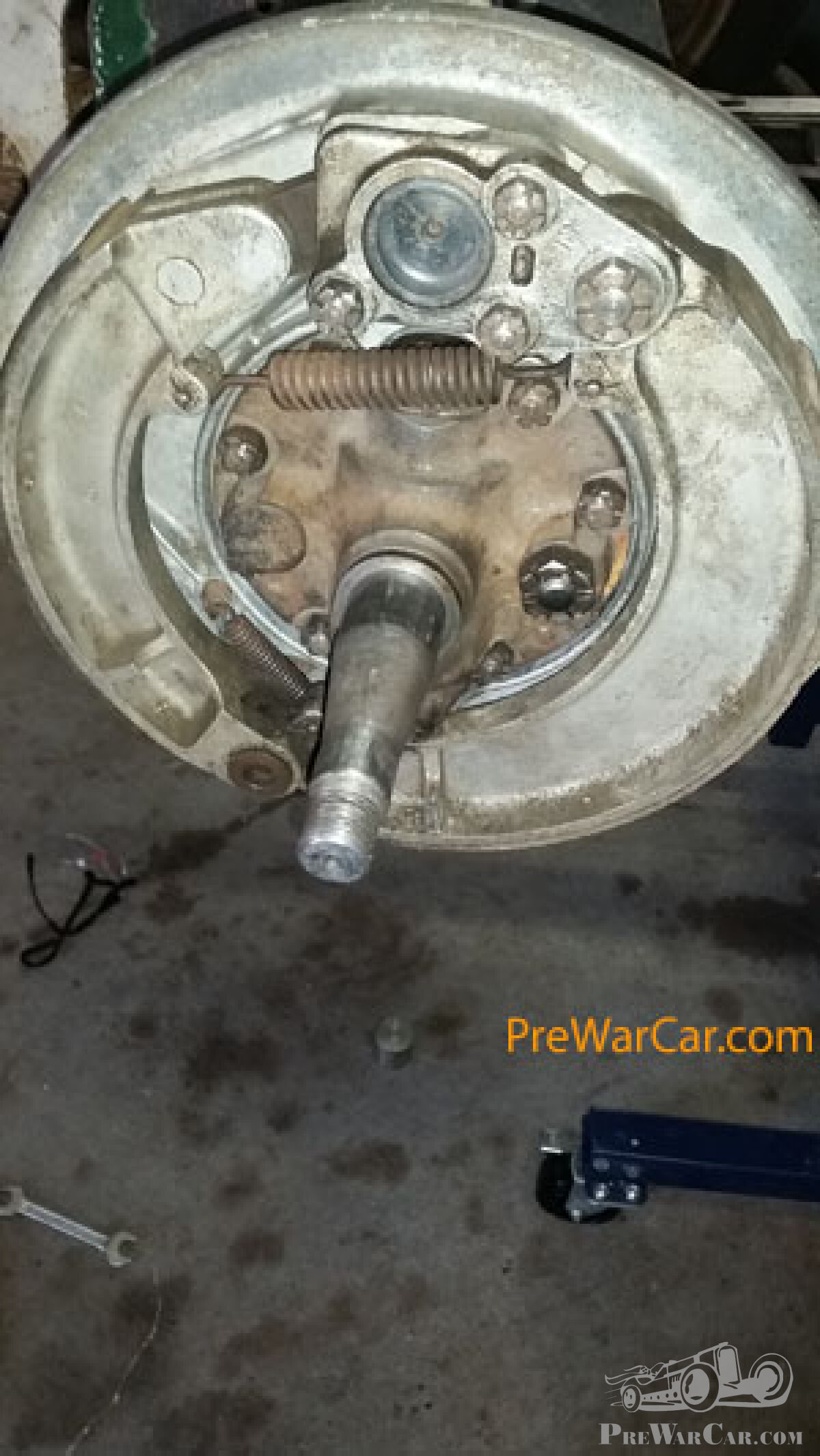
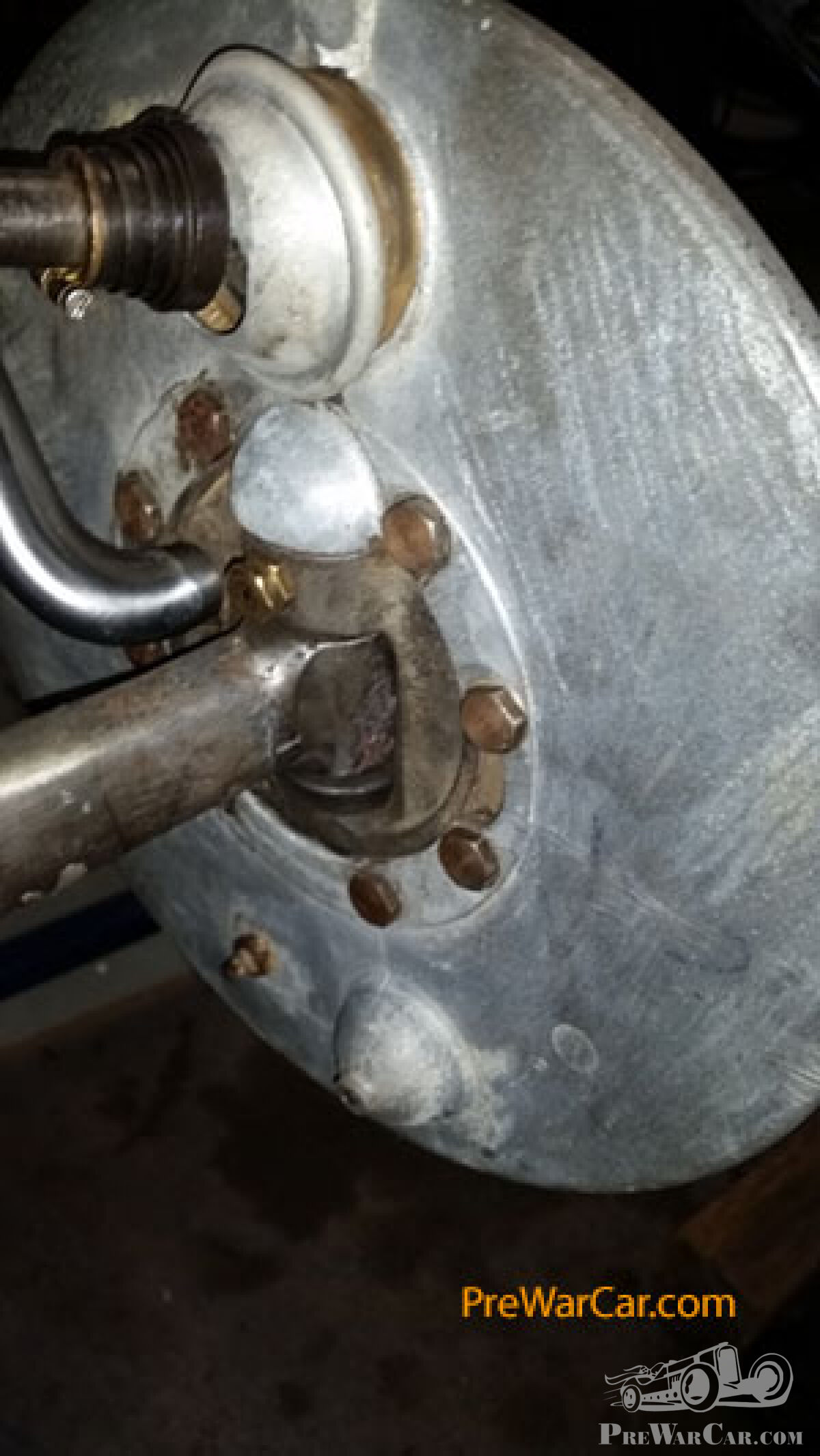


Geraint Owen, whom we all know from the famous BABS (a lot less people know he was the first private to sell a car through these pages many-many years ago), has problems identifying the vintage brakes on another brilliant car, the Parry Thomas Flatiron car (right in the picture below, Babs on the left and the Leyland-Thomas in the middle).
'They are metric (all the bolts are metric threads and the diameter is 300 mm). They may well have been made in France, but I know for sure that they were made in the winter of 1925/26. They are fitted to the Parry Thomas Flatiron GP car'
Any idea about these mystery brakes? Please share your comments and/or educated guess below.
Pubblicato:
martedì settembre 13th, 2016
Facebook
LinkedIn
Twitter
WhatsApp
Email
Copy
Commenti
Sconosciuto
15 Settembre 2016, 15:56
Sconosciuto
15 Settembre 2016, 07:04
These are Perrot type brakes, possibly built under licence by Hersot. They are identical in most respects to those on our 1928 Le Zèbre Z-10 2-litre car, on which they were an optional fitting. The drum ribbing pattern is slightly different (with cast-in iron liners) and our car has 8 bolts fastening the drum to the hub flange. They are extremely effective when correctly adjusted. Our stub axles are stamped: Vermot - 2 25 – Paris, & Verm... – 3.25 – Paris. I'd guess that Vermot was the Forge where these were manufactured.
Per saperne di più
Sconosciuto
15 Settembre 2016, 06:04
Hello Geraint, i stay in my garage at the next weekend and i make some pictures of my drums.
Per saperne di più
Sconosciuto
14 Settembre 2016, 20:45
It looks to be very similar to a Diatto style set up.
Per saperne di più
Sconosciuto
14 Settembre 2016, 19:09
It looks like an enhanced version of the Perrot brakes.
The Donnet CI6 was equipped with similar Perrot brakes from the end of 1926.
see: http://www.bloggen.be/donnet_ci6/archief.php?startdatum=1306706400&stopdatum=1307311200
Per saperne di più
The Donnet CI6 was equipped with similar Perrot brakes from the end of 1926.
see: http://www.bloggen.be/donnet_ci6/archief.php?startdatum=1306706400&stopdatum=1307311200
Sconosciuto
14 Settembre 2016, 16:31
Mechanically, the drum would suffice for an average road car, or racing in "1924".
The steering knuckle/backing plate appears to me as SEVERELY deficient. Even today plates are of stamped steel, what you see was "nonsense" in 1924.
Per saperne di più
The steering knuckle/backing plate appears to me as SEVERELY deficient. Even today plates are of stamped steel, what you see was "nonsense" in 1924.
Sconosciuto
14 Settembre 2016, 14:53
I agree with Craig - they look like Perrot made drums to me too
Per saperne di più
Sconosciuto
14 Settembre 2016, 14:34
Jens,
I think you are right, they look very very similar. Could you take some photos of yours so I can double check. The big question is what do the brakes on the rear of a G-type Mathis look like?
Per saperne di più
I think you are right, they look very very similar. Could you take some photos of yours so I can double check. The big question is what do the brakes on the rear of a G-type Mathis look like?
Sconosciuto
14 Settembre 2016, 11:19
The Sunbeam 14/40 used the same layout as the slightly later 20HP. The 14/40 was built in the period in question, 1924-1927.
Per saperne di più
Sconosciuto
14 Settembre 2016, 11:12
The backplates and the internals look like Sunbeam 20HP (1926-1930). Sunbeams were made in Wolverhampton UK but of course were famous for using metric threads (due to Louis Coatalen's influence). The drum looks custom cast as the fluting on the rim is different.
Per saperne di più
Sconosciuto
14 Settembre 2016, 07:08
Hello i have the same type of brakes, the brakes were installed in a Mathis Type G 1924. (see link)
http://www.antiqbrocdelatour.com/Les-collections/voitures-anciennes-doc/2f-photos-images/Mathis%20-%20Type%20G%201924.jpg
Per saperne di più
http://www.antiqbrocdelatour.com/Les-collections/voitures-anciennes-doc/2f-photos-images/Mathis%20-%20Type%20G%201924.jpg
Craig Little.
14 Settembre 2016, 03:26
Looks like original Perrot manufactured components to me.
Per saperne di più
I guess the problem is that Perrot made both "stock" axles and custom ones for many manufacturers, so finding the exact application may be a problem.