La rivista e il marketplace globale per gli appassionati di auto d’epoca, creati da appassionati.
La rivista e il marketplace globale per gli appassionati di auto d’epoca, creati da appassionati.


Filter
Faccia la sua scelta
- Automobile
-
Marca >>
-
Anno >>
-
- Motociclette
-
Ubicazione >>
- Parti e altro
-
Marca dell'auto >>
-
Produttore >>
-
Categoria >>
- Biciclette
-
Anno >>
-
Paesi



On the market: a baby Invicta seeks the oily-rag touch


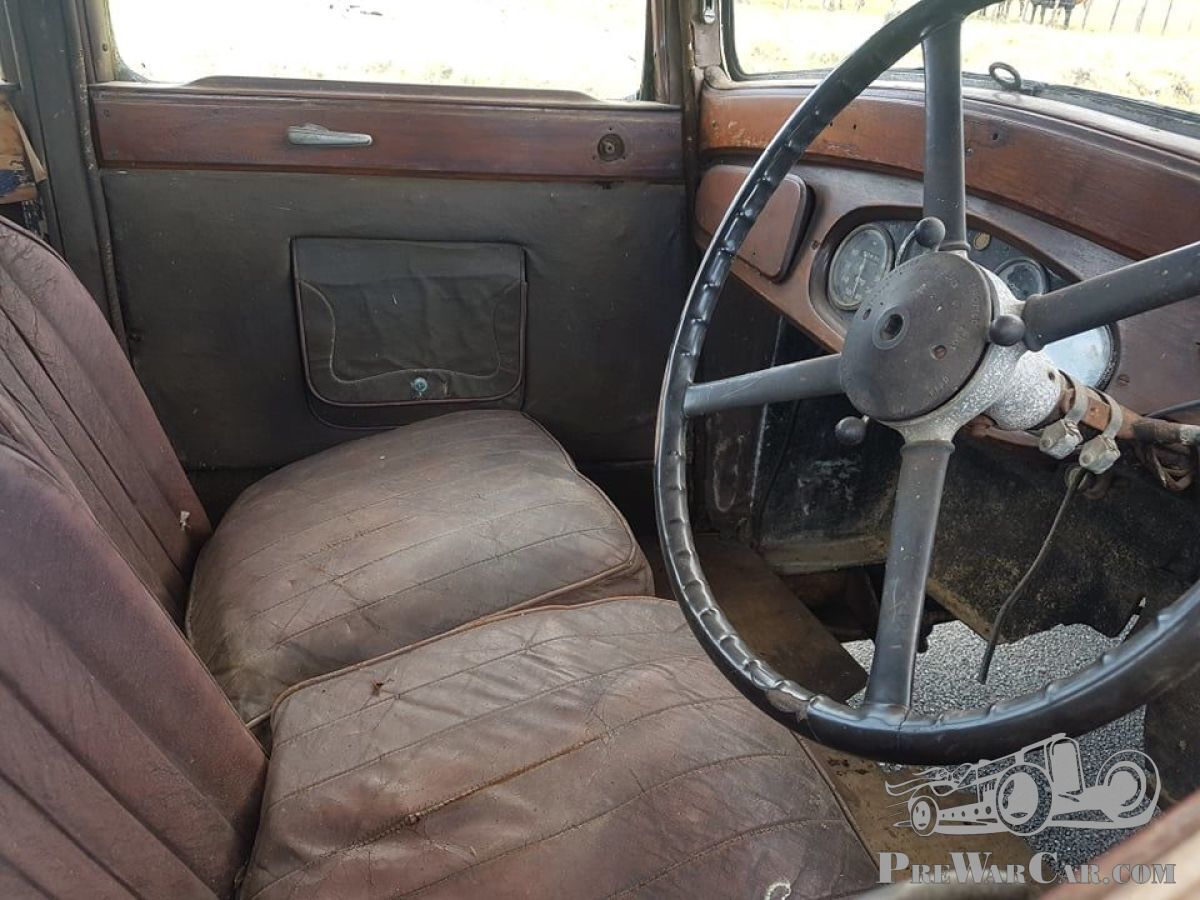


To most people, the marque Invicta probably means one of two cars: the vintage 'High Chassis' models of 2½-, Three- and 4½-Litres, or the post-vintage 'Low Chassis' S-type, all of which were powered by six-cylinder Meadows engines. Some enthusiasts might remember the post-war Black Prince, but that's really a whole different kettle of fish... The High Chassis were famous for the long-distance endurance records set with Violette Cordery at the wheel, while the S-type was celebrated for its major rally victories with Donald Healey.
There was a third model, though, often forgotten and rarely seen, and that was the 12/45. The big Invictas were expensive cars and couldn't be sold in sufficient numbers for the company to stay financially stable, so it tried to prolong its life by introducing a smaller, cheaper model in 1932. The 12/45 looked at first glance like the 4½-Litre, and it was still a six, but the engine was made by Blackburne and its capacity was only 1½ litres. It was a fine-looking machine but underpowered; its performance did not match its looks. Invicta's days were numbered and the last cars were built in 1935, after very few 12/45s had been made. A supercharged sibling, the 12/90, was even shorter-lived.
We know little about the splendid 1932 12/45 saloon seen here and offered for sale with Hans Compter Rare Cars in Eibergen in the Netherlands, except that it has been in single ownership since 1967, when it was bought from London by Compter for his impressive museum of rare cars, which he has built up over more than 60 years of collecting.
The Invicta is advertised as being 'suitable for making a special', in response to which we feel obliged to comment that it manifestly is not, and we hope that any ethical club or race organizer would not accept it if it did get cut up. It is suitable for one thing only, and that is very sympathetic restoration by an appreciative enthusiast. It is a pity that the original engine and gearbox appear to have been lost, but an AC six-cylinder engine and gearbox is supplied for fitment.
In addition to the mechanical work required, it looks as though the Invicta will need some bodywork repairs, but we'd like to see the emphasis placed on preservation. We'd take a guess that it wears a 1950s paint job. The unmolested leather upholstery is a real asset to the car and looks easily salvageable. Whoever takes this project on will end up with a superb car for pre-war touring. At €19,500 (approx. £16,800), it has to be worth serious consideration.
Words: Zack Stiling; pictures: Hans Compter Rare Cars
Pubblicato:
mercoledì luglio 12th, 2023
Facebook
LinkedIn
Twitter
WhatsApp
Email
Copy
Commenti
Steve Diggins
17 Luglio 2023, 21:00
Hello Peter, that is a very smart looking car you have. Could you let me know the name of the colour?
Per saperne di più
Peter Maguire
17 Luglio 2023, 17:07
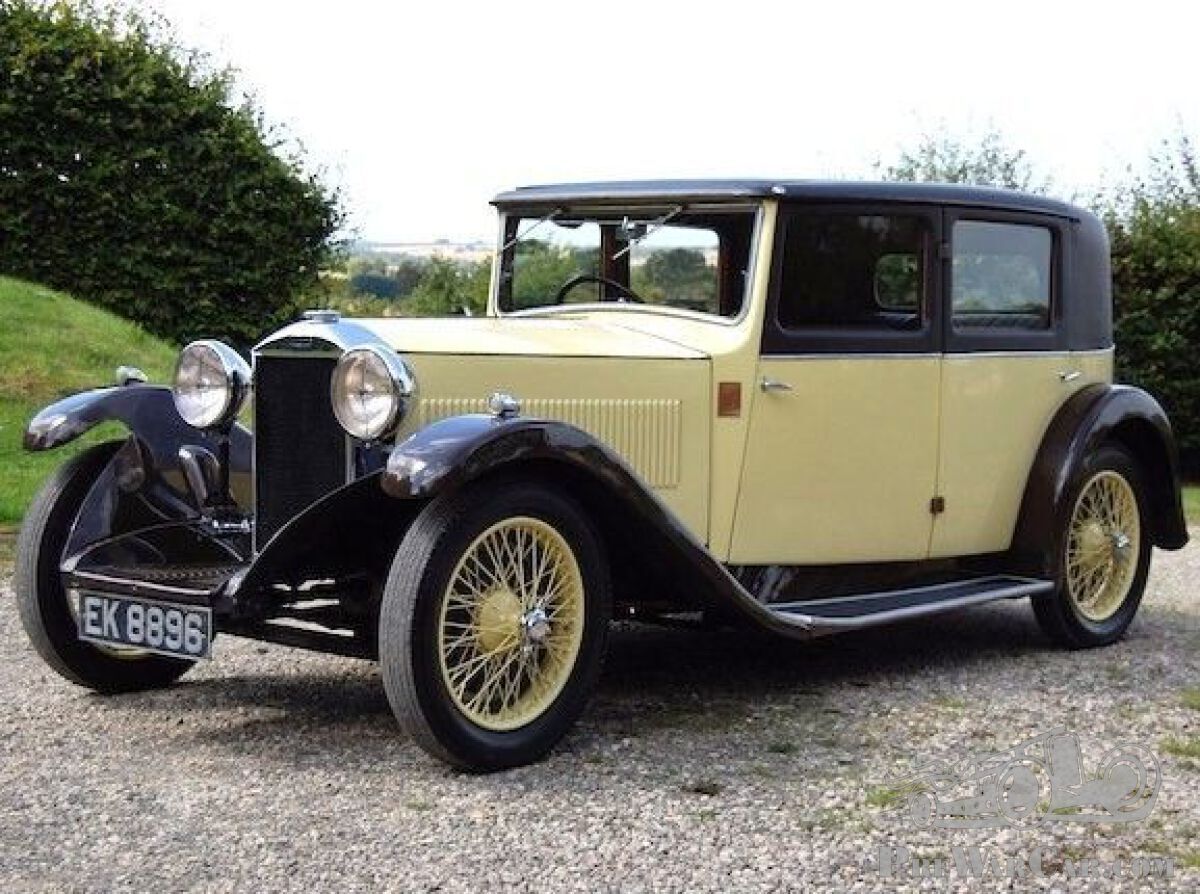
I recently purchased the only complete original running 12/45 Invicta Carbodies saloon. What a nice car it is and, I think, probably a little underated.
It has been maintained rather than restored and I plan to keep it that way. I am very pleased to own it.
Now, the original 'Motor' magazine road test suggested that they were a little 'underpowered' without actually using that word !
However, it was capable of circulating 'Brooklands' at a steady 65MPH, an acceptable speed I would have thought. The qouted top speed was just under 70.
As far I know Blackburn Airplanes, who built the motor, never really developed it thoroughly. They did produce a twin-cam version which seems to only have been fitted to Fraser-Nash cars(the one fitted to my car is S.O.H.C.), of which there were only 12 made. These were very experimental and no two of which are exactly alike, according to information in a monograph by M.W. Vincent 'The Role of Blackburn(e !) Engines in Road and Air Propulsion' .
I have a lot of information with my car dating back to before 1960. This includes a copy of the original Owners Manual.
When the car arrived it was suggested that it could be running a little rich. Nturally I drove it before touching anything and it was immediately apparent that not all was well. Yes, it was running rich, easily sorted by adjusting the carburettor air jet. It was also running horribly advanced.
From written records I know that the engine was rebuilt (a very thorough job and well documented) in early-mid 1981. There was a big problem after the rebuild in getting the engine to run properly. Eventually it was settled on an advance of 20 degrees at full retard. This was to give the Manuals recommended advance of 60 DEGREES (!!!) on full advance. YES, 60 degrees is the advance setting given in the Manual.
I think that it is as a result of this that the car has had little use during the past 20-30 years.
I have plenty of experience of manuscrips and proofing of typrsetting. AND I know how 6 degrees would have been written down in 1932.
It would have been a '6' with a tiny, elevated '0'. This cannot be replicated on a typewritten manuscript, hence I guessed '60' for '6'.
A typed manuscript would have been given to the typesetter, rather than a handwrittenone which could lead to a mistake occuring !!
The engine is now set at 6 degrees static advance as a auto-advance distributor is currently fitted. The engine now runs very sweetly indeed.
The car will now ascend hills, something that it was disinclined to do with the old advance settings.
What I find difficult to understand is why, in the intervening 50 years, anyone listening to the engine did not pick up that it was incorrectly set, as it did not sound at all right (at least to me).
By the way, I was 'taught' by a real motor engineer who said, if you do not have a figure to go by, set to T.D.C. with the points just breaking and work from that.
Best regards, Peter Maguire.
Per saperne di più
It has been maintained rather than restored and I plan to keep it that way. I am very pleased to own it.
Now, the original 'Motor' magazine road test suggested that they were a little 'underpowered' without actually using that word !
However, it was capable of circulating 'Brooklands' at a steady 65MPH, an acceptable speed I would have thought. The qouted top speed was just under 70.
As far I know Blackburn Airplanes, who built the motor, never really developed it thoroughly. They did produce a twin-cam version which seems to only have been fitted to Fraser-Nash cars(the one fitted to my car is S.O.H.C.), of which there were only 12 made. These were very experimental and no two of which are exactly alike, according to information in a monograph by M.W. Vincent 'The Role of Blackburn(e !) Engines in Road and Air Propulsion' .
I have a lot of information with my car dating back to before 1960. This includes a copy of the original Owners Manual.
When the car arrived it was suggested that it could be running a little rich. Nturally I drove it before touching anything and it was immediately apparent that not all was well. Yes, it was running rich, easily sorted by adjusting the carburettor air jet. It was also running horribly advanced.
From written records I know that the engine was rebuilt (a very thorough job and well documented) in early-mid 1981. There was a big problem after the rebuild in getting the engine to run properly. Eventually it was settled on an advance of 20 degrees at full retard. This was to give the Manuals recommended advance of 60 DEGREES (!!!) on full advance. YES, 60 degrees is the advance setting given in the Manual.
I think that it is as a result of this that the car has had little use during the past 20-30 years.
I have plenty of experience of manuscrips and proofing of typrsetting. AND I know how 6 degrees would have been written down in 1932.
It would have been a '6' with a tiny, elevated '0'. This cannot be replicated on a typewritten manuscript, hence I guessed '60' for '6'.
A typed manuscript would have been given to the typesetter, rather than a handwrittenone which could lead to a mistake occuring !!
The engine is now set at 6 degrees static advance as a auto-advance distributor is currently fitted. The engine now runs very sweetly indeed.
The car will now ascend hills, something that it was disinclined to do with the old advance settings.
What I find difficult to understand is why, in the intervening 50 years, anyone listening to the engine did not pick up that it was incorrectly set, as it did not sound at all right (at least to me).
By the way, I was 'taught' by a real motor engineer who said, if you do not have a figure to go by, set to T.D.C. with the points just breaking and work from that.
Best regards, Peter Maguire.
Bill Munro
16 Luglio 2023, 11:06
Nice example of a Carbodies Atlantic saloon body. I've long thought this body sits well on the Invicta chassis.
Per saperne di più