La rivista e il marketplace globale per gli appassionati di auto d’epoca, creati da appassionati.
La rivista e il marketplace globale per gli appassionati di auto d’epoca, creati da appassionati.


Filter
Faccia la sua scelta
- Automobile
-
Marca >>
-
Anno >>
-
- Motociclette
-
Ubicazione >>
- Parti e altro
-
Marca dell'auto >>
-
Produttore >>
-
Categoria >>
- Biciclette
-
Anno >>
-
Paesi



Once upon a time in London
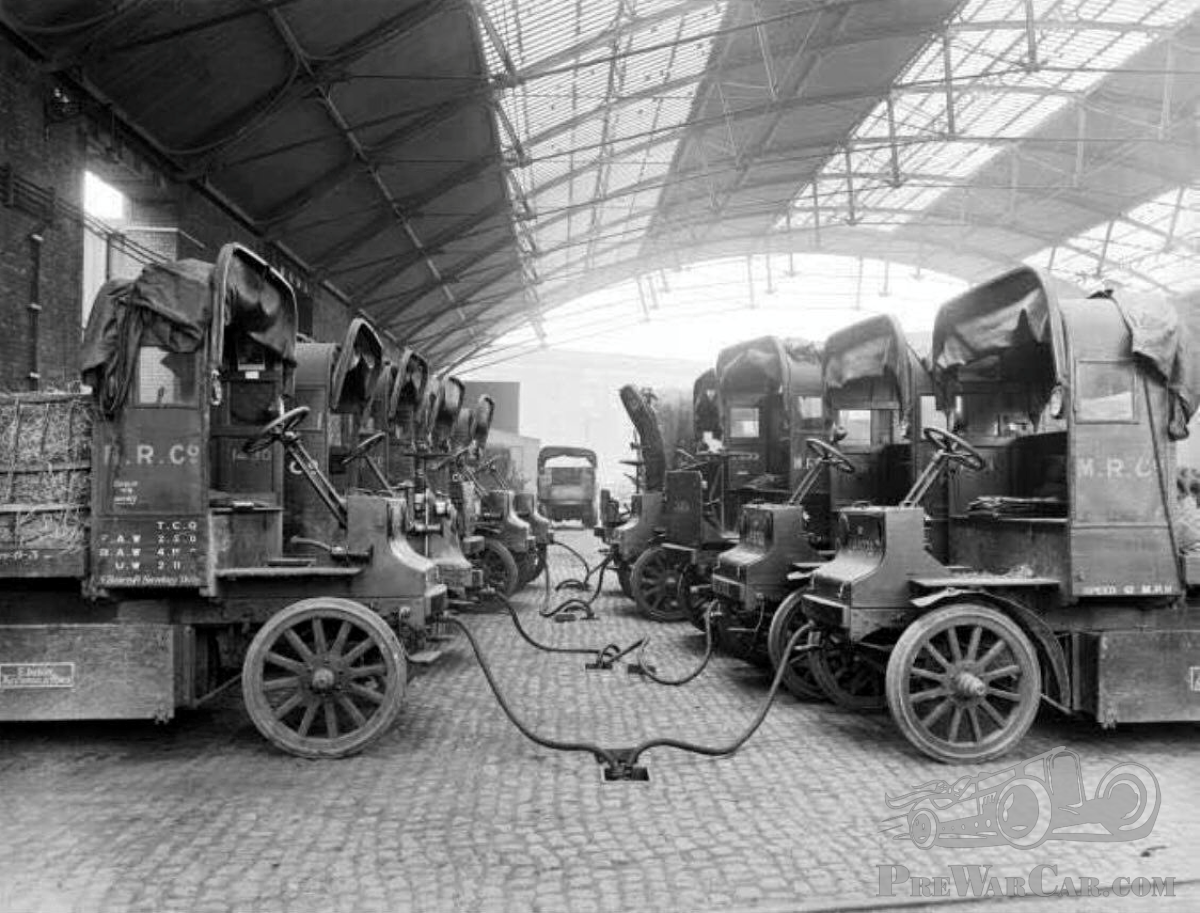


While London’s mayor Sadiq Khan proposes a daily "clean air charge" for petrol and diesel cars in the capital, the Evening Standard headed "Londoners buying electric cars soars as capital shifts to becoming green city" recently.
Lorries being refuelled at St. Pancras
But then take a look at this. An image you may not have seen before? The original caption with this one reads: "Lorries being refuelled at St. Pancras goods depot, London, 11 July 1917." But those words must not be taken too literally as these lorries are clearly being recharged rather then refuelled. Yes, those are electricity cables and not fuel lines!
The information doesn’t end there: "These lorries were used to carry goods around goods depots and to deliver them to offices in towns. The Midland Railway owned a variety of road vehicles. At this time horse-drawn transport was still widely used but motor vehicles were starting to become more common."
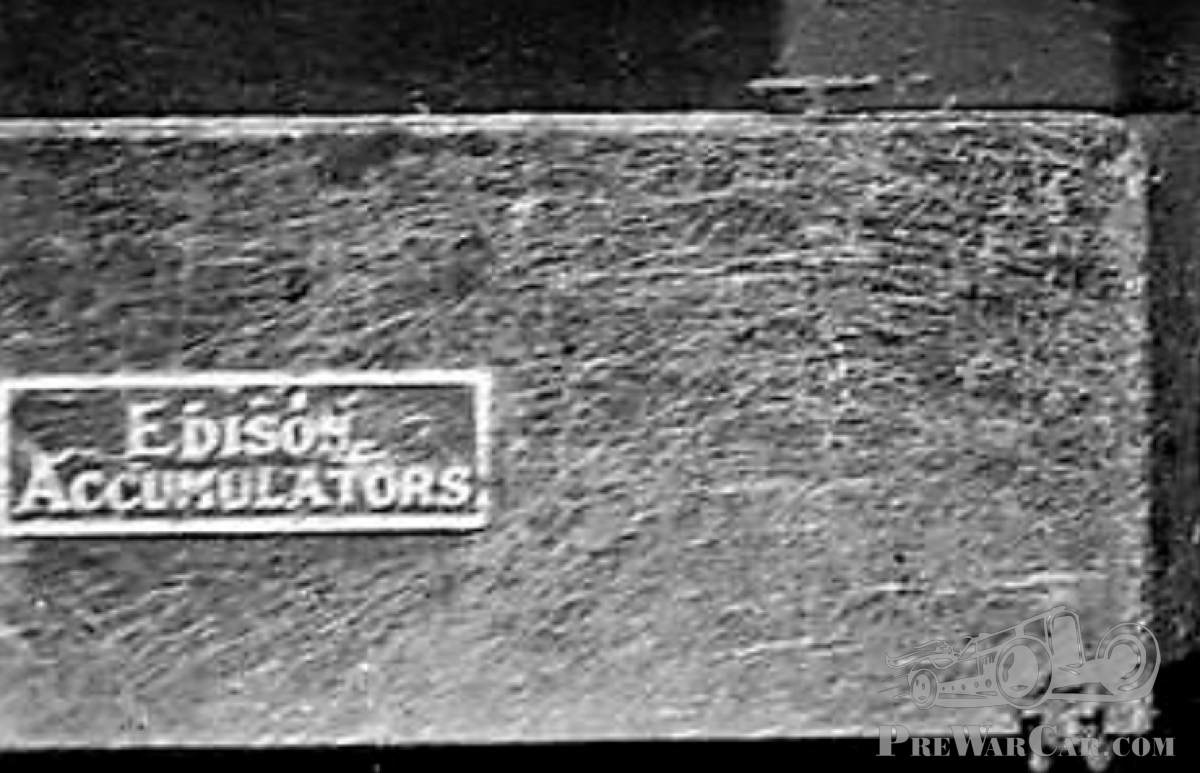
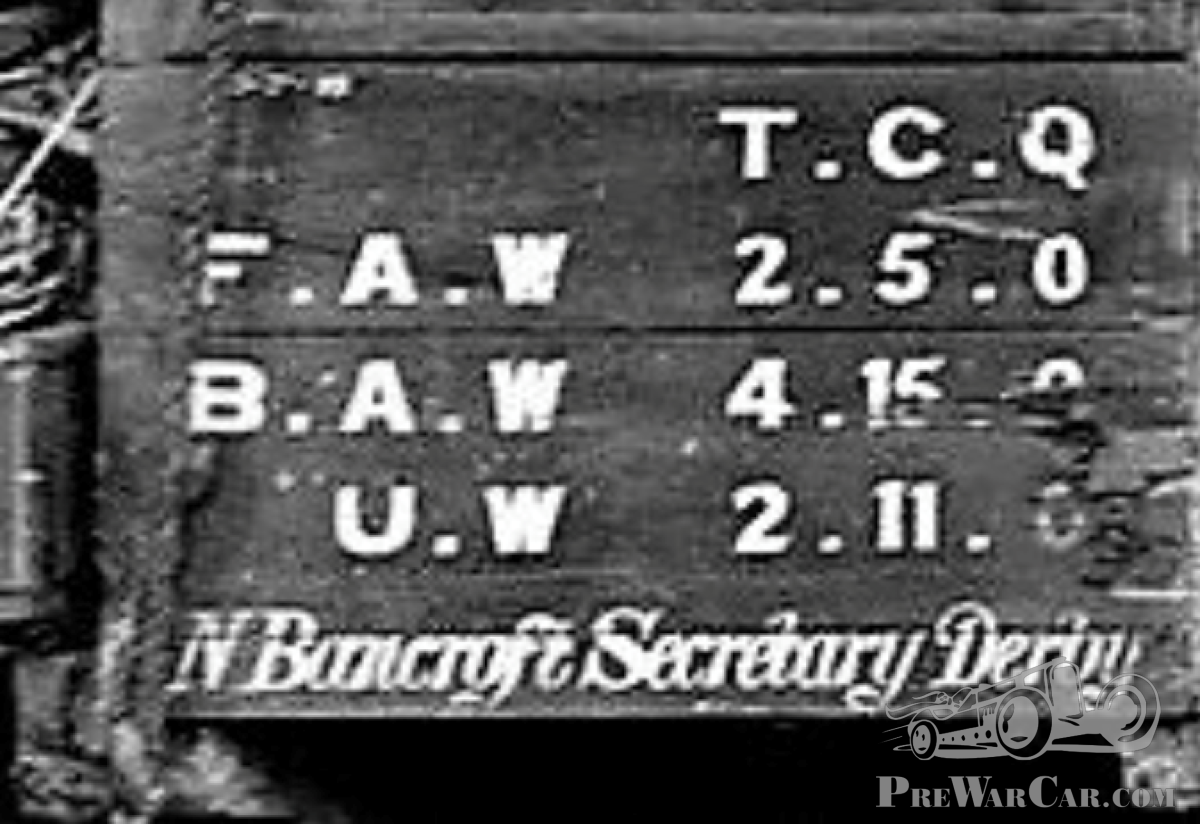
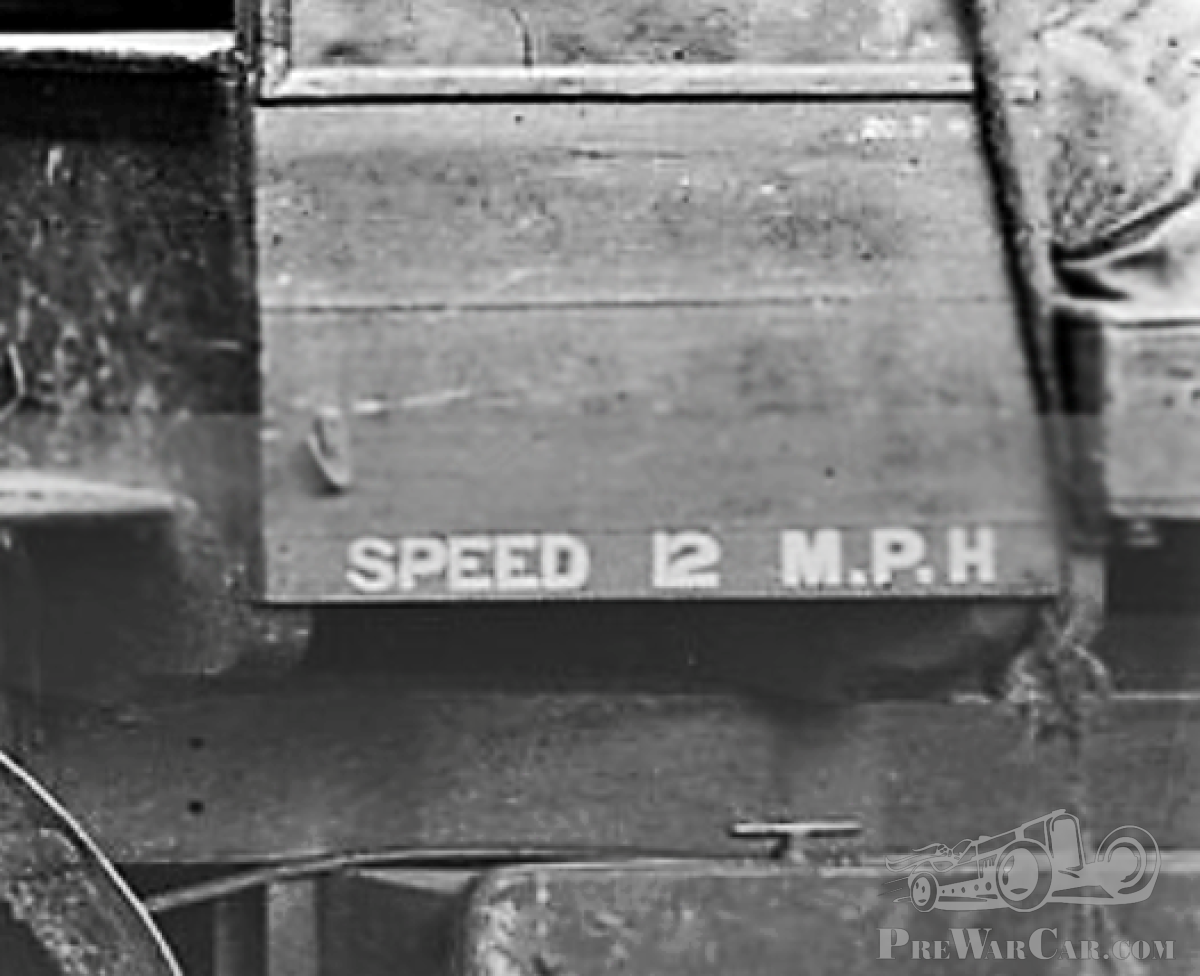
Zooming in reveals a bit more details about the lorries themselves. The one at the front on the left has Edison Accumulators on its side and a number of letters and figures, which we don’t really understand (do you?). The one front right has written on its body: SPEED: 12 M.P.H. But is anything more known about these vehicles? Were they American imports, or British-made after all? Leyland Motors perhaps, which offered 'petrol-electric railway cars' at the time?
Words Jeroen Booij. Picture Science & Society Picture library.
Pubblicato:
lunedì gennaio 24th, 2022
Facebook
LinkedIn
Twitter
WhatsApp
Email
Copy
Commenti
David Grimstead
25 Gennaio 2022, 01:46
David Scott
24 Gennaio 2022, 07:51
Very simple, if you grew up in England!! T.C.Q is Tons ,Hundredweights, Quarters, a ton is obvious 2240 pounds (lbs), a hundredweight ( cwt) was 112 lbs and a quarter was 26 pounds.
The weights are, I would guess, Front Axle Weight, Rear Axle Weight and Unladen Weight, the display of the name of the Company Secretary was a legal requirement at the time, up to the 60s I would guess.
If you think this is complicated, our school exercise books had the entire rear cover as a chart of "avoirdupois", weight, volume, length and area including such gems as Rods, Poles or Perches, Chains ( still used on railways today, if you look on a structure you will find a C.I. plaque giving the number and distance from the terminus), Gills, Pints,Quarts, and Gallons ( British "long" Gallons of course ) Furlongs, etc. I would struggle to work it all out, but I always worked in engineering-oriented jobs so we went metric in 1972, so much simpler than trying to work out a seventh of 7ft11 13/16 inches in your head! Brexiteers are welcome to it!!
Per saperne di più
The weights are, I would guess, Front Axle Weight, Rear Axle Weight and Unladen Weight, the display of the name of the Company Secretary was a legal requirement at the time, up to the 60s I would guess.
If you think this is complicated, our school exercise books had the entire rear cover as a chart of "avoirdupois", weight, volume, length and area including such gems as Rods, Poles or Perches, Chains ( still used on railways today, if you look on a structure you will find a C.I. plaque giving the number and distance from the terminus), Gills, Pints,Quarts, and Gallons ( British "long" Gallons of course ) Furlongs, etc. I would struggle to work it all out, but I always worked in engineering-oriented jobs so we went metric in 1972, so much simpler than trying to work out a seventh of 7ft11 13/16 inches in your head! Brexiteers are welcome to it!!
Anthony Green
24 Gennaio 2022, 07:12
T.C.Q. = Tons – CWT (Hundredweight) - Quarters
F.A.W. Front Axle Weight
B.A.W. Back Axle Weight
U.W. Unladen Weight
Per saperne di più
F.A.W. Front Axle Weight
B.A.W. Back Axle Weight
U.W. Unladen Weight
Michael Edwards
24 Gennaio 2022, 07:05
The ‘U W’ stands for unladen weight, that is the weight of the vehicle without cargo. The ‘T, C, Q’ are abbreviations for ‘Ton’, ‘Hundredweight’ and ‘Quarter’ - standard measurements at the time. The other letters relate to the ‘Allowed’ weight of the cargo carried, and the total weight of vehicle and cargo.
Per saperne di più
The first Edison commercial van was displayed by his Storage Battery Company of Great Portland-street, London in 1912. Lord Montague of Beaulieu opened new showrooms in Duke-street, London in November 1913 when he enthused about the low running cost of its commercial vehicles, citing a quarter penny per ton-mile costs using electricity at half a penny per unit. Their batteries were Nickel-Iron (“NIFE”) cells; still low power density but lighter, very rugged, long-lasting and acid-free.
At St Pancras, Midland Railway was already using American Buckwalter Electric platform trucks with Edison accumulators in April 1914, so had charging plant in place by then. Edison heavily promoted the advantages of electric town vehicles during WWI when petrol was restricted by DORA, a time when some councils were forced to purchase electric vans to replace horses commandeered by the War Office. Midland Railway was one of the larger electric vehicle users (84 in 1917, 76 in 1919) with Harrods (47 in 1915, 76 in 1917), Lyons, Liberty, Co-op, Fuller Dye and many others in London operating hundreds of electrics from half to six tonners. Not all used Edison batteries.
One very large commercial vehicle commissioned in London to use Edison accumulators was a van built by Messrs. C. Adey and Son, van builders of Vine-court, Whitechapel, for the Johnny Walker whisky company, in September 1915. It was over 18-feet long/6-feet wide/7-feet high with the Johnny Walker figure emblazoned on the sides and it had 60 cells in a box under the driver’s seat, said to give it a surely exaggerated 70 miles range. Its chassis was described as “fitted with Edison’s latest electrical machinery”, so it could all have been imported.
Edison lorries usually fitted with a 60-cell battery advertised a 12 mph/30-40 mile range. In 1915, a £695, 30 cwt “Edison-built” lorry of Edinburgh council travelled 40 miles on a full charge with a maximum speed of 11mph on the flat but made barely 5mph on hills. By 1918, a standard 3.5-ton Edison lorry fitted with 60 A10 type cells, which alone weighed 2250lbs, was capable of going no more than 35 miles. By fitting 110 cells, range went up to 60 miles at the cost of reinforced battery pack weighing 4950 lbs.