La rivista e il marketplace globale per gli appassionati di auto d’epoca, creati da appassionati.
La rivista e il marketplace globale per gli appassionati di auto d’epoca, creati da appassionati.


Filter
Faccia la sua scelta
- Automobile
-
Marca >>
-
Anno >>
-
- Motociclette
-
Ubicazione >>
- Parti e altro
-
Marca dell'auto >>
-
Produttore >>
-
Categoria >>
- Biciclette
-
Anno >>
-
Paesi



PreWarWorkshop: a monocylinder repair
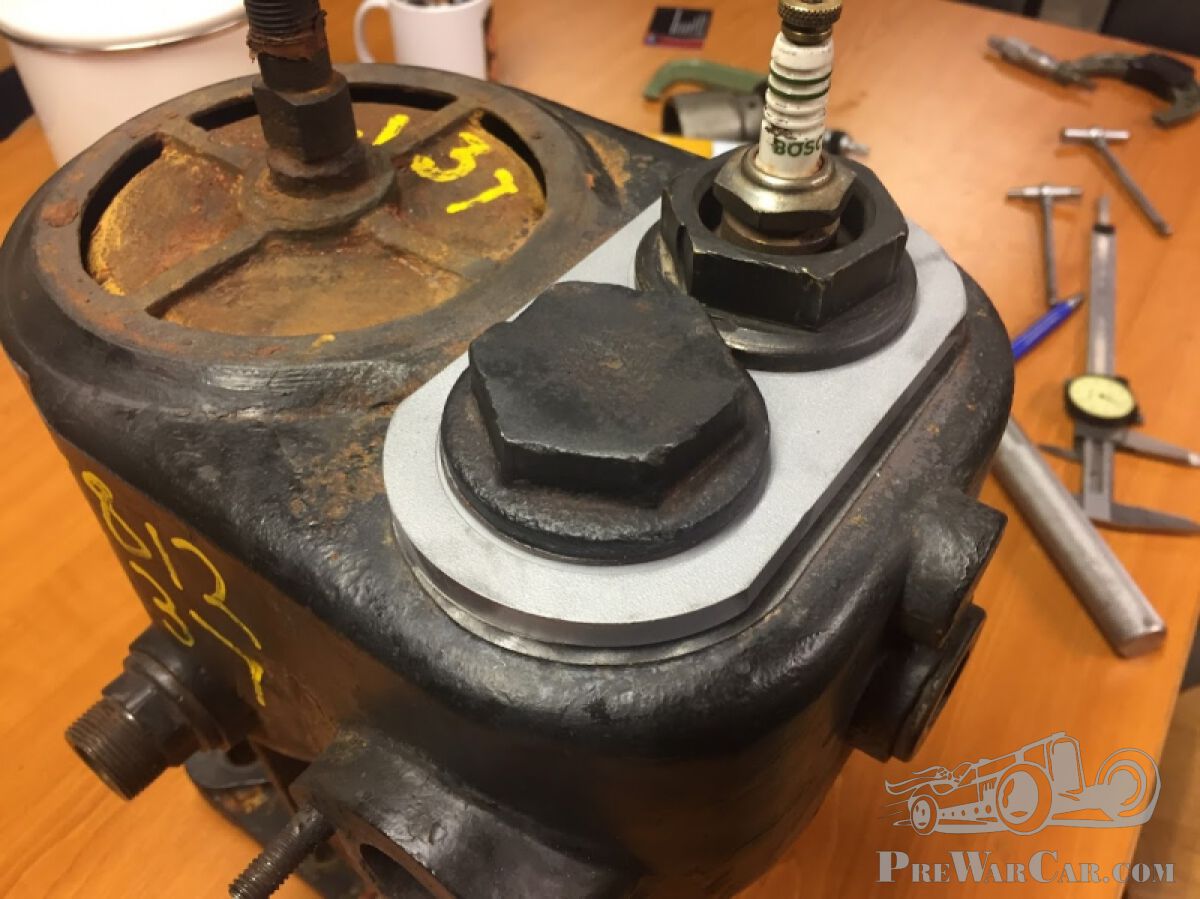
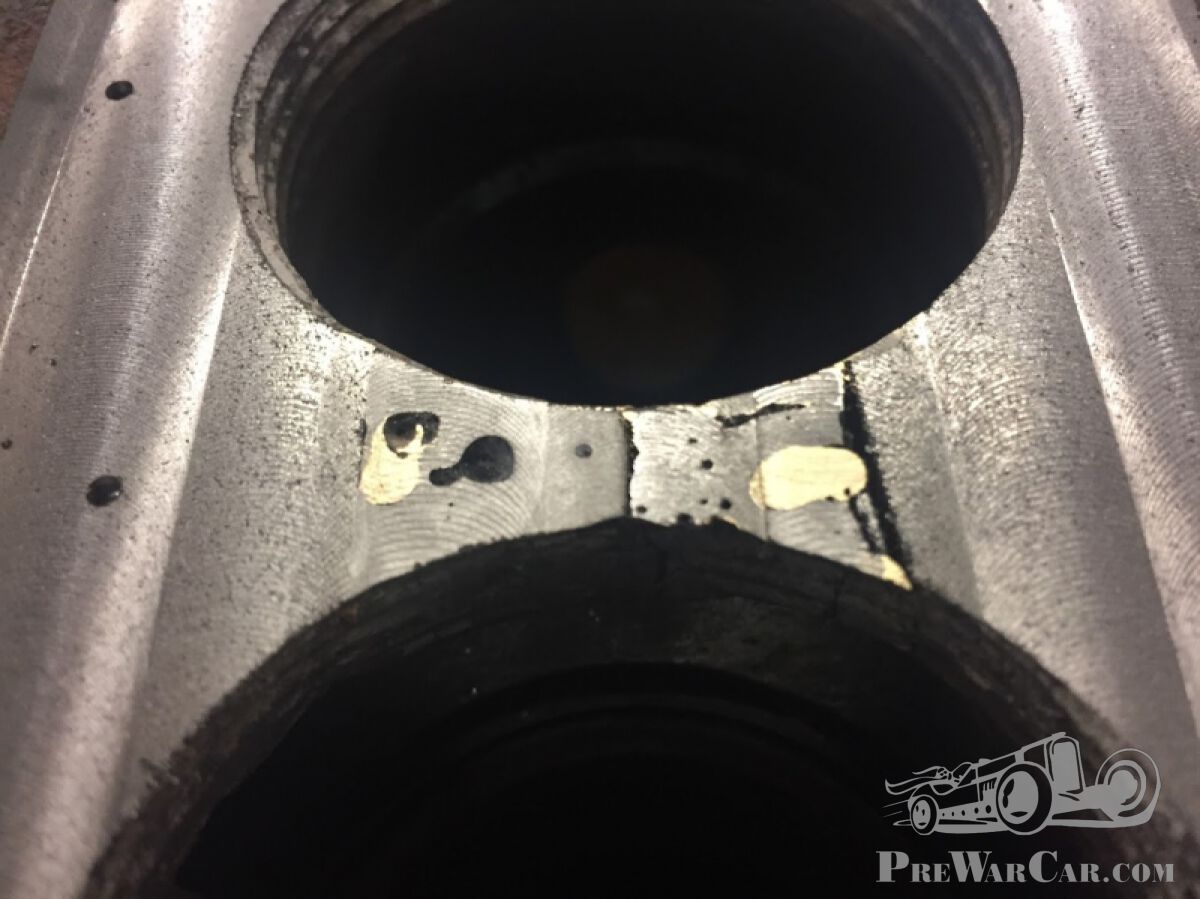


In this case there was a cast-iron cylinder that was cracked on a very tiny bridge between the 2 valve plugs. The area has a diameter of some 2,5mm and had been welded multiple times already, but kept cracking again. After each weld, the cracks got worse and a solution had to be found.
Of course this is a single idea of how to solve this and I would be very curious to find out how you would have approached this problem. For future reference, any tips and tricks are most welcome!
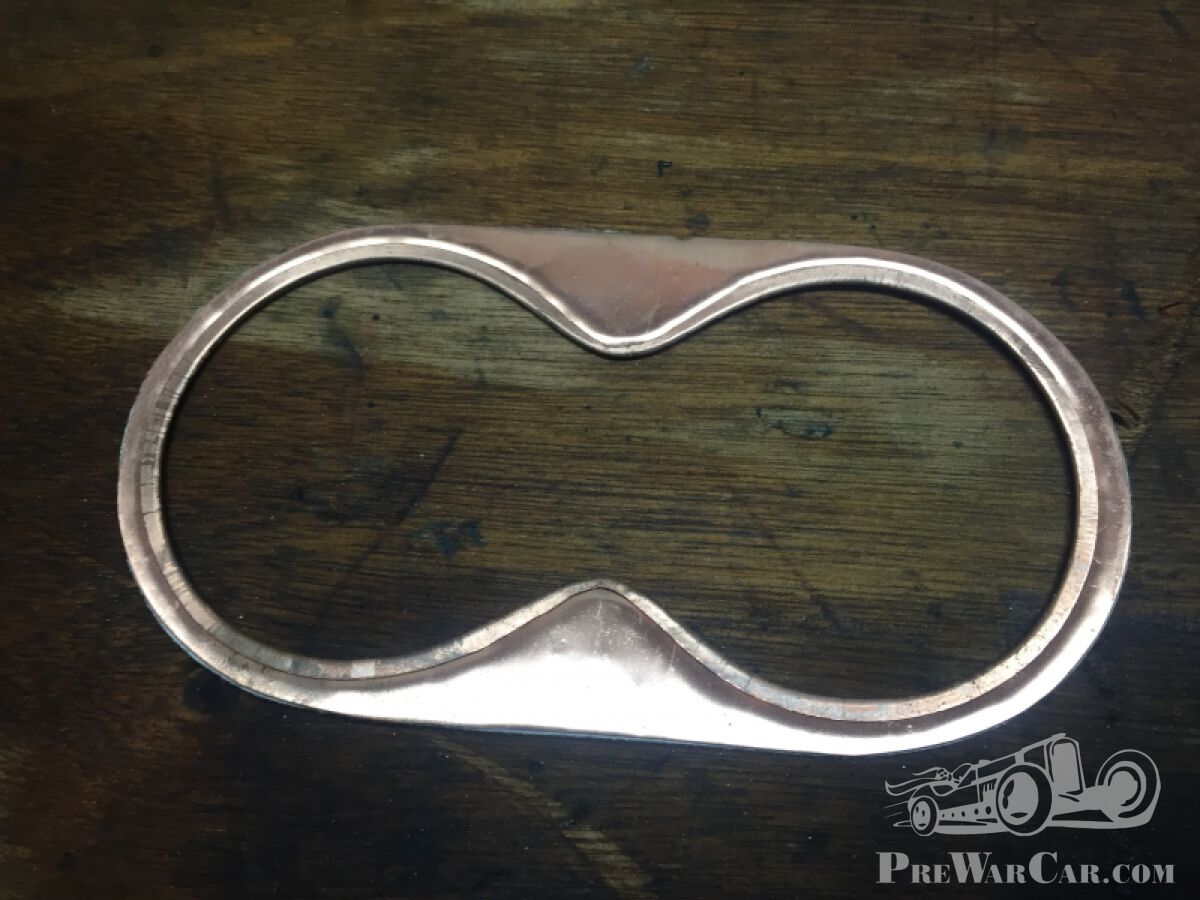
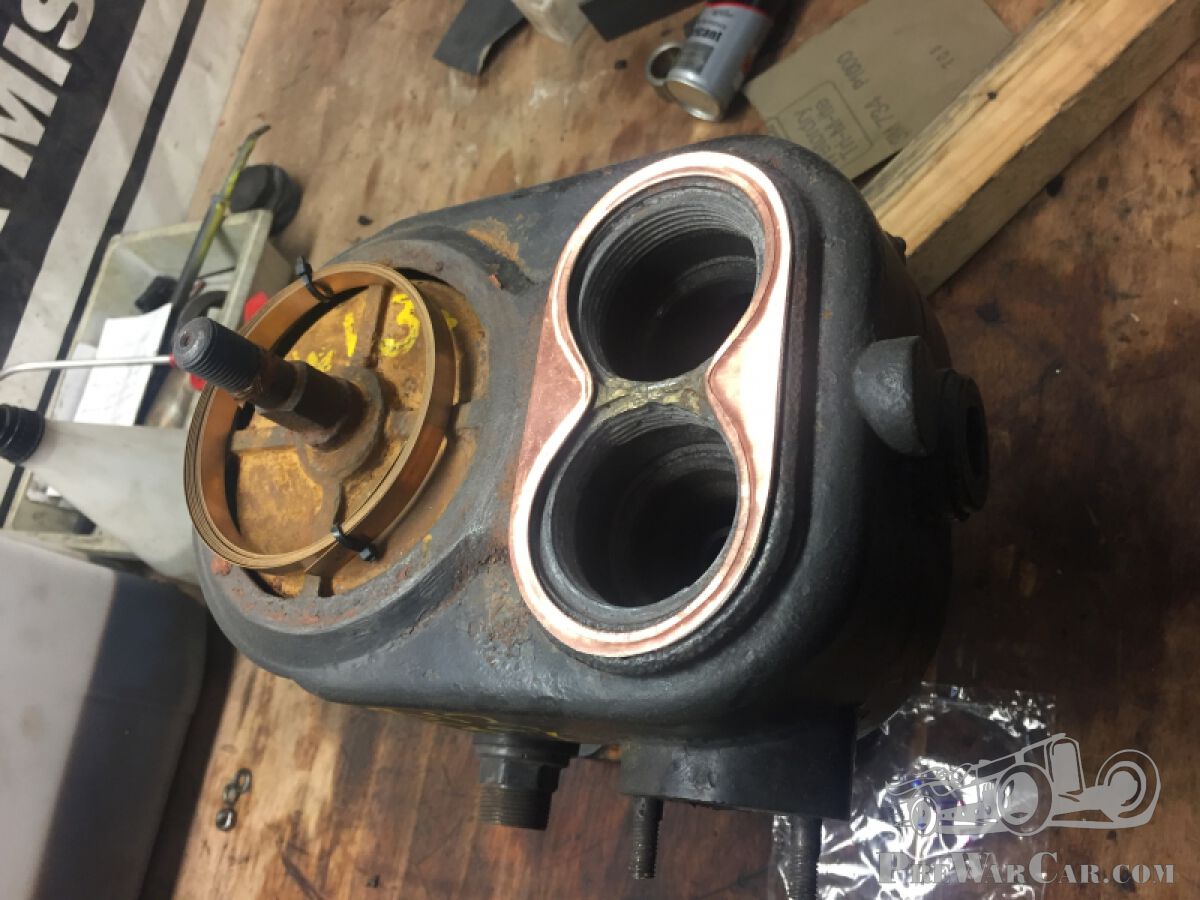
In this case, we milled the top 5mm off the cylinder, revealing the crack and start with new material. A 3-layer copper crush gasket, made to my own design by PreWarCar.com advertiser Gaskets-to-Go, is fitted and a new 4,5mm top-plate is made, in the shape of the part that has been milled off. When assembled, the part looks as it did originally, and the cylinder seals perfectly well now.
The 2 large brass plugs on top of the cylinder hold the plate and crush the copper rings and copper gasket for a tight seal. The whole assembly can be fitted with plenty of torque on the plugs to seal everything.
Please view my photo album at https://goo.gl/photos/vBdTzmWCnXq8B2mR6
Article and work by Jos van Genugten
Pubblicato:
martedì gennaio 31st, 2017
Facebook
LinkedIn
Twitter
WhatsApp
Email
Copy
Commenti
Sconosciuto
04 Febbraio 2017, 00:31
I agree that the result of this repair may be Ok, but with fingers crossed and the blessing of the Rev Ian Murray. A cold welding repair is closer to an ideal repair. Worth investigating SPD = Supersonic Particle Deposition. Deposits metal powder with air pressure up to 30 Bar is blasted onto the parent metal. Often used for repair of costly military components and can put a layer of a dissimilar metal on parent metal, such as magnesium on aluminium. Basically it melds the powder onto the parent metal by force and all becomes one. Process is very noisy but results are usually good.
Per saperne di più
Sconosciuto
02 Febbraio 2017, 08:27
I have to agree with Peter Maguire, this will solve nothing as the damaged area is still there. Interesting to know if it has been crack tested? Plenty of UK firms could have repaired this properly, either with welding in the conventional way in an oven, or laser welding which can be done cold, but it wouldn't have been cheap so I suppose for a veteran car that isn't going to be heavily stressed this kind of solution is probably OK if you're not fussy.
Per saperne di più
Tom
01 Febbraio 2017, 16:03
There is no such thing as two valve-chambers here ! This is clearly an L-shaped side-valve cylinder. The valves are lowered upside down - stems downwards - in these two holes. You are looking straight into the combustion chamber, so no compression loss if the whole top-side is closed. There was a compression loss before as there was a leak - the crack - between the two brass valve caps.
Agreed to mr. Smith that stitching would be difficult and even welding the crack the proper way would be doubtfull; this is an effective and cheap way of "closing the gap".
Per saperne di più
Agreed to mr. Smith that stitching would be difficult and even welding the crack the proper way would be doubtfull; this is an effective and cheap way of "closing the gap".
Sconosciuto
01 Febbraio 2017, 14:27
@Peter The valves are beneath the plugs. These plugs are just to seal the holes required to mount the valves in. There is no question of mixing 2 chambers as they are connected anyway. A quick sketch:
http://imgur.com/a/BxQRv
Per saperne di più
http://imgur.com/a/BxQRv
Sconosciuto
01 Febbraio 2017, 14:03
@Ian, You are correct in that it would loose some compression, but it's only a very small area, and would it be a problem, it can easily be corrected with adding material to the inside of the (hollow) brass plug where the spark plug sits.
@David, Sometimes, suppliers tend to leave their small deliveries in places where I will definitely find them, in this case, the spring surves the purpose of being stored in my warehouse ;)
Per saperne di più
@David, Sometimes, suppliers tend to leave their small deliveries in places where I will definitely find them, in this case, the spring surves the purpose of being stored in my warehouse ;)
Sconosciuto
01 Febbraio 2017, 13:09
I do not see that this repair is actually going to solve the problem. The crack appears to lie in the 'wall' separating the two valve chambers, one being the inlet and the other the exhaust. If that crack extends downward into the 'wall' then sealing the top of it achieves little or nothing, as the crack will continue to grow and, probably, open-up to eventually allow the contents of both chambers to mix! In any case the gasket made for the repair does not run across the top of the cracked part, not that this would finally make much difference for the reasons that I have stated.
It is possible to effect a repair when the damage is in this sort of area by 'stiching' of the block. This job requires considerable expertise and there are firms (I only know of them in the UK and my knowledge is fairly ancient!) that specialise in this repair. Welding, as was the previous, unsatisfactory, repair is another option still. Toulouse, where there are a lot of industries that specialise in Aero-Space technology also has firms that can repair this sort of damage by very high-tech welding techniques. I have seen such a repair done to a 'Dixi' block and it was excellent.
I do not see that in the long-term - or perhaps even short-term - that the current repair will last or actually work. Sorry for the bad news.
Per saperne di più
It is possible to effect a repair when the damage is in this sort of area by 'stiching' of the block. This job requires considerable expertise and there are firms (I only know of them in the UK and my knowledge is fairly ancient!) that specialise in this repair. Welding, as was the previous, unsatisfactory, repair is another option still. Toulouse, where there are a lot of industries that specialise in Aero-Space technology also has firms that can repair this sort of damage by very high-tech welding techniques. I have seen such a repair done to a 'Dixi' block and it was excellent.
I do not see that in the long-term - or perhaps even short-term - that the current repair will last or actually work. Sorry for the bad news.
Sconosciuto
01 Febbraio 2017, 11:25
May I ask what is the purpose of the long length of spring steel coiled up and held with two cable ties and placed in the water jacket area?
Per saperne di più
Sconosciuto
01 Febbraio 2017, 10:33
Apologies if I'm not fully understanding how this repair works! I'm not an engineer or a mechanic - I'm a clergyman with faith in God! Theologically, the ignition is the Holy Spirit, the Piston, (the moving part) is the Son, and the Block, (the solid part) is the Father. I wonder whether you might have weakened the Father by reducing the thickness of the casting on the top. Having machined away 50% of the thread, does that not put extra pressure on what is left? Also, if the crack runs the whole depth of the casting, surely there will still be loss of compression through the remaining crack? The Holy Trinity is something of a mystery, but none so much as the engineering skills to repair a cracked Block. With every blessing... (and you might need it!)
Per saperne di più
Sconosciuto
01 Febbraio 2017, 10:19
A very effective solution to a common problem. Stitching would probably not have worked because of the previous welding, and the porous nature of the casting. Cracks caused by frost damage or casting faults are a common problem with the back end of Riley 9hp cylinder heads. The least expensive remedy is to cover the cracks with a gasket and bolt a plate on top; although this will only work if the casting is thick enough to cut threads. Such repairs will last for years and are very effective; if not aesthetically pleasing. Similarly the sides of cylinder blocks can be repaired in the same way.
Per saperne di più