La rivista e il marketplace globale per gli appassionati di auto d’epoca, creati da appassionati.
La rivista e il marketplace globale per gli appassionati di auto d’epoca, creati da appassionati.


Filter
Faccia la sua scelta
- Automobile
-
Marca >>
-
Anno >>
-
- Motociclette
-
Ubicazione >>
- Parti e altro
-
Marca dell'auto >>
-
Produttore >>
-
Categoria >>
- Biciclette
-
Anno >>
-
Paesi



Pulling with a Pullford: the tractor for the hard-up smallholder
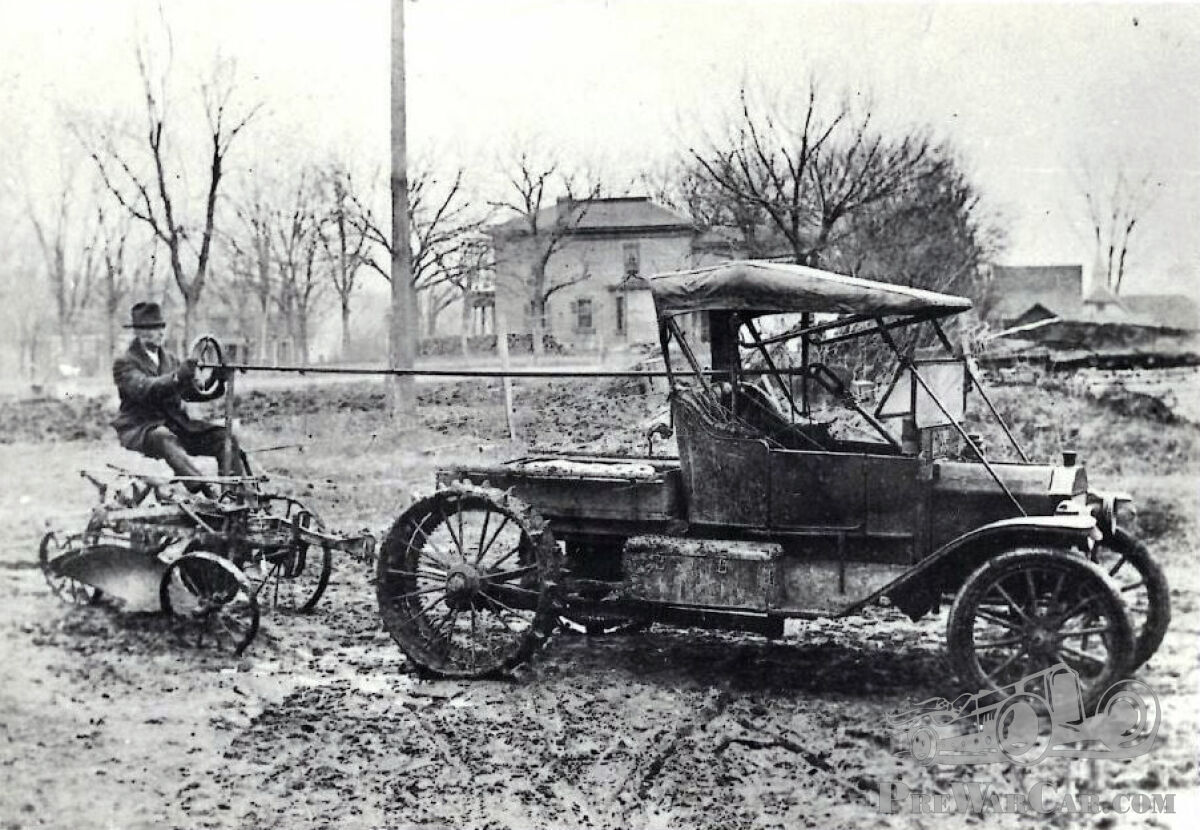

Tractors have developed at a pace very much in keeping with our beloved motor cars, and there’s no doubt there's a lot of common ground between the two. According to Wikipedia, “gasoline-powered tractors began to catch on in the 1910s, when they became smaller and more affordable,” but still there were many farmers who could not afford one, even when Henry Ford, in 1917, introduced the Fordson. That would soon become the best-selling mass-produced tractor. Yes, that’s just one of the parallels between the tractor world and the car world.
Naturally, of course, there were companies devising smart ways to serve the small farmer. The Pullford Company of Quincy, Illinois, seized the opportunity with a clever invention. It came up with a kit that could transform any old T Ford into a small tractor. From a contemporary agricultural publication: “Tractors are expensive. The Pullford attachment costs you very little. You can buy an old Ford for a very small sum. Your entire cost set up and running in the field should not exceed $150. Compare that with any other tractor on the market.”
The company itself advertised its products with taglines such as "A Ford car with the Pullford does the work of three to four horses" and "For low cost farm power."
It took a demonstrator to the National Tractor Demonstrations in 1917 near Fremont in Nebraska, which hundreds of thousands attended. Supposedly several full-size tractor manufacturers protested, fearing the competition, but what could they do? There was no way of stopping Pullford, it seemed, except by marketing similar kits, such as those soon to be offered by the Victor Traction Gear Company and the Convertible Tractor Company. Then there were Staude’s Mak-A-Tractor and the Knickerbocker Motors Company’s Forma-tractor, with the tagline "Day’s work done while still high sun."
We do not know which of these conversions the one seen here could be, other than that the base car is believed to be a 1912 Ford Model T Torpedo Runabout, but then it could just as well be a clever bit of DIY engineering. There is, after all, one extra feature which all of the suppliers above didn’t seem to offer: a seat on the plough and that ultra-long steering column to guide the Ford over that field to be ploughed. A great idea that would have been, but would it have worked?
Words: Jeroen Booij; picture: source unknown
Pubblicato:
giovedì luglio 18th, 2024
Facebook
LinkedIn
Twitter
WhatsApp
Email
Copy
Commenti
Edward David Hosford
21 Luglio 2024, 19:08
Of course, this is just a mock-up. Look: the shear is not turning any sod!
Per saperne di più
David Liepelt
18 Luglio 2024, 18:48
I may be part of a very small and elite group having used a Pull-Ford in the field. It did nothing till we put about 1,000 lbs. of granite curbing on the rear platform. Then it struggled pulling a single horse plough and got hot. It was geared too high.
The next year we put a Perfecto underdrive tranmissions in the driveshaft, and a nicely refitted engine that had a crack in a valve seat. It ran well and wasn't going to run long enough to hurt itself. The Perfecto transmission used stock T differential gears to make a 2:1 auxiliary ratio. At that point the Pull-Ford did reasonably well, with the single bottom horse plough.
But I know why they went under...
Per saperne di più
The next year we put a Perfecto underdrive tranmissions in the driveshaft, and a nicely refitted engine that had a crack in a valve seat. It ran well and wasn't going to run long enough to hurt itself. The Perfecto transmission used stock T differential gears to make a 2:1 auxiliary ratio. At that point the Pull-Ford did reasonably well, with the single bottom horse plough.
But I know why they went under...


Viklit Graae Jorgensen
22 Luglio 2024, 08:51
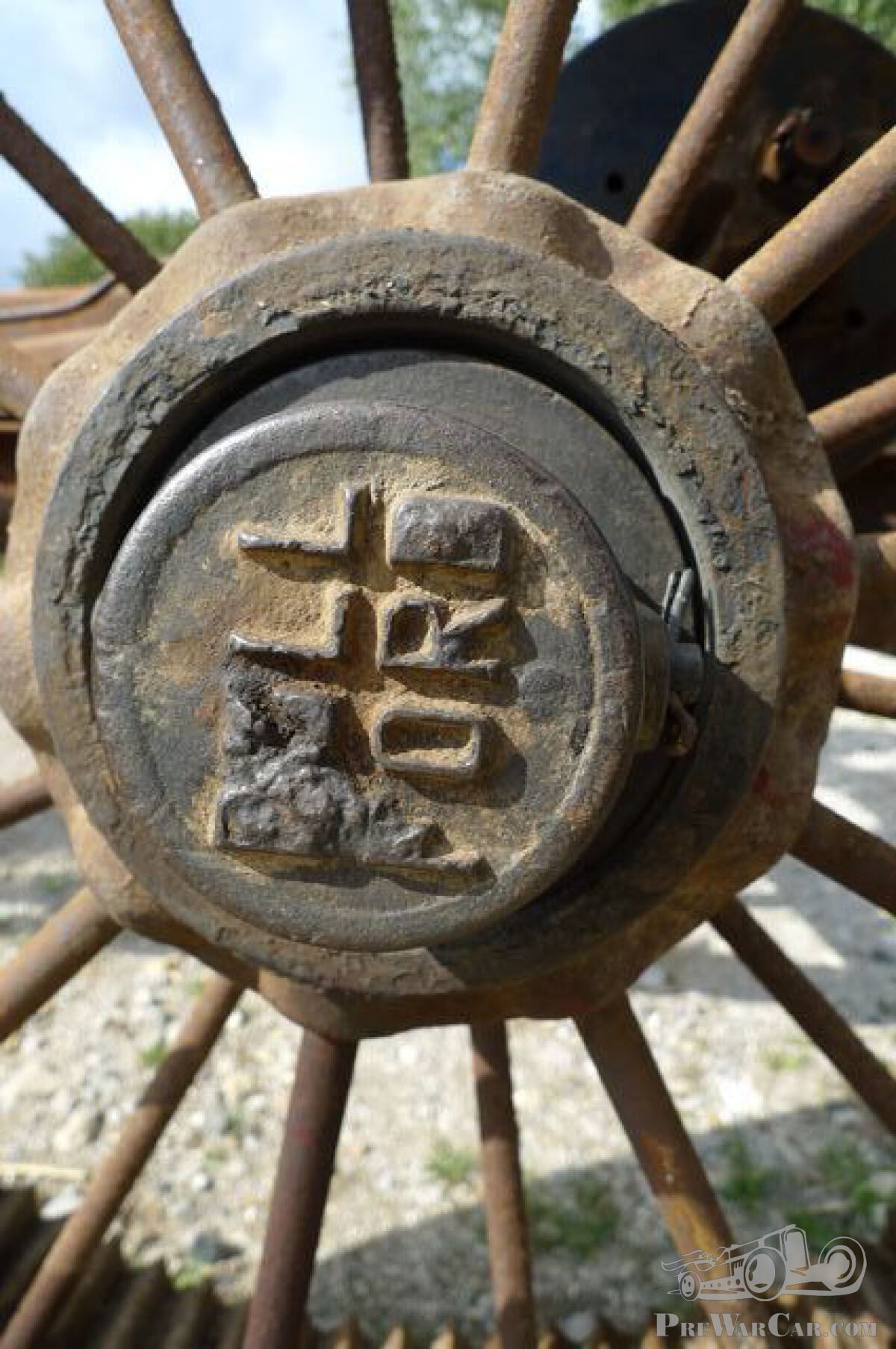
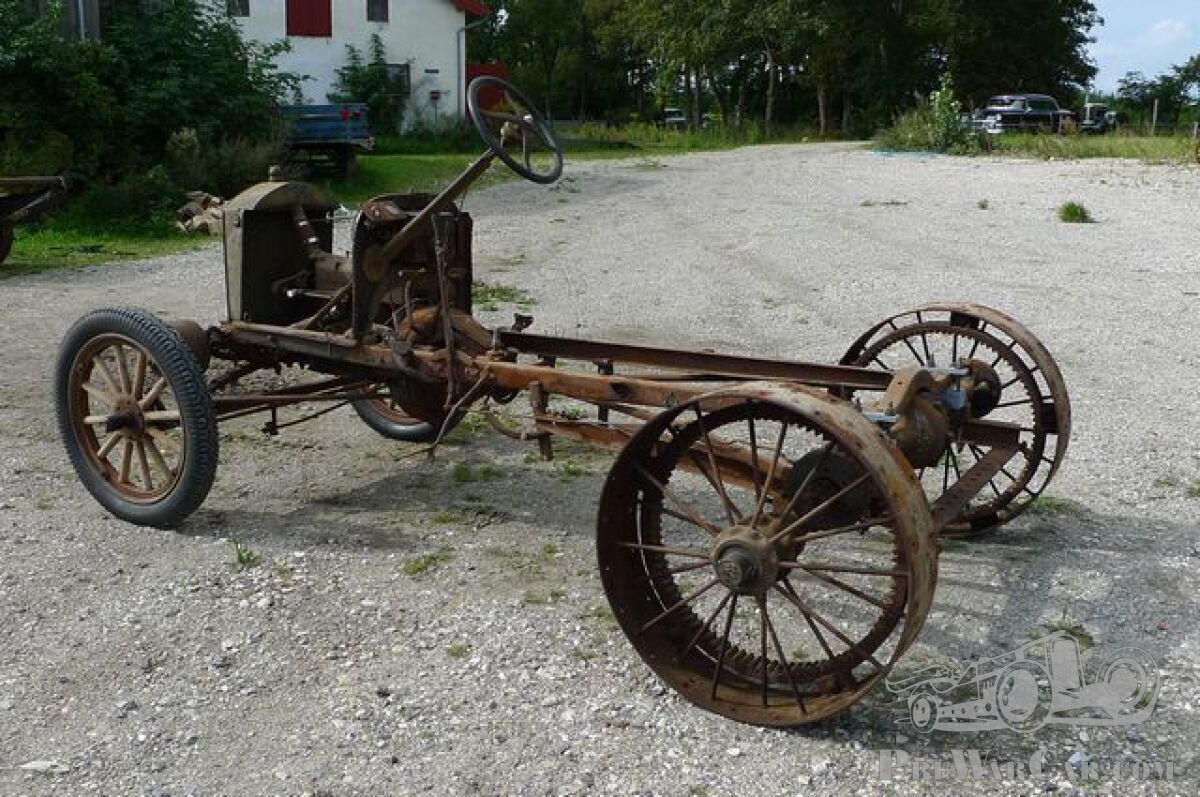
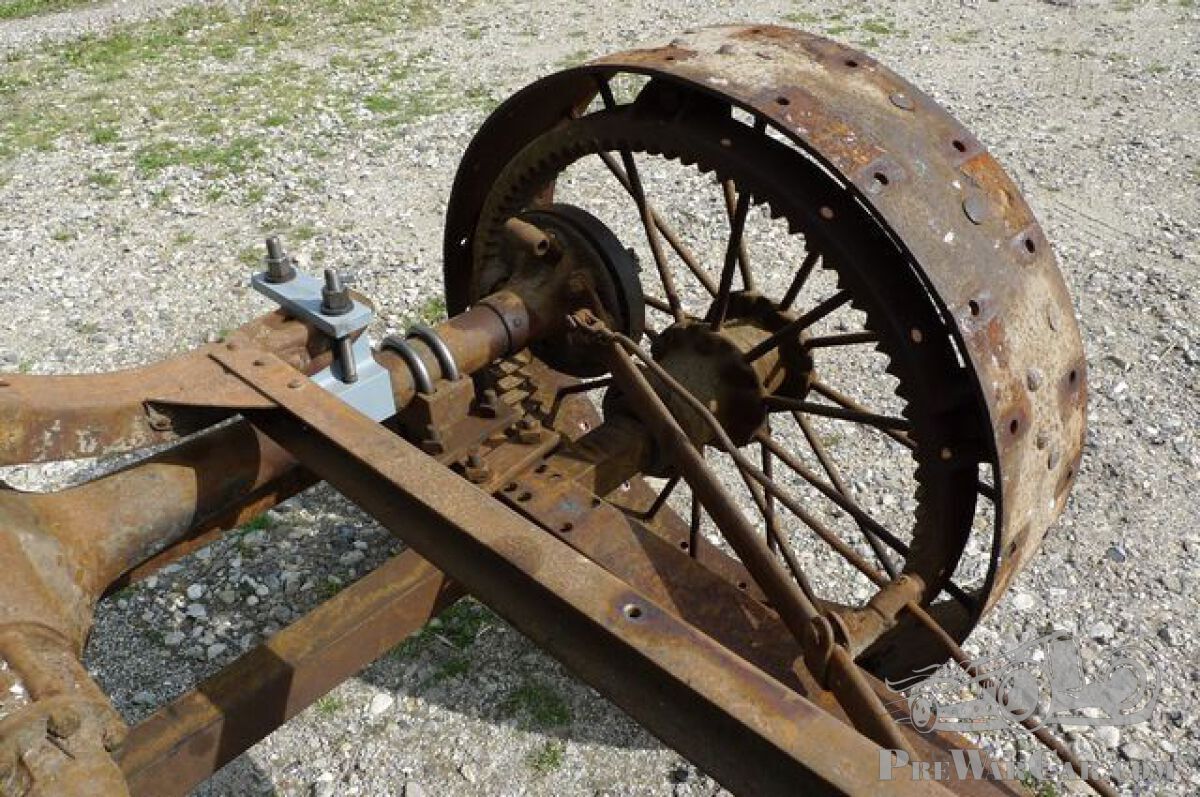
I have one, converted from a 1925 Model T, probably in the '30s. It has two sets of rear-wheels, one for normal ground and a wider set for soft ground. It was a cheap way for a small farm to get a helper.
Per saperne di più