La rivista e il marketplace globale per gli appassionati di auto d’epoca, creati da appassionati.
La rivista e il marketplace globale per gli appassionati di auto d’epoca, creati da appassionati.


Filter
Faccia la sua scelta
- Automobile
-
Marca >>
-
Anno >>
-
- Motociclette
-
Ubicazione >>
- Parti e altro
-
Marca dell'auto >>
-
Produttore >>
-
Categoria >>
- Biciclette
-
Anno >>
-
Paesi


Remembering Dorothy Levitt


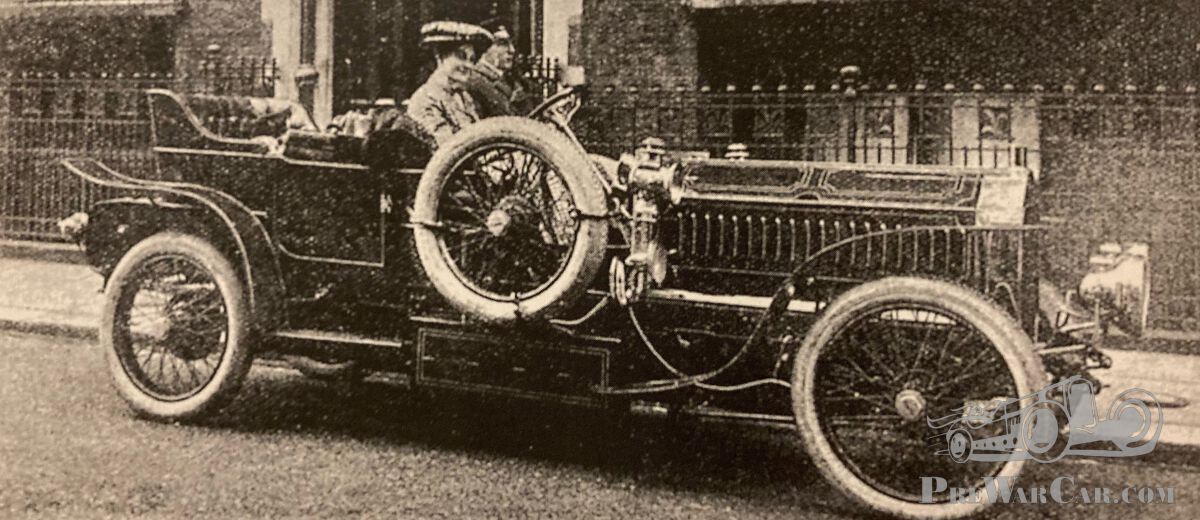


Further to our story on Monday about the new Levitt Concours for women motorists, which is being held at Hampton Court Palace next month, we thought we would turn our attention to Dorothy Levitt, after whom the concours is named. Of all the pioneering women motorists of the early 20th century, she was one of the boldest and most adventurous, claiming many 'firsts' for a woman at the time.
Born in 1882, she was a young woman of 20 when she learned how to drive at the hands of S.F. Edge in 1902. He would become a prominent and well-known figure in the motoring world, about whom a new biography by Simon Fisher is being published by Evro this autumn. Edge was 15 years older than Levitt and they clearly hit it off, though the exact nature of their relationship is hard to ascertain ― he certainly found this fearless young woman a very useful marketing tool, and for her, here was a man willing to enable her to pursue her newfound love of speed.
Levitt's first adventure in motorsport was in May 1903, when she was just 21. Levitt was entered for the 400-mile Glasgow to London two-day reliability run in a 12hp Gladiator car, of which Edge was the UK agent. A newspaper report gives a flavor of Miss Levitt's attitude to speed and the law: 'As she was ascending a steep hill... three plain clothes policemen, disguised as tramps, sprang from behind a hedge and tried to stop the car, 'but ' said Miss Levitt, 'we were going at 37 miles an hour, dashed right by them, and quickly vanished from their sight'. This was not her first run-in with the police, and would certainly not be her last.
Edge by that time was involved with Napier and owned a Napier-engined 40-foot speedboat named Napier; soon Levitt was also competing in that. In July 1903 the boat, driven by Levitt, won the inaugural British International Harmsworth Trophy held for speedboats on the River Lee in County Cork, Ireland. On another one occasion, during a race at Cowes on the Isle of Wight, a ship from Southampton sailed right in front of her path. Dorothy had a choice: either to try to stop before smashing into the boat, or to accelerate and squeeze past. She chose the latter and only just made it with inches to spare. The incident was witnessed by many people, including King Edward VII, who was impressed by the young lady that he asked to meet her afterwards.
And so continued Dorothy Levitt's fast years of adventure during some of the most exciting years of the 20th century. This year marks the centenary of her untimely death, aged just 40, of a drug overdose in 1922. There was never a conclusive verdict of suicide, but the last years of her life were plagued by financial problems. Levitt's fascinating life story has now been told in as much detail as possible in a new book by Michael Barton called Fast Lady: The Extraordinary Adventures of Miss Dorothy Levitt. It is to be launched on Saturday 3 September, the same day as the new Levitt Concours at Hampton Court Palace named in her honour. The book is an engaging and entertaining read, and is illustrated with some poignant period photographs. It may not solve the mystery of her death, but it shines a light on this important and pioneering figure of the early motoring world ― an inspiration to us all.
Pubblicato:
venerdì agosto 26th, 2022
Facebook
LinkedIn
Twitter
WhatsApp
Email
Copy
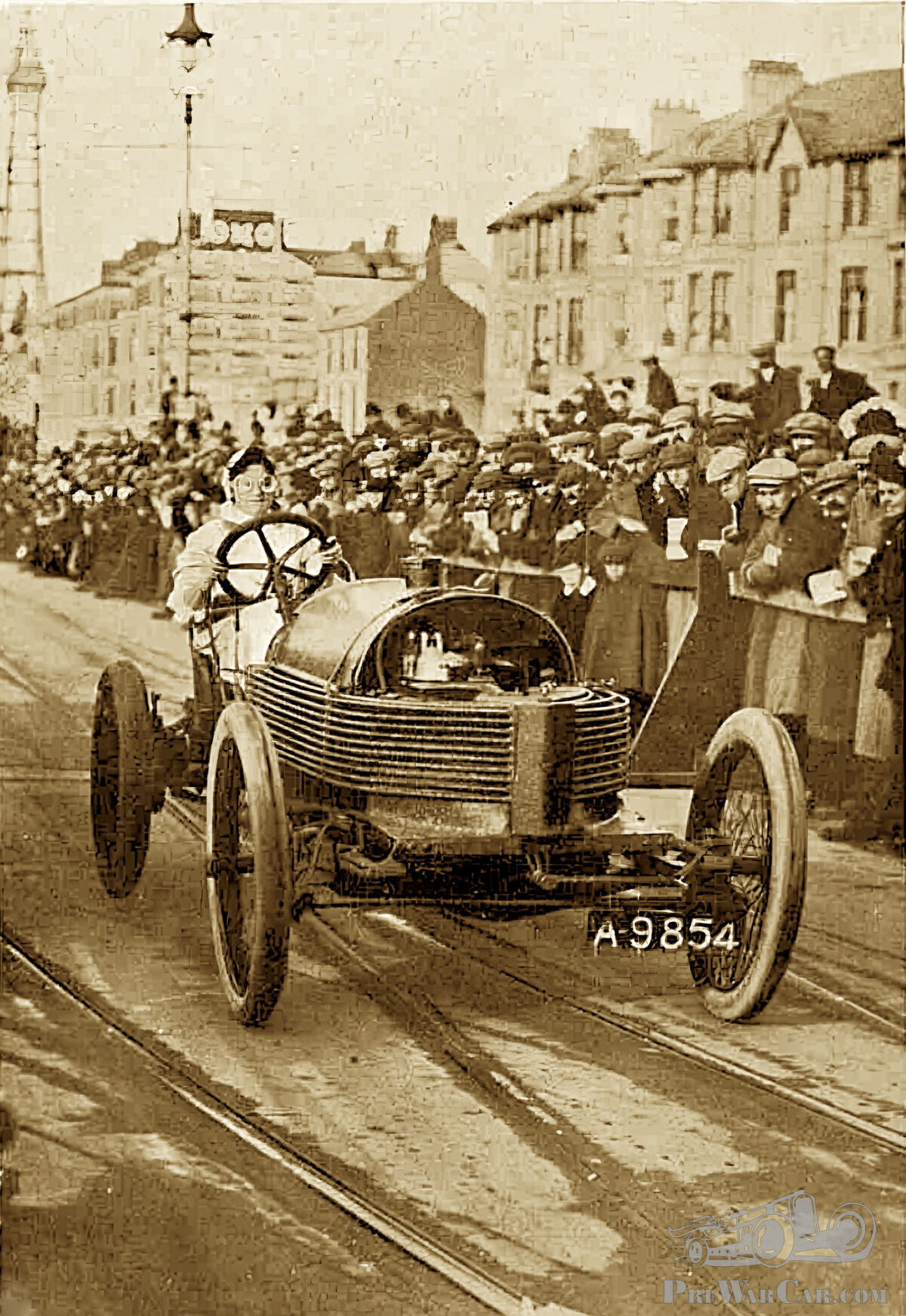
Already recognised as holding an outright water speed record in a Napier motor boat, she also previously set the World Land Speed Record for women during the Brighton Speed Trials of 1905 when she ran another Napier car at 79.75 mph. At the Blackpool Speed Trials in England, however, she smashed her own record with a timed run for the flying kilometre of 90.88 mph driving the Napier L48 on two runs along the Blackpool waterfront.
One newspaper reported: “Miss Levitt has had plenty of narrow escapes. At Blackpool… during the speed trials, two dogs, three children and finally three more dogs came onto the track and tried to cross over. Miss Levitt spoiled her trials but managed with splendid work to save the children. History does not tell what happened to the dogs.”
The story of her other lucky escape at Blackpool driving the Napier L48 also made headlines. She took off from a standing start, reaching 96 mph when the front part of the bonnet came away (it was reported that a strap broke) and the wind got under it and threw it back toward her. She brake slowly at first and then as hard a she could as it looked like the bonnet could decapitate her. She managed to stop just as the last screw came away.
When asked what she felt racing the Napier L48 at that speed she said: “Wonderful. One can hardly describe one’s sensations. There is a feeling of flying through space. I never think of the danger. That sort of thing won’t do. But I know it is omnipresent.The slightest touch of the hand and the car swerves, and swerves are usually fatal. But I am a good gambler and always willing to take the chance. In going that pace the hardest thing is to keep in the car. Half the time the wheels do not touch the ground at all, and when they do you must be prepared to take the shocking lurch or else out you will go. It is far harder work to sit in a car than to ride a galloping horse in a steeplechase. When I made the records I was in the car alone. I prefer it.”
After Blackpool in 1906, she announced to the American press that she wished to race an American to cement the title: “I am willing to race here (in the United Kingdom) or at Ormond Beach, Fla., or elsewhere in the United States. I am wild to race an American woman for the world’s championship. I must look to America to race. There is no one left in Europe with whom to compete,” she said. Dorothy Levitt never made it to Florida but she remains one of the greats of the heroic era of motor racing.
The Napier L48 which Dorothy Levitt drove to become the fastest woman in the world was commissioned by SF Edge and Montagu Napier to break speed records and to create a new category of motor car using six cylinder engines. The world-beating 915 cubic inch (15 litres) motor was placed into a chassis with an overall weight of less than 1000kg (2,204lbs) to meet current European motor racing regulations
Dorothy Levitt was not lacking in confidence to beat all comers in the USA. If she had taken the Napier L48 to Florida it would have been the third time that the first car timed at more than 100 mph on American soil had raced on the Daytona and Ormond beaches. In 1905, Arthur Macdonald, set a new speed record of 91.371mph over five miles on the beaches, then over the course of the week set a world’s record of 104.651 mph over the mile as well as 5, 10 and 20 mile speed records, and a new American record for a flying kilometre at 97.258 mph.
In 1906, however, the Napier L48 with Clifford-Earp at the wheel the car set a world record time of 1:15:40-2/5sec or 79.288 mph for 100 miles.
The revolutionary six cylinder engine from this winning Napier was installed in a new chassis in the 1970s in Australia and the resulting car will be back on the sands of Ormond and Daytona beaches for the first time in February 2024 to remember some of the greatest races in the history of auto racing. It will later be offered for sale at the Bonhams Auction, Fernandina Beach on 29 February 2024.