La rivista e il marketplace globale per gli appassionati di auto d’epoca, creati da appassionati.
La rivista e il marketplace globale per gli appassionati di auto d’epoca, creati da appassionati.


Filter
Faccia la sua scelta
- Automobile
-
Marca >>
-
Anno >>
-
- Motociclette
-
Ubicazione >>
- Parti e altro
-
Marca dell'auto >>
-
Produttore >>
-
Categoria >>
- Biciclette
-
Anno >>
-
Paesi



Requesting wheel identification


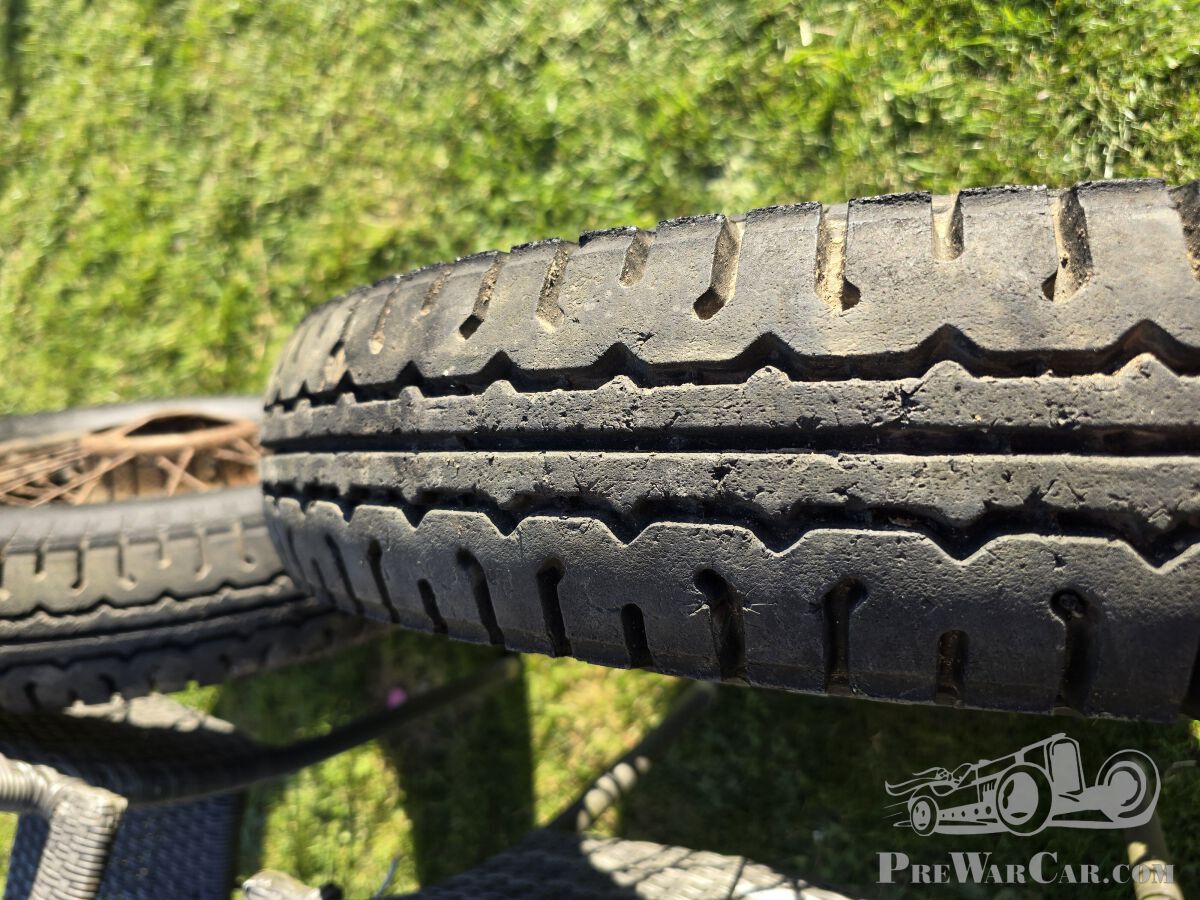


Could I please have some help identifying these wheels? I 'see any stampings or markings on the wheels, but this may be covered by the paint that has been previously applied to them. They have Pirelli Wayfarer de Luxe tyres on in size 6.00/18.
I have absolutely no idea what they have come off, so any help would be greatly appreciated!
Nathan Wakelin
Pubblicato:
martedì aprile 8th, 2025
Facebook
LinkedIn
Twitter
WhatsApp
Email
Copy
Commenti
David Grimstead
18 Aprile 2025, 21:00
Pete Giles
13 Aprile 2025, 10:01
It could be a 1930s Rover P1 wheel; 18 inches is correct but it's a bit big at 6.00.
Per saperne di più
Roland Dhondt
09 Aprile 2025, 11:26
Dear Sir,
These wheels are Magna wheels with a well-based rim for wired-bead tyres. The well-based rim was introduced by Dunlop in 1924 and the Magna wheel was, also by Dunlop, introduced around 1930.
The fixation of the hubcap with a central screw on a support with three branches is typically British. With a rim diameter of 18 inches we are around 1934. It could be Austin.
Kind Regards,
Roland
Per saperne di più
These wheels are Magna wheels with a well-based rim for wired-bead tyres. The well-based rim was introduced by Dunlop in 1924 and the Magna wheel was, also by Dunlop, introduced around 1930.
The fixation of the hubcap with a central screw on a support with three branches is typically British. With a rim diameter of 18 inches we are around 1934. It could be Austin.
Kind Regards,
Roland
The photo examples being five-stud could be from many larger 1930s British saloons or sporting models as stylish wire wheels had increased popularity at this time and many were 18-inch. Their asymmetric “Y” centre gave clear access to five-studs but may not have been universal—Hillman Wizards at least had a five-star centre pattern.
The 1930s Wolseley Hornets and 16/60 Vipers had Dunlop Magna wheels with screwed-on hubcaps but normally had 4.50-4.75x18 tyres, although some were advertised fitted with oversize tyres. Large Rovers had the same size Magnas, as did early 1930s Singers, Triumph Scorpions and Humber Snipes; the latter’s original tyres look wider. For 1932 all Vauxhalls got Magna wire wheels as standard, though some Big Sixes had larger tyres. Lanchesters got them in 1936. Many versions of all these makes had five-stud hubs.
Most early post-1930 Morris Oxfords and larger Cowleys had five-stud hubs and some had Dunlop Magna wheels, initially 50-shillings extra and standard from 1932, but not all their hubcaps seem to be screwed on. Larger 1930s Austins also had this pattern wheel but their hubcaps don’t look to have a centre bolt either.
It is unlikely that oversize Pirelli Wayfarer Deluxe tyres were an original factory fitting on an 18-inch Dunlop rim. Advertisements for second-hand cars retro-fitted with oversize or balloon tyres in the 1930s was not uncommon. Pirelli did not supply wheels.
Your editor Zack Stiling, as writer of the Wayfarer column in The Automobile magazine, may feel deflated to learn that Wayfarer tyres were Pirelli’s lowest rated offering and didn’t last long... They were made at Pirelli’s 1928-opened Burton-on-Trent factory, were launched on their Olympia show stand in October, 1931, and were only sold until late in the 1930s. There were three car tyres in Pirelli’s early to mid-1930s range: the Blue Riband, the Standard and the Wayfarer, described as “a cheap tyre”—an early 18-inch was about £1. The improved Pirelli Wayfarer Deluxe, as seen in the photos, was a replacement for both Standard and Wayfarer. It was on sale just before and early in W.W.II, costing £3 3s. 3d. for a 6.00x18. Some were on sale post-war but probably only old-stock or second-hand as Pirelli don’t appear to have advertised them in the 1940s.