La rivista e il marketplace globale per gli appassionati di auto d’epoca, creati da appassionati.
La rivista e il marketplace globale per gli appassionati di auto d’epoca, creati da appassionati.


Filter
Faccia la sua scelta
- Automobile
-
Marca >>
-
Anno >>
-
- Motociclette
-
Ubicazione >>
- Parti e altro
-
Marca dell'auto >>
-
Produttore >>
-
Categoria >>
- Biciclette
-
Anno >>
-
Paesi



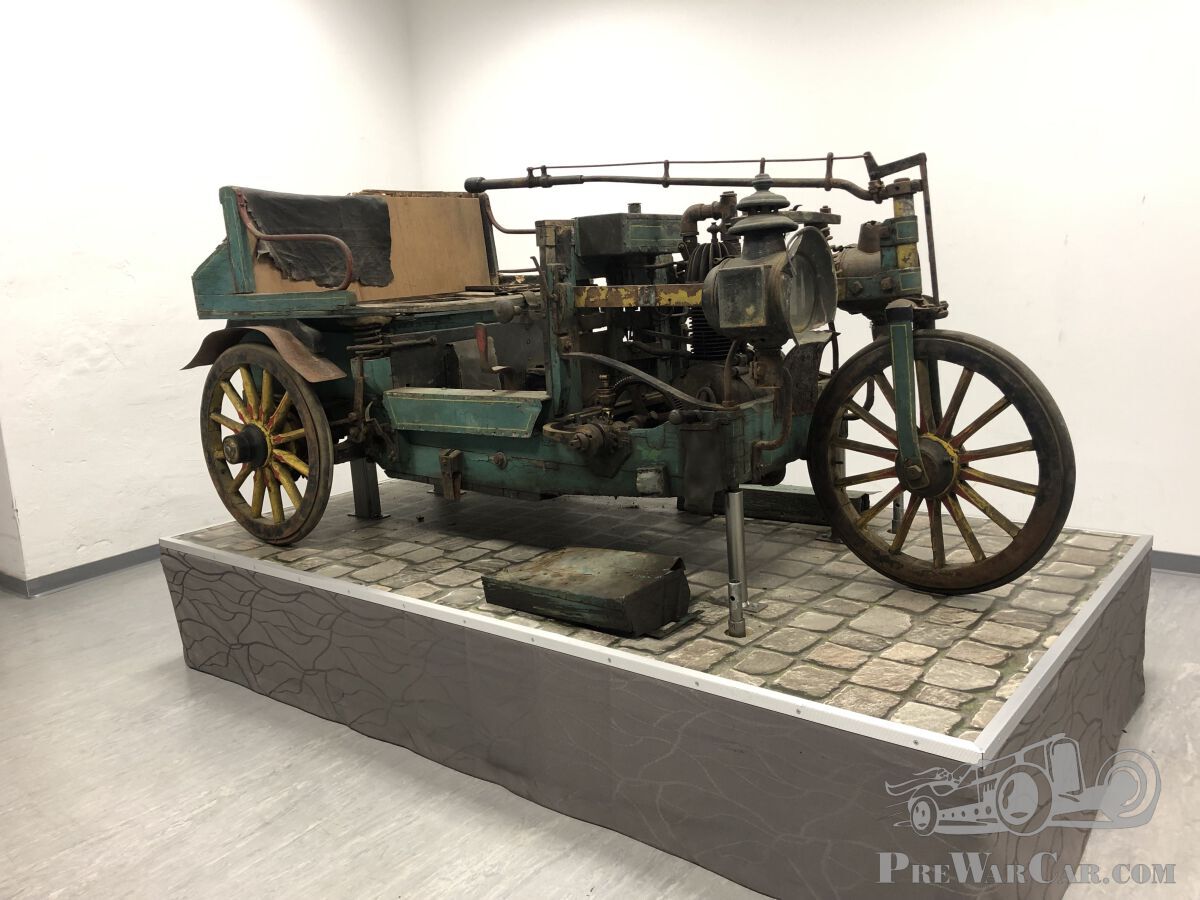
Scientific examination of the "Tricycle of Wolkramshausen"

Press release
As reported in the daily press and special interest media during 2021, the „Ost-Klassiker-Klub“ of Wolkramshausen in northern Thuringia owns a wooden motorised tricycle whose age and provenance are unclear. Unfortunately, a lot of rumours and speculations were spread by superficial reporting and individual opinions. A team of five experts therefore met in Wolkramshausen during the week before Christmas in order to examine the vehicle in detail.
The aim was to support the club on a voluntary basis in classifying the tricycle professionally and in an unbiased way. It is therefore essential to take into consideration all the details of the history, provenance, technology, materials and the overall context of the vehicle, and to evaluate the results in a scientifically comprehensible way. To this end, samples were also taken to be subjected to various analytical procedures in the laboratory.
The team of experts includes:
Dr. Ronny Friedrich – Curt-Engelhorn-Centrum Archäometrie, Mannheim, expert in scientific material analysis and age determination,
Sebastian Hoffmann – TÜV Rheinland, Frankfurt, expert for historic vehicles and expert for scientific age determination of metals,
Tino Räppel – Oldtimerdienst Chemnitz, expert for mechanics, electrics and bodywork of early automobiles and motorcycles,
Dr. Gundula Tutt – OMNIA Restaurierung, Freiburg, expert for historic vehicle materials, analysis and age determination,
Frederik E. Scherer – automotive historian and specialised journalist, Speyer, historical research and documentation of the investigation.
It was already possible to make concrete statements about the origins of the vehicle during the examination on the basis of visible findings. However, the team decided not to publish any details until the laboratory analyses of the material samples have been carried out. The detailed investigation results will then be summarised and published.
With this in mind, the group politely asks the public to refrain from further speculation, especially when being ventured without a physical inspection of the vehicle.
(Photo: Frederik E. Scherer, all rights reserved)
Originally published on January 19, 2022
Pubblicato:
lunedì aprile 4th, 2022
Facebook
LinkedIn
Twitter
WhatsApp
Email
Copy
Commenti
Peter Maguire
11 Aprile 2022, 10:08
Frederik E. Scherer
11 Aprile 2022, 10:00
I am surprised about how enthusiastically you‘re all still discussing the vehicle. I can tell you so far that 1895 has never been considered to be a realistic year of construction.
Per saperne di più
Adrian
11 Aprile 2022, 17:21
Frederik E. Scherer - this is certainly because the advertisment for sale on this site makes the claim of ca 1895 and until you and your four colleagues break cover and dispel this it will remain.
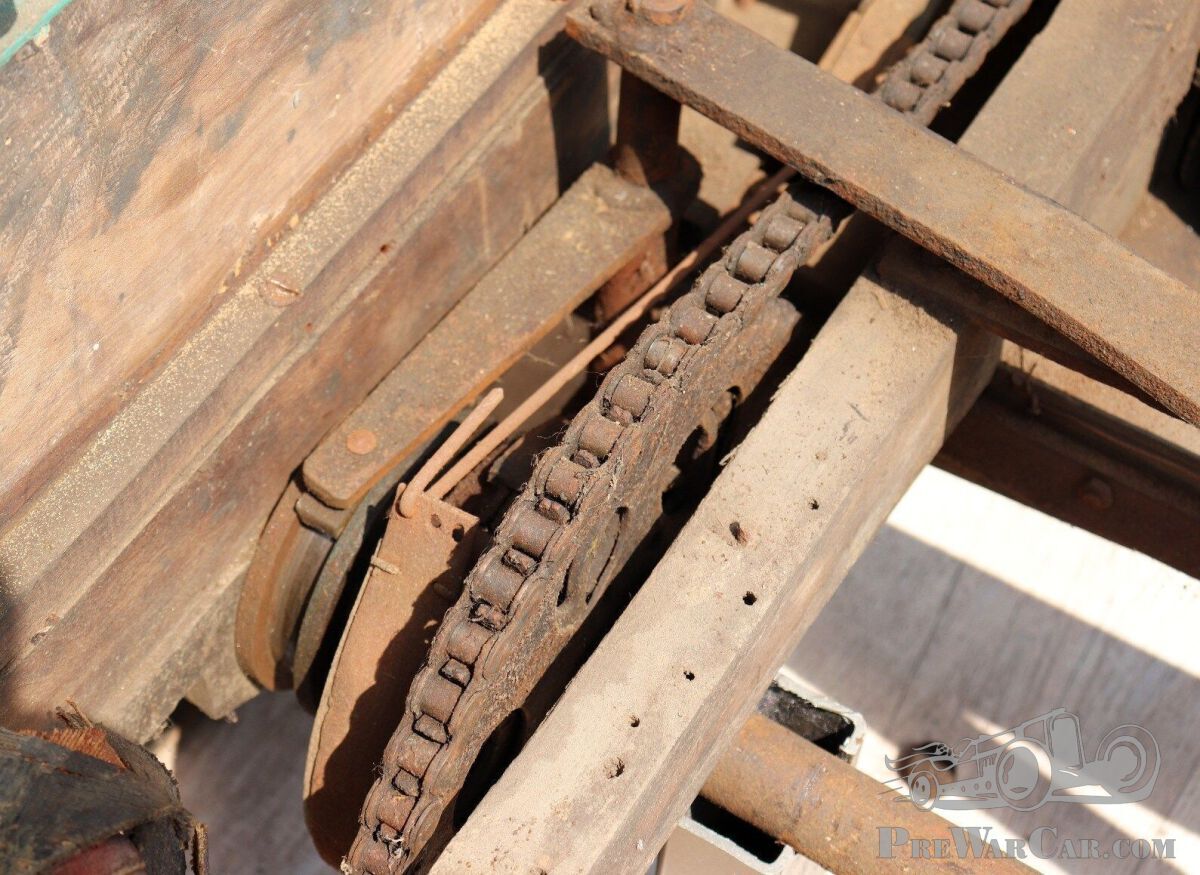
My concern about the chain is that it looks like it has been sourced straight off a sixties motorcycle with lightening holes in the chainwheel and a chain of a pitch and manufacture which are 'modern'
Per saperne di più
My concern about the chain is that it looks like it has been sourced straight off a sixties motorcycle with lightening holes in the chainwheel and a chain of a pitch and manufacture which are 'modern'
Steve Diggins
10 Aprile 2022, 21:17
Right from the start I have thought this is nothing more than an unworkable piece of folk art. However, as a piece of art it has stimulated thought and discussion.
Per saperne di più
Richard Smith
10 Aprile 2022, 13:05
The person who designed this contraption must have been off the scale bonkers.
Per saperne di più
David GREEN
09 Aprile 2022, 13:48
The various sources of photographs and videos have proven to be of extraordinary assistance in narrowing the areas of doubt. On the positive side, the following seem to me to be broadly plausible (although they raise additional questions): (1) sprockets and chains to back wheels (driven independently, or solid axle?); (2) contracting band brakes (why have a front wheel brake at all?); (3) gravity feed petrol tank to carburettor; (4) magneto ignition; (5) breather oil pipe and oil drip feed to engine crankcase.
The puzzles remain: (1) engine without a flywheel; (2) the uncovered gearwheel drive to the lay or secondary drive shaft; (3) the apparent lack of a throttle (4) the absence of a clutch; and (5) so many standard gas-pipe fittings. It appears that there may be dog clutches at either end of the lay/secondary shaft, associated with the drive sprockets and one can conceive a simple mechanism whereby they are brought into play simultaneously. But, unless there is another clutch, pulling dog clutches into engagement when one side is not moving would potentially be extremely damaging. Those familiar with the vintage Morgan 3-wheeler will know that it has two clutches: one plate/cone to get the car started, and a dog clutch to slam across in going from 1st to 2nd (it only has 2 speeds and no reverse), so two types of clutch is not inherently implausible on the Dreirad. However, in the case of the Dreirad, why bother to have dog clutches at all if there is a plate/cone clutch somewhere else?
Provisionally, I suspect that many of the bits may be period, but would really need to know the design, as embodied in the construction, would actually work if it is to move beyond a conceit.
Finally, I was surprised at how much dismantling of the car was undertaken by the expert panel. If this amount of dismantling was acceptable, then I assume that a few screws could have been gently removed. These would immediately show whether their profiles were modern or not.
Per saperne di più
The puzzles remain: (1) engine without a flywheel; (2) the uncovered gearwheel drive to the lay or secondary drive shaft; (3) the apparent lack of a throttle (4) the absence of a clutch; and (5) so many standard gas-pipe fittings. It appears that there may be dog clutches at either end of the lay/secondary shaft, associated with the drive sprockets and one can conceive a simple mechanism whereby they are brought into play simultaneously. But, unless there is another clutch, pulling dog clutches into engagement when one side is not moving would potentially be extremely damaging. Those familiar with the vintage Morgan 3-wheeler will know that it has two clutches: one plate/cone to get the car started, and a dog clutch to slam across in going from 1st to 2nd (it only has 2 speeds and no reverse), so two types of clutch is not inherently implausible on the Dreirad. However, in the case of the Dreirad, why bother to have dog clutches at all if there is a plate/cone clutch somewhere else?
Provisionally, I suspect that many of the bits may be period, but would really need to know the design, as embodied in the construction, would actually work if it is to move beyond a conceit.
Finally, I was surprised at how much dismantling of the car was undertaken by the expert panel. If this amount of dismantling was acceptable, then I assume that a few screws could have been gently removed. These would immediately show whether their profiles were modern or not.
Adrian
09 Aprile 2022, 10:20
The collection of pictures linked by Tim includes this one - there's nothing much more to say about the credibility of this vehicle
Per saperne di più
Peter Maguire
08 Aprile 2022, 13:24
From the size of it, too small to be for adults !
An expensive Edwardian child's toy perhaps ?
Or, from the paint on the rear wheels, a fairground exhibit/oddity ?
Per saperne di più
An expensive Edwardian child's toy perhaps ?
Or, from the paint on the rear wheels, a fairground exhibit/oddity ?
Thomas A. Erler
07 Aprile 2022, 21:51
I just looked for more information and found the site of the club: http://oldtimer-wolkramshausen.de/
You will find three little youtube films, showing many more details (if youcan stand the music ;)). It is interesting that the contraption is quite smaller than at least I imagined. So the engine could basically be identical to the bonhams one. Because of the paint they sort of attribute it to Lutzmann (early OPEL connection), but if you look at Lutzmann automobiles, thats craftmanship. This thing is crudely hewn together. I can also see a proper magneto,
Regards Thomas
Per saperne di più
You will find three little youtube films, showing many more details (if youcan stand the music ;)). It is interesting that the contraption is quite smaller than at least I imagined. So the engine could basically be identical to the bonhams one. Because of the paint they sort of attribute it to Lutzmann (early OPEL connection), but if you look at Lutzmann automobiles, thats craftmanship. This thing is crudely hewn together. I can also see a proper magneto,
Regards Thomas
Tim
07 Aprile 2022, 10:23
I filly agree with David Green.
Here some more photos:
https://www.mdr.de/nachrichten/thueringen/nord-thueringen/nordhausen/oldtimer-sensation-motor-fahrzeug-100.html
/Tim
Per saperne di più
Here some more photos:
https://www.mdr.de/nachrichten/thueringen/nord-thueringen/nordhausen/oldtimer-sensation-motor-fahrzeug-100.html
/Tim
Thomas A. Erler
06 Aprile 2022, 14:16
Yes, I am very much with David Green, looking at the machinery for quite a while, I am still unsure about what I can see. The gearing and the crank handle will for sure not enable anyone to hand crank that engine. Trembler coil might be an explanation. Also looking at the sprockets left and right of the scuttle you can see little pins making it possible to shift from left to right chain drive. So two speeds. But no clutch? A picture from the other side would be helpful. All the ingredients from that machine would have be known around 1900. But would it work?
Otherwise how many things were built and known not to work?
I am still surprised that no one could identify the engines. The engine of that three wheeler must be huge for sure. I bet it is more than two litres. I think, the seller not stepping forward and supplying better pictures, we might have these controversional discussion going on for a longer period of time. But basically I am torn between agreeing that its a good hoax and admitting it might be really old. The place where it was found could give a clue as well, as there must have been newspaper articles from the period. If it´s still for sale in the summer month´s I might have a personal look myself.
regards from Tyrol
Per saperne di più
Otherwise how many things were built and known not to work?
I am still surprised that no one could identify the engines. The engine of that three wheeler must be huge for sure. I bet it is more than two litres. I think, the seller not stepping forward and supplying better pictures, we might have these controversional discussion going on for a longer period of time. But basically I am torn between agreeing that its a good hoax and admitting it might be really old. The place where it was found could give a clue as well, as there must have been newspaper articles from the period. If it´s still for sale in the summer month´s I might have a personal look myself.
regards from Tyrol
David GREEN
05 Aprile 2022, 20:18
Edited version
Much of the fun generated by PreWarCar.com lies in the friendly jousting over photographs taken in bygone eras. In many cases, there is no prospect of definitive answers, but the rough and tumble of debate is a marvellous way of learning more about the subject. And all this would be impossible if we had first to inspect the vehicle physically.
So, in the spirit of conjecture without physical examination, can I say that the Dreirad BJ is an imaginative conceit, constructed by someone with a strong sense of humour and an eye for implausible detail. The car reminds me very much of the cartoons by the British cartoonist Emmett.
Let me just mention four items that spring to mind. (1) The front wheel brake. This is activated by a sleeve attachment at the passenger end of the tiller. It might just work if it was in tension, but it operates by compression through a feeble piece of wire. This operates the rocker on the steering column head to push down a brake pad onto the solid tyre of the front wheel. The brake would stop nothing. (2) The engine. This is likely to be period, and is extremely like the engine sold by Bonhams. The Bonhams photograph enables one to identify the spark plug position, as well as part of a single valve with its spring. I assume this is an exhaust valve, with the inlet possibly regulated by an automatic inlet valve (as in the 1903 Napier at Beaulieu). But the major difference between the Dreirad BJ and the Bonhams engine is the replacement of the flywheel with a small, straight-cut gear. Unless the other side of the crankcase is very different, the absence of the flywheel should place beyond reasonable doubt that the car is an amusing pastiche. It would be easy to see the flywheel if we were given photographs of the other side of the vehicle, but these are suspiciously absent. (3) I believe that somebody elsewhere has commented on the front fork, which looks much later than ca. 1895. (4) There is a starting handle in a small bin on the right hand side at the front of the wooden chassis that would appear to be intended for the square end of the secondary shaft. The gearing is such that it would turn the engine very much slower than normal. It is just possible it was intended to allow the driver to set the piston past TDC, and then trigger the ignition with a trembler coil (much as one was able to do with early Silver Ghosts) but it would be just as easy to do this by moving the flywheel (if it has one). As for transmission to a back wheel, I await more photographs with interest.
Per saperne di più
Much of the fun generated by PreWarCar.com lies in the friendly jousting over photographs taken in bygone eras. In many cases, there is no prospect of definitive answers, but the rough and tumble of debate is a marvellous way of learning more about the subject. And all this would be impossible if we had first to inspect the vehicle physically.
So, in the spirit of conjecture without physical examination, can I say that the Dreirad BJ is an imaginative conceit, constructed by someone with a strong sense of humour and an eye for implausible detail. The car reminds me very much of the cartoons by the British cartoonist Emmett.
Let me just mention four items that spring to mind. (1) The front wheel brake. This is activated by a sleeve attachment at the passenger end of the tiller. It might just work if it was in tension, but it operates by compression through a feeble piece of wire. This operates the rocker on the steering column head to push down a brake pad onto the solid tyre of the front wheel. The brake would stop nothing. (2) The engine. This is likely to be period, and is extremely like the engine sold by Bonhams. The Bonhams photograph enables one to identify the spark plug position, as well as part of a single valve with its spring. I assume this is an exhaust valve, with the inlet possibly regulated by an automatic inlet valve (as in the 1903 Napier at Beaulieu). But the major difference between the Dreirad BJ and the Bonhams engine is the replacement of the flywheel with a small, straight-cut gear. Unless the other side of the crankcase is very different, the absence of the flywheel should place beyond reasonable doubt that the car is an amusing pastiche. It would be easy to see the flywheel if we were given photographs of the other side of the vehicle, but these are suspiciously absent. (3) I believe that somebody elsewhere has commented on the front fork, which looks much later than ca. 1895. (4) There is a starting handle in a small bin on the right hand side at the front of the wooden chassis that would appear to be intended for the square end of the secondary shaft. The gearing is such that it would turn the engine very much slower than normal. It is just possible it was intended to allow the driver to set the piston past TDC, and then trigger the ignition with a trembler coil (much as one was able to do with early Silver Ghosts) but it would be just as easy to do this by moving the flywheel (if it has one). As for transmission to a back wheel, I await more photographs with interest.
Joop Terpstra
05 Aprile 2022, 18:46
This vehicle looks 'made up' in the 1980's and is put in the ground for 40 years and they recently dig it up.
I can't put my finger on what is wrong with it but it doesn't feel good. I wouldn't put my money on this one.
But it is a conversation piece that's for sure....
SORRY.
Per saperne di più
I can't put my finger on what is wrong with it but it doesn't feel good. I wouldn't put my money on this one.
But it is a conversation piece that's for sure....
SORRY.
Hortig Michael
05 Aprile 2022, 17:59
An article from January 2022 reports, that the team of specialists, who studied the materials used on the car, came to the decision that the car wad built during the first years after 1900. So the date 1895, which is written in the advert seems to be wrong
Per saperne di più
Bres Dominique
05 Aprile 2022, 09:11
Hello,
I think that in the team of experts, TEX AVERY or MICKEY MOUSE are missing ...
Sorry !
Per saperne di più
I think that in the team of experts, TEX AVERY or MICKEY MOUSE are missing ...
Sorry !
Thomas Erler
04 Aprile 2022, 09:21
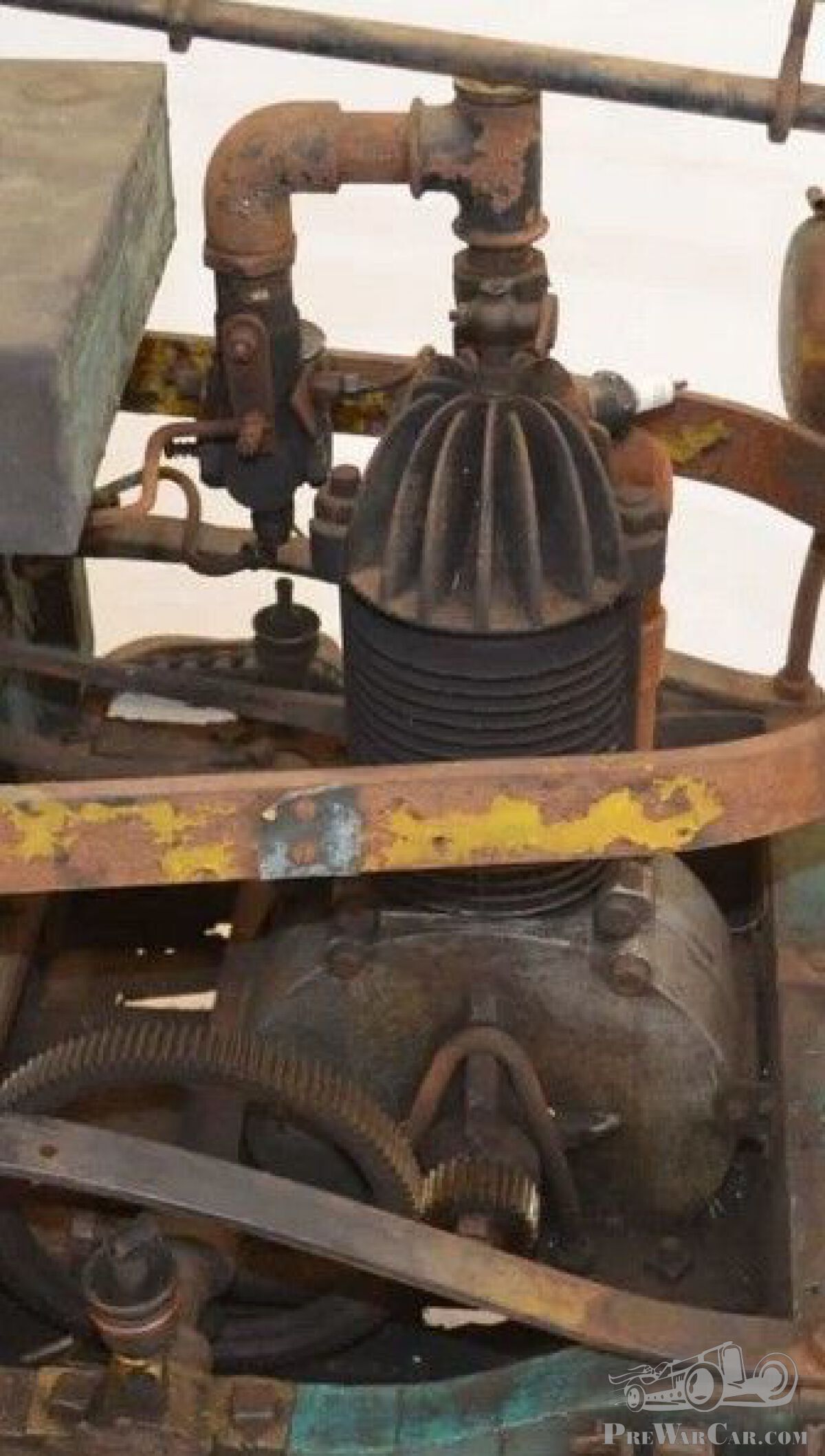
As this vehicle is currently in the sales ads of prewar.com it might be possible to shed some more light onto that vehicle. Maybe if some fellows could have a look onto the engine, wich is quite peculiar in the way the cylinder and the head is bolted to the crankcase. Probably someone will notice the engine and can point to a manufacturer.
The closest I came is the small 1 1/2hp engine sold by bonhams ( https://www.bonhams.com/auctions/19766/lot/21/ )quite a while ago. Obviously they also had no clue to the manufacturer. But if you look at the 2 bolt cylinder head fixture with the anchoring points at the crank case you can see some resemblance.
Another question arrises from the springs used. I am no expert on carriages, as far as I my research went I found the Daimler Motorlastwagen to be the first to use coil springs in 1898.
Per saperne di più
The closest I came is the small 1 1/2hp engine sold by bonhams ( https://www.bonhams.com/auctions/19766/lot/21/ )quite a while ago. Obviously they also had no clue to the manufacturer. But if you look at the 2 bolt cylinder head fixture with the anchoring points at the crank case you can see some resemblance.
Another question arrises from the springs used. I am no expert on carriages, as far as I my research went I found the Daimler Motorlastwagen to be the first to use coil springs in 1898.
David GREEN
05 Aprile 2022, 20:11
Much of the fun generated by PreWarCar.com lies in the friendly jousting over photographs taken in bygone eras. In many cases, there is no prospect of definitive answers, but the rough and tumble of debate is a marvellous way of learning more about the subject. And all this would be forbidden if we had first inspected the vehicle physically.
So, in the spirit of conjecture without physical examination, can I say that the Dreirad BJ is an imaginative conceit, constructed by someone with a strong sense of humour and an eye for implausible detail. The car reminds me very much of the cartoons by the British cartoonist Emmett.
Let me just mention four items that spring to mind. (1) The front wheel brake. This is activated by a sleeve attachment at the passenger end of the tiller. It might just work if it was in tension, but it operates by compression through a feeble piece of wire. This operates the rocker on the steering column head to push down a brake bpad onto the solid tyre of the front wheel. The brake would stop nothing. (2) The engine. This is likely to be period, and is extremely like the engine sold by Bonhams. The Bonhams photograph enables one to identify the spark plug position, as well as part of a single valve with its spring. I assume this is an exhaust valve, with the inlet possibly regulated by an automatic inlet valve (as in the 1903 Napier at Beaulieu). But the major difference between the Dreirad BJ and the Bonhams engine is the replacement of the flywheel with a small, straight-cut gear. Unless the other side of the crankcase is very different, the absence of the flywheel should place beyond reasonable doubt that the car is an amusing pastiche. It would easy to see the flywheel if we were given photographs of the other side of the vehicle, but these are suspiciously absent. (3) I believe that somebody elsewhere has commented on the front fork, which looks much later than ca. 1895. (4) There is a starting handle in a small bin on the right hand side at the front of the wooden chassis that would appear to be intended for the square shaft end of the secondary shaft. The gearing is such that it would turn the engine very much slower than normal. It is just possible it was intended to allow the driver to set the piston past TDC, and then trigger the ignition with a trembler coil (much as one was able to do with early Silver Ghosts) but it would be just as easy to do this by moving the flywheel (if it has one). As for transmission to a back wheel, I await more photographs with interest.
Per saperne di più
So, in the spirit of conjecture without physical examination, can I say that the Dreirad BJ is an imaginative conceit, constructed by someone with a strong sense of humour and an eye for implausible detail. The car reminds me very much of the cartoons by the British cartoonist Emmett.
Let me just mention four items that spring to mind. (1) The front wheel brake. This is activated by a sleeve attachment at the passenger end of the tiller. It might just work if it was in tension, but it operates by compression through a feeble piece of wire. This operates the rocker on the steering column head to push down a brake bpad onto the solid tyre of the front wheel. The brake would stop nothing. (2) The engine. This is likely to be period, and is extremely like the engine sold by Bonhams. The Bonhams photograph enables one to identify the spark plug position, as well as part of a single valve with its spring. I assume this is an exhaust valve, with the inlet possibly regulated by an automatic inlet valve (as in the 1903 Napier at Beaulieu). But the major difference between the Dreirad BJ and the Bonhams engine is the replacement of the flywheel with a small, straight-cut gear. Unless the other side of the crankcase is very different, the absence of the flywheel should place beyond reasonable doubt that the car is an amusing pastiche. It would easy to see the flywheel if we were given photographs of the other side of the vehicle, but these are suspiciously absent. (3) I believe that somebody elsewhere has commented on the front fork, which looks much later than ca. 1895. (4) There is a starting handle in a small bin on the right hand side at the front of the wooden chassis that would appear to be intended for the square shaft end of the secondary shaft. The gearing is such that it would turn the engine very much slower than normal. It is just possible it was intended to allow the driver to set the piston past TDC, and then trigger the ignition with a trembler coil (much as one was able to do with early Silver Ghosts) but it would be just as easy to do this by moving the flywheel (if it has one). As for transmission to a back wheel, I await more photographs with interest.
In my view they appear to be arc welds. I am aware that his form of welding was available prior to 1900, but was not a comon method and was not something that I would expect on a vehicle supposedly of the time (1900 !).
Also the bottom weld (on the metal 'bar'that runs back to ?) looks to me like an INDUSTRIAL arc weld as it is very uniform. It is the sort of weld that one sees frequently today in mass-production, whereas the 'top' weld visible is much rougher and very 'by hand'.
Even without seeing the vehicle, this alone would make me doubt any dating to the early part of the 20th C. I suspect that David Green's suggestion that it is someones flight of fancy is probably correct.