La rivista e il marketplace globale per gli appassionati di auto d’epoca, creati da appassionati.
La rivista e il marketplace globale per gli appassionati di auto d’epoca, creati da appassionati.


Filter
Faccia la sua scelta
- Automobile
-
Marca >>
-
Anno >>
-
- Motociclette
-
Ubicazione >>
- Parti e altro
-
Marca dell'auto >>
-
Produttore >>
-
Categoria >>
- Biciclette
-
Anno >>
-
Paesi


The first car to cross the Canadian Rockies

Back in the early 1900s, there were very few roads once you left a town or city. The best you could hope for were some half-decent wagon trails and dry weather. In rugged BC in 1904 there were no roads through the interior or across the Rockies. The CPR had even destroyed parts of the very good Cariboo Road in 1882, a true highway from the coast to the interior, to lay tracks. And wouldn’t you know they got all the freight business to the interior?
Even so, back in the day, there were people who had a desire to drive great distances and see as much of the world as possible. Charles Glidden of Lowell, Massachusetts was one of those. His choice of car was the British built Napier, one of the finest cars in the world at the time. This prominent (and rich) American motoring enthusiast who had made many other long-distance tours wasn’t going to let the lack of roads hold him back.
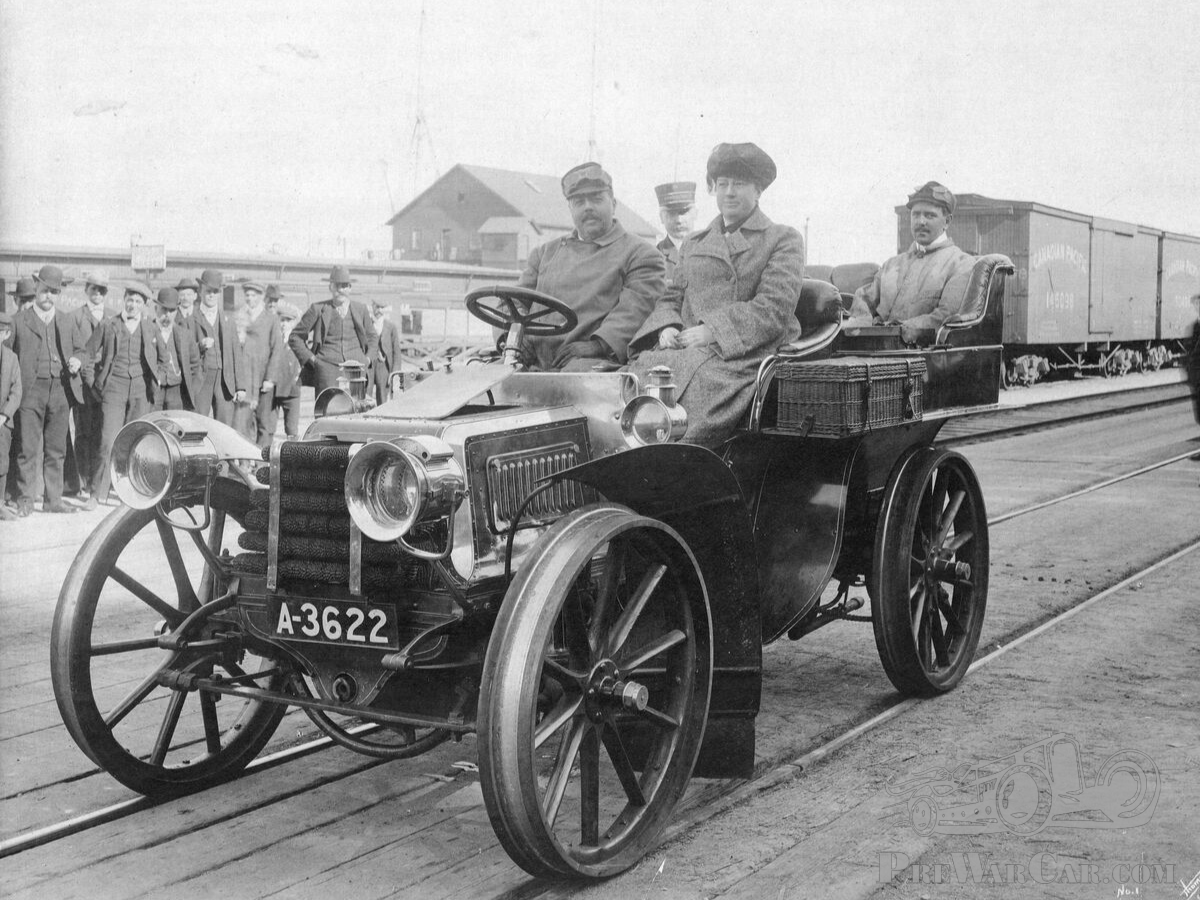
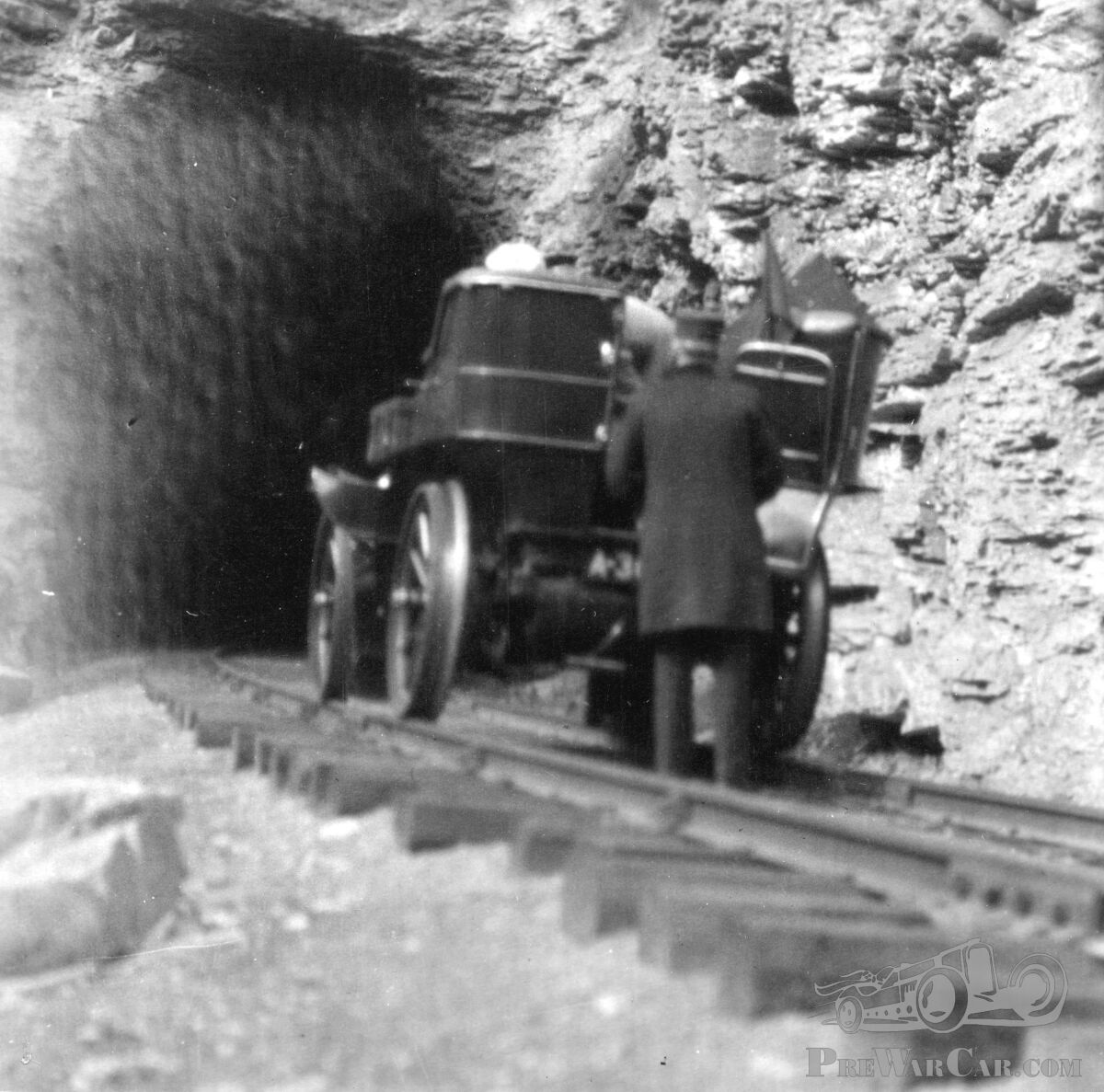
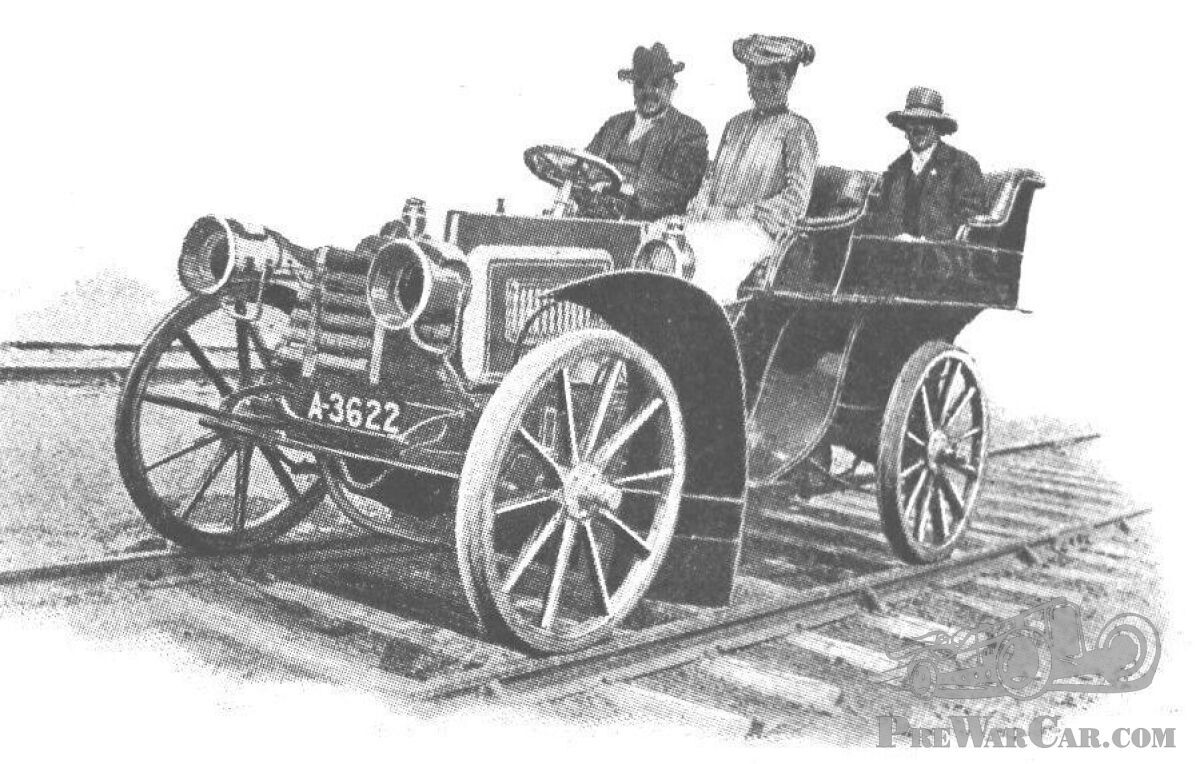
Mr Glidden approached the Canadian Pacific Railroad to allow him to use the rail line crossing the Rockies, through the province and arriving in Vancouver. His idea was to put flanged wheels on the Napier and actually run it on the rails. The CPR agreed on the condition that the car is upgraded to locomotive standards and be dispatched as a scheduled train with a CPR conductor. The extra equipment on the car included warning torpedoes (flares?) a horn, red flags and signals.
The CPR rail lines were in fine condition so the trip was very smooth for Mr Glidden, his wife and a friend from London, England a Mr Charles Thomas. The ride was so smooth that Mr Glidden at one time had the twenty-four horsepower Napier opened up and they hit close to sixty miles per hour. However, their average speed for just over eighteen hundred miles was about thirty miles per hour and the whole trip took twelve days.
In the picture above is the Napier arriving at the foot of Howe Street In Vancouver. Mr and Mrs Glidden are upfront. In the back seat are the CPR conductor in his conductor uniform with hat and Mr Thomas from London. They look quite relaxed and pleased after their long journey.
After this trip railroad companies did not allow private vehicles on their tracks but they did take note of the idea and in 1905 the CPR had one on the rails in Alberta for inspection purposes. Cars on the rails became a bit of railroad tradition in this country. A 1930 Rolls Royce was in use in the late thirties on Vancouver Island for a logging company owner. One of the most interesting cars to be used on the rails was a 1939 McLaughlin Buick Limited Imperial Touring Z Sedan. The CPR fitted it with heavier leaf springs, air brakes, plus a locomotive horn and bell. But the most incredible bit of equipment was its own turntable to turn it around. This was under the car at its balance point and with a special manually operated jack could raise the 8,400lb car off the tracks. Then one man could push the car around as if it was on a pivot and put it down on the tracks.
Words by Steve Diggins. Photograph courtesy BC Archive.
Pubblicato:
giovedì ottobre 10th, 2019
Facebook
LinkedIn
Twitter
WhatsApp
Email
Copy
Commenti

Steve Diggins
15 Ottobre 2019, 07:51
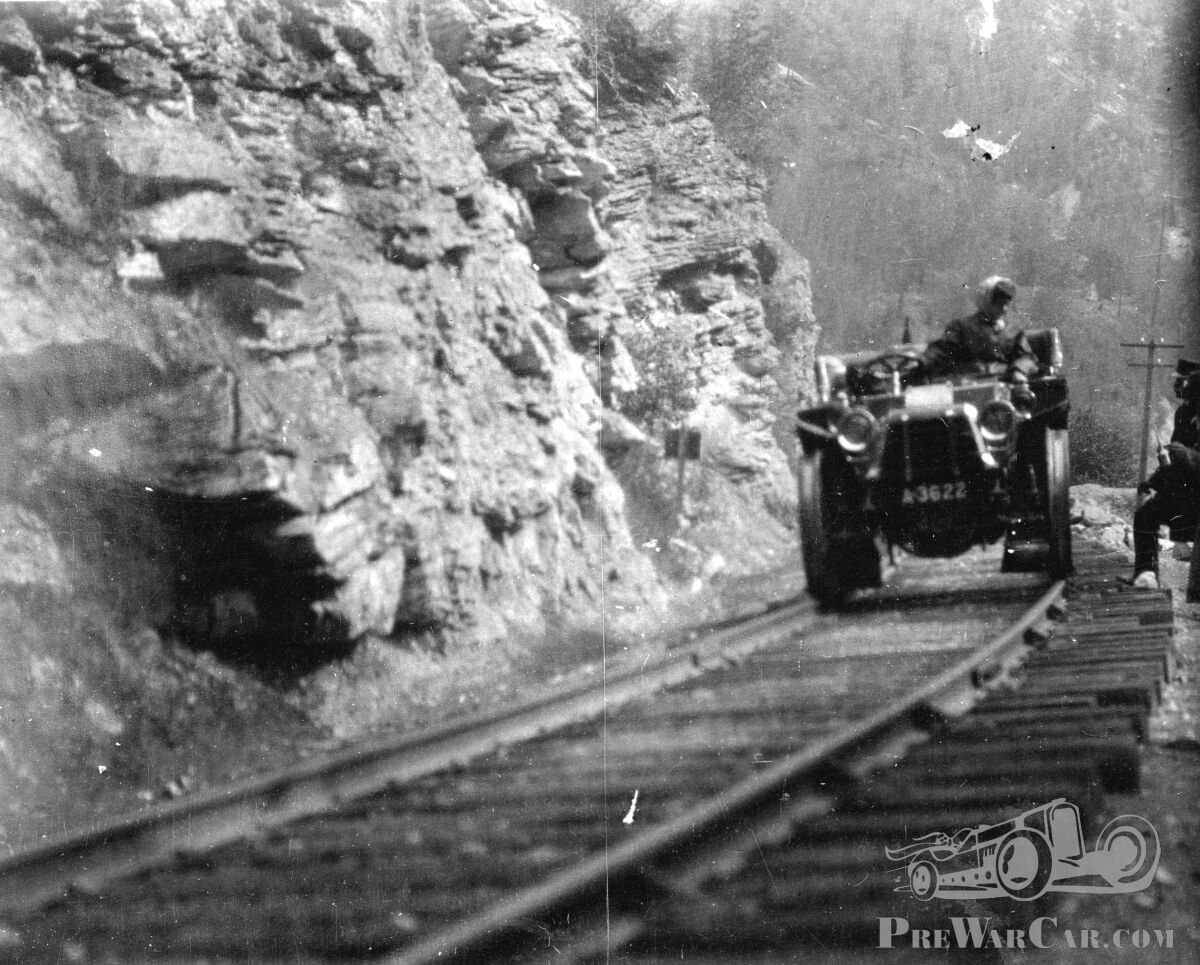
In response to Lauren's questions, first off I don't know what the average speed of the train would be. These were massive locomotives and I am sure out on the vast open prairie the trains would be just as fast as the car. BC is very different with many large mountain ranges to go around and different grades to deal with. About a one hundred mile section winds through the Thompson River Canyon and the Fraser River Canyon. second only in size to the Grand Canyon Two of the photos were taken in the canyon section. This could be a scary ride because about fifty foot below the rail line is a large fast moving river.
Who did the driving? I am pretty sure Mr.Glidden did all of it. I have not seen photos of anybody else behind the wheel. Mr. Thomas might have done some, but there are no photos of him doing so. Somewhere I read that he was more than just a friend. He could have been a mechanic provided by Napier. That would make sense.
Where to sleep? The CPR built very nice hotels and lodges throughout the country so you could stay over and enjoy. They also had beautiful ocean liners on the Pacific and Atlantic if you wanted to go to far away places.
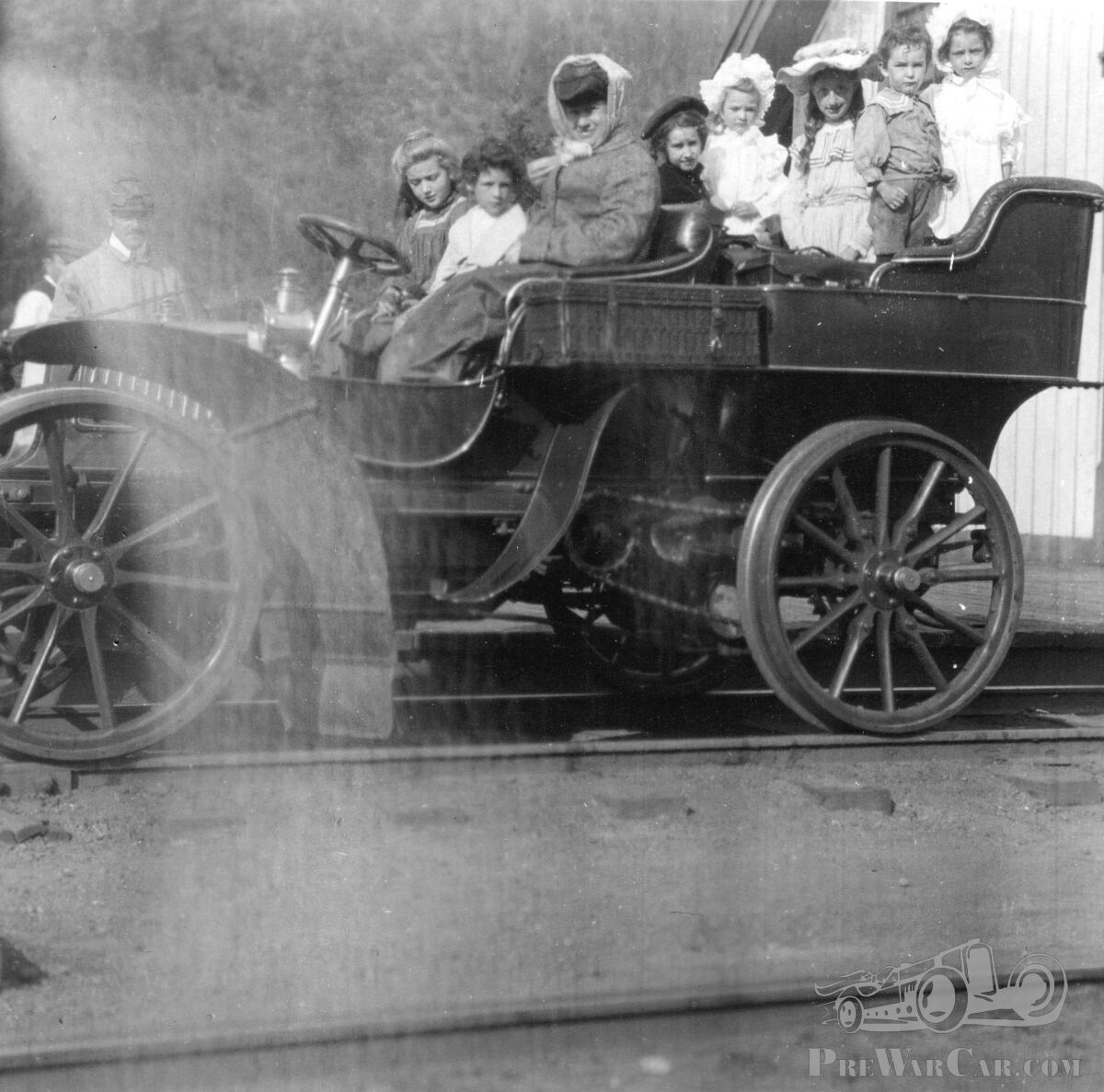
I mentioned in the article the CPR had their own car on the rails in 1905 and have included a photo of it. I am not sure what make it is.
Per saperne di più
Who did the driving? I am pretty sure Mr.Glidden did all of it. I have not seen photos of anybody else behind the wheel. Mr. Thomas might have done some, but there are no photos of him doing so. Somewhere I read that he was more than just a friend. He could have been a mechanic provided by Napier. That would make sense.
Where to sleep? The CPR built very nice hotels and lodges throughout the country so you could stay over and enjoy. They also had beautiful ocean liners on the Pacific and Atlantic if you wanted to go to far away places.
I mentioned in the article the CPR had their own car on the rails in 1905 and have included a photo of it. I am not sure what make it is.

Larry A. Lewis
10 Ottobre 2019, 16:27
A railway torpedo is a small explosive device that is placed directly on the rails so that the wheels of a following train, when crushing it, will make an audible noise to warn it to stop as there is an obstruction or other danger further down the line. These were used throughout North America. Today, road vehicles fitted with retractable rail wheels are commonly used for maintenance and inspection purposes.
Per saperne di più
Hubertus Hansmann
10 Ottobre 2019, 14:25
Sleeping, etc.: According to the "Allgemeine Automobil Zeitung" - No.40 /1904, the Napier slept on side tracks, while Mr. & Mrs. Glidden and Mr. Thomas were parked in Hotels over night. By the way: Each wheel had a weight of more than 110 kg!
Best, Hubertus
Per saperne di più
Best, Hubertus
Laurens
10 Ottobre 2019, 07:49
That is a train I certainly would like to use!
Thanks for sharing.
What was the average speed of a train those days, who drove that trip?
Steve, do you know what they did with sleeping etc? As it isn’t save to just stop the car and park it on the track.
Per saperne di più
Thanks for sharing.
What was the average speed of a train those days, who drove that trip?
Steve, do you know what they did with sleeping etc? As it isn’t save to just stop the car and park it on the track.