La rivista e il marketplace globale per gli appassionati di auto d’epoca, creati da appassionati.
La rivista e il marketplace globale per gli appassionati di auto d’epoca, creati da appassionati.


Filter
Faccia la sua scelta
- Automobile
-
Marca >>
-
Anno >>
-
- Motociclette
-
Ubicazione >>
- Parti e altro
-
Marca dell'auto >>
-
Produttore >>
-
Categoria >>
- Biciclette
-
Anno >>
-
Paesi



The Ford Ballard Special: two engines are better than one


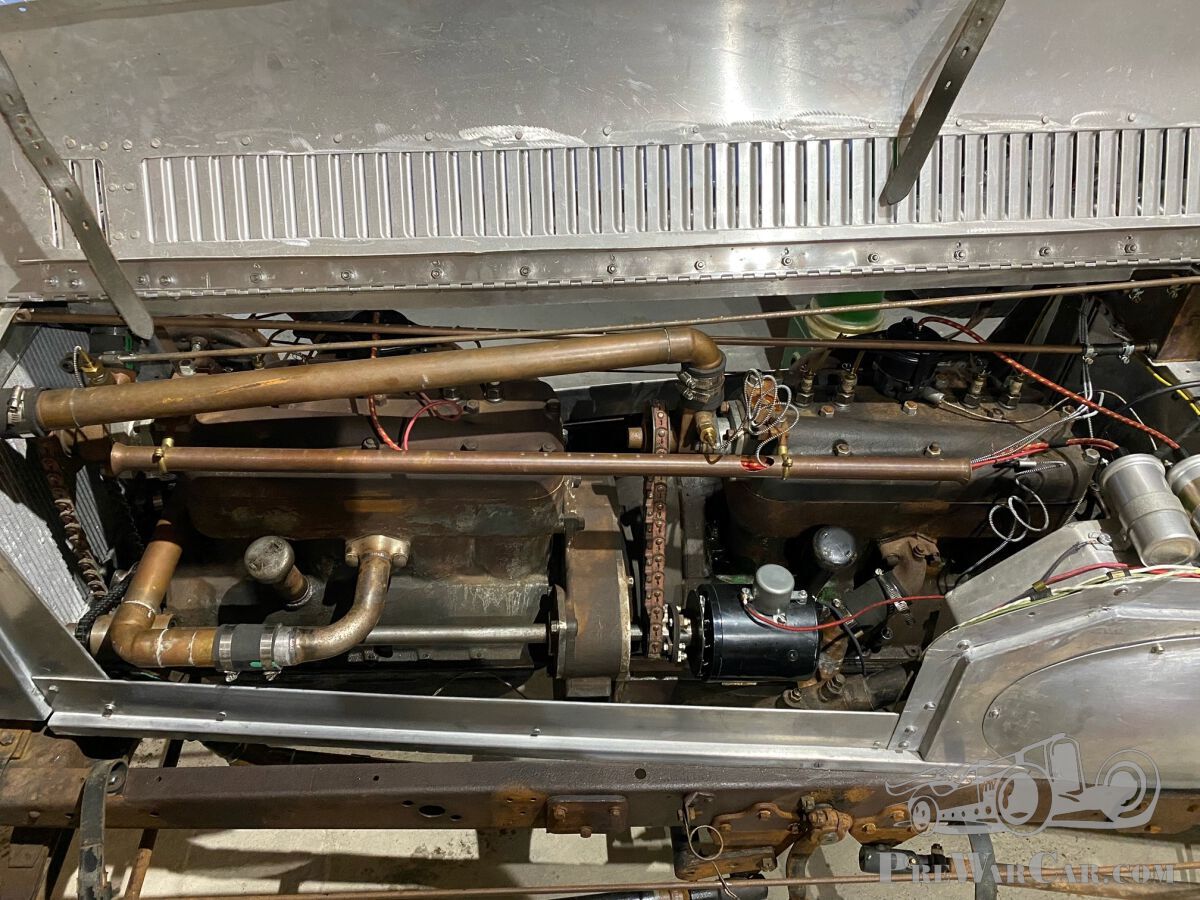


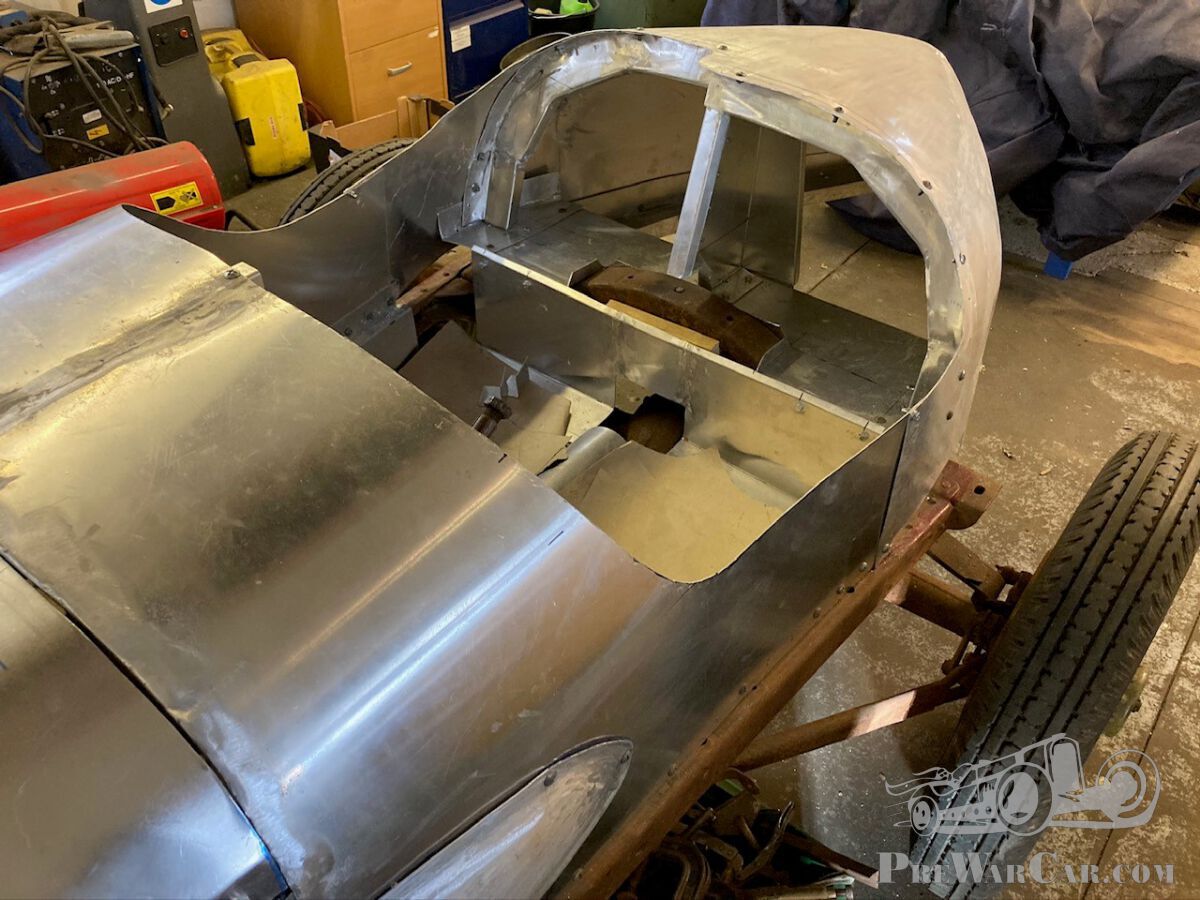
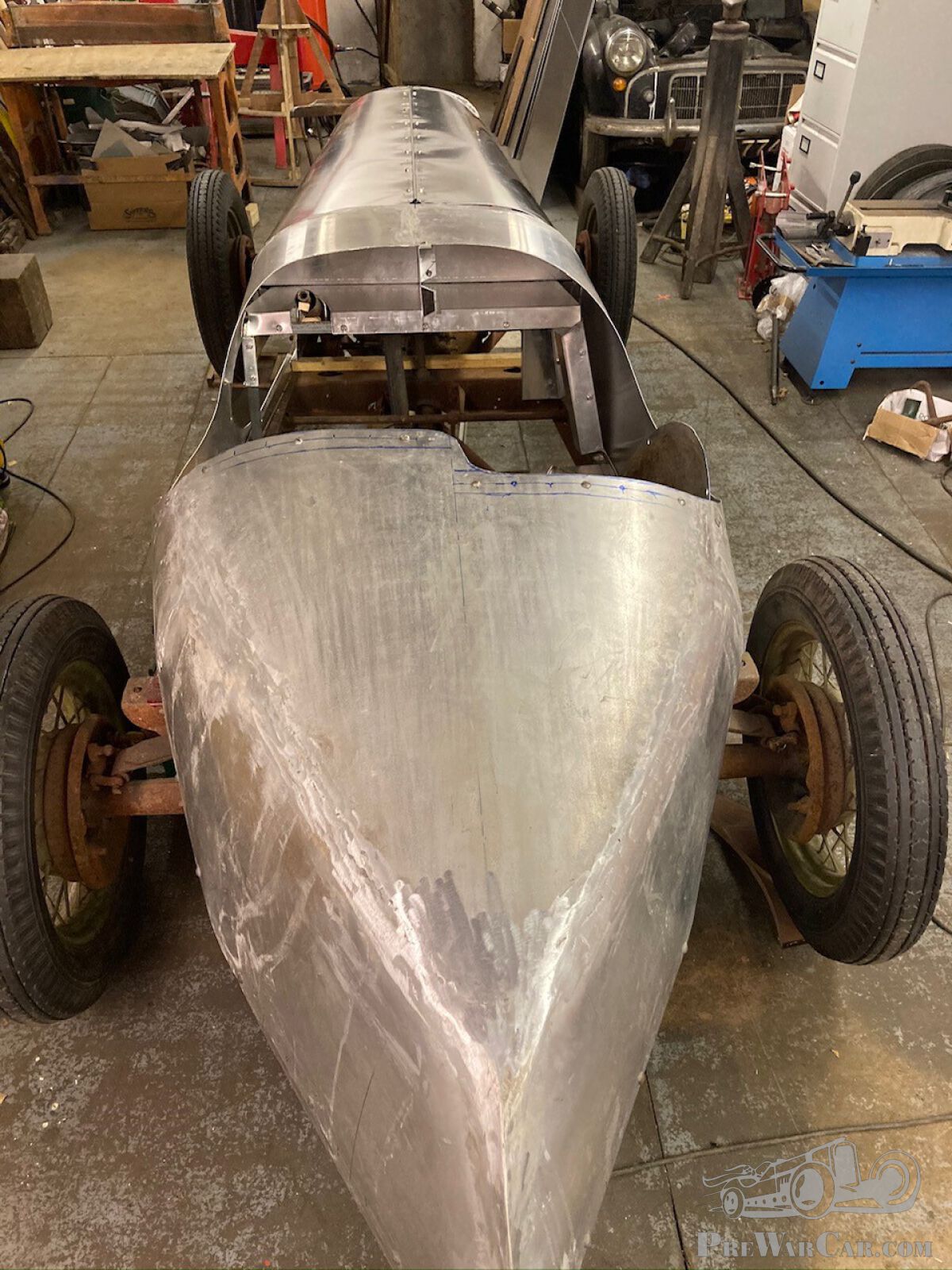


Last year, we brought news that Tobias Ballard, Model A Ford enthusiast and expert engineer, had achieved what nobody else in living memory had done and produced a vintage Model A special powered by twin engines. When we first saw the car, it had only just been completed and was yet to be driven in earnest. It has now made multiple journeys under its own power, including some hell-for-leather runs at the Normandy Beach Race in 2023.
As we wrote last year: "The Ford Model A is one of those cars which, through history, has been so ubiquitous, you might well wonder what you could do with one that hasn't been done before. Tobias Ballard of the Model A Revival Company has now made your life that much harder, because he's just completed what, to the best of our knowledge, may well be a world first: a twin-engined Model A powered by a pair of original Model A engines mated together to make an eight-cylinder.
"Leaving the unique method of propulsion aside, everything about the build has been undertaken in the spirit of the first generation of American hot-rodders of the 1920s and '30s, with only genuine vintage parts used throughout.
"Lest anyone should fear that a good Model A was harmed in the construction of the Ballard Special, Tobias restores Model As for a living and has quite a hoard of odd chassis, engines, and other parts, and had only to have a rummage through them to find the parts needed to make a complete car."
Inspired by the Brooklands daredevils
Tobias told us:
"The Ballard Special is the culmination of lots of blood, sweat and tears, not only from myself but also from the couple of guys who work in my workshops. I was told it wouldn't work, would shake itself apart on starting up or would just fail to drive, but we persisted in our vision and determination and succeeded.
"It started as a rolling chassis which I pulled out from storage. After debating it in my mind, I decided not to cosmetically restore the rolling chassis, engines or transmission, preferring to restore or replace just the necessary parts and rebuild the engines' internals without losing the patina which has taken ninety years to mature.
"We fabricated a steel interconnected housing which the front and rear engines bolt onto, using the original existing bolt holes on the engines. Once this was done, we knew that we still had to be able to drive the rear engine's cooling system, so we had to experiment to find the best way to not lose traction to the final pulley after the slip from the various belts. For this, we decided to fabricate a new bottom pulley on the front engine, not only as a belt pulley but also with a chain sprocket to drive a shaft down the side of the engine to the rear. This shaft, in turn, is a direct drive into the end of the dynamo and also incorporates a belt-drive pulley to the rear water pump. The belts are the old fabric machine-type link belts, which are the easiest to use when you need to vary the lengths of the belts as we did.
"There was no need to lengthen the chassis but we did have to bring the support bars out from where they used to be, located under the gearbox bellhousing at the front and from the torque tube at the rear, the torque tube and prop-shaft being significantly shorter than the original version.
"The steering was moved back and lowered and a longer steering rod fabricated.
"The crankshafts are pretty much standard, except the front of the rear crank has been strengthened to cope with the increased torque. The detail in the connection of the crankshafts and how we have timed them is, I’m afraid, something I cannot share, so I will leave it to the imagination and speculation of the wider community. However, trial, error and catastrophic failure were all endured before we finally succeeded.
"The car on the road has enormous torque and the acceleration is smooth and awe-inspiring, with the engines running a straight-eight firing order. As you would imagine, from a car of just over seven litres or 440 cubic inches, which weighs around ¾-ton, it has a bit of a kick.
"Handling is surprisingly good, with the balance being pretty even. This was pure luck as all I'd thought about was getting as much power as I could, as simply as I could.
"Is it reckless, brave or stupid? Probably all three, but where would we be without the courage and grit of those pioneers of speed and power who went before us? If it wasn’t for them, willing to pay the ultimate price in the search for that perfect powertrain in the early days of motorsport and motor manufacturing, the whole world's motor industry would have followed a very different course."
One year later
As mentioned above, since its completion this time last year, the Ballard Special has been widely shown and has covered many miles on the road under its own power. Undoubtedly its finest hour so far, though, was when it was taken to France for the Normandy Beach Race on September 22nd to 24th, 2023. The Ford ran like a car possessed, proving its abilities before hundreds of spectators.
With racing curtailed for the winter, there'll still be an opportunity to view the Twin Engine Special at this year's InterClassics Maastricht on January 11th to 14th, where it will be appearing on the PreWarCar.com stand alongside a replica of the 1896 Ford Quadricycle, celebrating the show's theme "120 Years of Ford Performance."
You'll not just have an opportunity to view the Twin Engine Special—you'll also be able to buy it. The workshops of the Model A Revival Company are never idle and sometimes it's necessary to make space for new projects, and now that he's mastered a twin-engined Model A, Tobias is working to produce a twin-gearbox one.
The PreWarCar.com and PostWarClassic.com stand will be in the North Hall, number N.746. Tickets for InterClassics may be purchased here.
Pubblicato:
venerdì gennaio 5th, 2024
Facebook
LinkedIn
Twitter
WhatsApp
Email
Copy
Commenti
Chris Martin
07 Gennaio 2024, 21:31
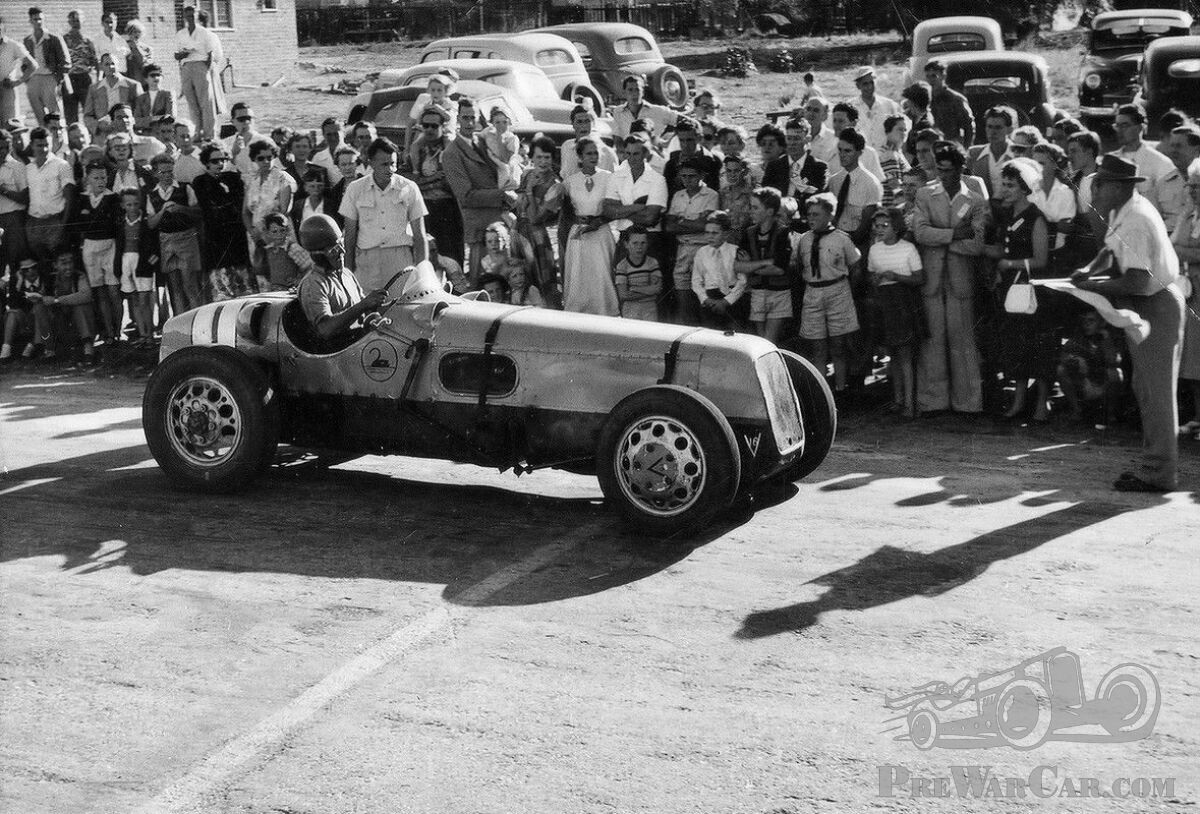
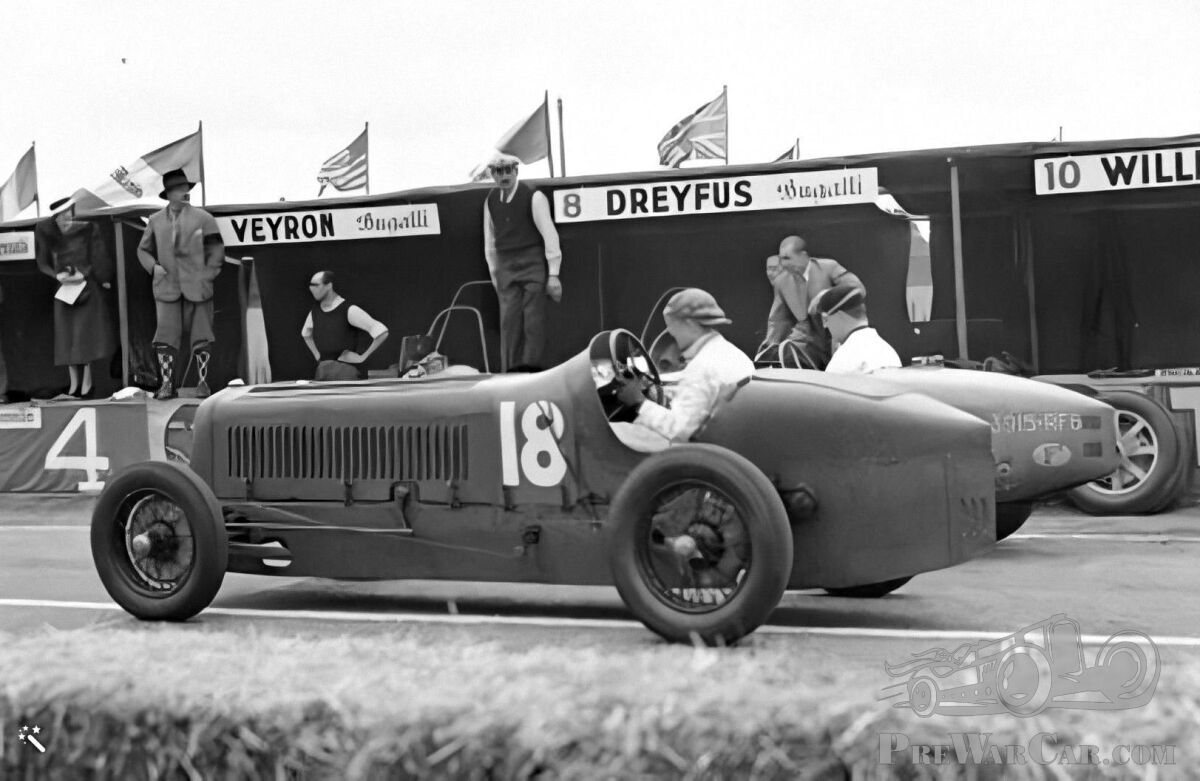
Here is another photo of the Montier-Ford straight-eight at the Dieppe Grand Prix in 1933.
Per saperne di più
Tobias Ballard
11 Gennaio 2024, 21:36
Hi Chris. Thank you for that. I’m not sure how much of the car is Model A. The axles, wheels and braking system certainly aren’t and the chassis looks to dip in the middle on the first picture and not on the second. The rear suspension also is different in the respect of the shock absorption. None of these changes surprises me at all to be honest as the set up he has there would handle much better than the standard setup that we have. We’ve researched extensively to try and find pictures of it under the skin to see if he had used a Model B chassis which would make sense because it’s longer and means you don’t have to sit on the rear axle to fit behind the two Model A engines, like we do in the standard chassis. We are currently ploughing through the race result listings for the races of 1932 to see if they say what the car is. However all we are finding is that it is a Ford Montier Special with two four-cylinder engines with race number 2. For 1933 it doesn’t say anything about the engines. It’s such a shame that there isn’t any more known photos of it as I’d love to know more about it.
Kind regards,
Tobias.
Per saperne di più
Kind regards,
Tobias.
Chris Martin
12 Gennaio 2024, 22:10
I can't say for sure what was left of the Model A chassis by 1932 but I do know the Montiers, father and son, continuously improved and modified their cars since the first Model T-based racers of 1921.
The first version of the Model A they raced from about 1929 had the chassis lowered by stepping the rails up at the front and back and the radiator moved forward. These evolved too but by 1932, with the straight-eight, they had what certainly must have been a longer frame, modified suspension and new bodywork.
Ferdinand Montier was quoted as saying they were always short of money so used what they had and improved the cars one year to the next rather than build new cars each year.
The car in question here does not claim to be a Model A Ford but was just the latest in a line of Montier-Fords, much like your car is no longer a Model A Ford either.
As I said, I spent ten years researching what I could find and am in touch with the owners of all known surviving Montier cars; of course there is nothing known of the fate of the straight-eight but it was probably used as the basis for the last Montier-Ford racer fitted with the flathead V8 in 1934.
There is a comprehensive list of competition results in my book, but there may yet be other events not recorded.
For the whole story my book is available from Amazon
Per saperne di più
The first version of the Model A they raced from about 1929 had the chassis lowered by stepping the rails up at the front and back and the radiator moved forward. These evolved too but by 1932, with the straight-eight, they had what certainly must have been a longer frame, modified suspension and new bodywork.
Ferdinand Montier was quoted as saying they were always short of money so used what they had and improved the cars one year to the next rather than build new cars each year.
The car in question here does not claim to be a Model A Ford but was just the latest in a line of Montier-Fords, much like your car is no longer a Model A Ford either.
As I said, I spent ten years researching what I could find and am in touch with the owners of all known surviving Montier cars; of course there is nothing known of the fate of the straight-eight but it was probably used as the basis for the last Montier-Ford racer fitted with the flathead V8 in 1934.
There is a comprehensive list of competition results in my book, but there may yet be other events not recorded.
For the whole story my book is available from Amazon
Mark Ranger
16 Gennaio 2024, 13:52
What is the name of your book, please?
Regards,
Mark
Per saperne di più
Regards,
Mark
Chris Martin
16 Gennaio 2024, 21:45
Hello Mark.
My book is titled 'Charles Montier and his French Racing Fords', published in 2022 and is available through Amazon.
ISBN-13 : 979-8837757013
Depending on where you are, to minimise shipping costs it is best to order through your local Amazon.com, Amazon.co.uk, Amazon.com.au, etc., etc.
It is also available in a French edition titled 'Charles Montier - Sorcier de la Ford T', so be sure to order the correct one.
Thanks for your interest.
Per saperne di più
My book is titled 'Charles Montier and his French Racing Fords', published in 2022 and is available through Amazon.
ISBN-13 : 979-8837757013
Depending on where you are, to minimise shipping costs it is best to order through your local Amazon.com, Amazon.co.uk, Amazon.com.au, etc., etc.
It is also available in a French edition titled 'Charles Montier - Sorcier de la Ford T', so be sure to order the correct one.
Thanks for your interest.
Chris Martin
16 Febbraio 2023, 05:09
Nice car and well done.
Not to take anything away from Mr Ballard's efforts but as mentioned above, this is not the first of its type.
I spent 10 years researching the story of Charles Montier and his racing Fords and published a book last year titled 'Charles Montier and his French Racing Fords', available through Amazon - ISBN-13 : 979-8837757013
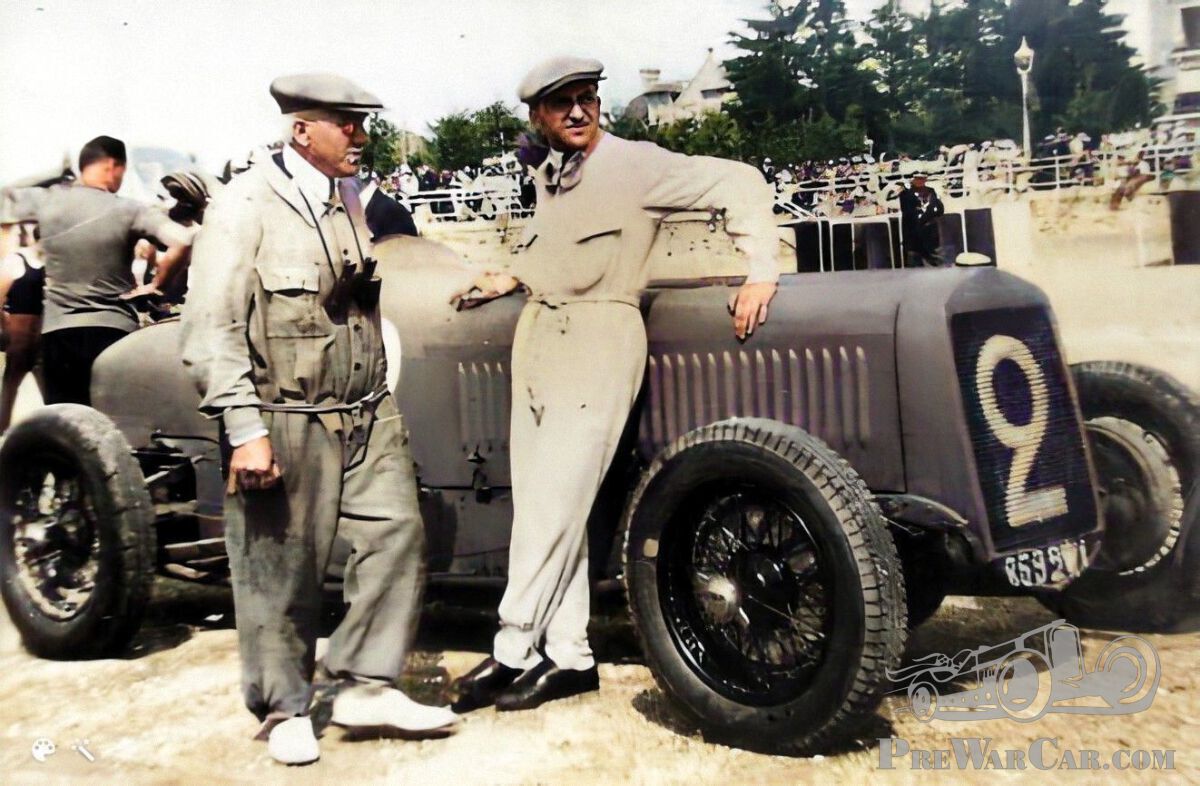
Montier was a Ford agent in Paris who started competing in races and hillclimbs with modified Model Ts in 1921, he even entered the first Le Mans 24 hour race in 1923 and finished 14th, although he was not so successful the following two years. Later he moved on to Model A Fords and when he lost patience waiting for a supply of the new Ford V8 engines in 1932 he too engineered a straight-eight from two Model A engines although with limited success. I attach a photo of Charles with his son Ferdinand before the Grand Prix of La Baule in 1933.
Per saperne di più
Not to take anything away from Mr Ballard's efforts but as mentioned above, this is not the first of its type.
I spent 10 years researching the story of Charles Montier and his racing Fords and published a book last year titled 'Charles Montier and his French Racing Fords', available through Amazon - ISBN-13 : 979-8837757013
Montier was a Ford agent in Paris who started competing in races and hillclimbs with modified Model Ts in 1921, he even entered the first Le Mans 24 hour race in 1923 and finished 14th, although he was not so successful the following two years. Later he moved on to Model A Fords and when he lost patience waiting for a supply of the new Ford V8 engines in 1932 he too engineered a straight-eight from two Model A engines although with limited success. I attach a photo of Charles with his son Ferdinand before the Grand Prix of La Baule in 1933.
Tobias Ballard
07 Gennaio 2024, 11:33
Hi, Chris. I think it was you that said last year about Charles Montier and his two-engined Model A and since then we have tried to find a photograph of this car but have had no luck. We’ve seen some wording on the car but not much detail but I’d love to know if anyone out there has a photo of it.
Per saperne di più
Chris Martin
07 Gennaio 2024, 21:22
The photo I attached last year is of the Montier straight-eight. Here is another of it in action. I had spent ten years researching everything I could find about the Montiers and their cars but so far have found no other photos showing any mechanical parts.
Per saperne di più
Philippe De Smet
15 Febbraio 2023, 08:48
Fabulous, well done!
From all the people I met in the vintage world, I don'know a bigger Petrol head as Toby.
Always something in mind to improve, try, build...
Congrats for this achievement and go on.
Per saperne di più
From all the people I met in the vintage world, I don'know a bigger Petrol head as Toby.
Always something in mind to improve, try, build...
Congrats for this achievement and go on.
Leif Ortegren
15 Febbraio 2023, 02:43
I've read and seen photos of a couple of twin engine "T"s that were done in period. Given the long history and the number of people fooling with them, I'm sure this isn't the first ever "A. I believe Charles Montier built one circa 1930. That takes nothing away from this well engineered effort! We need a drive by video on the banking at Brooklands so we can hear it!
Per saperne di più
It was an interesting concept fitting two motors in those early race cars. In South Australia Eldred Norman fitted two flathead V8s together to create a very special race car. I'm not sure where the photo attached was taken.