La rivista e il marketplace globale per gli appassionati di auto d’epoca, creati da appassionati.
La rivista e il marketplace globale per gli appassionati di auto d’epoca, creati da appassionati.


Filter
Faccia la sua scelta
- Automobile
-
Marca >>
-
Anno >>
-
- Motociclette
-
Ubicazione >>
- Parti e altro
-
Marca dell'auto >>
-
Produttore >>
-
Categoria >>
- Biciclette
-
Anno >>
-
Paesi


The intrepid motorists of the Dark Continent


To Victorian man, few subjects held as much fascination as the expansion of the British Empire to bold new frontiers. India and the Middle East, though a land of riches, had already been a seat of civilisation for over a thousand years. The ancient Hindus and Muslims sowed the seeds of culture and commerce, and the Mongols and Mughals carried them in all directions. Sub-Saharan Africa was another matter - an untamed land of impenetrable rainforests, raging torrents and savage animals, of curiosity and danger - 'the Dark Continent', as the Victorians called it. Explorers such as David Livingstone and Henry Morton Stanley, who opened up unknown passages and made wondrous discoveries, were elevated to an almost hero-like status.
For our part, we can be glad that the early days of motoring overlapped with the latter days of imperial exploration. In the second half of the 19th century, there was great interest in conquering the wild terrain by way of an ambitious transcontinental railway from Cape Town to Cairo. Ultimately, it never came to fruition, but the Cape-to-Cairo obsession was still burning hot when motor-cars started appearing in Africa. Of all the epic drives which could be attempted, it was the Holy Grail.
Tom Silver, who promoted Quadrant motorcycles, had a crack in 1903, but aborted it in the Soudan. In 1913, Captain Kelsey had a go in a specially-prepared, multi-purpose 25/50hp Argyll, but he met with a worse fate still. It was not until 1926 that the Cape-to-Cairo would finally be conquered, after a two-year expedition in a pair of Crossley 25/30hp light lorries led by Major Chaplin Court-Treatt and his wife Stella. Sadly, their victory was dimmed a little by the fact a team of Citroën Kégresses had successfully set off from Colomb-Béchar, Algeria, in 1924, to arrive Cape Town just before the Court-Treatts reached Cairo.
That it took two years to drive from the bottom to the top of Africa, or 23 years if one considers Tom Silver's attempt as the starting point, goes to show that motoring in Africa at the time was fraught with endless dangers. Breaking a half-shaft on an English country lane is one thing; breaking it before a gang of slavering leopards, miles from any garage or a clean water supply, is quite another.
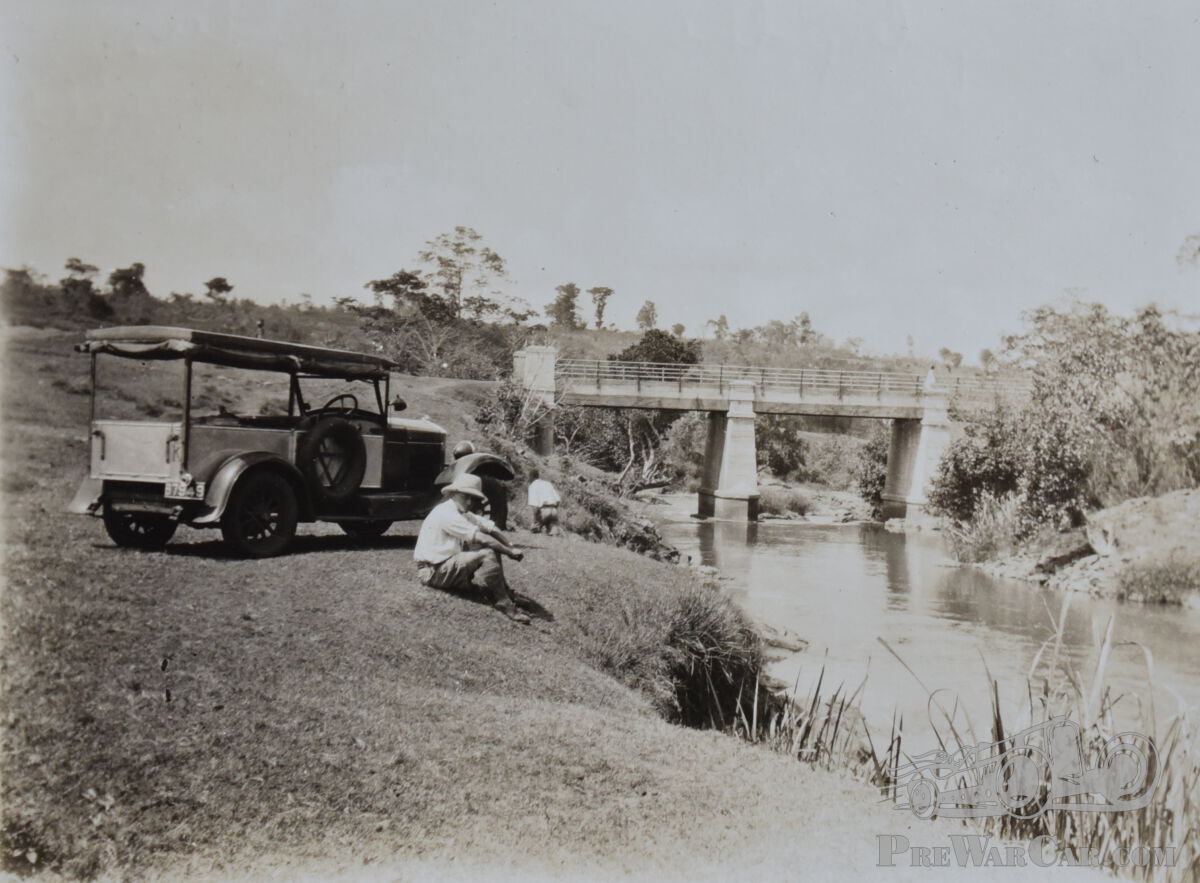
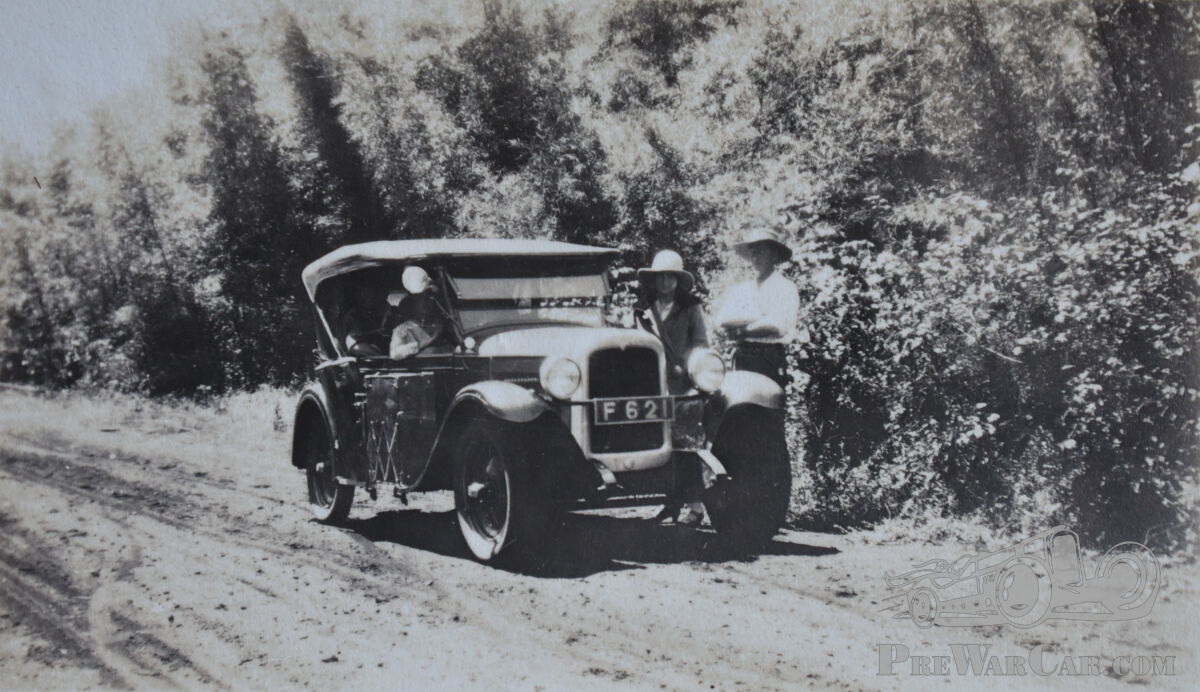
We are full of admiration, then, for the men and women in those photographs and their cars, which must have taken quite a beating sometimes. From the number plates, we think the pictures were taken in Kenya or Rhodesia, but only one location is positively identified: the picture with the bridge shows 'Percy' at the banks of the River Yala, in Kenya's Kakamega Gold Fields.
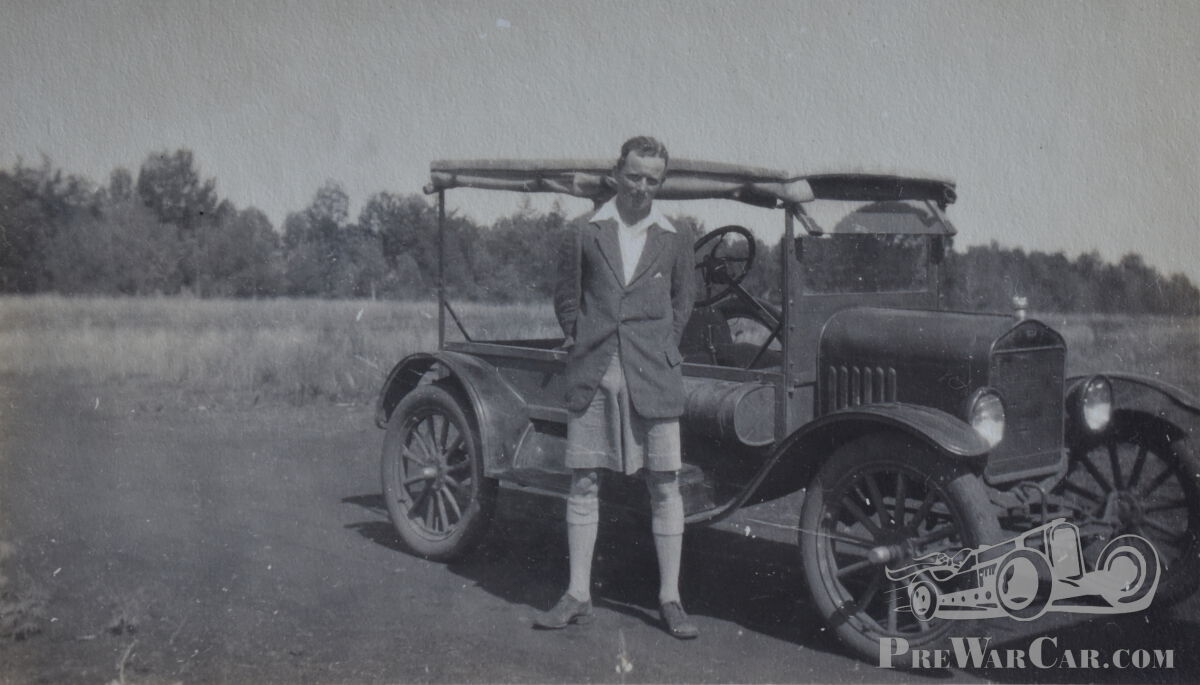
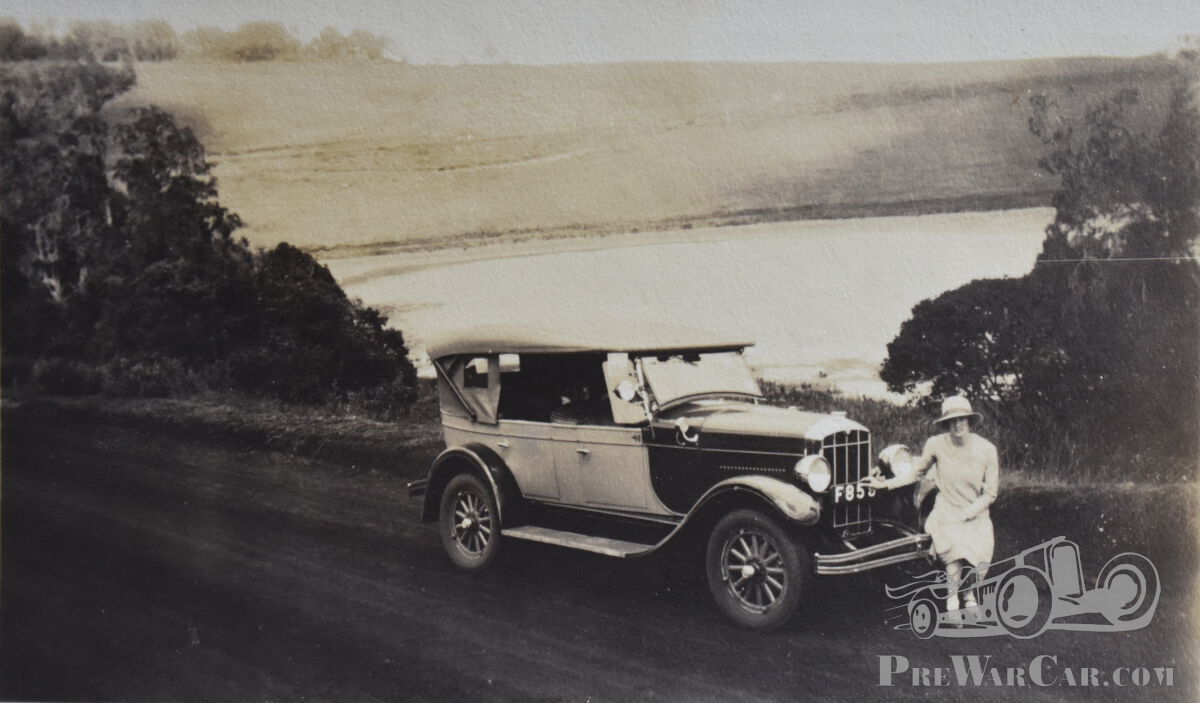
As far as the cars go, one is easily identified as a late Ford Model T. There's something quite fetching about the lightweight, low-sided bodywork, like a speedster-cum-pick-up. We recognise F 858 as being a Durant of the late 1920s, and F 621 we're fairly sure is a Chevrolet, but please tell us if you know better. As for Percy's little runabout, we haven't a clue. It's almost certainly American again but, apart from noting that the semi-covered light truck bodywork seems to have popular in the area, we can't draw any other conclusions from it.
Words: Zack Stiling; pictures: Stiling Collection
Pubblicato:
lunedì aprile 10th, 2023
Facebook
LinkedIn
Twitter
WhatsApp
Email
Copy
Commenti
Harry S. Sekella
16 Aprile 2023, 16:05
The third picture is a Durant or Rugby.
Per saperne di più