La rivista e il marketplace globale per gli appassionati di auto d’epoca, creati da appassionati.
La rivista e il marketplace globale per gli appassionati di auto d’epoca, creati da appassionati.


Filter
Faccia la sua scelta
- Automobile
-
Marca >>
-
Anno >>
-
- Motociclette
-
Ubicazione >>
- Parti e altro
-
Marca dell'auto >>
-
Produttore >>
-
Categoria >>
- Biciclette
-
Anno >>
-
Paesi



Mystery 'U-Eight' or maybe 'Offline Eight' ? ( update: a 'desaxe' Causan / SCAP? )

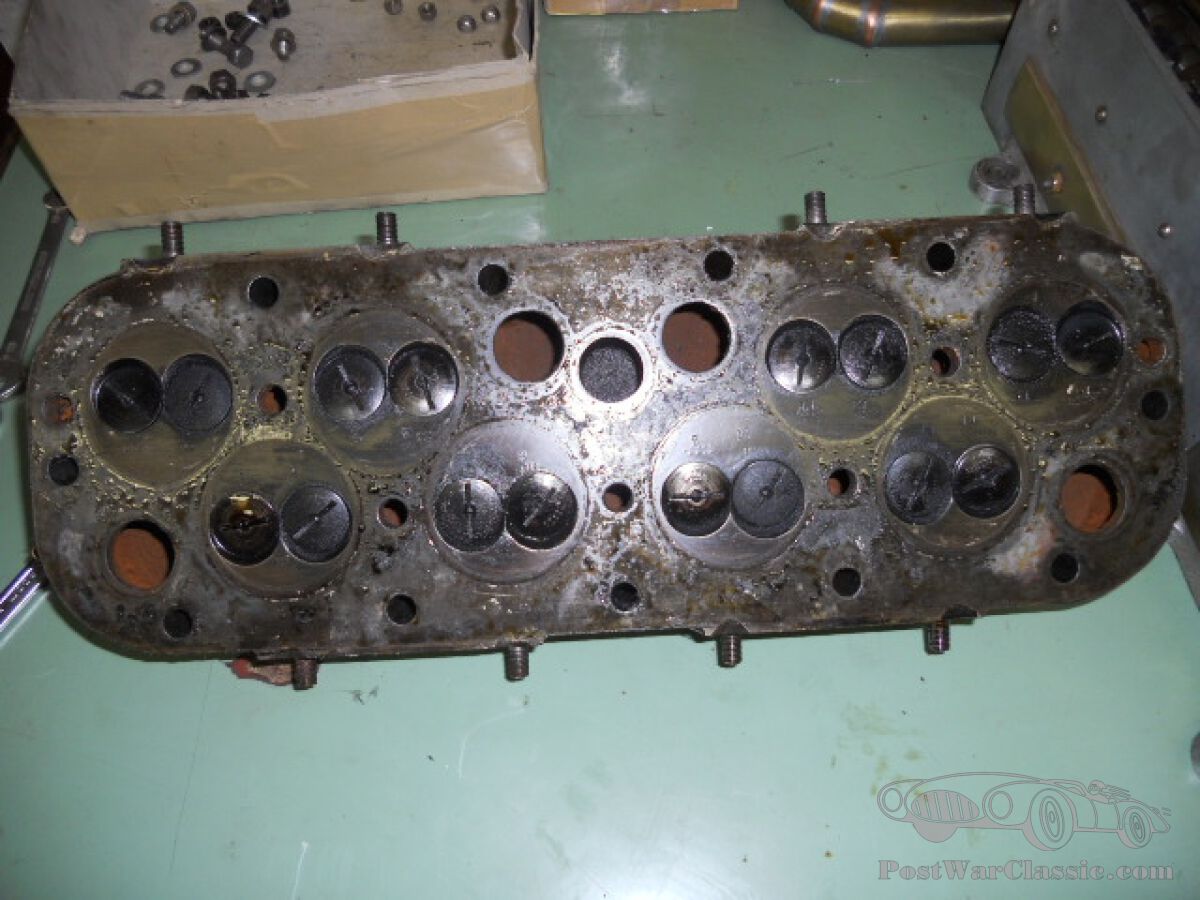
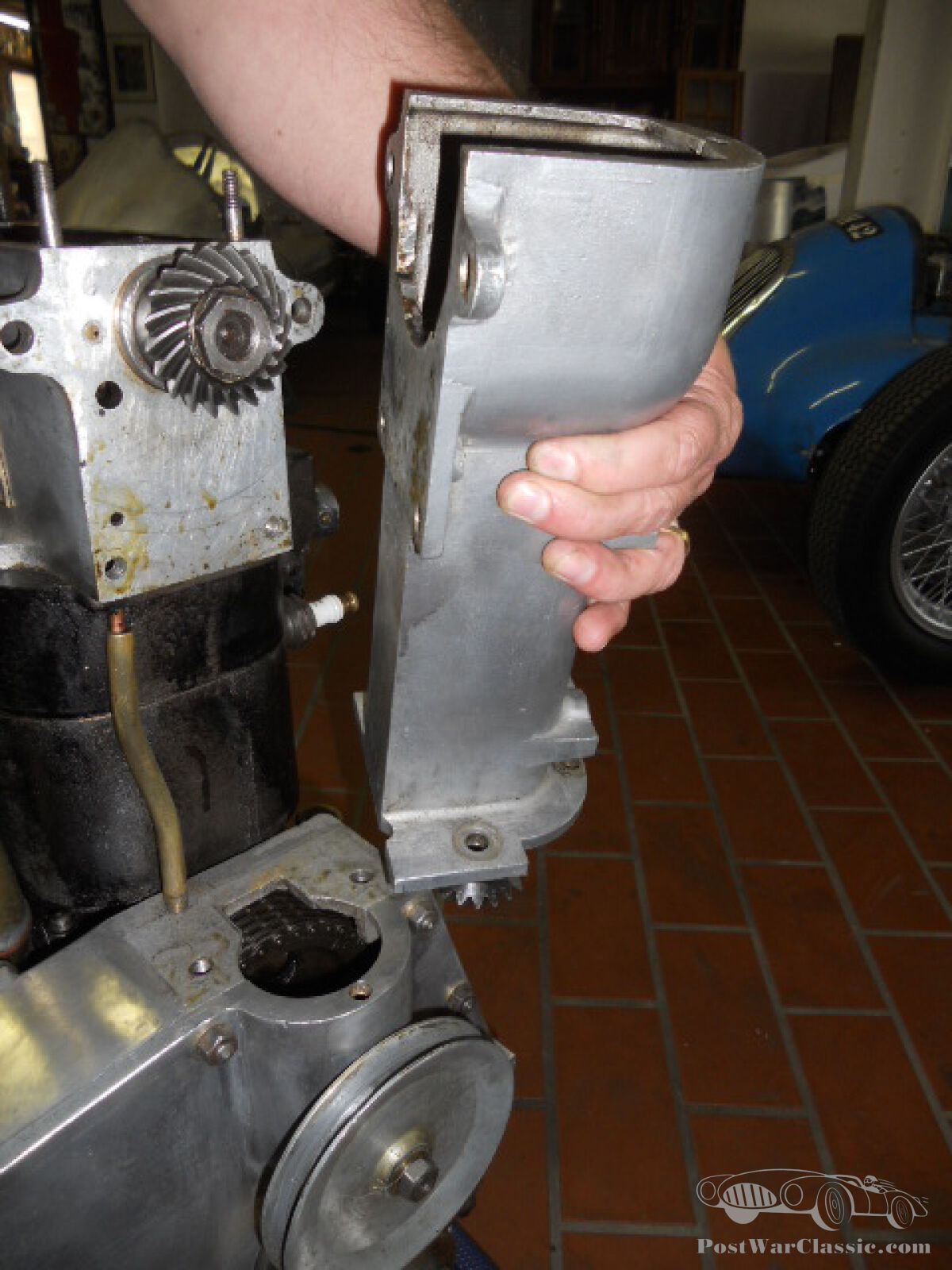
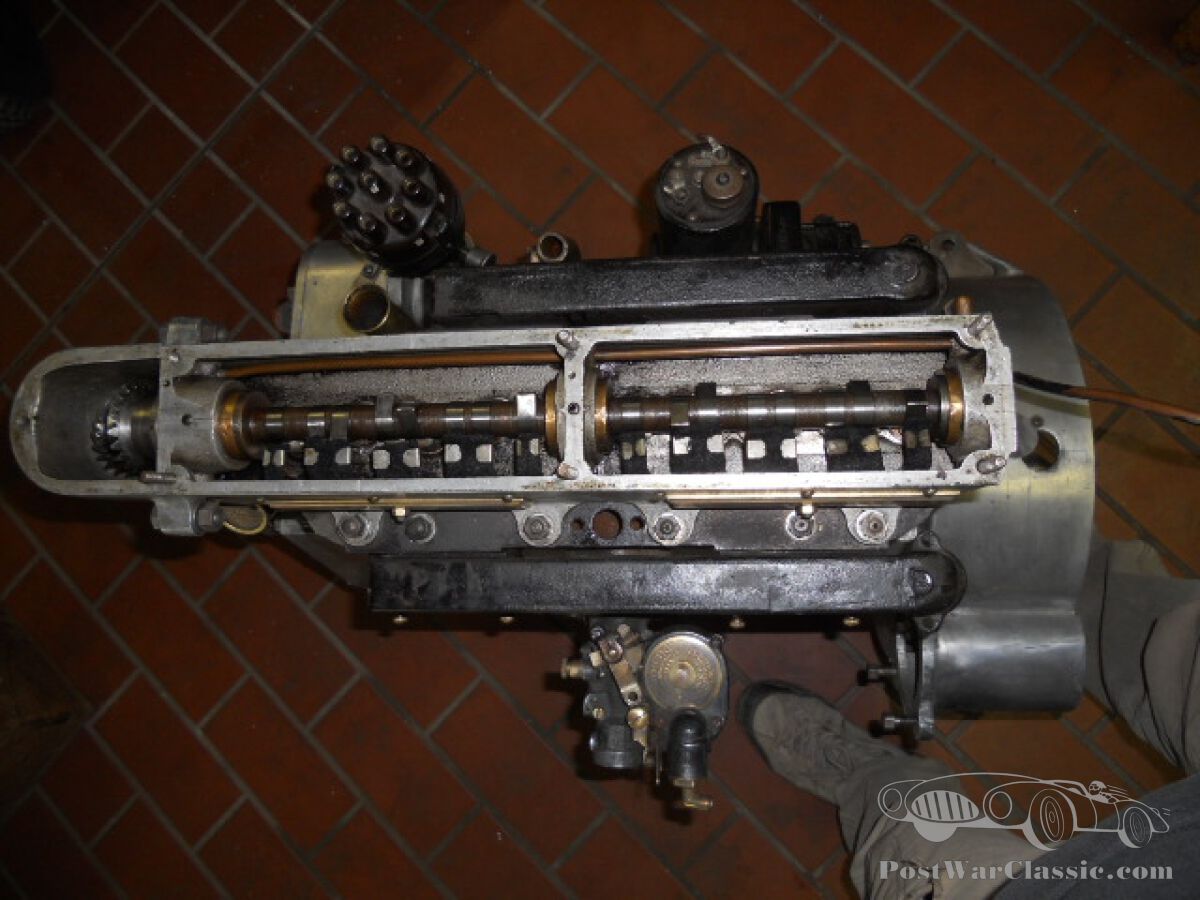
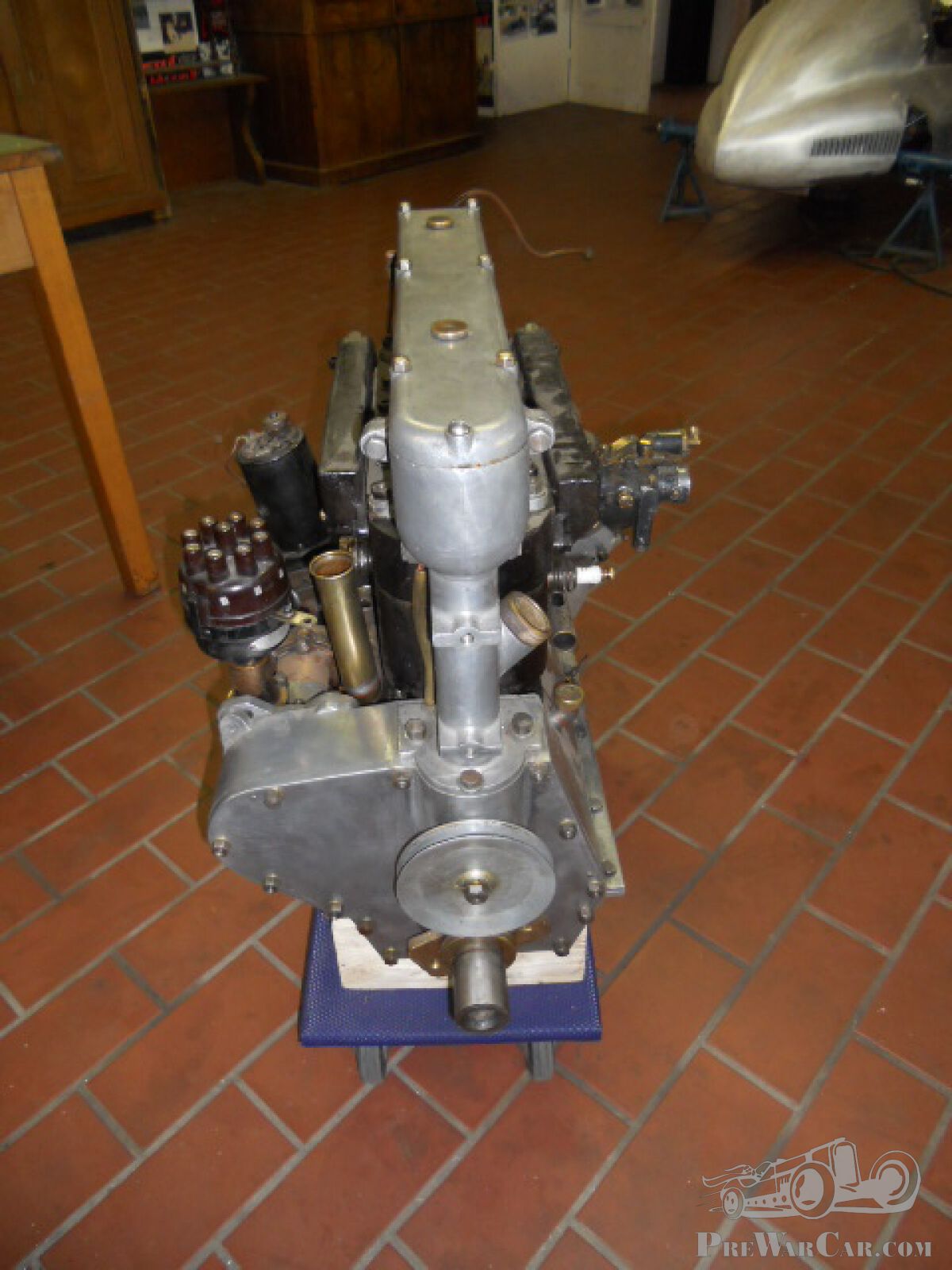
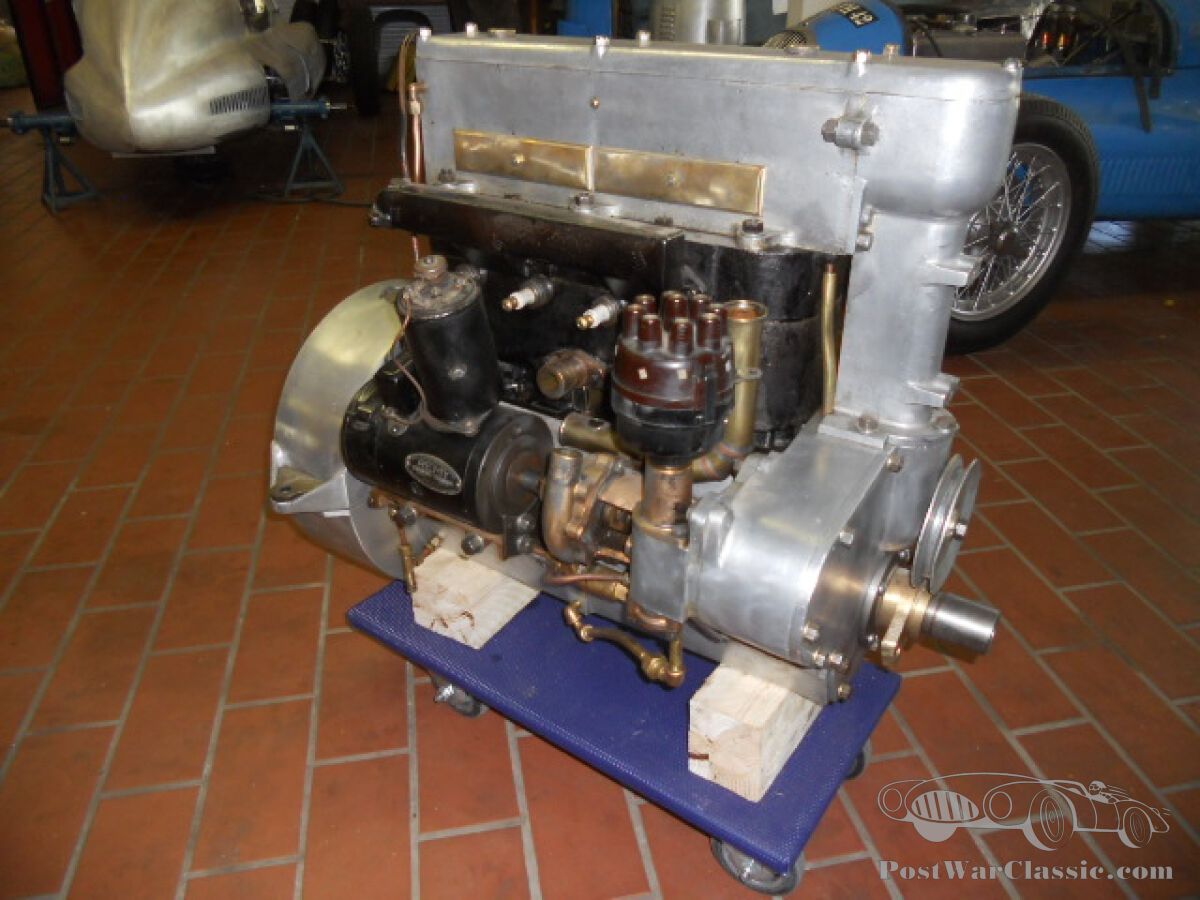
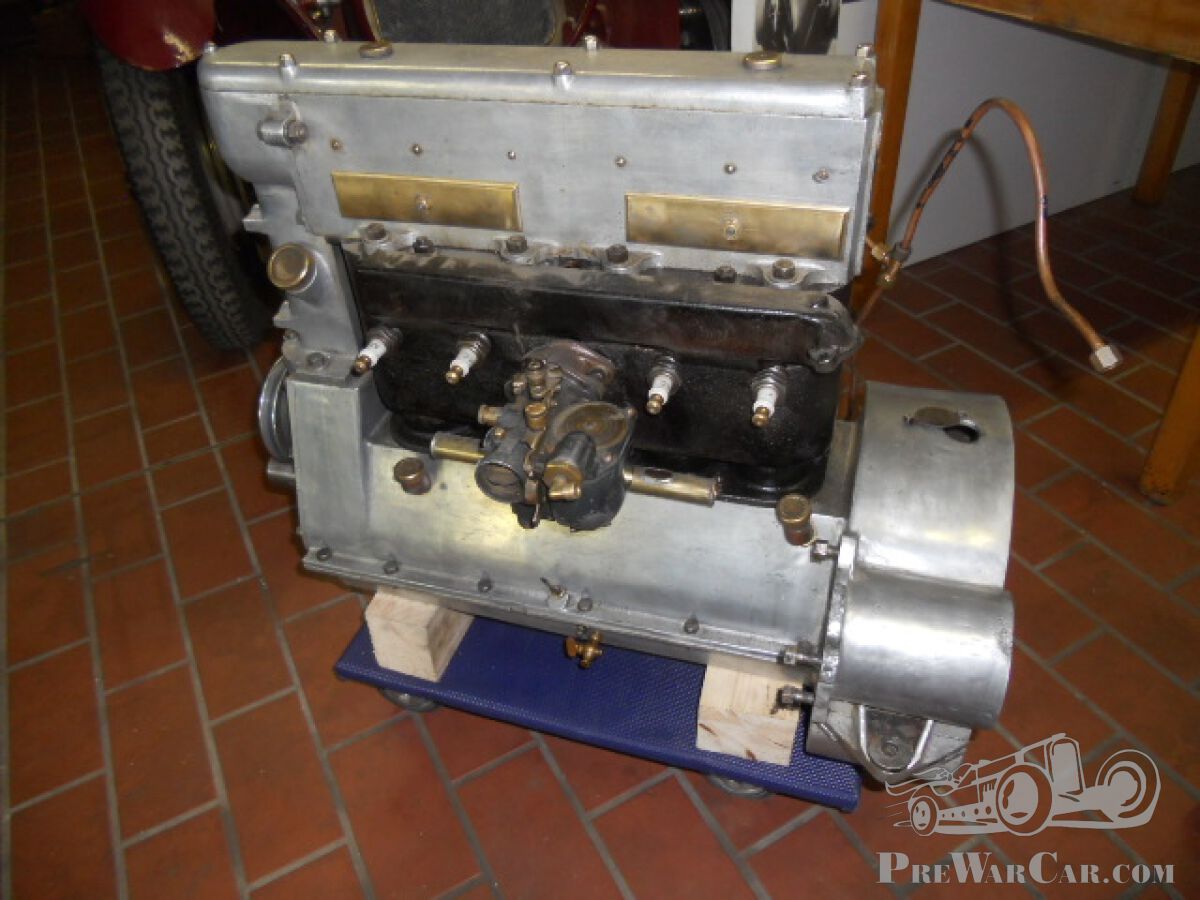
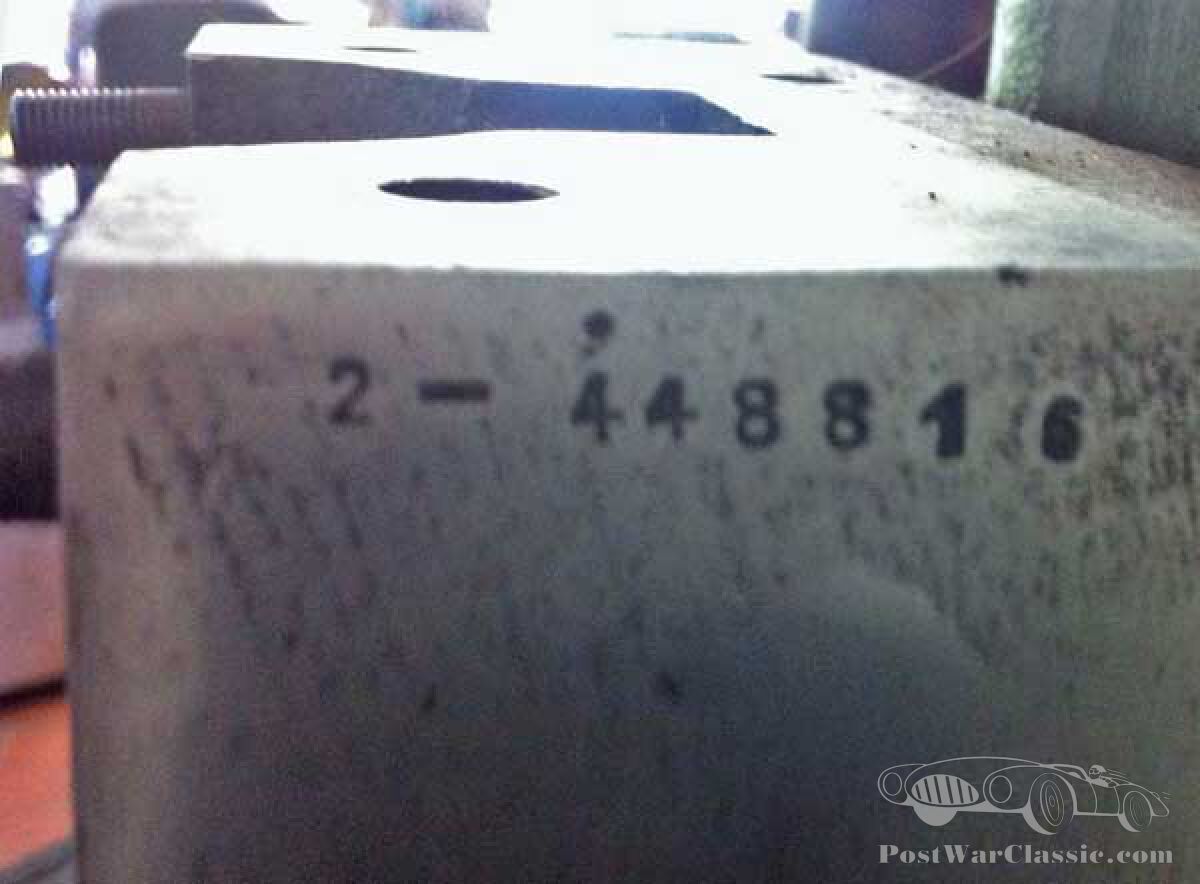
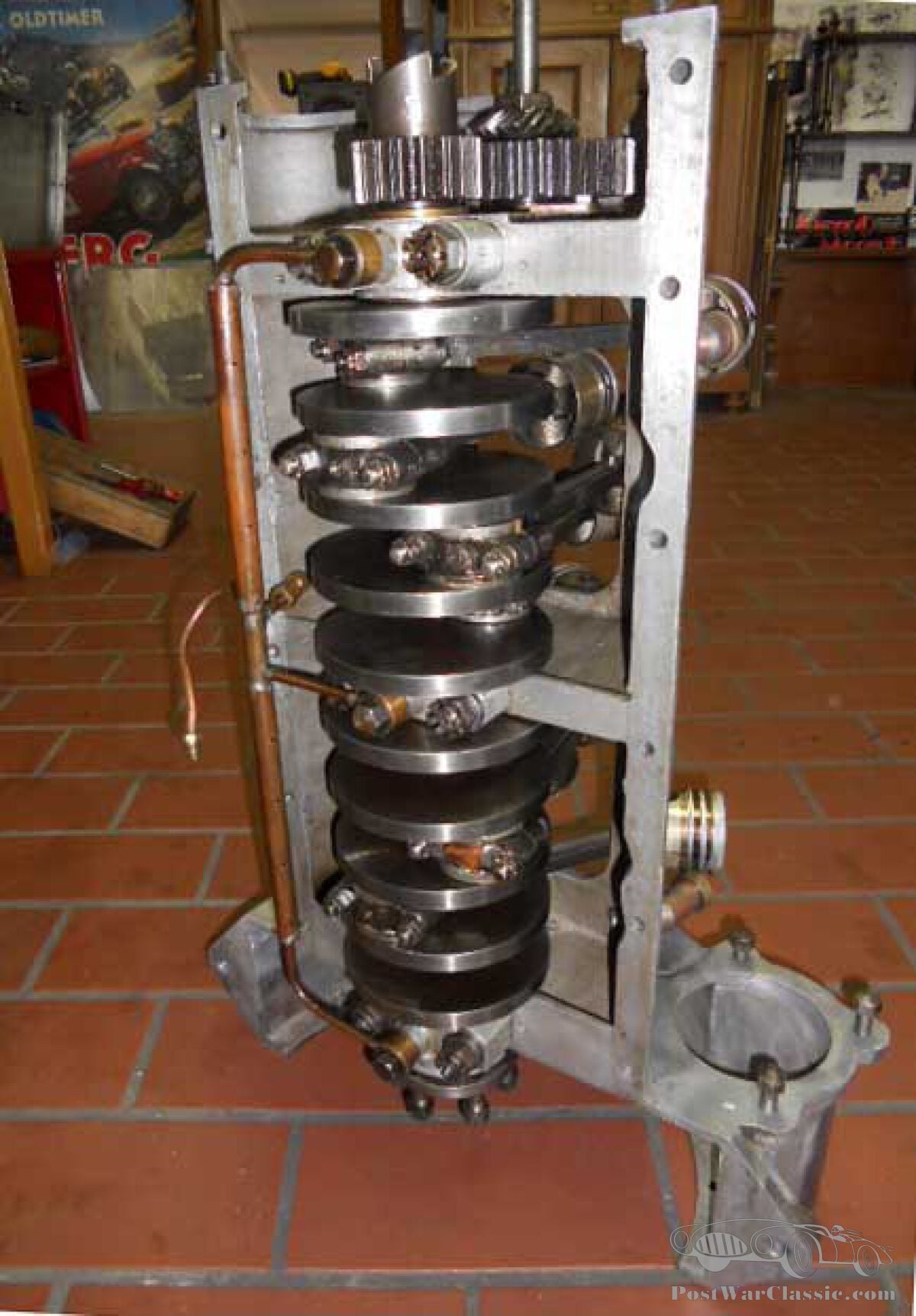


Rainer Schmid, earlier winner of PreWarCar's 'Spirit of the Event' Trophy at Vintage Montlhéry with his Sénéchal tandem racer is now working on a new project. This based on an amazing eight cylinder engine he found. Aside all engineering aspects in our view the first problem is what name to give to the beast. Offline Eight? Shortened Straight Eight? U-Eight? Zero Degrees V8? Rainer has no clue regarding maker or origin yet it looks european and vintage. The engine has one cast block with two parallel cylinder banks. And there is a number reading 2-448816. Of course one could also say it is a straight eight with offset placement of four and four cylinders. We are most curious to learn what our more educated readers have to say about this intricate piece of machinery! (oops, nearly forgot to show you the crank side of things)
Chris Marchal refers to the interesting cycle car make Causan . Némorin Causan was also involved in the design of aero engines. Also the engine is showing similar genese as this 1919 SCAP
Pubblicato:
domenica giugno 5th, 2016
Facebook
LinkedIn
Twitter
WhatsApp
Email
Copy
Commenti
Stephen Moore
27 Settembre 2018, 06:54
So, two years later, have those who posted these images uncovered any definite information on the origins of this staggered eight?
Per saperne di più
Sconosciuto
20 Giugno 2016, 19:19
I think the poster is just curious about the psychological profile the PWC readership.
Good luck trying to work that one out !
Andy.
Per saperne di più
Good luck trying to work that one out !
Andy.
Sconosciuto
15 Giugno 2016, 16:36
I must remember this...(as time goes by):
Take a look at that minimalistic CLEARANCE over the cam drive BEVEL GEAR! My got, had they run out of alloy?
Perhaps someone knows of such engineering design in the first part of the Century(outside of transmission cases), I certainly do not, but am the wrong person to ask.
Bevels of this sort transmit considerable loading to the OUTSIDE(thrust washers?), which is spent energy(do not tell Mr. Timken).
The ALLOY is not run of the mill, which eliminates the early days.
BUT, the spur gears are MASSIVE, THE DESIGNER WAS TRYING TO FOOL US!!!
Per saperne di più
Take a look at that minimalistic CLEARANCE over the cam drive BEVEL GEAR! My got, had they run out of alloy?
Perhaps someone knows of such engineering design in the first part of the Century(outside of transmission cases), I certainly do not, but am the wrong person to ask.
Bevels of this sort transmit considerable loading to the OUTSIDE(thrust washers?), which is spent energy(do not tell Mr. Timken).
The ALLOY is not run of the mill, which eliminates the early days.
BUT, the spur gears are MASSIVE, THE DESIGNER WAS TRYING TO FOOL US!!!
william hearne
14 Giugno 2016, 16:45
In my honest opinion I feel that the folk who post these identification posts are not giving us enough information right at the outset. My plea is for posters to give as much information as possible. I am talking about the things that would help us identify the item such as the makers of the fittings the thread types and anything else that would help.
Editor: Hear, hear!!! Thnx for that William. We have begged for that again and again in these columns. But the messages never seems to land with the next poster... Probably the mystery posters are all first timers at PreWarCar.
Per saperne di più
Editor: Hear, hear!!! Thnx for that William. We have begged for that again and again in these columns. But the messages never seems to land with the next poster... Probably the mystery posters are all first timers at PreWarCar.
Sconosciuto
14 Giugno 2016, 12:46
A dry sump system would require independant scavenge and pressure pumps and plumbing to an external tank etc - I see no evidence of any of this.
There also appears to be an oil filler on the cam drive tower, plus a dipstick below the carburettor both suggesting the oil lives in the sump.
The oil system looks like work in progress with crude jets added for the big ends, the breathers on the carb side look like an afterthought too.
The design of the aluminium castings is very simplistic with very little detail and no obvious internal stiffening webs etc. The add on lugs connecting the various parts are very crude also.
The highly polished external finish though suggests a show angine, or something done to impress potential investors etc.
The whole thing looks mid/late 20s in concept.
Per saperne di più
There also appears to be an oil filler on the cam drive tower, plus a dipstick below the carburettor both suggesting the oil lives in the sump.
The oil system looks like work in progress with crude jets added for the big ends, the breathers on the carb side look like an afterthought too.
The design of the aluminium castings is very simplistic with very little detail and no obvious internal stiffening webs etc. The add on lugs connecting the various parts are very crude also.
The highly polished external finish though suggests a show angine, or something done to impress potential investors etc.
The whole thing looks mid/late 20s in concept.
Sconosciuto
13 Giugno 2016, 15:03
Here is a shot in the dark that might assist in processes of elimination for us to define the manufacturer.
The "castings" are impressive, regardless of design elements that are less formidable. That says "BRITISH" to me, because of my awe at the intricate casting detail of many British motorcycle manufacturers of the 50's-60's, the vertical twin in particular. The ITALIAN (semi) vertical twin was even more exquisitely cast(Laverda/American Eagle).
I do not know when (pivot/cushioned) "motor mounts" were first introduced to the 4 wheel market(anyone?). However, the NORTON, again of Britain introduced their ISOLASTIC mounting system with the "Commando" model, of 1968(?).
Usually, rubber mounting "requests" an extra gear.
So, again, 1960's, but in Britain?
Per saperne di più
The "castings" are impressive, regardless of design elements that are less formidable. That says "BRITISH" to me, because of my awe at the intricate casting detail of many British motorcycle manufacturers of the 50's-60's, the vertical twin in particular. The ITALIAN (semi) vertical twin was even more exquisitely cast(Laverda/American Eagle).
I do not know when (pivot/cushioned) "motor mounts" were first introduced to the 4 wheel market(anyone?). However, the NORTON, again of Britain introduced their ISOLASTIC mounting system with the "Commando" model, of 1968(?).
Usually, rubber mounting "requests" an extra gear.
So, again, 1960's, but in Britain?
Sconosciuto
12 Giugno 2016, 08:18
If you look at the photo of the 'crank side of things' there does not appear to be an internal oil pump. However, there is an external oil pipe fitted to the base of the engine, on the off-side, that connects to what appears to be a pump driven from the base of the distributor.
Also, there is more of a 'tray', rather than a conventional sump fitted to the base of the crankcase. The flywheel housing protrudes well beneath it.
My guess is that this pipe is to scavenge whatever oil collects in this 'tray'. There is another pipe that runs aft to connect (?- not totally visible) to yet another pipe that seems to have run across the back of the engine to the nearside - to a collection tank?
Interestingly, gears drive the cam, but a roller chain drives the ancillaries.
Andy Tilley is very correct in suggesting the three-point suspension pointing to a car. Again, as I said in my first comment, it would be helpful to know if the fixings are metric or imperial.
Per saperne di più
Also, there is more of a 'tray', rather than a conventional sump fitted to the base of the crankcase. The flywheel housing protrudes well beneath it.
My guess is that this pipe is to scavenge whatever oil collects in this 'tray'. There is another pipe that runs aft to connect (?- not totally visible) to yet another pipe that seems to have run across the back of the engine to the nearside - to a collection tank?
Interestingly, gears drive the cam, but a roller chain drives the ancillaries.
Andy Tilley is very correct in suggesting the three-point suspension pointing to a car. Again, as I said in my first comment, it would be helpful to know if the fixings are metric or imperial.
Sconosciuto
10 Giugno 2016, 18:41
Why do we think its dry sump ?
I would be extremely surprised if it was the work of a great designer, nor one with a great deal of resources.
Checking to see if its been designed in imperial units or otherwise might help rule out some options as to its origin, likewise having a look for brand names on the (probably) bought in parts like timing chain,and pistons might give a clue also.
Re its application, it appears to have a 3 point mounting system with a pivot at the front which in addition to the starter and dynamo probably rules out anything other than a road car.
Per saperne di più
I would be extremely surprised if it was the work of a great designer, nor one with a great deal of resources.
Checking to see if its been designed in imperial units or otherwise might help rule out some options as to its origin, likewise having a look for brand names on the (probably) bought in parts like timing chain,and pistons might give a clue also.
Re its application, it appears to have a 3 point mounting system with a pivot at the front which in addition to the starter and dynamo probably rules out anything other than a road car.
Sconosciuto
10 Giugno 2016, 06:41
I still think not boat! Far too much aluminium which would corrode badly in salt water.
The dry-sump is also problematic as it points back to 'racing'.
Perhaps the design is considerably earlier that one would think. Early part of the 1920's say. Also quite a number of small sports/racing cars from that time only had a single carburettor. All the castings appear to be of high quality, very well finished and, overall, the engine is quite sophisticated.
So, a 'prototype' race engine?
Regards, Peter.
Per saperne di più
The dry-sump is also problematic as it points back to 'racing'.
Perhaps the design is considerably earlier that one would think. Early part of the 1920's say. Also quite a number of small sports/racing cars from that time only had a single carburettor. All the castings appear to be of high quality, very well finished and, overall, the engine is quite sophisticated.
So, a 'prototype' race engine?
Regards, Peter.
Sconosciuto
08 Giugno 2016, 16:47
Things to add to Peter Maguie's list.
1. Compression ratio is to low for racing.
2. Probably runs on very poor fuel.
3. The packaging is for a very small space, so to get more torque or power.
4. What is the firing order would be interesting.
5. Also RPM can not be much.
6. Note the very small water out let on the head.
I still am thinking a possible boat design for a small boat that would need a starter, dry sump, for clearance and service, and a very small engine bay.
Per saperne di più
1. Compression ratio is to low for racing.
2. Probably runs on very poor fuel.
3. The packaging is for a very small space, so to get more torque or power.
4. What is the firing order would be interesting.
5. Also RPM can not be much.
6. Note the very small water out let on the head.
I still am thinking a possible boat design for a small boat that would need a starter, dry sump, for clearance and service, and a very small engine bay.
Sconosciuto
08 Giugno 2016, 01:00
The serial numbers on the starter and distributor should give clues to their origin and date.
Per saperne di più
Sconosciuto
07 Giugno 2016, 16:20
Let's get simple and call it an "off-line" straight eight.
Thanks for the term "desaxlerung", always just called it "offset piston pin", do not know however what year this became mandated?
Does anyone know of a piston manufacturer of center pin pistons, I have been looking for years, and it is (also) "tortuous" to try to convert back from the new type. I do know that I could order a custom batch, but I really do not need the added attention.
Per saperne di più
Thanks for the term "desaxlerung", always just called it "offset piston pin", do not know however what year this became mandated?
Does anyone know of a piston manufacturer of center pin pistons, I have been looking for years, and it is (also) "tortuous" to try to convert back from the new type. I do know that I could order a custom batch, but I really do not need the added attention.
Sconosciuto
07 Giugno 2016, 13:47
It may be a good idea to look at the engine specification.
1. Chain drive for the timing gears.
2. Big-ends offset, so, effectively you have two side-by-side 4-cylinder engines.
3. ALSO, I bet that if you look at the firing order the big-ens are set at 45 degrees in relation to this.
4. Bores appear to be set at 90 degrees to the horizontal without any angulation as per Lancia, etc. That is parallel bores.(Mike Clark thinks this too)(edit.: plus the original text)
5. Single carburettor does not suggest 'racing'!
6. A dry-sump set-up does. The only exception that I know on a 'production' car - that is for public consumption - being American on the Falls engine fitted to the 'Courier' car produced in 1923.
7. Also, it did have a starter. Again not usual for a racing car.
8. The coil appears to be 'Delco-Remy', once again pointing to an American origin.
I would like to know how the 1300cc displacement was arrived at.
So, as there was a starter, car not boat. Not a racing engine either, not enough carbs! (plus the aforementioned starter!)
Where the engine was found, or where it originated could also help.
Per saperne di più
1. Chain drive for the timing gears.
2. Big-ends offset, so, effectively you have two side-by-side 4-cylinder engines.
3. ALSO, I bet that if you look at the firing order the big-ens are set at 45 degrees in relation to this.
4. Bores appear to be set at 90 degrees to the horizontal without any angulation as per Lancia, etc. That is parallel bores.(Mike Clark thinks this too)(edit.: plus the original text)
5. Single carburettor does not suggest 'racing'!
6. A dry-sump set-up does. The only exception that I know on a 'production' car - that is for public consumption - being American on the Falls engine fitted to the 'Courier' car produced in 1923.
7. Also, it did have a starter. Again not usual for a racing car.
8. The coil appears to be 'Delco-Remy', once again pointing to an American origin.
I would like to know how the 1300cc displacement was arrived at.
So, as there was a starter, car not boat. Not a racing engine either, not enough carbs! (plus the aforementioned starter!)
Where the engine was found, or where it originated could also help.
Sconosciuto
07 Giugno 2016, 12:40
Némorin Causan was indeed a prolific engine designer and most of his work can be found on a site dedicated to him: http://perso.numericable.fr/nemorin.causan/Nemorin%20Causan/00%20MENU%20nemorin%20causan.html
However, I could not find any engine resembling our mystery engine so far.
Per saperne di più
However, I could not find any engine resembling our mystery engine so far.
Sconosciuto
07 Giugno 2016, 10:14
Re Causan; After he designed the winning engine for Delage in 1908 he left because Louis Delage agreed to De Dion's request that they credited the winning engine to them, in exchange for a decent discount on their own engines! He was sent to the Westen Front during the war where he met Bucciali but after the war he went to Bignan in 1922. After that he did join Bucciali in 1925 and designed a 1500 c.c. racing engine for the "Buc" racer. Soon after he went to America and was more concerned with aeroplanes and their engines than cars.
I doubt if the U8 was his design as he was well aware of the benefits of hemispherical combstion chambers in 1908 and of DOHC by 1925.
Per saperne di più
I doubt if the U8 was his design as he was well aware of the benefits of hemispherical combstion chambers in 1908 and of DOHC by 1925.
Sconosciuto
07 Giugno 2016, 00:44
I think that "Desaxe" should be the correct term. See Wiki :
https://en.wikipedia.org/wiki/Desaxe
for a good explanation.
Henry Ford was experimenting with this principle in the 30's and 40's.
So the possibility of an American influence is there.
Per saperne di più
https://en.wikipedia.org/wiki/Desaxe
for a good explanation.
Henry Ford was experimenting with this principle in the 30's and 40's.
So the possibility of an American influence is there.
Sconosciuto
07 Giugno 2016, 00:33
I think that Tjerk is on the same wavelength as me, that it is an attempt to shorten a long engine, BUT, if the bores are "Siamesed" then overheating will occur. They are therefore offset, to afford engine cooling.
Google for 'Spread bore engine Rover'
Rover were using this in 1954 for the L-R and 1953 for the P4 60, so earlier than Jaguar.
Per saperne di più
Google for 'Spread bore engine Rover'
Rover were using this in 1954 for the L-R and 1953 for the P4 60, so earlier than Jaguar.
Sconosciuto
06 Giugno 2016, 23:08
Lancia built a U-4 engine for the first series of their Beta Autocarro Z-10 & Z-11 light trucks in 1950-1953. Their V-8 Trikappa used an included angle of 22 degrees. Fitted with Zenith carburettor & Bosch magneto. ('Lancia - 70 years', by Bruce Lindsay). But neither bear any similarity at all to this U-8, which is surely not Lancia. Spark plug position set to the top of the cylinder bores is similar to the early series of the Lancia Lambda (1922-1926).
Per saperne di più
Sconosciuto
06 Giugno 2016, 23:06
I would call it a staggered straight eight. It reminds me of the way to plant a proper cedar hedge. Staggered!
Per saperne di più
Sconosciuto
06 Giugno 2016, 22:18
Look's like some homegrown mid-west USA experiment.
Per saperne di più
Sconosciuto
06 Giugno 2016, 22:06
Hi Rainer ,
I recognize there your taste for such machinery .
The name that comes to my mind on this is CAUSAN .
CAUSAN had a short American period , he was very much in his own Franc- Tireur / Avant Garde mood ; that would explain the mix of Metric threads with Imperial threads . Only a guy like Causan ( French by Origin working abroad ) would do that . No one in the US would do that .
The later small Causan 4 Cylinder engine ( Made in France that one ) has similar features / castings etc : Timing by cascade of pinions , flat alloy cover in the same manner .
The Engine Capacity of 1300 cc Doesn't correspond to anything in France at the period ; it is over the cyclecar regulations . For Racing a 1500 cc or 1100 cc would be better ...
Per saperne di più
I recognize there your taste for such machinery .
The name that comes to my mind on this is CAUSAN .
CAUSAN had a short American period , he was very much in his own Franc- Tireur / Avant Garde mood ; that would explain the mix of Metric threads with Imperial threads . Only a guy like Causan ( French by Origin working abroad ) would do that . No one in the US would do that .
The later small Causan 4 Cylinder engine ( Made in France that one ) has similar features / castings etc : Timing by cascade of pinions , flat alloy cover in the same manner .
The Engine Capacity of 1300 cc Doesn't correspond to anything in France at the period ; it is over the cyclecar regulations . For Racing a 1500 cc or 1100 cc would be better ...
Sconosciuto
06 Giugno 2016, 20:02
I think the bores are parallel not in a V formation because the top ends of the bores are so very close together. Also although the cranks are at 90 degrees to one another as they usually are in a V eight there is one crank journal per cylinder rather than one journal per two cylinders which must do something odd to the firing order although I can't think what!
Per saperne di più
Sconosciuto
06 Giugno 2016, 19:47
I have no clue what it is, but like to mention a few things I have not yet seen in the comments as to what you could call it. Technically, based on the crankshaft it is a straight eight, with what's called in German 'Schraenkung' (something like: 'setting to the side'). This is where the center axis of the cylinder does not meet the center line of the crankshaft. Something that was already used with steam engines even before petrol engines existed. It is mainly done to limit one-sided wear and tear on your cylinder, leading to 'oval' cylinders over time. It is not the same as 'desaxierung' where you move the piston pin slightly off-center to reduce piston noise. Personally I feel the only reason the maker did this was to produce a 'short' and compact eight cylinder, to fit into some chassis that would not accommodate a proper in-line eight or even a V8. A similar challenge as VW had to get an 8-cylinder in the Passat and many other manufacturers before them and since.
You can of course call it what you like (VW's 'W8', Audi's 'W12 etc.) but as the 'desaxierung' is going both ways, which is unusual, I would guess that the technical term would go towards: "Doppelt geschraenkter Reihenmotor"! A "Double side-set in-line engine". There!
Per saperne di più
You can of course call it what you like (VW's 'W8', Audi's 'W12 etc.) but as the 'desaxierung' is going both ways, which is unusual, I would guess that the technical term would go towards: "Doppelt geschraenkter Reihenmotor"! A "Double side-set in-line engine". There!
Sconosciuto
06 Giugno 2016, 16:17
Regarding the comment about Delco-Remy - Delco France took over the Continsuza company sometime in the mid 20's - The dynamo part of the set-up looks similar to a Continsuza unit I once had.
I dont think the Delco-Remy equipment points to a US origin.
Per saperne di più
I dont think the Delco-Remy equipment points to a US origin.
Sconosciuto
06 Giugno 2016, 15:37
The design and construction looks very much like American thinking, as do some of the parts. Like the valves and the timing chain. The dry sump and small clutch seems to me as it could be a boat race motor. Millerish or Lockhart like. There were many hand made boat motors at this time in the US.
Per saperne di più
Sconosciuto
06 Giugno 2016, 15:20
Valve actuation must also be 'tortuous", valves as not angled in each chamber.
It is EXPENSIVE, let's try to define the year?
Jaguar started to (MINIMALLY)offset the (vertical)piston bores of their XK series, they ran out of adequate in- line clearances when increasing displacement.
!960's?
Per saperne di più
It is EXPENSIVE, let's try to define the year?
Jaguar started to (MINIMALLY)offset the (vertical)piston bores of their XK series, they ran out of adequate in- line clearances when increasing displacement.
!960's?
Sconosciuto
06 Giugno 2016, 14:27
David is right !
Note the third piston from the right, nearly at the top of its stroke. But it also has a small slice out of its edge, and you can see a hole in the walls of the opposite cylinders, where the flame would have to travel.
Very tortuous indeed !
Would this induce knocking in the piston ?
Per saperne di più
Note the third piston from the right, nearly at the top of its stroke. But it also has a small slice out of its edge, and you can see a hole in the walls of the opposite cylinders, where the flame would have to travel.
Very tortuous indeed !
Would this induce knocking in the piston ?
Sconosciuto
06 Giugno 2016, 13:50
Thank you very much for the interest and the ideas of the readers.
This is exactly the direction that we think but exact facts are unclear.The alternator and starter are from Remy and the carburettor is from Stromberg. Most of the screws are not metric. Shows to America!? But the smal filigran construction with only 1300ccm at eight cylinders?
Best regards
Rainer Schmid
Per saperne di più
This is exactly the direction that we think but exact facts are unclear.The alternator and starter are from Remy and the carburettor is from Stromberg. Most of the screws are not metric. Shows to America!? But the smal filigran construction with only 1300ccm at eight cylinders?
Best regards
Rainer Schmid
Sconosciuto
06 Giugno 2016, 13:32
I don't think this can be a V engine, the bores are so close they would break into each other close to the crankshaft. If they are parallel, as it seems, the crank would be centered causing lots of angle to the pistons. Might have a lot of piston slap?
Per saperne di più
Sconosciuto
06 Giugno 2016, 13:04
I have just taken another look at the photos.
the engine appears to be set-up for a dry-sump lubrication system which would very much indicate a racing pedigree.
Should we be thinking 'Miller' or a contemporary?
Per saperne di più
the engine appears to be set-up for a dry-sump lubrication system which would very much indicate a racing pedigree.
Should we be thinking 'Miller' or a contemporary?
Sconosciuto
06 Giugno 2016, 13:03
Very strange, no combustion chambers in the head, so the pistons only come part way up the bore? Very small valves and the induction arrangement, into the block and up through a hole into the head must be very tortuous, quite like DI Delage.
Nice looking piece of kit tho'! I'm quite envious.
editor: sure what you say, see how the sparkplugs are postioned. If the pistons would come up all the way, there was no combustion...
Per saperne di più
Nice looking piece of kit tho'! I'm quite envious.
editor: sure what you say, see how the sparkplugs are postioned. If the pistons would come up all the way, there was no combustion...
Sconosciuto
06 Giugno 2016, 13:00
Delco-Remy was an American company. By 1918, I think, they became part of General Motors. I know that there were some English cars that were (in the 1930's and, possibly, before) fitted with their coil ignition systems. However, it is more likely that an American origin could be the answer.
Per saperne di più
Sconosciuto
06 Giugno 2016, 08:56
Looking at the crankshaft, I would call it shortened straight eight, as it has 8 individual conrod pins. On U-8 you would expect two banks of cylinders and two crankshafts (e.g. Bugatti T47). On V-type engine you would expect just 4 conrod pins (e.g. Cadillac). I think the goal here was to build very short straight eight to squeeze it in straight 6 or 4 room..... Not sure if Lancia ever built 8 cyl in this fashion though...
Per saperne di più
Sconosciuto
06 Giugno 2016, 07:39
The electrics are Delco r
Remy if that helps.
Per saperne di più
Remy if that helps.
Sconosciuto
06 Giugno 2016, 07:00
My first thought too was Lancia.
However, this engine is nothing like the
8-cylinder one made and fitted to the 'Astura', made in the 1930's by Lancia.
So, like Stewart, I am left scratching my head as to who exactly made it. Somehow it looks more European than anything else. But, remembering that Bugatti was influenced by the very advanced racing engines built by Miller in the U.S.A. I wonder. So, could it be American, 1920's, with a racing pedigree, even if an experimental one. From appearances it does not seem to have had much use.
Some more information, such as are the nuts and threads metric, would be of help.
Regards, Peter.
Per saperne di più
However, this engine is nothing like the
8-cylinder one made and fitted to the 'Astura', made in the 1930's by Lancia.
So, like Stewart, I am left scratching my head as to who exactly made it. Somehow it looks more European than anything else. But, remembering that Bugatti was influenced by the very advanced racing engines built by Miller in the U.S.A. I wonder. So, could it be American, 1920's, with a racing pedigree, even if an experimental one. From appearances it does not seem to have had much use.
Some more information, such as are the nuts and threads metric, would be of help.
Regards, Peter.
Sconosciuto
06 Giugno 2016, 06:58
Mr Lancia may have called it a V8
VW would think they were clever to call it a W8
We need to see the crankshaft! - it may be a wobbly-straight-8
Per saperne di più
VW would think they were clever to call it a W8
We need to see the crankshaft! - it may be a wobbly-straight-8
Sconosciuto
06 Giugno 2016, 06:21
Looks abit like a lancia trikappa engine, they have 22 degrees, the Lambda has about 13 degrees between the Zylinders, if it is an angle between the Zylinders, we Name it a RV8. very strange is the carb on one side and the exhaust on both sides.
Per saperne di più
Sconosciuto
05 Giugno 2016, 23:38
I have no idea what this engine is, but Rover called it "Spread-bore".
They did it, (rather later in life in the 50's), with their straight 6's.
The spread-bore engine evolved due to the number of changes required to the basic design in order to create a larger engine.
The amount of over-boring required led to siamesed cylinder bores and piston ring scuffing if the cars were driven really hard.
The answer was the spread-bore design in which the cylinder bore centres were re-positioned within the block to leave more metal between each bore and ultimately to provide better cooling.
So I presume that this 8 cyl. engine had exactly the same problems, and so they took exactly the same measures.
Maybe Rover Engineers saw what others had done before them.
Per saperne di più
They did it, (rather later in life in the 50's), with their straight 6's.
The spread-bore engine evolved due to the number of changes required to the basic design in order to create a larger engine.
The amount of over-boring required led to siamesed cylinder bores and piston ring scuffing if the cars were driven really hard.
The answer was the spread-bore design in which the cylinder bore centres were re-positioned within the block to leave more metal between each bore and ultimately to provide better cooling.
So I presume that this 8 cyl. engine had exactly the same problems, and so they took exactly the same measures.
Maybe Rover Engineers saw what others had done before them.