La rivista e il marketplace globale per gli appassionati di auto d’epoca, creati da appassionati.
La rivista e il marketplace globale per gli appassionati di auto d’epoca, creati da appassionati.


Filter
Faccia la sua scelta
- Automobile
-
Marca >>
-
Anno >>
-
- Motociclette
-
Ubicazione >>
- Parti e altro
-
Marca dell'auto >>
-
Produttore >>
-
Categoria >>
- Biciclette
-
Anno >>
-
Paesi



The Razor Blade: fenomeno o trappola mortale?

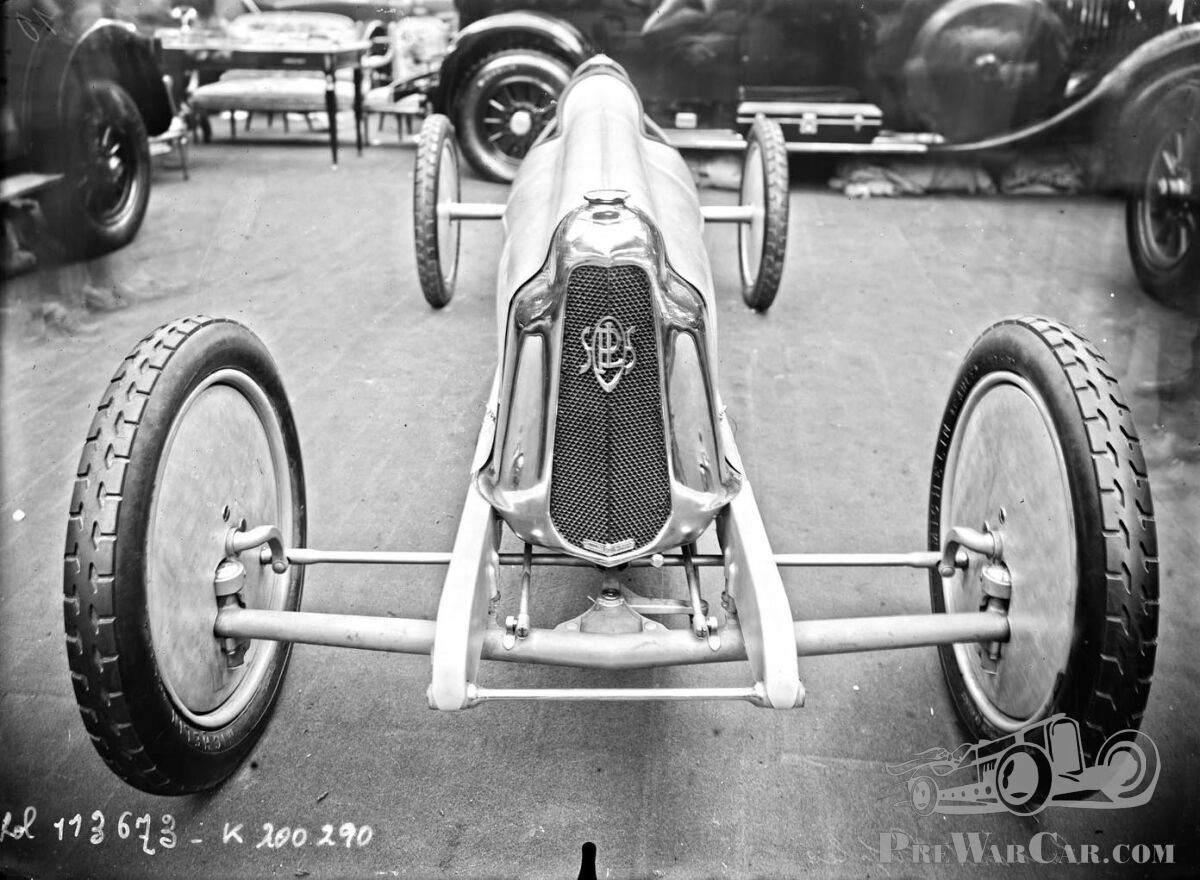


Di tanto in tanto, una macchina emerge dal passato con un’aura più da fantascienza che da storia. Affusolata, estrema e avvolta nel mistero, questa strana monoposto ha subito catturato la nostra attenzione mentre esploravamo il tesoro digitale della Bibliothèque nationale de France. Con le sue curve in alluminio lucidato e un passato quasi mitologico, meritava sicuramente un’indagine più approfondita. All’inizio, tutto ciò che avevamo era una didascalia vaga: Voiture Panhard Profilée, Salone di Parigi, 1926. Quello che abbiamo scoperto è un racconto di audace ingegneria, record di velocità — e tragedia.
Non ci è voluto molto per scoprire che questa Panhard & Levassor era in realtà un’auto da record conosciuta come Lame de Rasoir — ovvero Razor Blade. Un nome che, come converrete, le calza a pennello.
Il suo design era tagliente in più di un senso. La posizione di guida era del tutto insolita: il pilota era più sdraiato che seduto in questa monoposto. La sua testa poggiava su un piccolo cuscino e la vista frontale era in gran parte ostruita dalla carrozzeria — per cui guardare avanti doveva significare sporgersi di lato di tanto in tanto. Anche il volante era un elemento notevole: grande, senza raggi, circondava il busto del conducente.
La sorprendente carrozzeria — realizzata in alluminio lucido e legno di mogano — fu progettata dagli ingegneri Louis Bionier e Marius Breton. Fu costruita su misura per Breton, che era anche il pilota ufficiale. Raggiunse una velocità massima sul giro di 190,324 km/h a Montlhéry, ma con la versione da due litri, meno estrema — non con la particolare Razor Blade da 1,5 litri. Quest’ultima era stata presumibilmente concepita per superare il muro dei 240 km/h, ma non ci riuscì. Nei rilevamenti ufficiali di ottobre 1926, l’auto registrò una media di 223 km/h sui cinque miglia.
Purtroppo, pochi giorni dopo, Breton si schiantò ad alta velocità e morì sul colpo, a soli 34 anni. La strada di Issy-les-Moulineaux dove avvenne l’incidente porta ancora oggi il suo nome.
Degno di nota è anche il fatto che le sospensioni dell’auto siano ancora oggi oggetto di discussione tra gli storici. Ciò che sembra invece più certo è che non vi fossero freni sulle ruote — una scelta deliberata per ridurre peso e resistenza aerodinamica. Un unico freno a tamburo sarebbe stato montato sulla trasmissione — o almeno, così si ritiene…
Testo: Jeroen Booij
Immagini: Bibliothèque nationale de France
Pubblicato:
lunedì luglio 14th, 2025
Facebook
LinkedIn
Twitter
WhatsApp
Email
Copy
Commenti


Terry Cockerell
23 Luglio 2025, 01:58
Back in 2022 my brother and I went to the US for the Auburn Cord Duesenberg Festival held in Auburn Indiana. Along the way we visited the Indianapolis Speedway and Museum. It was interesting to see the development of streamlining from the first car to win the race in 1911 which is known as the Marmon Wasp to the 1928 race winning car designed and built by Harry Miller. Miller's car looks more like an Art Deco sculpture. One outstanding example from the 1960s had the driver located to the LHS in what looks like a motorcycle sidecar body. The theory was to help maintain speed on the corners. The Museum is well worth a visit. You can also take a ride around the track. I was very surprised at the overall low banking.
Per saperne di più

Terry Cockerell
21 Luglio 2025, 03:24
It sure is a sleek looking machine. I once sat in a Ferret Scout Car that had the steering wheel laying almost horizontal above the driver's knees. Weird driving position. Reducing drag in the Vintage and Veteran Era was noted by the experts.
Harry Miller and Barney Oldfield worked together to produce the Golden Submarine in 1917. One of Oldfields friends had been killed when his car flipped during a race. Oldfield said he could smoke a cigar in the Golden Submarine while driving at 100 mph. During one race the car ended up in a pond with Barney nearly being drowned. I guess the cigar was drowned ?
The end result was the safety roof was cut off for future racing.
A replica of this amazing machine has been built but I'm not sure where it is located.
Per saperne di più
Harry Miller and Barney Oldfield worked together to produce the Golden Submarine in 1917. One of Oldfields friends had been killed when his car flipped during a race. Oldfield said he could smoke a cigar in the Golden Submarine while driving at 100 mph. During one race the car ended up in a pond with Barney nearly being drowned. I guess the cigar was drowned ?
The end result was the safety roof was cut off for future racing.
A replica of this amazing machine has been built but I'm not sure where it is located.

Laurent Friry
18 Luglio 2025, 12:18
This is a view of the cockpit from the engine compartment of the 1500 cc Lame de Rasoir. You can see the gear lever, the handbrake and the spokeless steering wheel, which is tilted in the opposite direction to the usual one. A driving position where the driver puts his legs inside the steering wheel, quite revolutionary for the time !
Per saperne di più


Brulé Bernard
14 Luglio 2025, 17:14
Bonjour,
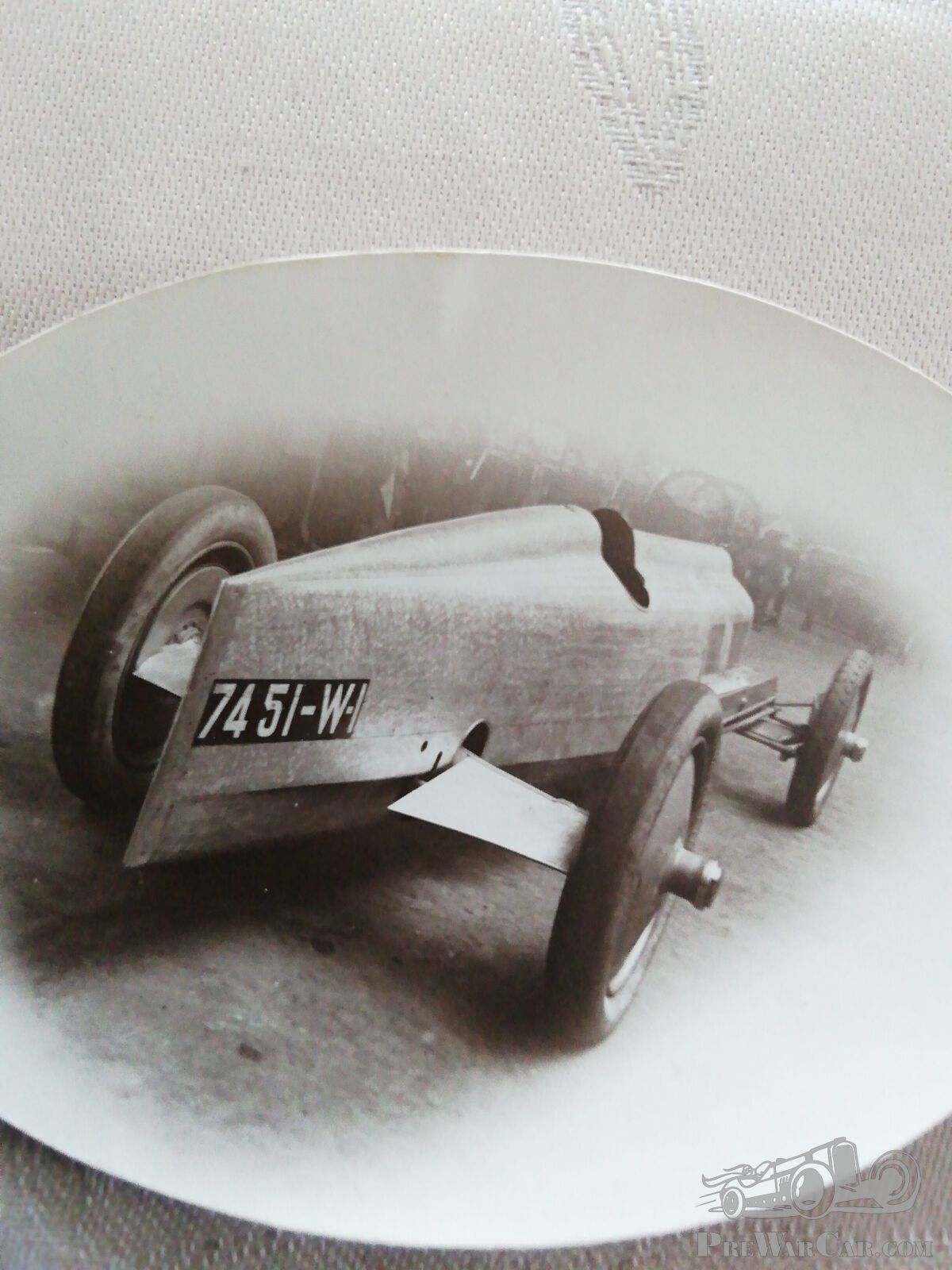
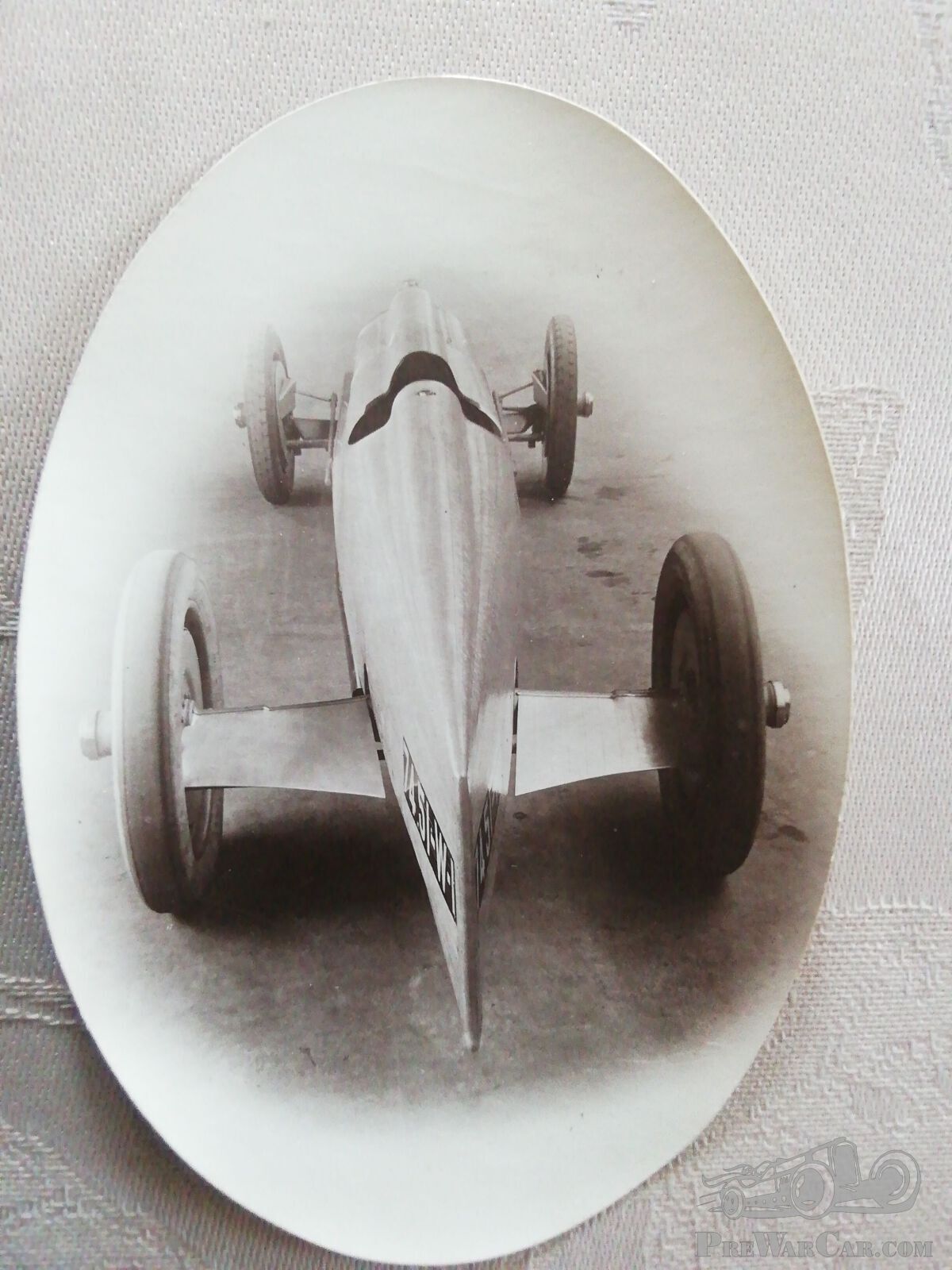
These two small old photos show the first version of the "lame de rasoir" from 1925.
The car was apparently equipped with a 5-litre engine.
Its registration "garage" 7451-WI refers to its road use.
Unlike its little 1500 sister, this one has brakes.
I think that, contrary to what is often said, the bodies of the 5-litre and 1500 were made of light metal and not mahogany. To be confirmed, of course.
A fairly good rebuild was carried out in the USA (with a 4-cylinder Miller).
---
Bonjour,
Ces deux petites photos anciennes montrent la première version de la "lame de rasoir" de 1925.
La voiture était, semble-t-il, équipée d'un moteur de 5 litres.
Son immatriculation "garage" 7451-WI évoque son roulage sur route.
Contrairement à sa petite sœur 1500, celle-ci est équipée de freins.
Je pense que, contrairement à ce qui est souvent dit, les carrosseries des 5 litres et 1500 étaient en métal léger et non en acajou. A confirmer, bien sûr...
Une reconstruction assez bonne à été réalisée aux USA (avec un 4 cylindres Miller).
Per saperne di più
These two small old photos show the first version of the "lame de rasoir" from 1925.
The car was apparently equipped with a 5-litre engine.
Its registration "garage" 7451-WI refers to its road use.
Unlike its little 1500 sister, this one has brakes.
I think that, contrary to what is often said, the bodies of the 5-litre and 1500 were made of light metal and not mahogany. To be confirmed, of course.
A fairly good rebuild was carried out in the USA (with a 4-cylinder Miller).
---
Bonjour,
Ces deux petites photos anciennes montrent la première version de la "lame de rasoir" de 1925.
La voiture était, semble-t-il, équipée d'un moteur de 5 litres.
Son immatriculation "garage" 7451-WI évoque son roulage sur route.
Contrairement à sa petite sœur 1500, celle-ci est équipée de freins.
Je pense que, contrairement à ce qui est souvent dit, les carrosseries des 5 litres et 1500 étaient en métal léger et non en acajou. A confirmer, bien sûr...
Une reconstruction assez bonne à été réalisée aux USA (avec un 4 cylindres Miller).

Mark Walker
14 Luglio 2025, 15:41
I was pleased to see a Sima Violet a bit like this one just above the tail of the Panhard in the third photo.
Per saperne di più
frederick v veenschoten
14 Luglio 2025, 14:20
I can see quarter elliptic leaf springs on the front axle, Mostly covered by frame covers.
Per saperne di più