La rivista e il marketplace globale per gli appassionati di auto d’epoca, creati da appassionati.
La rivista e il marketplace globale per gli appassionati di auto d’epoca, creati da appassionati.


Filter
Faccia la sua scelta
- Automobile
-
Marca >>
-
Anno >>
-
- Motociclette
-
Ubicazione >>
- Parti e altro
-
Marca dell'auto >>
-
Produttore >>
-
Categoria >>
- Biciclette
-
Anno >>
-
Paesi



The Serpollet type H from Mulhouse was NOT a participant in the Paris-Madrid 1903 race




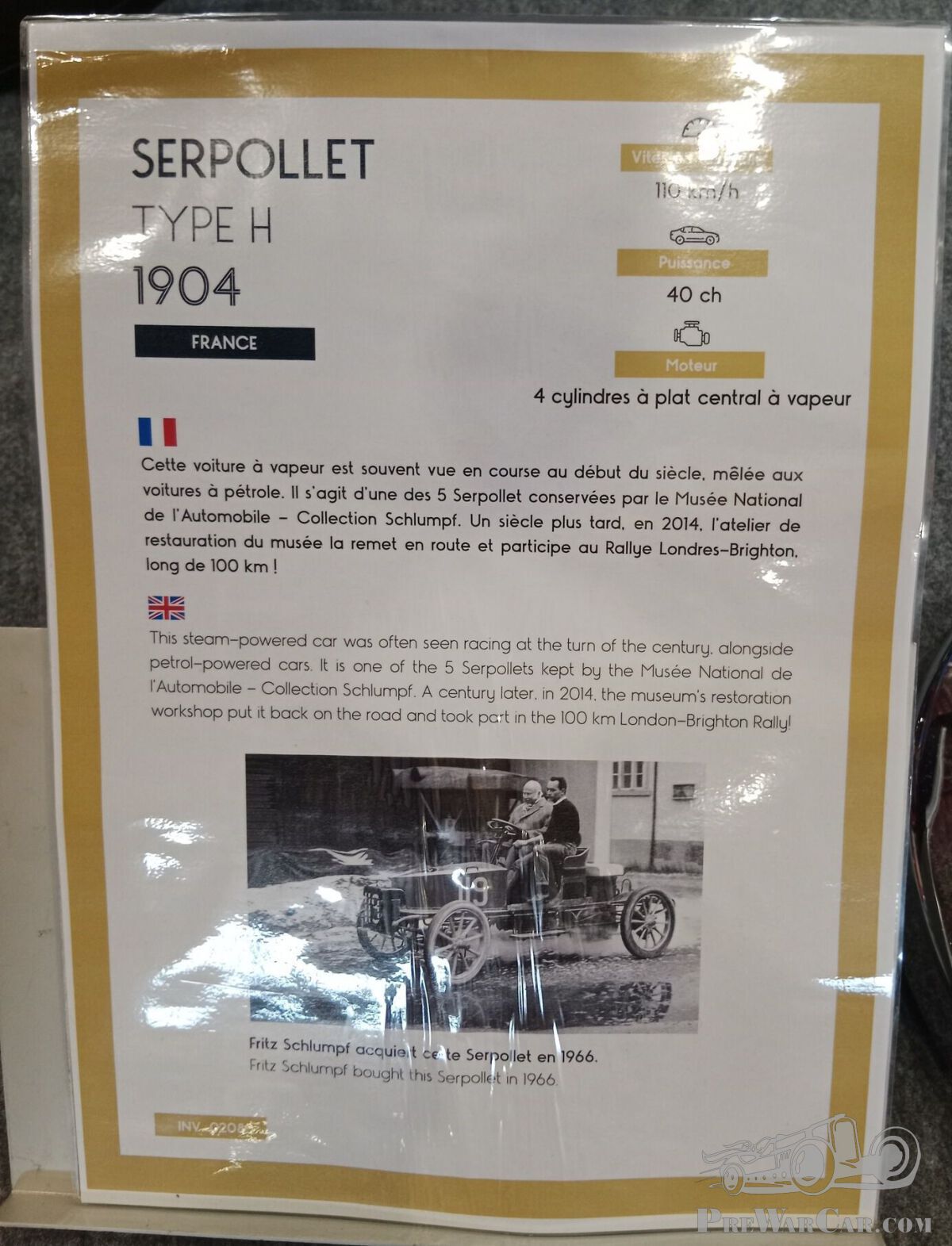
Was the Serpollet type H from Mulhouse a participant in the Paris-Madrid 1903 race? "NO!" Is what automobile historian Vasily Shishka, from Russia told us. He is the author of the encyclopedia "French automobiles of the 19th century". Now he and his colleagues are working on the book "Cars of Leon Serpollet."
Today he substantiates his findings and tells us why The Serpollet type H from Mulhouse is NOT the car that participated in the Paris-Madrid 1903 race.
"The Gardner-Serpollet type H exhibited in Mulhouse is currently displayed as a participant in the Paris-Madrid 1903 race with a 40 hp engine. The museum display log sheets mention seven such cars in this race [fig.1].
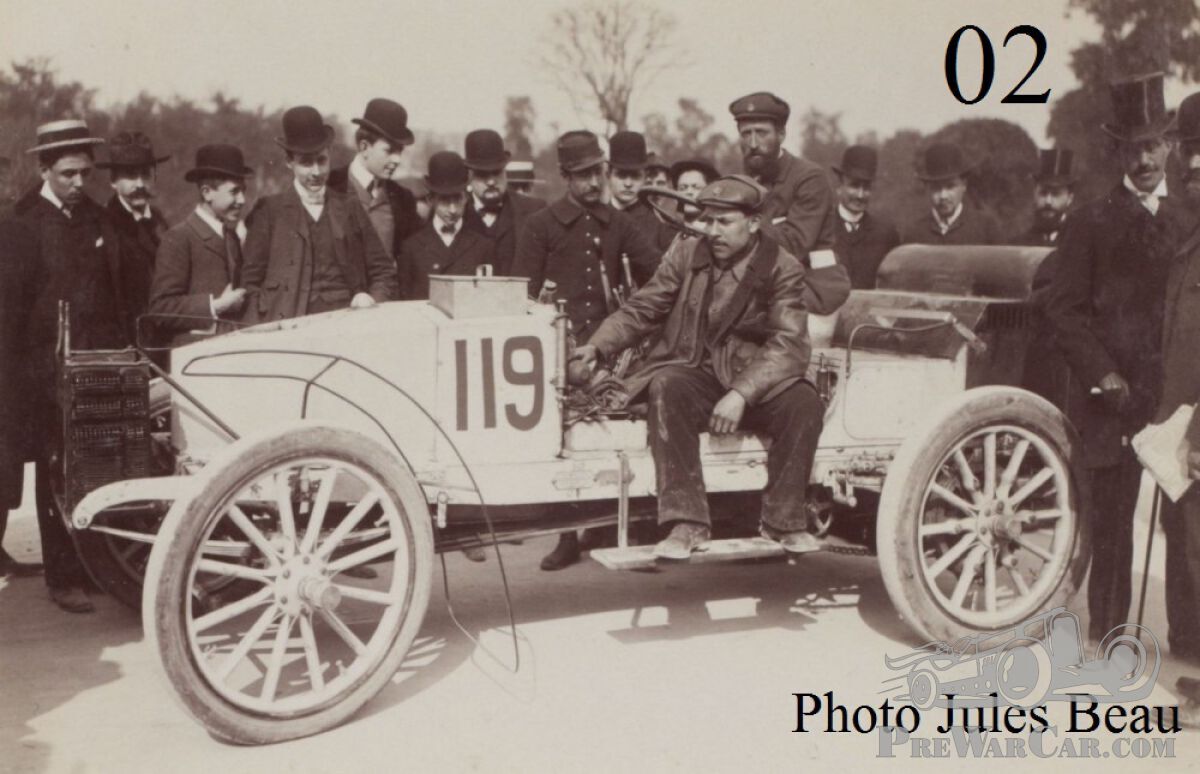
We all know that this race was stopped in Bordeaux due to the death of many participants and spectators. All seven Gardner-Serpollet cars arrived in Bordeaux. The best result was achieved by driver Le Blon in car number 119. He took the thirteenth place [fig.2].
In reality, two types of Gardner-Serpollet cars participated in the tragic race. They were 40 hp and 20 hp racers, Le Blon, Chanliaud, Rulot, Lillie used 40 hp cars [fig.2]. Racers D`Udekem and Olliver used 20 hp cars [fig.3]. It is not yet established which car the driver Caillois was in.
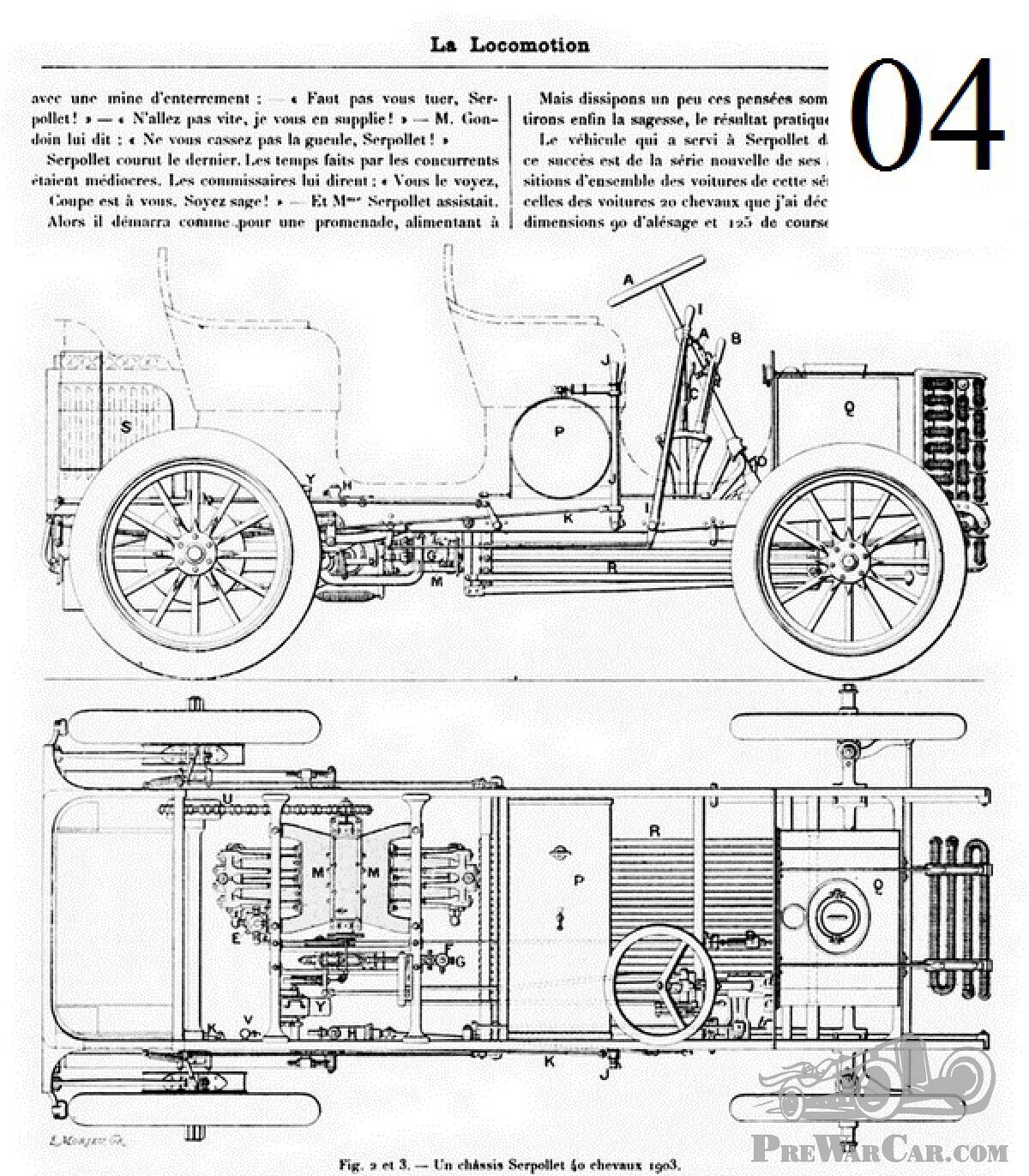
A production vehicle with a 40 hp engine already existed. The factory drawing designation of this model is type Z, (however, the factory drawing designations do not match the designations we see on the chassis plates). The 40 hp racing car was built on the basis of this model. The production model was presented to the public at the Paris Automobile Salon in December 1902 [fig.4].
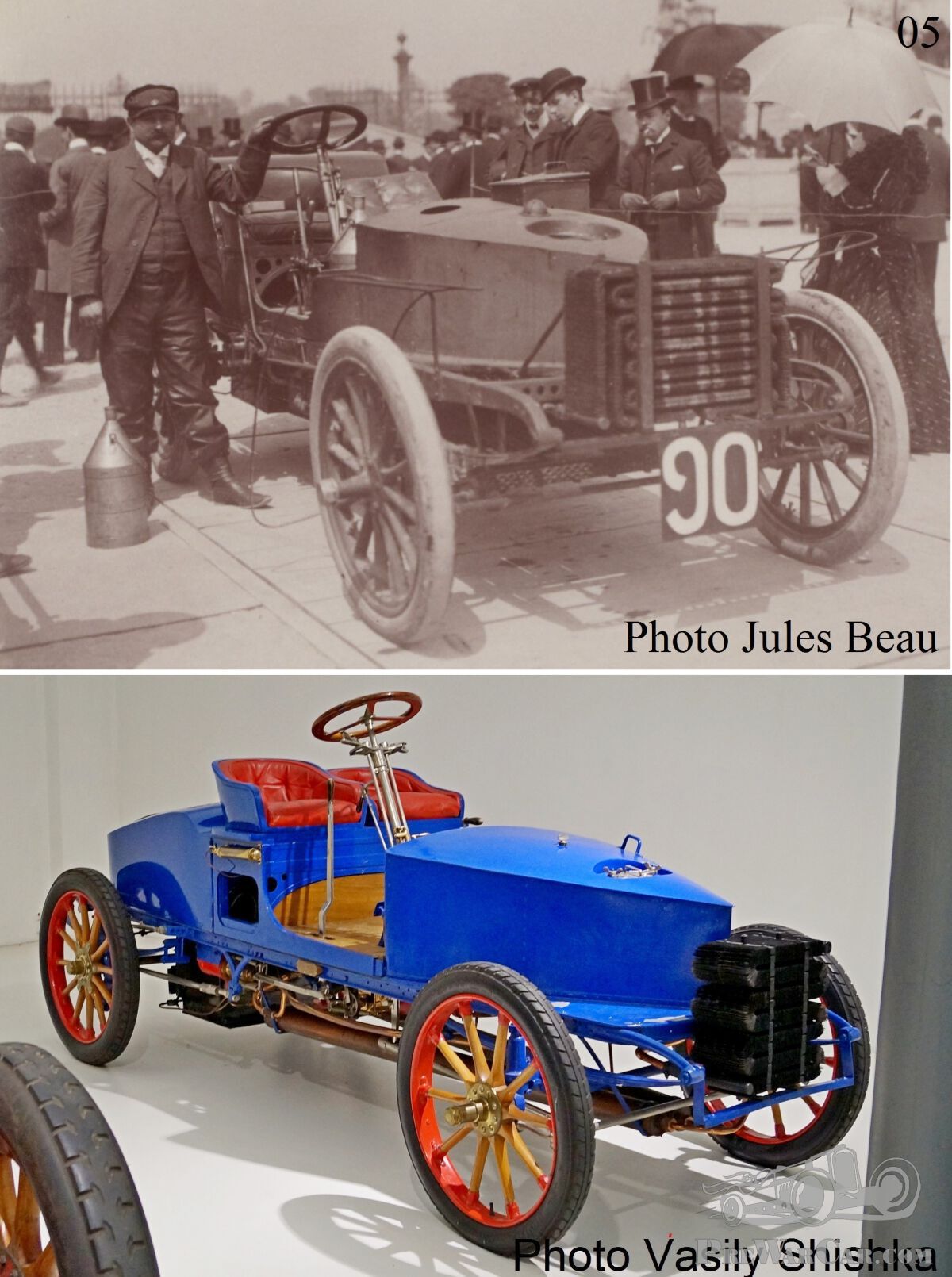
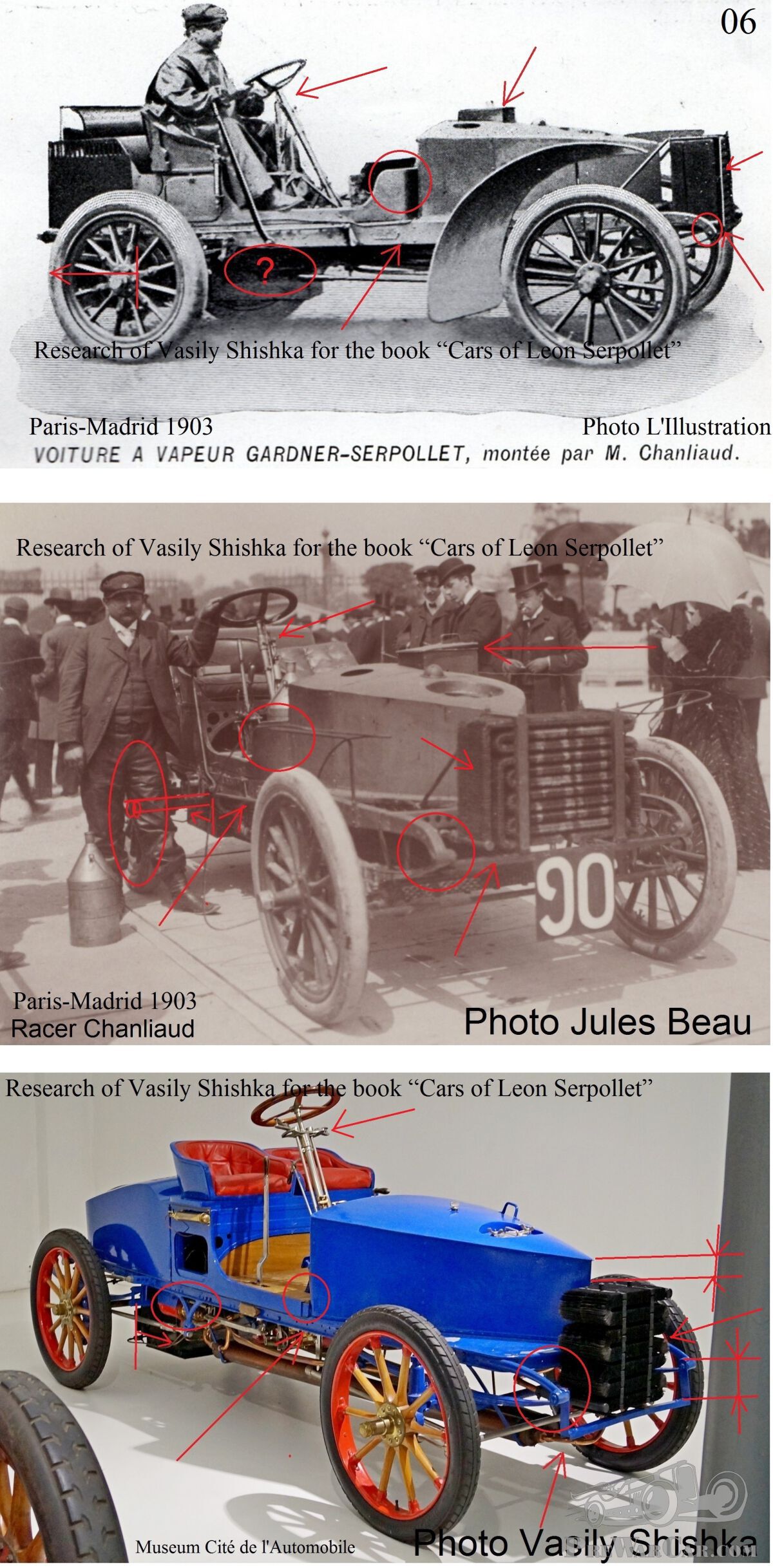
The car from Mulhouse is considered a car participant in the Paris-Madrid race based on the famous photo of Jules Beau. This photo shows the driver Chanliaud [fig. 5]. At first glance, the cars are similar, but they are different cars [fig. 6]. The main difference between the 1903 40hp Paris-Madrid racing car from the Mulhouse car is the location of the steam generator and the chassis.
In the Paris-Madrid 40hp racing car the steam generator is behind the rear axle as normal in the production car, whilst the car from Mulhouse has a generator located inside the wheelbase (in front of the rear axle). It should also be noted that the construction of the chassis differs. The 1903 40hp Paris-Madrid racing car has a pressed steel chassis which is the same as the chassis of a type Z 40 hp production car and has an engine without a subframe. This is about two times deeper than the chassis on the car from Mulhouse, which is of the earlier rolled steel channel type. The chassis of the Mulhouse car is practically identical to a type H production car, except for the rear spring hangers. It also has an engine on a cast iron subframe which, as has been discussed, did not exist on the Paris-Madrid 40hp racing cars. The Mulhouse car has levers on the steering wheel, as the type H should have. Accordingly, the racing car Paris-Madrid 40 hp doesn't have it.
It is therefore logical to assume that Leon Serpollet did not need to increase the power of a Type H car from 12 hp up to 40 hp, as the company already had a car with a 40 hp engine, it can be concluded that the Mulhouse car is not one of the 40hp Paris-Madrid racing cars.
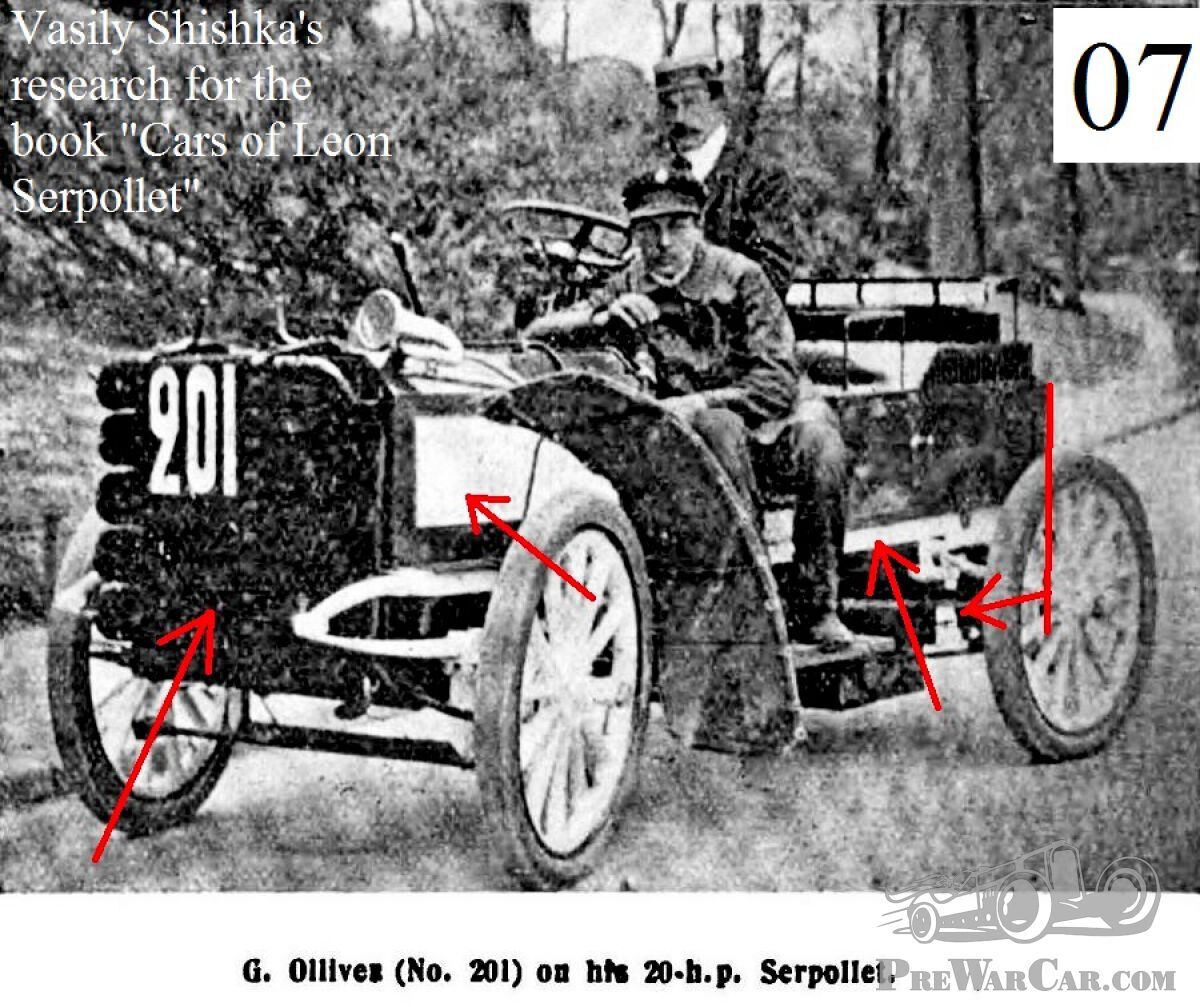
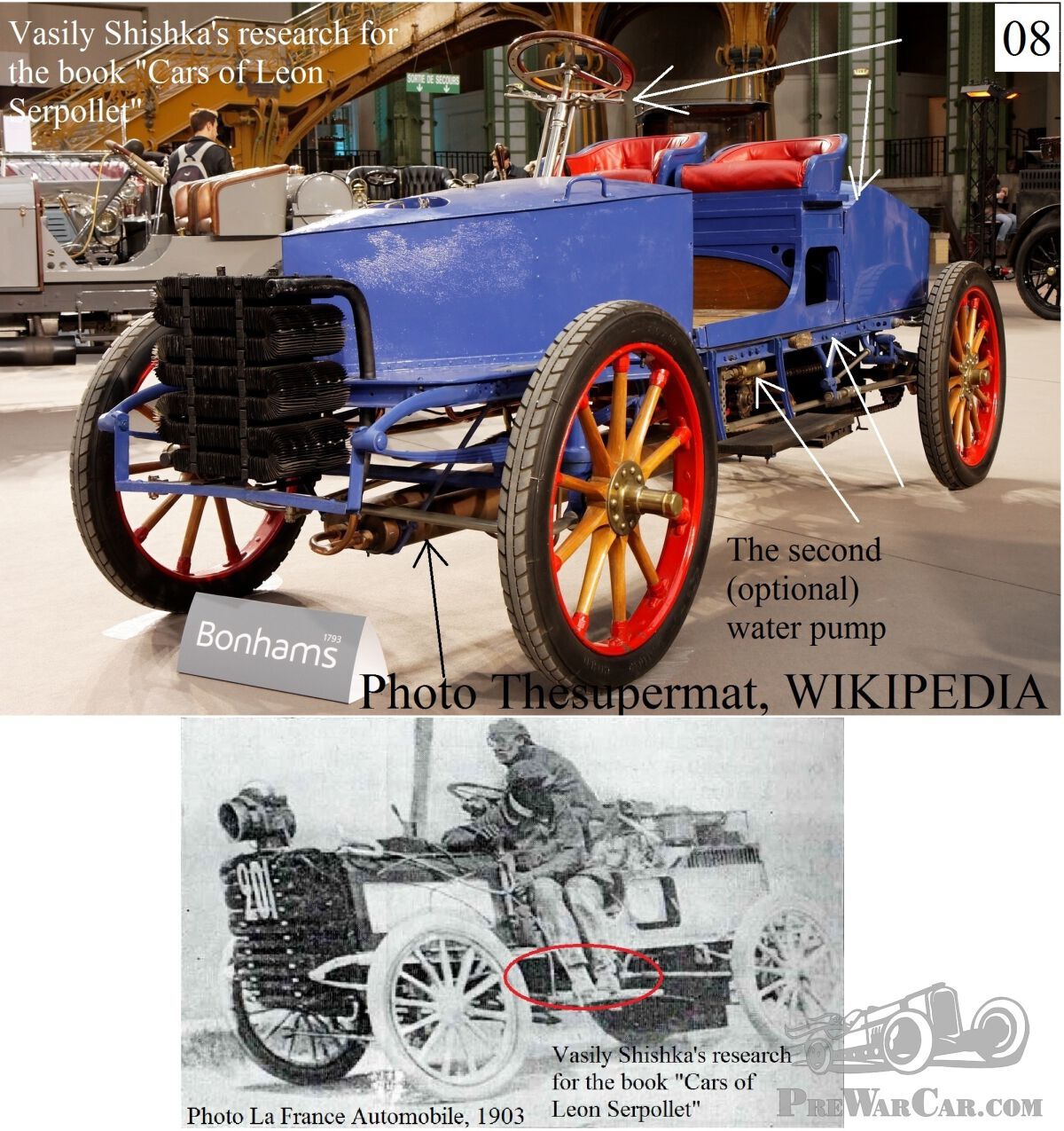
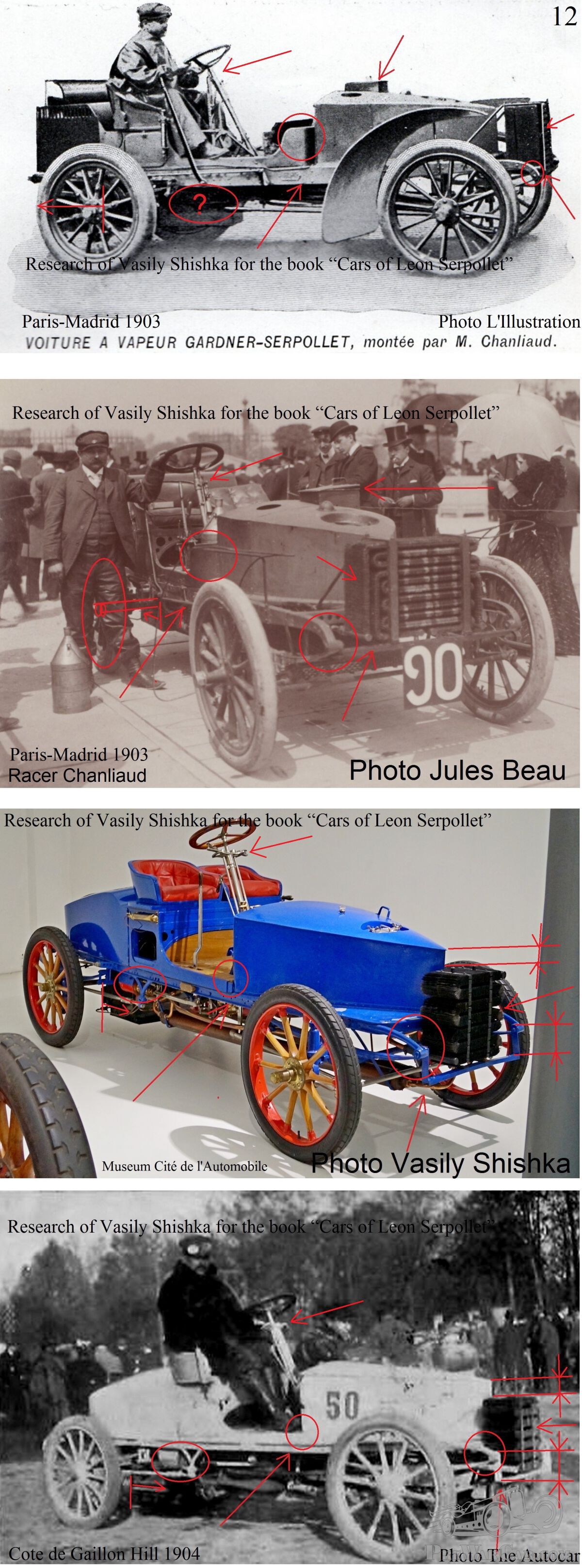
Let's take a look at the 1903 Paris-Madrid 20 hp racing car. Unfortunately, we have very few photos, but it is much more like the car from Mulhouse. Both cars have a steam generator inside the wheelbase (in front of the rear axle) and the earlier style metal channel chassis. But these cars also have differences [fig.7]. The 1903 Paris-Madrid 20 hp car has a large condensor and large tanks for water and fuel (this is masked by a rectangular hood). A car designed for long-distance racing should carry as much fuel as possible and also condense the exhausted steam for reuse so as not to lose precious time topping up water and refuelling. The car from Mulhouse has a more streamlined shape and a smaller tank. Chris Wedgwood also pointed out another difference. The car from Mulhouse has a second (optional) water pump. This pump is located on the left under the frame and is driven by an eccentric directly on the rear axle [fig.8]. We remember the principle of operation of the Serpollet steam generator. When starting, the generator pipes are heated by a burner without water to a high temperature, then water is injected and fuel is supplied by proportional pumps. It makes sense to heat the generator to a temperature higher than usual before starting as initially the water will chill the coils before the effect of the burner commences, then, if you continue to inject more water than required by proportional pumps, this will overcool the generator and result in a loss of power. Therefore, the use of a second water pump makes sense only for short distance races. If you carefully look at the photo of the racing car Paris-Madrid 1903 20 hp, we do not see this additional pump. For long-distance races, the average speed is much more important, and an additional pump takes power and gives extra weight.
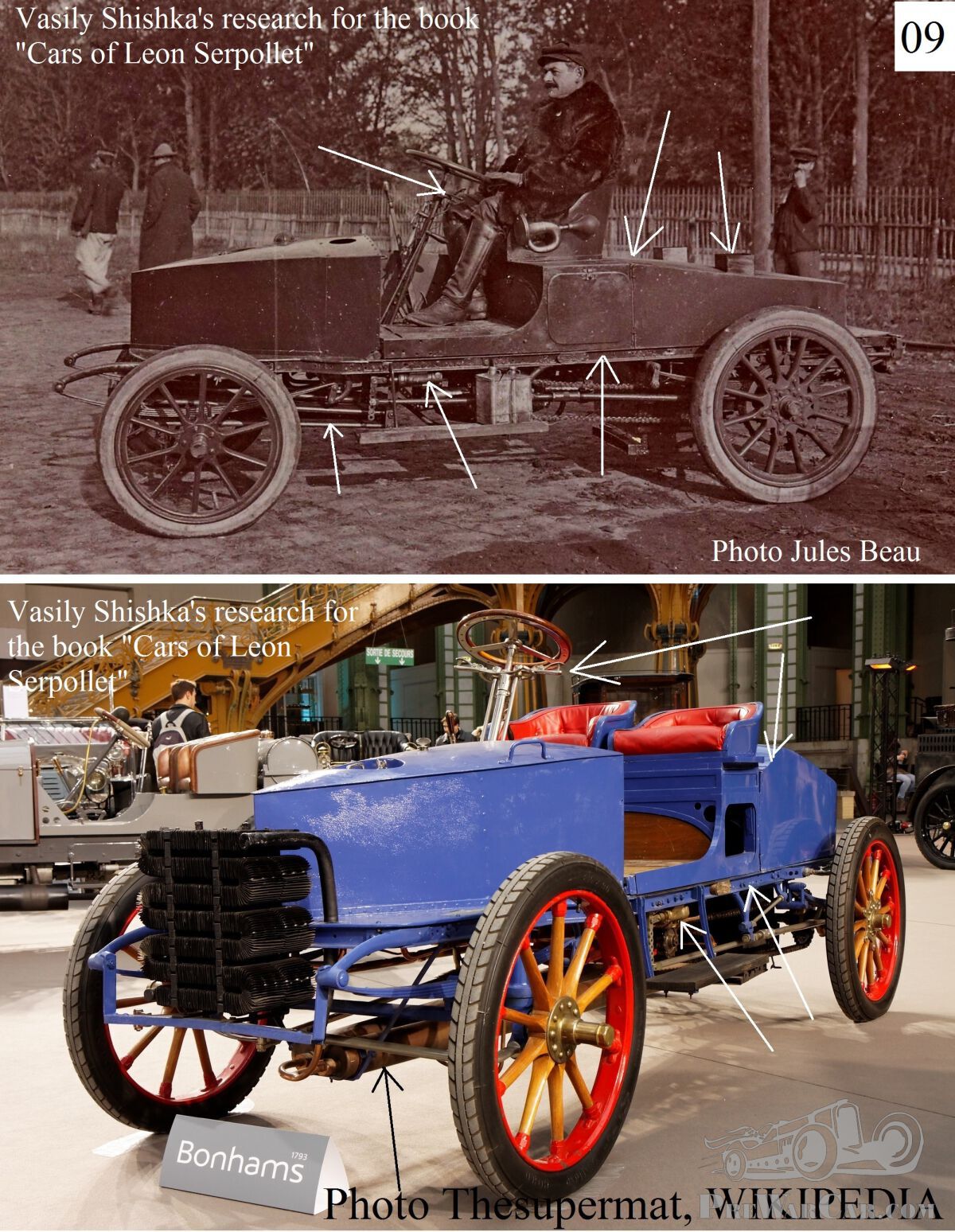
The question arises, what short-distance competition in 1903 do we know? One is the climb Cote de Gaillon Hill 1903. This is a short distance of just 6.5 miles. The famous photographer Jules Bo left us some beautiful photos; we see a very similar car with an additional water pump. The car we see here is a “new car with 15 hp.” (The automotor journal 1904, p. 1222). But there is no 100% similarity.
For example, the car in the photo has a condenser with many tubes hung below the chassis and does not have two large feedwater heater tubes (heat exchanger) as does the Mulhouse car [fig.9]. The back is also different.
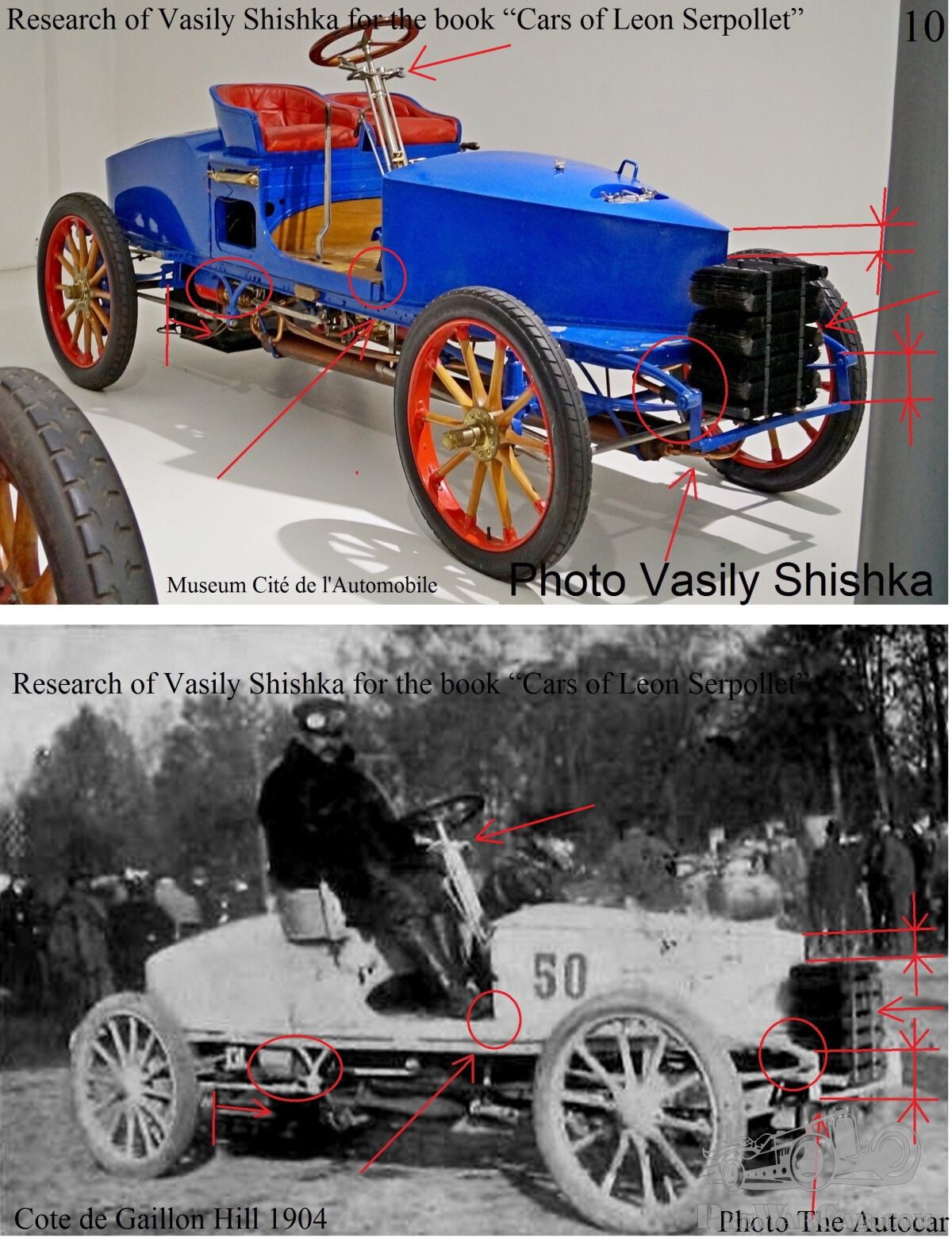
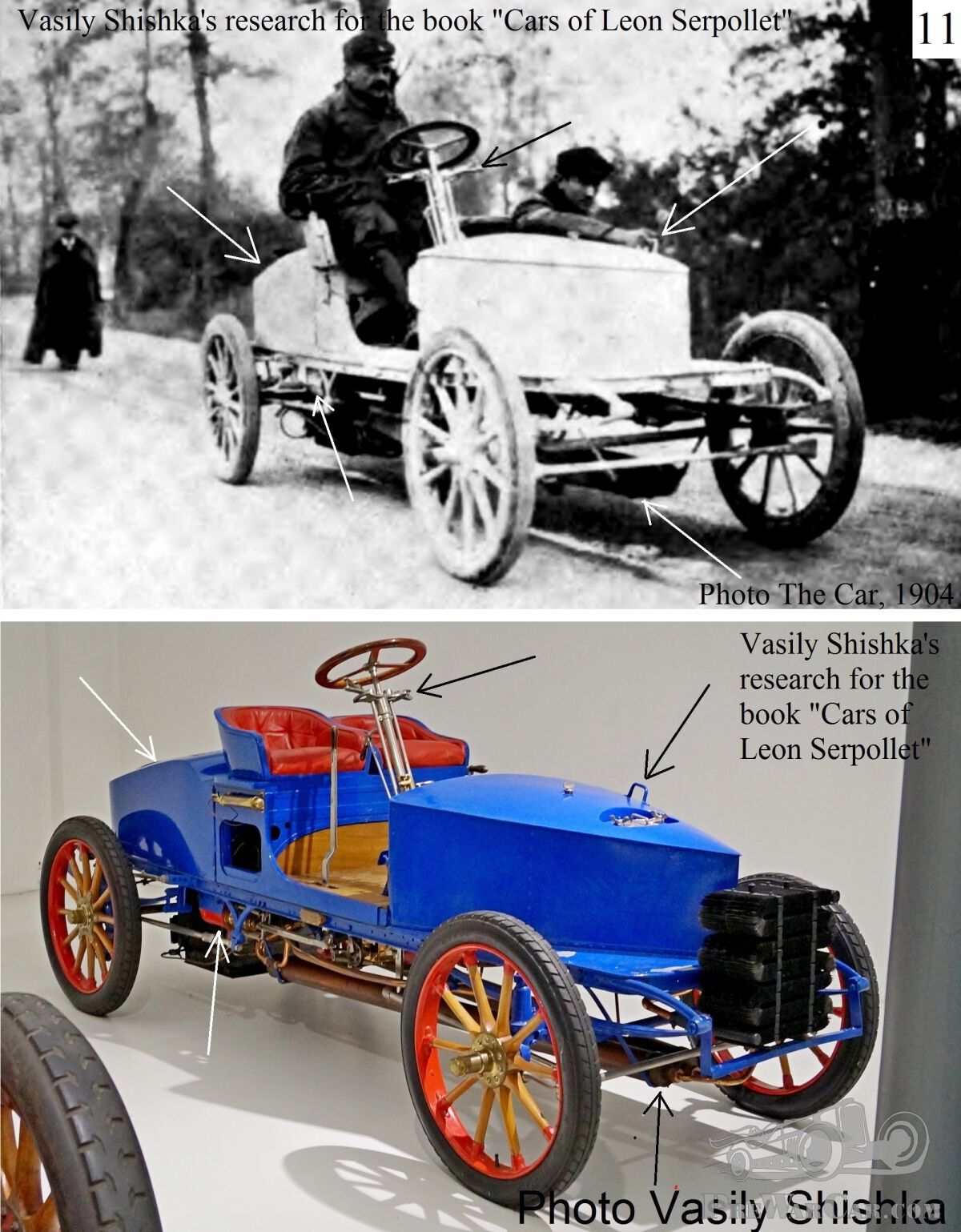
When we have a look at the photos from the Gaillon 1904 competition, we can see, although the photos are of poor quality, two pipes under the car, a modified rear of the body [fig.10], a manual pump (right under the frame) and handle on the rectangular hood for the mechanic. Everything is like a car from Mulhouse [fig.11].
You can compare which car looks more like the Gardner Serpollet from Mulhouse [fig.12].
Therefore, we believe the car from Mulhouse is not a 40hp or 20hp Paris-Madrid 1903 racing car, but a Gaillon 1904 racing car!
I, Vasily Shishka, am writing the book “Cars of Leon Serpollet”. The main consultant to this book, as well as the initiator of its writing, is Chris Wedgwood, a man with steam in his blood, a steam engineer and car restorer. Chris and I spent many evenings chatting, trying to figure out the different nuances of Serpollet cars. My wife is very unhappy with this.
The second consultant is a wonderful French archivist, author of books on the history of French motorcycles, Didier Magister.
Invaluable help is provided by people from different countries who collect important information bit by bit: Alexander Kulchitsky, Dan Soudey, Davide Grappolo, Henk Schuuring, Thomas Ulrich, Umberto Voltolin, Fred Korthals, Daniel Ward, Tobias Ward, Goupil Dubois, Pierre-Jean Desfossé, Pascal Le Poder, Laurent Zoller, Michael Hortig, Jos-Pierre Wantz, James Wood, Stanislav Kiriletz, Rustam Bikbov, Ivan Ponomarenko, Davide Lorenzone, Bocha Balboni, Alekse and etc. Thank you all so much!
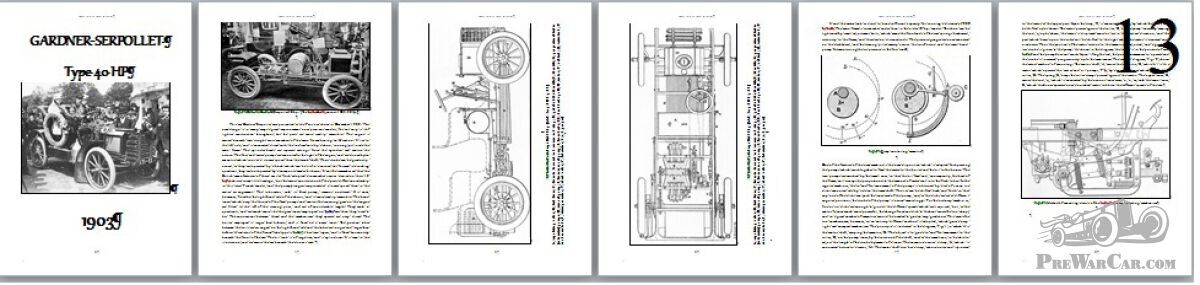
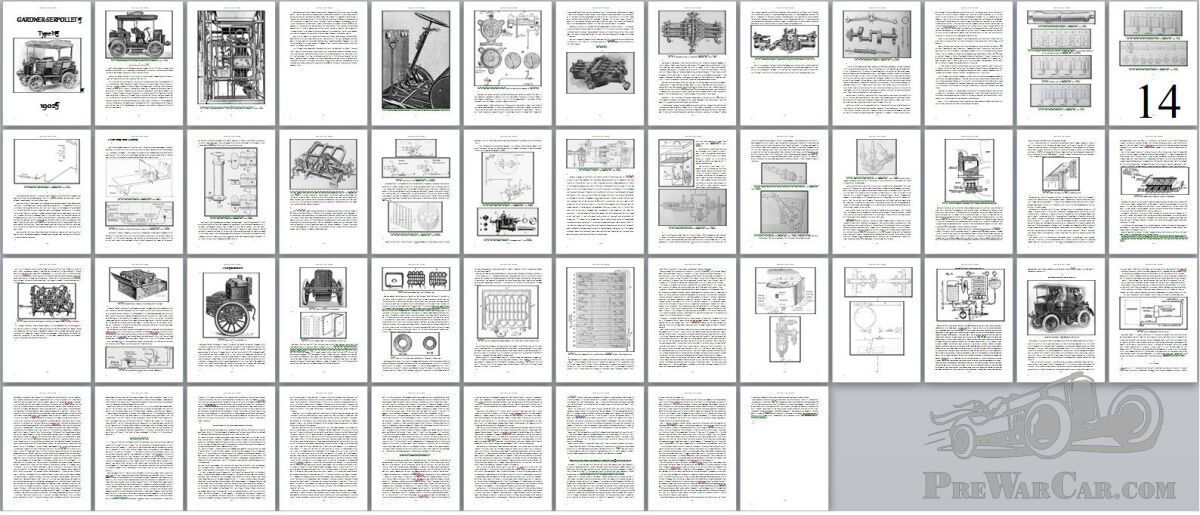
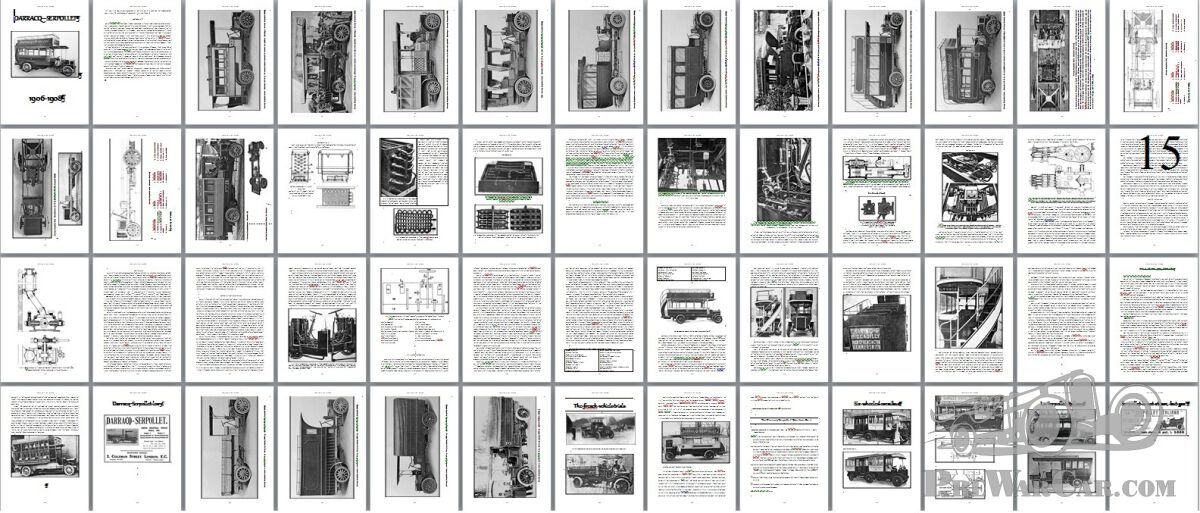
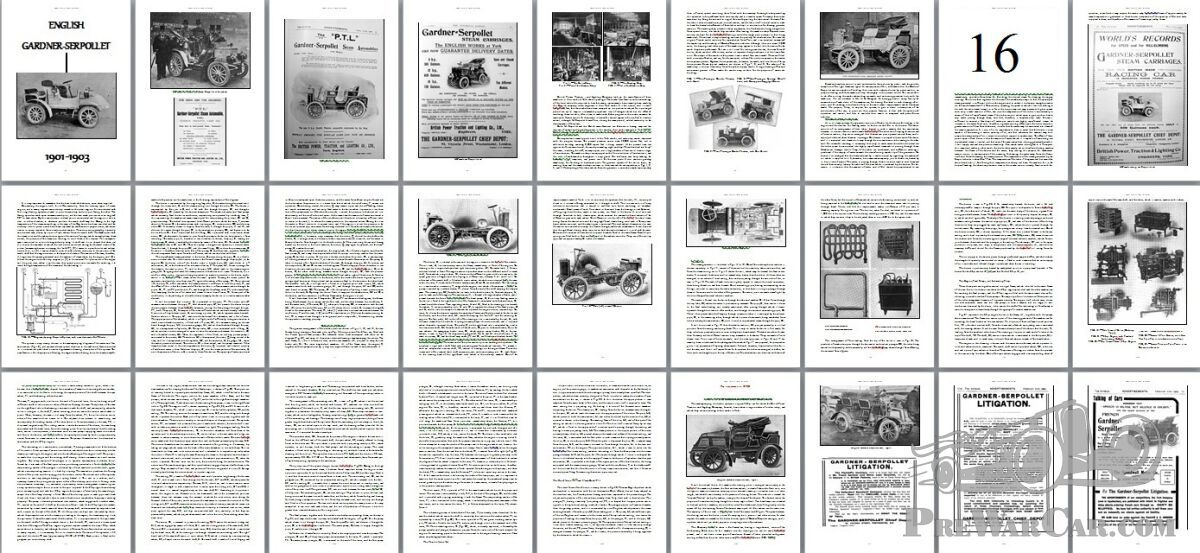
You can see the draft of some pages of the future book [fig.13-16].
We ask for help from all people interested in preserving the global automotive history in the form of digital copies of brochures, family photographs and instructions for using Serpollet cars.
This article is in no way intended to offend the wonderful staff of the magnificent Mulhouse Museum Cité de l'Automobile. These great people do a lot to preserve and promote global automotive heritage. Unfortunately, the French automobile museum does not have a program for inviting researchers, as the German Technical Museum has. The purpose of this article is to correct errors with the help of historical sources that have become available recently."
Words by Vasily Shishka.
Pubblicato:
giovedì marzo 26th, 2020
Facebook
LinkedIn
Twitter
WhatsApp
Email
Copy
Commenti
Angelo Capodiferro
09 Marzo, 15:39
Vasily Shishka
02 Marzo 2025, 21:37
I am very pleased that the museum has studied this article. In November, 2024, at the exhibition of vintage cars in Lyons, you could see this car with the correct plate.
Per saperne di più
Fёdor
05 Aprile 2020, 11:05
Great investigation. I look forward to the release of the book, be sure to buy
Per saperne di più
Zoller Laurent
02 Aprile 2020, 13:23
My friend Vassily is a REAL HISTORIAN. He always checks everything he writes.
I had great pleasure in collaborating with him for his two books on french cars built before 1900. He can count on my collaboration for his future books.
Laurent ZOLLER
Per saperne di più
I had great pleasure in collaborating with him for his two books on french cars built before 1900. He can count on my collaboration for his future books.
Laurent ZOLLER
Bart
26 Marzo 2020, 13:14
There are more faults in the museum display signs along with the cars. Sadly when you point this out to the museum and offer to present proof for necessary corrections the do not respond (yet?).
Per saperne di più
David Hyde
26 Marzo 2020, 08:56
Thank you for your research on these fascinating cars. I look forward to seeing your book.
Per saperne di più
Jos van Genugten
26 Marzo 2020, 08:04
Excellent Vasily, interesting what extensive research can turn up even after so many years.
Per saperne di più
Does anyone know when it is expected to be published ?
Also ,
There are so many books on French Cars including French CYCLECARs & other racecars from that era of the early 20th Century that I would like to purchase but I don’t because they are all written in French ! Does anyone know if the present books on these cars will be translated into English ?