La rivista e il marketplace globale per gli appassionati di auto d’epoca, creati da appassionati.
La rivista e il marketplace globale per gli appassionati di auto d’epoca, creati da appassionati.


Filter
Faccia la sua scelta
- Automobile
-
Marca >>
- Motociclette
-
Ubicazione >>
- Parti e altro
-
Marca dell'auto >>
-
Produttore >>
-
Categoria >>
- Biciclette
-
Anno >>
-
Paesi



Gobron-Brillié ancora una volta: la vettura da 100 mph di Rigolly
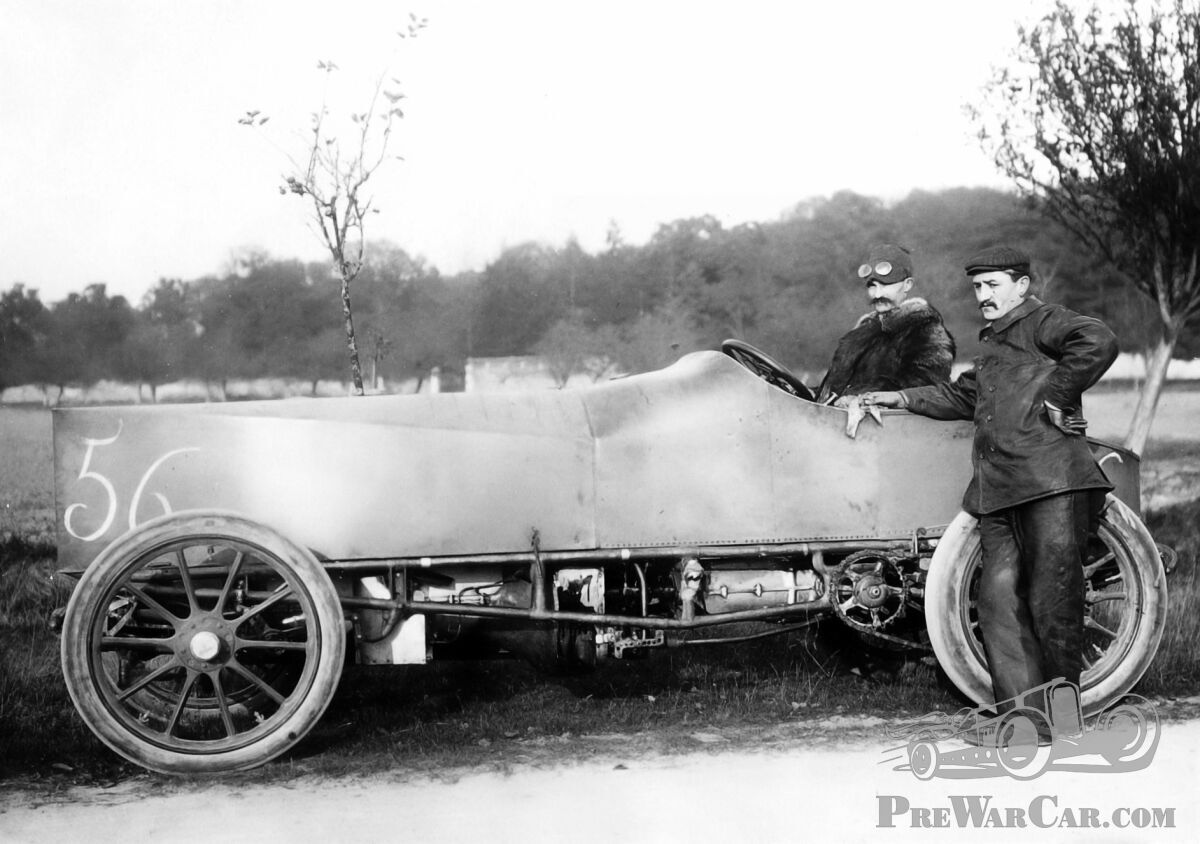

Negli ultimi mesi vi abbiamo già raccontato diverse storie dedicate alla Gobron-Brillié. La prima è stata pubblicata a maggio, seguita a giugno da un altro articolo dedicato alle vetture da competizione della Casa francese. Ora che è trascorso un altro mese, ci è sembrato il momento giusto per dedicare ancora una volta spazio a questo straordinario costruttore.
La vettura raffigurata è ritenuta la Gobron-Brillié da 100 CV di Louis Rigolly durante la cronoscalata della Côte de Gaillon, disputata il 30 ottobre 1904. Era equipaggiata con il motore a pistoni contrapposti di cui abbiamo parlato nei precedenti articoli e con ogni probabilità è la stessa automobile con cui Rigolly partecipò alla Ostend Automobile Week, in Belgio, il 21 luglio 1904. In quell'occasione percorse il chilometro lanciato alla straordinaria velocità di 166,665 km/h, entrando nella storia come il primo uomo a superare le 100 mph (160 km/h) al volante di un'automobile.
Si dice che la Gobron-Brillié di Rigolly fosse dotata di una carrozzeria alleggerita montata su un telaio tubolare, ma sorprendentemente le informazioni attendibili su questa vettura sono piuttosto scarse. Forse uno dei nostri lettori ne sa di più? Abbiamo invece scoperto che la carriera agonistica di Rigolly fu relativamente breve. Si concluse già nel 1906, quando la Gobron-Brillié iniziò a ritirarsi gradualmente dalle competizioni internazionali di alto livello. Da quel momento Rigolly condusse una vita riservata in Francia, sopravvisse a entrambe le guerre mondiali e morì nel 1958 all'età di 82 anni.
Testo: Jeroen Booij
Foto: autore sconosciuto
Pubblicato:
lunedì agosto 10th, 2026
Facebook
LinkedIn
Twitter
WhatsApp
Email
Copy
Commenti
Graham Rankin
10 Agosto, 10:15
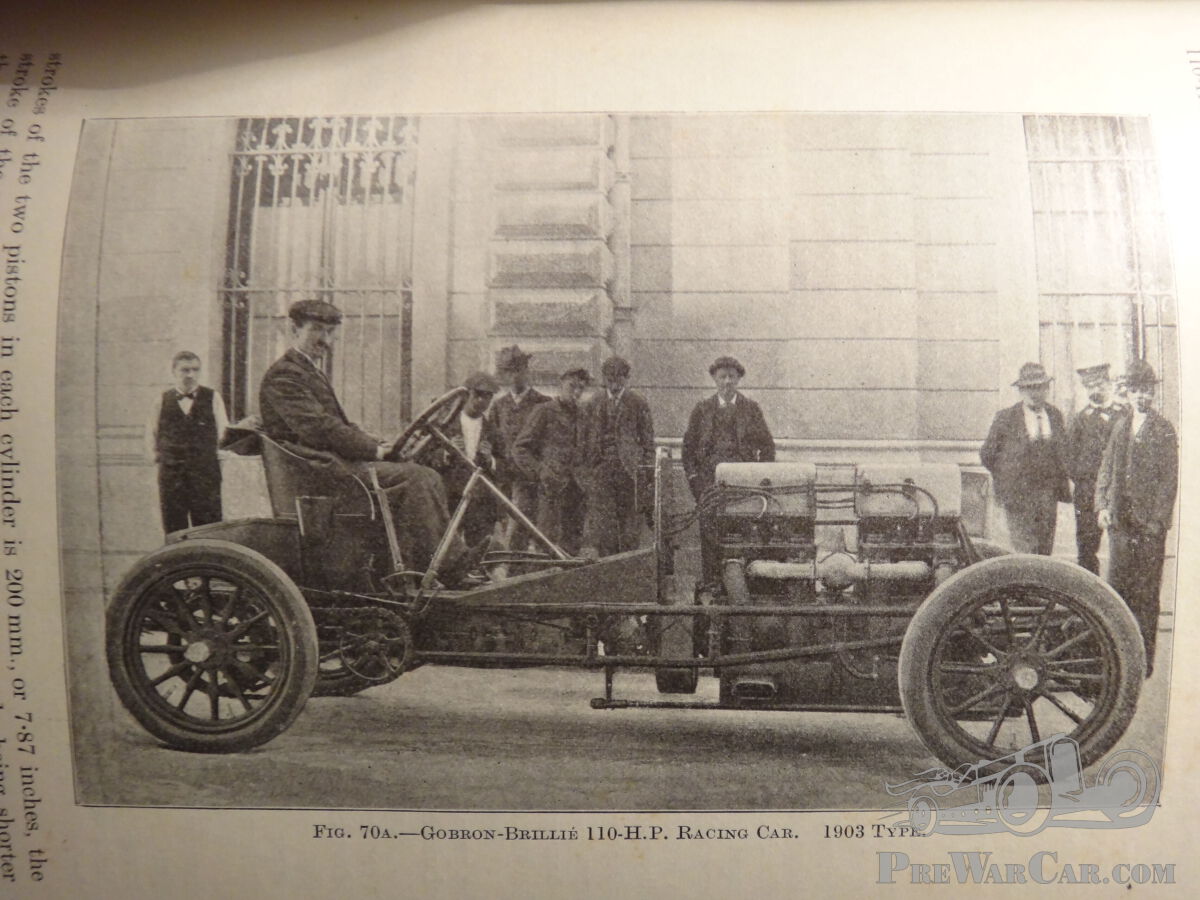
Here is another photo of a 110 HP race car from 1903 which may interest readers and which is extracted from the ever wonderful W. Worby-Beaumont publication---Archibald Constable & Company Ltd, 16 James Street, London--1906. Volume 2. (42 Shillings net).
...."Of the car illustrated, it may be mentioned that the engine is of nominally 110 HP and it has cylinders of 140mm, or 5.51 inches bore. The combined strokes of the two pistons in each cylinder is 200mm, or 7.87 inches, the stroke of the upper pistons, with the long connecting rods, being shorter than that of the lower pistons, and as arranged in the smaller engines. The stroke of the lower pistons is about 1.27 times greater than that of the upper pistons. During 1904 Rigolly drove the racing car of that year's construction at a recorded speed of nearly 95 miles per hour."....
Per saperne di più
...."Of the car illustrated, it may be mentioned that the engine is of nominally 110 HP and it has cylinders of 140mm, or 5.51 inches bore. The combined strokes of the two pistons in each cylinder is 200mm, or 7.87 inches, the stroke of the upper pistons, with the long connecting rods, being shorter than that of the lower pistons, and as arranged in the smaller engines. The stroke of the lower pistons is about 1.27 times greater than that of the upper pistons. During 1904 Rigolly drove the racing car of that year's construction at a recorded speed of nearly 95 miles per hour."....
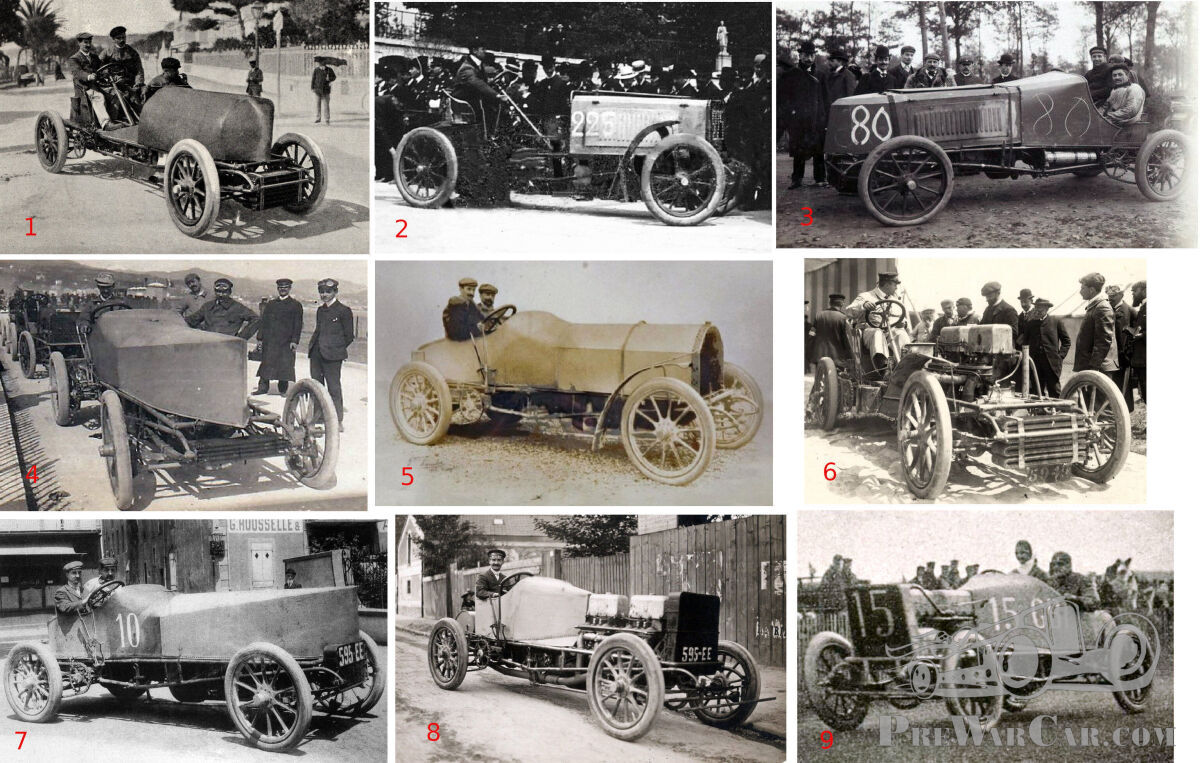
It is remarkable that Gobron-Brillié continued to use this tubular frame till and with the 1907 Grand Prix de l’ACF, when in fact all other makes had already changed to pressed steel frames for years. As I stated before, the car was fast and performed well on relatively short races, but during long distance races, especially during the circuit races with their many turns and braking moments, they either didn’t perform well or were even forced to withdraw by mechanical failure like worn-out tyres or broken radiators. It could well be that a lot of trouble was caused by frame torsion due to the large and powerful engine.
In the uploaded image I’ve collected the different appearances of the car in the 1903-1907 period, showing the first time a change was observed: 1. Semaine de Nice 1903 (Rigolly); 2. Paris-Madrid 1903 (Duray); 3. Kilomètre de Dourdan 1903 (Duray); 4. Semaine de Nice 1904 (Rigolly); 5 and 6. Gordon Bennett trials 1904 (Rigolly resp. Burton); 7. Gordon Bennett trials 1905 (Rigolly); 8. Grand Prix de l’ACF 1906 (Rigolly); 9. Grand Prix de l’ACF 1907 (Rigolly). The 1906 and 1907 Grand Prix cars seem to be more or less identical.
To be continued …?